
Solar Powered Security Camera Information Hub | Section 1: Basics & Education
A solar powered security camera combines several technologies to provide outdoor security monitoring without requiring a permanent connection to mains electricity.
Although these cameras may appear simple from the outside, they contain several important components that work together to generate electricity, capture video, detect movement and communicate with connected devices.
Understanding these components helps Australian homeowners and property owners better understand how solar security cameras operate and why different models may offer different capabilities.
In this guide, we explain the main components of a solar powered security camera and the role each plays in the overall system.
1. Solar Panel – Generating Electricity
The solar panel is responsible for generating the electricity used to recharge the camera's battery.
It contains photovoltaic cells that convert sunlight into direct current (DC) electricity.
Solar powered security cameras generally use two types of panel arrangements.
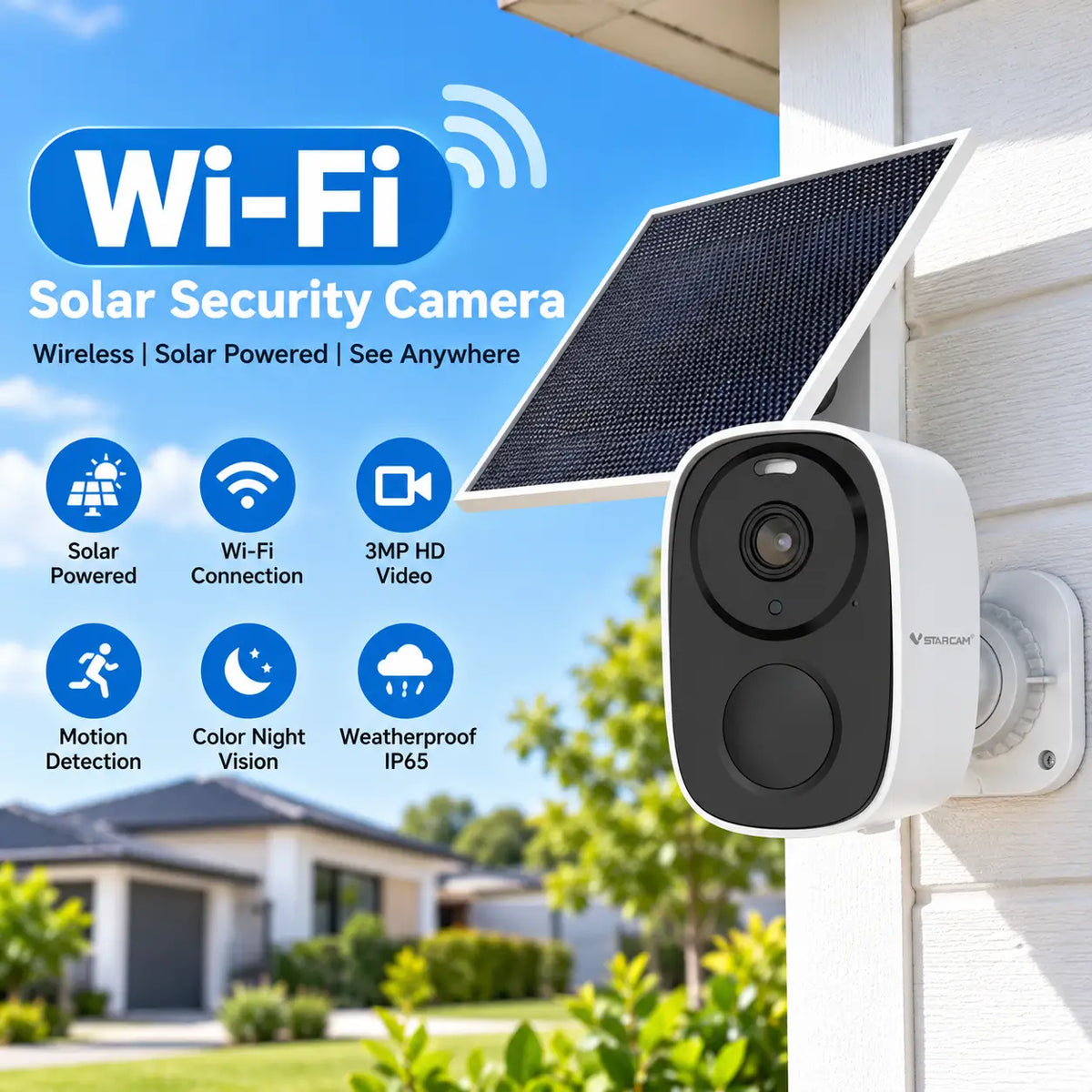
Integrated Solar Panel
The solar panel is built into the camera housing, creating a compact design with fewer external components.
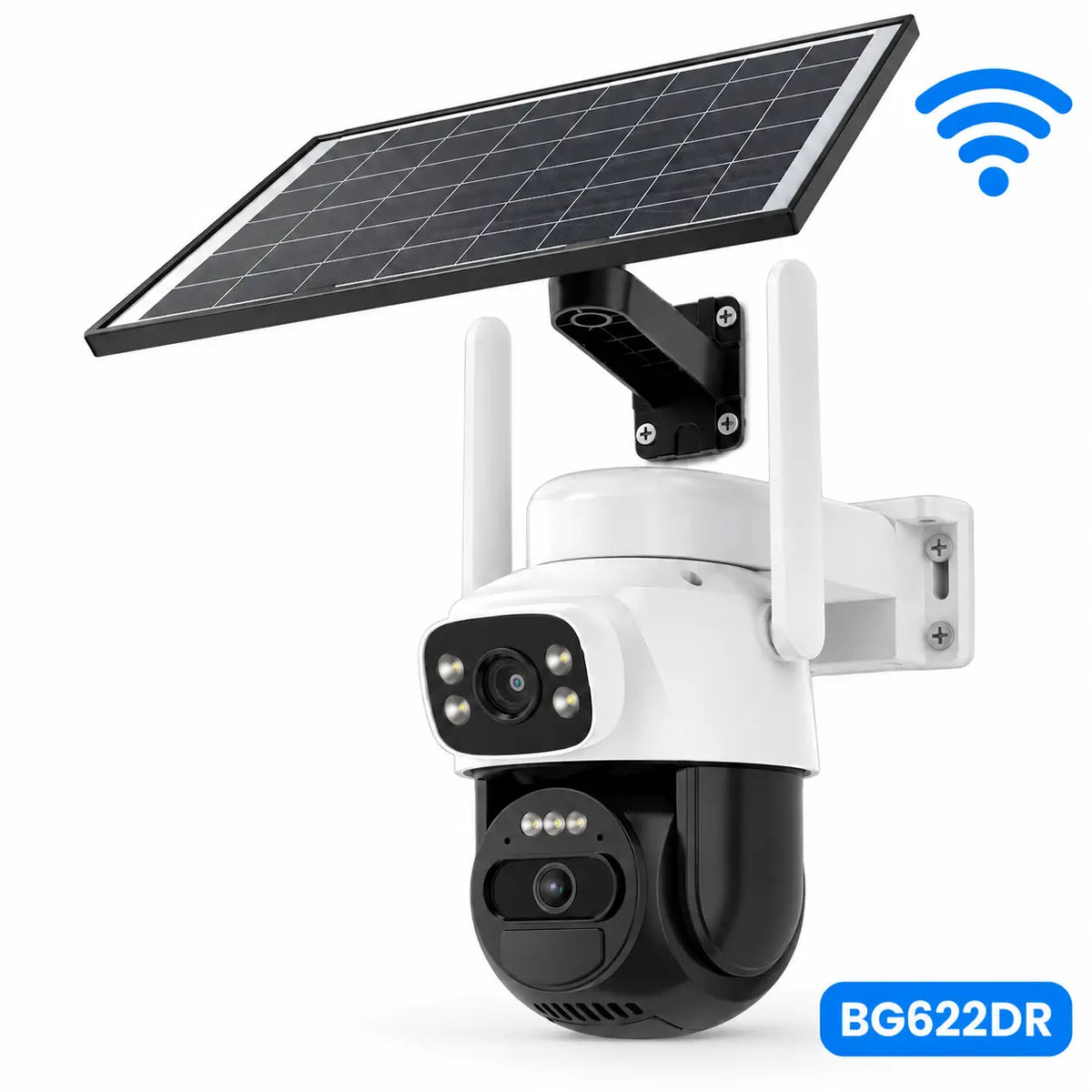
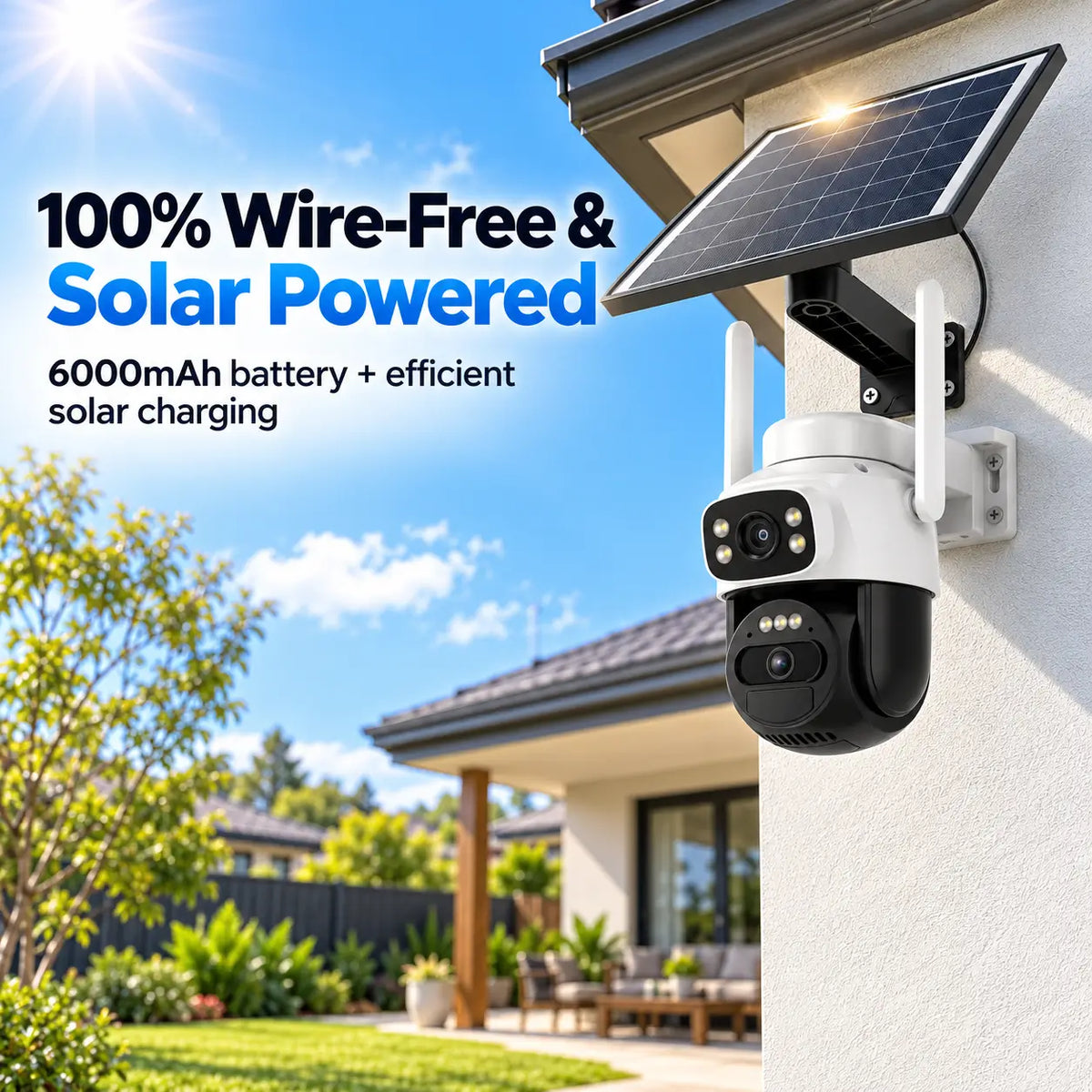
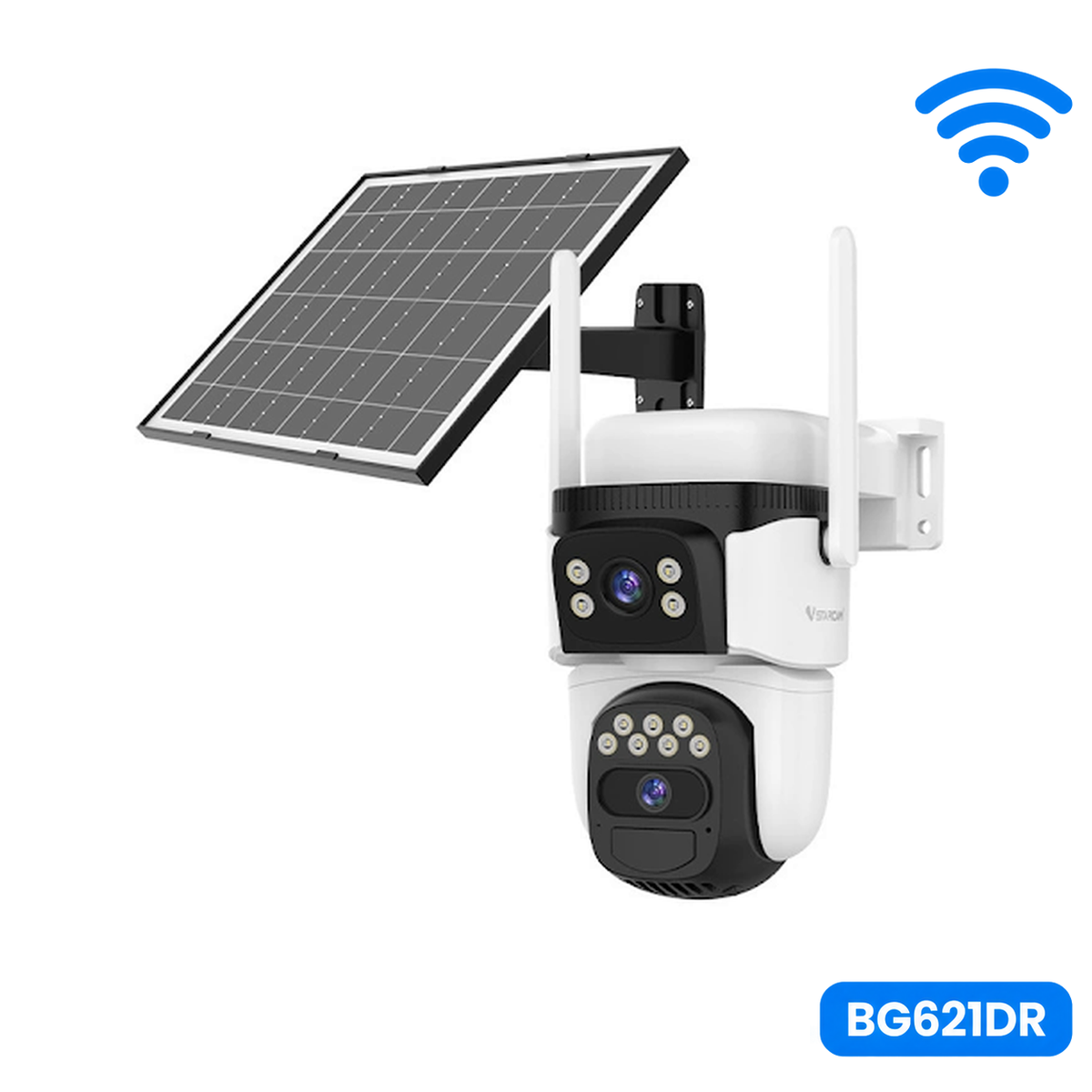
External Solar Panel
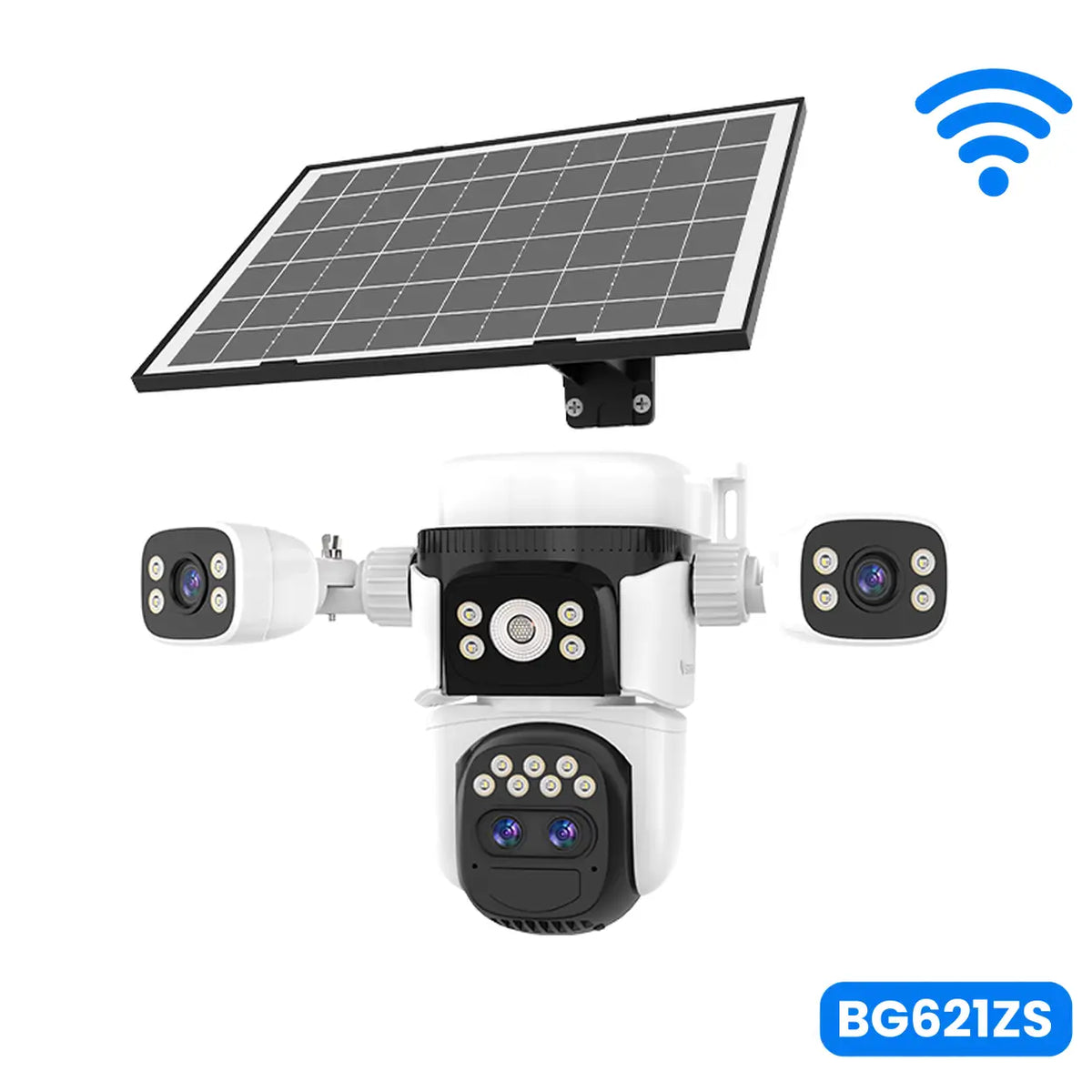
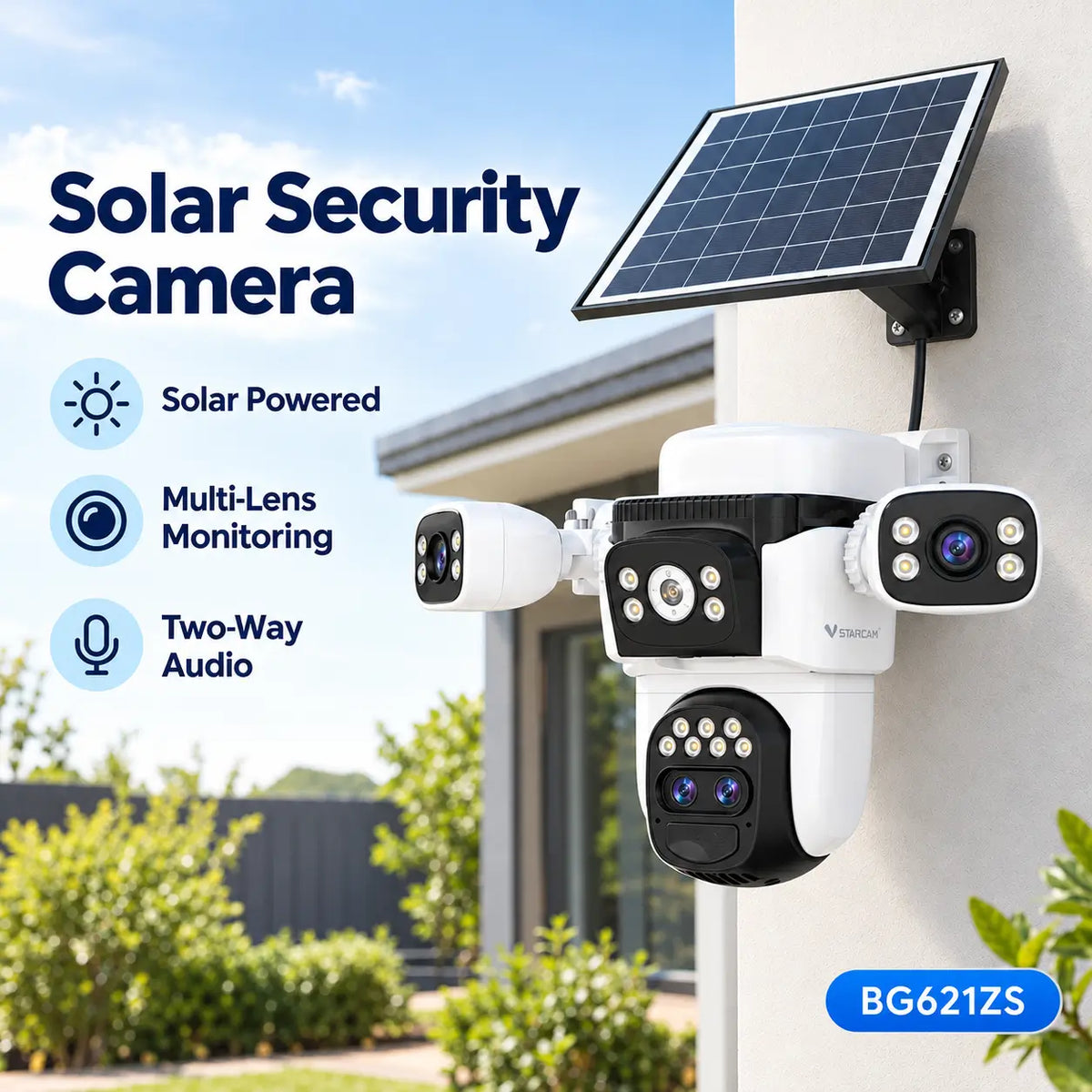
The solar panel is installed separately and connected to the camera through a cable.
This design allows the panel to be positioned independently of the camera, which can be useful when the camera is installed in a shaded location.
Both designs perform the same basic function: converting sunlight into electrical energy.
The amount of electricity generated depends on sunlight exposure, panel efficiency and environmental conditions.
2. Rechargeable Battery – Storing Energy
The rechargeable battery stores electricity generated by the solar panel.
It allows the camera to continue operating when solar generation is insufficient, including during the night.
Most solar powered security cameras use rechargeable lithium-based batteries.
Common battery technologies include lithium-ion and lithium iron phosphate (LiFePO₄).
The battery acts as an energy reserve, supplying electricity to the camera's electronic components whenever required.
Its capacity determines how much electrical energy can be stored, but actual operating time also depends on the camera's power consumption.
For example, frequent video recording, wireless communication and night lighting may increase electricity consumption.
Battery capacity, charging performance and operating time will be explained in greater detail in Section 3 – Features & Technology Explained.
3. Camera Lens and Image Sensor – Capturing Images
The camera lens and image sensor work together to capture images and video.
Although closely connected, they perform different functions.
Camera Lens
The lens collects and focuses light onto the image sensor.
Its optical design influences the camera's field of view and how objects appear in recorded footage.
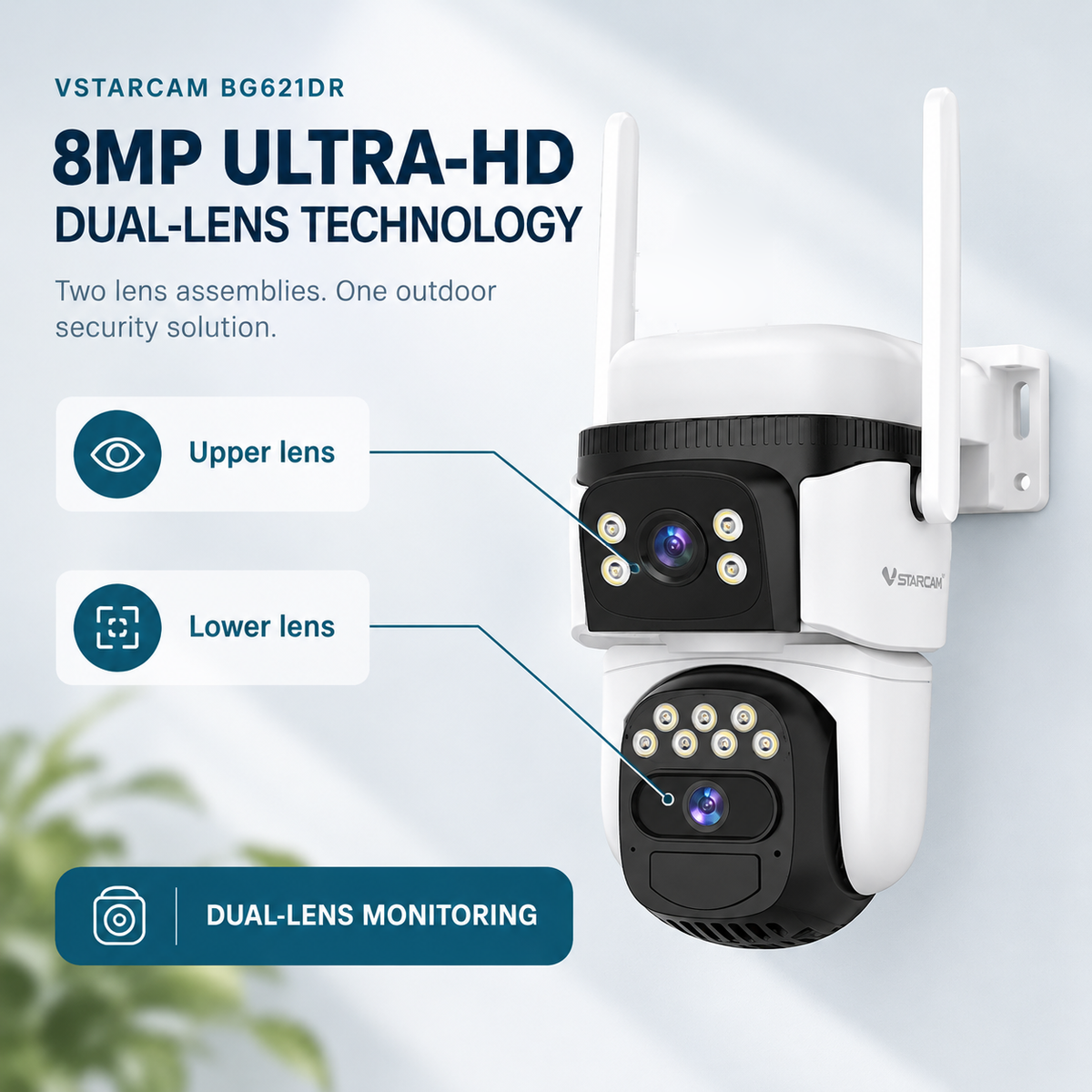
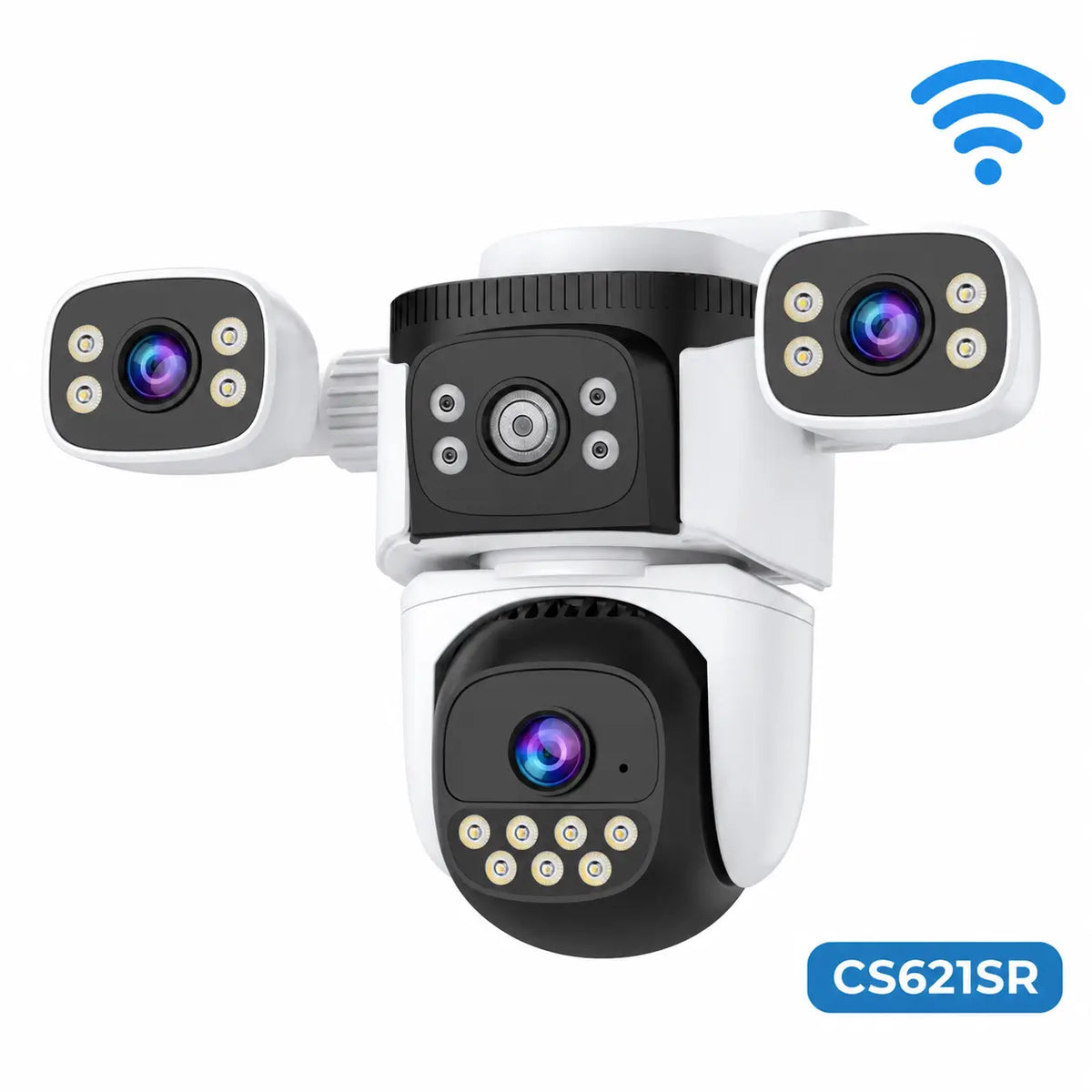
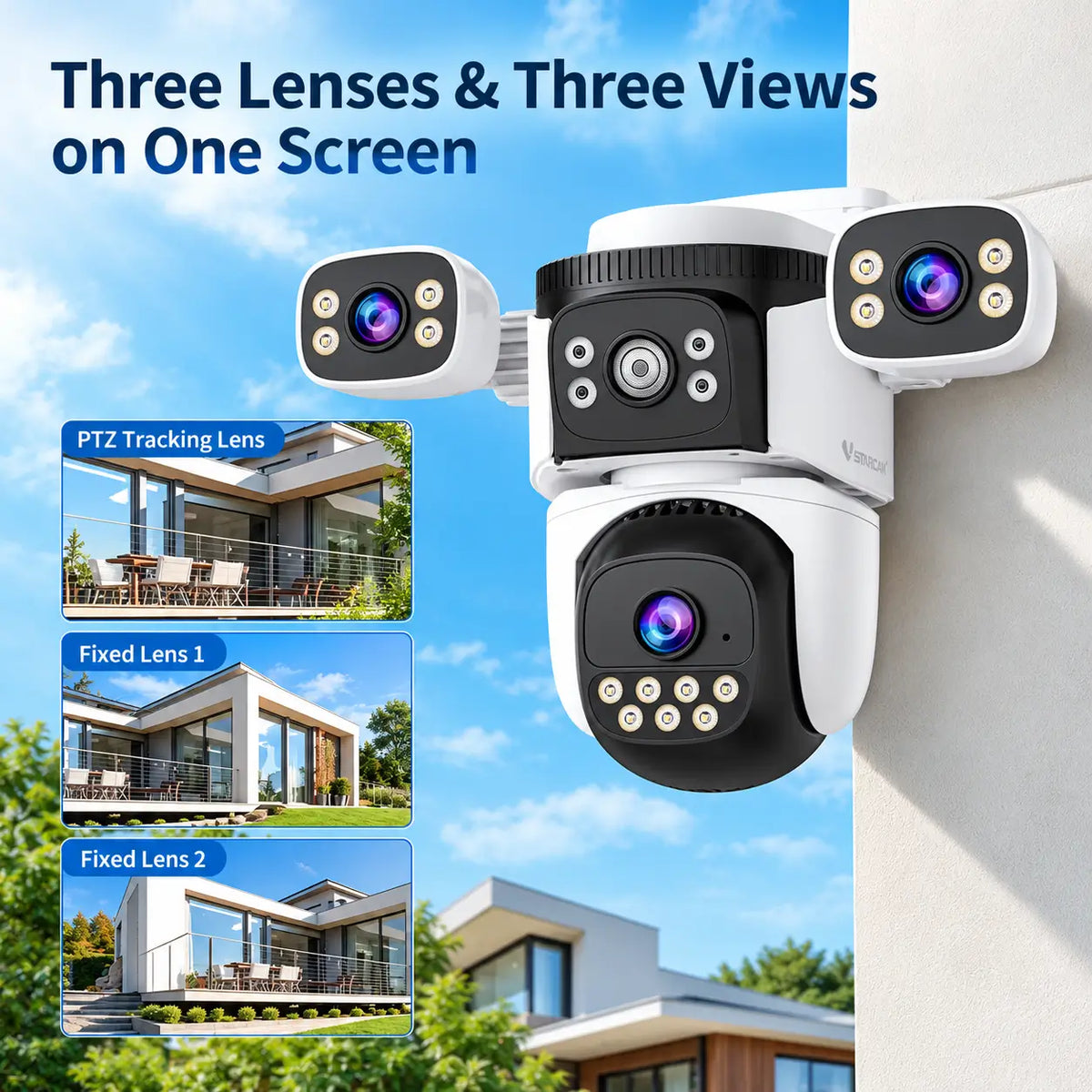
Some cameras use a single fixed lens, while others incorporate multiple lenses or zoom capabilities.
Image Sensor
The image sensor converts incoming light into electronic signals.
Most modern security cameras use CMOS image sensors.
These signals are processed to create digital images and video recordings.
Image quality depends on several factors, including the lens, sensor, image processing and available lighting.
A camera's resolution alone does not determine its overall image quality.
Understanding these two components helps explain how security cameras capture visual information.
4. Motion Detection Sensor – Identifying Activity
Motion detection allows a security camera to identify activity within its monitoring area.
Many battery-powered solar security cameras use a Passive Infrared (PIR) sensor.
A PIR sensor detects changes in infrared radiation associated with moving people, animals or other objects.
When suitable movement is detected, the camera may activate recording or send a notification.
Some cameras also use image-based motion detection, which identifies movement by analysing changes in captured images.
More advanced systems may combine different detection methods.
Motion detection is particularly useful for battery-powered cameras because it can reduce unnecessary recording activity and help manage energy consumption.
However, detection methods and capabilities vary between camera models.
5. Wireless Communication Module – Connecting the Camera
The wireless communication module allows the camera to exchange information with compatible networks and devices.
Solar powered security cameras commonly use one of two wireless communication technologies.
Wi-Fi Connection
Wi-Fi cameras connect through a compatible wireless network.
This may allow users to view footage, receive notifications and manage camera settings through a smartphone application.
A suitable Wi-Fi signal is generally required for reliable network communication.
4G Cellular Connection
Some solar security cameras use a 4G cellular communication module.
These cameras connect through compatible mobile networks rather than relying on household Wi-Fi.
They typically require an activated SIM card, mobile data service and suitable network coverage.
This arrangement can be useful for rural properties or locations without fixed internet access.
It is important to remember that solar power and wireless connectivity are separate technologies.
A camera may operate without mains electricity while still requiring a network connection for remote monitoring.
For more information, see B04 – Do Solar Security Cameras Need Wi-Fi, Electricity or Internet?
6. Video Storage – Saving Security Footage
Security cameras need a method of storing recorded images and video.
Depending on the model, solar powered security cameras may support several storage options.
MicroSD or TF Memory Card
Many cameras include a memory card slot for storing footage locally.
Built-In Storage
Some models contain internal electronic storage that does not require a removable memory card.
Cloud Storage
Certain cameras can upload recordings to a compatible cloud storage service through an internet connection.
Cloud storage may require a subscription, depending on the manufacturer.
Recording and storage are separate functions.
Recording refers to capturing video, while storage determines where the recorded footage is saved.
The available options depend on the camera's design and supported features.
7. Camera Housing and Additional Components
Solar powered security cameras are frequently installed outdoors, making protective housing an important part of their design.
Camera housings are commonly manufactured from engineered plastics, aluminium alloys or combinations of materials.
They protect internal electronic components against environmental exposure.
Many outdoor cameras feature an Ingress Protection (IP) rating, which indicates their tested resistance to dust and water.
For example, an IP65-rated enclosure is dust-tight and protected against water jets under specified test conditions.
However, an IP rating does not mean the camera is suitable for underwater use.
Modern solar powered security cameras may also include additional components such as:
- Infrared LEDs: Support night vision in low-light conditions.
- White LED Spotlights: Provide visible illumination for supported night-time functions.
- Microphone and Speaker: Enable two-way audio communication.
- Electronic Processor: Manages image processing, recording and other camera functions.
- Charging Circuitry: Regulates battery charging and electrical power distribution.
Not every camera includes all these features.
The available components depend on the manufacturer's design and intended application.
8. How Do These Components Work Together?
Consider a solar powered security camera installed above the driveway of an Australian home.
The solar panel generates electricity, while the rechargeable battery stores energy for later use.
The lens and image sensor capture visual information.
When the motion detection system identifies activity, the camera may begin recording.
The electronic processor manages the recording process, and the footage can be saved using the camera's supported storage system.
If a suitable network connection is available, the camera may also send a notification to the homeowner's smartphone.
Meanwhile, the protective housing helps shield the internal components from outdoor conditions.
Each component has a specific responsibility, but they operate together as one integrated security system.
Final Thoughts
A solar powered security camera is more than a surveillance camera connected to a solar panel.
It combines electricity generation, rechargeable battery storage, image capture, motion detection, electronic processing and wireless communication.
Each component contributes to the camera's overall operation.
Understanding these basic components provides a foundation for learning about more advanced solar security camera technologies.
For Australian homeowners, rural property owners and small businesses, this knowledge can help explain how modern solar security cameras operate in different environments.