
Do Solar Powered Fans Really Work? What You Need to Know
With Australia's hot summers and rising electricity costs, more households are exploring alternative ways to stay comfortable without relying entirely on traditional electrical appliances.
Solar powered fans are becoming an attractive option, particularly for people looking for portable, energy-efficient cooling solutions.
But one important question remains:
Do solar powered fans really work, and can they provide reliable cooling throughout the day and night?
The short answer is yes. Solar powered fans can provide effective airflow when properly matched to their intended use. However, their performance depends on several factors, including sunlight availability, solar panel output, battery capacity and fan power consumption.
Modern solar powered fans equipped with rechargeable batteries can also operate without direct sunlight, making them useful for indoor cooling, outdoor activities and night-time operation.
Let's explore how they work in real-world Australian conditions.
1. How Do Solar Powered Fans Actually Work?
Solar powered fans use electricity generated by a solar panel to operate an electric motor.
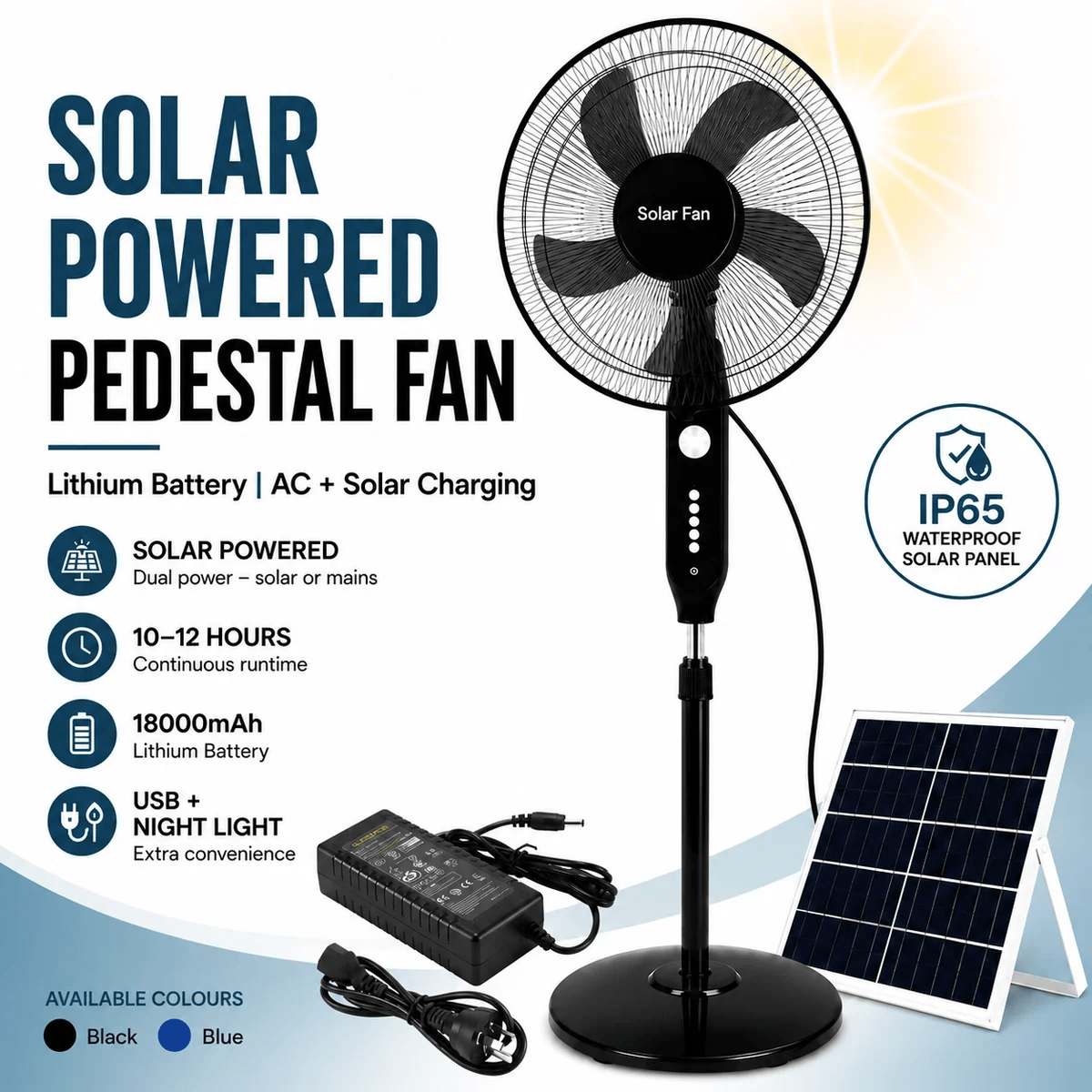
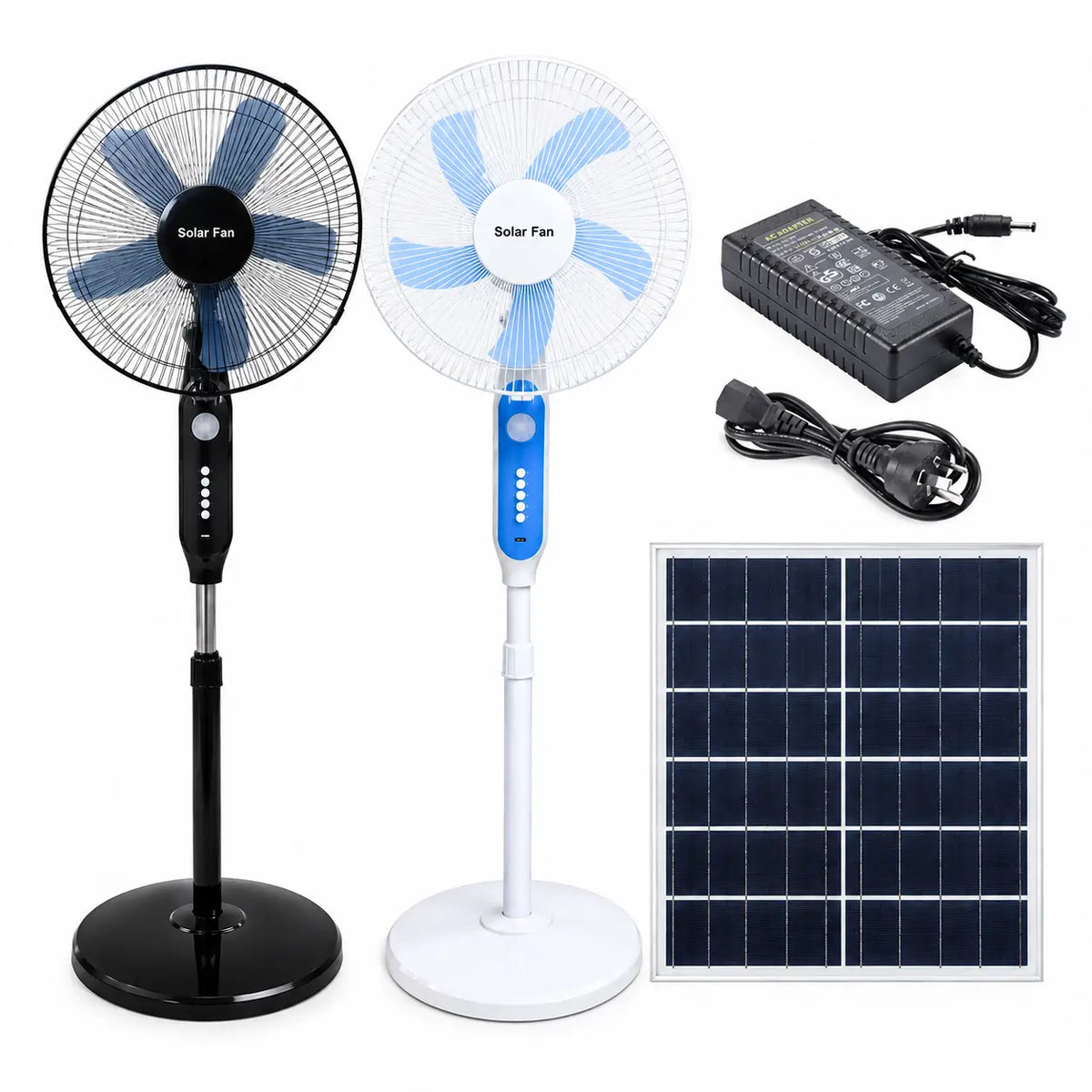
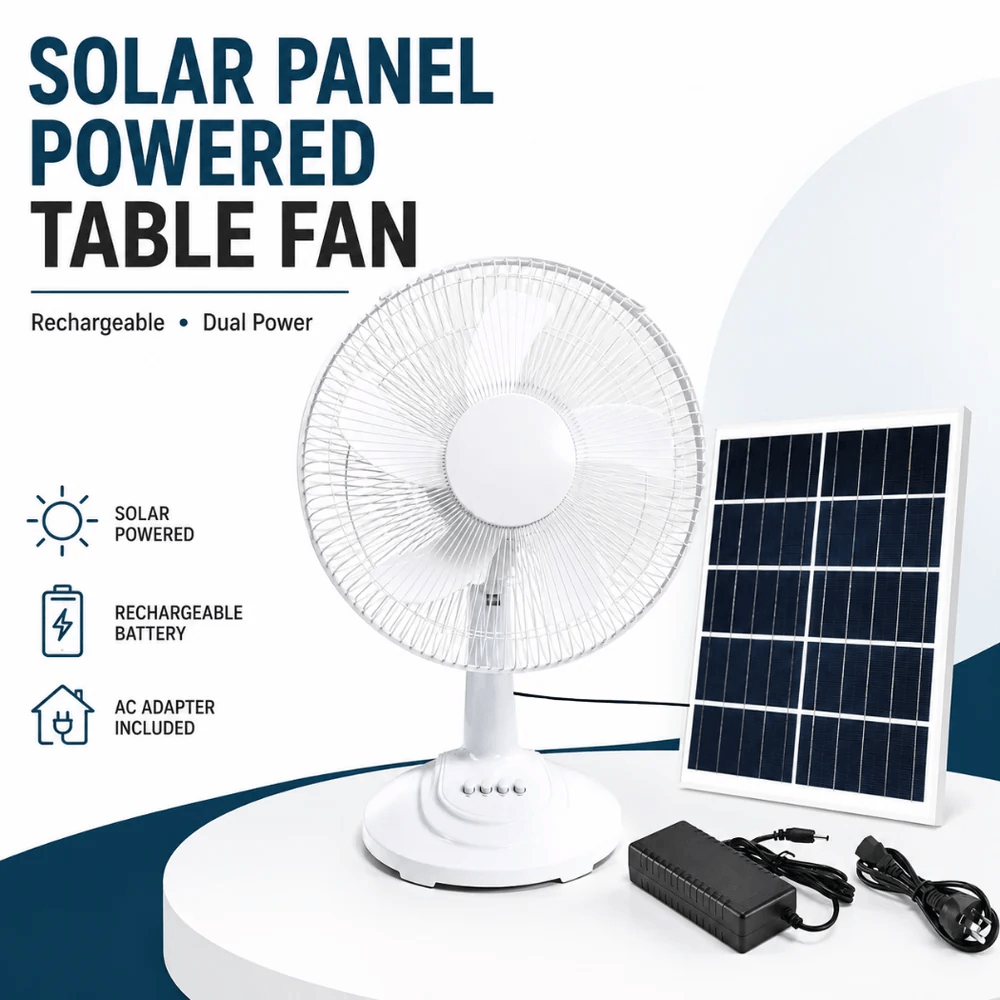
A typical rechargeable solar fan system consists of three main components:
- Solar Panel: Converts sunlight into electrical energy.
- Rechargeable Battery: Stores electricity for later use.
- Fan Motor: Uses electricity to rotate the fan blades and generate airflow.
During sunny weather, the solar panel generates electricity that can be used to charge the battery.
Depending on the fan's design, the solar panel may also power the fan while charging the battery.
When sunlight is unavailable, the fan can continue operating using stored battery energy.
This combination makes rechargeable solar powered fans more flexible than solar-only models that require continuous sunlight.
2. Can Solar Powered Fans Work During the Day?
Yes. Solar powered fans can operate during daylight hours when sufficient electrical power is available.
For rechargeable models, the solar panel can collect sunlight and charge the internal battery while the fan is being used, provided the charging system supports simultaneous operation.
How to Position the Solar Panel
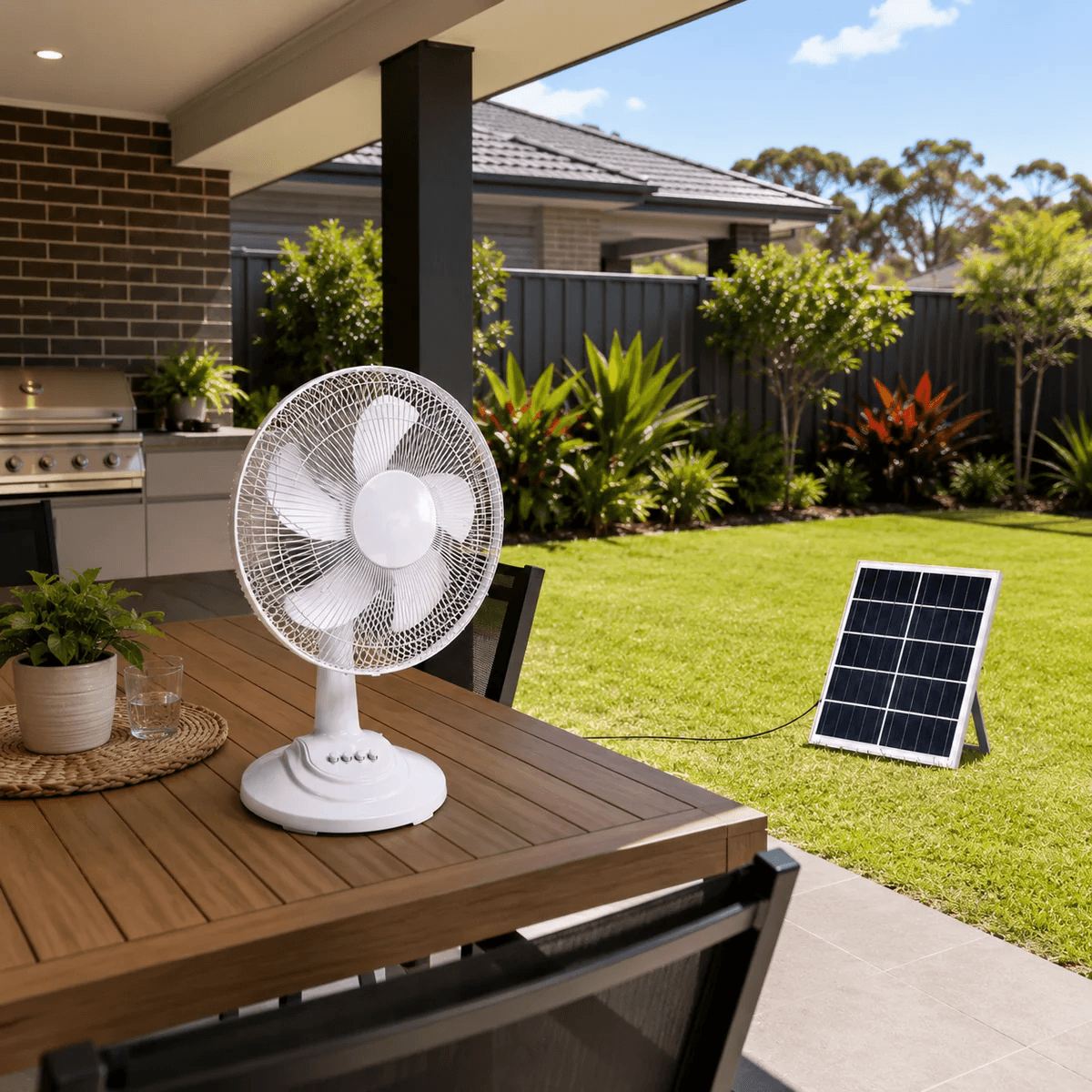
For efficient charging, the solar panel should be positioned outdoors where it receives direct sunlight.
Avoid placing the panel:
- Under trees or shaded areas
- Behind walls or other obstructions
- Indoors behind windows
- Under covered patios with limited sunlight
Although some solar panels may generate electricity in indirect sunlight, their output is generally lower than under direct sunshine.
Can You Use the Fan Indoors While the Solar Panel Is Outside?
Yes, provided the fan is designed to operate with a remotely positioned solar panel and the supplied cable is suitable.
For example, you can place the solar panel outside in a sunny location while keeping the fan inside your living room or bedroom.
This arrangement allows the solar panel to collect sunlight while the fan provides comfortable indoor airflow.
Important: The fan does not necessarily need to be placed outdoors with the solar panel.
This is one of the practical advantages of solar powered fans that use a separate solar panel and rechargeable battery.
3. Do Solar Powered Fans Work at Night?
One of the most common questions Australian consumers ask is whether solar powered fans can operate after sunset.
Yes. Solar powered fans equipped with rechargeable batteries can operate at night without being connected to a solar panel.
During the day, the solar panel generates electricity and charges the battery.
At night, the fan draws electricity from the stored battery energy.
This means you can disconnect the solar panel, move the fan indoors and use it wherever convenient.
For example:
During the Day:
- Place the solar panel outdoors in direct sunlight.
- Use the fan while charging, if supported.
- Store excess generated electricity in the battery.
During the Night:
- Disconnect the solar panel if the design allows.
- Move the fan into your bedroom or living room.
- Operate the fan using its rechargeable battery.
This flexibility makes rechargeable solar powered fans particularly convenient for Australian households.
However, the fan's operating time depends on its battery capacity and electricity consumption.
4. How Long Can a Solar Powered Fan Run on Battery?
Battery runtime is one of the most important factors affecting solar fan performance.
A fan with a larger battery can generally operate longer than a comparable fan with a smaller battery, assuming similar power consumption.
However, actual runtime depends on several factors.
Battery Capacity
Battery capacity indicates how much energy can be stored.
For accurate comparisons, battery capacity should ideally be expressed in watt-hours (Wh).
For example:
| Battery Capacity | Fan Power Consumption | Theoretical Runtime |
|---|---|---|
| 40 Wh | 10 W | 4 hours |
| 60 Wh | 10 W | 6 hours |
| 80 Wh | 10 W | 8 hours |
| 100 Wh | 10 W | 10 hours |
These figures are theoretical examples. Actual runtime will generally be shorter because of electrical losses, battery characteristics and operating conditions.
Fan Speed
Higher fan speeds usually require more electricity.
Operating the fan at a lower speed can significantly extend battery runtime.
For overnight use, choosing a comfortable lower speed may help conserve battery energy.
Battery Condition
Battery performance may gradually decline with age and repeated charging cycles.
Following the manufacturer's charging and storage recommendations can help maintain battery performance.
Buying Tip: Always check the manufacturer's battery capacity and estimated operating time at different fan speeds before purchasing.
5. Do Solar Powered Fans Work on Cloudy or Rainy Days?
Solar powered fans can still be useful during cloudy weather, although solar charging performance will usually be reduced.
Solar panels generate electricity from sunlight, including some diffuse sunlight that passes through clouds.
However, heavy cloud cover can substantially reduce the amount of electricity generated.
What Happens When Solar Charging Is Insufficient?
If the solar panel cannot generate enough electricity to operate the fan continuously, a rechargeable model may draw additional power from its battery.
Once the battery is depleted, the fan will need to be recharged before further battery-powered operation.
AC Adapter Charging: A Practical Backup Solution
Some modern solar powered fans offer an additional charging option through a compatible AC power adapter.
This allows the battery to be recharged using a standard household power outlet when solar charging is insufficient.
For Australian households, this provides useful flexibility:
- Sunny Weather: Recharge using solar energy.
- Cloudy Weather: Use stored battery energy or AC charging.
- Rainy Days: Recharge using a compatible AC adapter.
- Night-Time: Operate using the rechargeable battery.
A solar powered fan offering both solar and AC charging can therefore be more convenient for year-round use.
Not all solar fans include AC charging, so check the specifications before purchasing.
6. Are Solar Powered Fans Powerful Enough to Keep You Cool?
Solar powered fans can provide effective cooling comfort by circulating air.
However, it is important to understand the difference between a fan and an air conditioner.
Solar Fans vs Air Conditioners
Air conditioners actively remove heat from indoor air, reducing room temperature.
Solar powered fans do not normally reduce the actual air temperature.
Instead, they create airflow that helps your body release heat more efficiently, particularly through the evaporation of perspiration.
This can make you feel cooler even when the surrounding air temperature remains unchanged.
What Affects Cooling Performance?
Several factors influence how effectively a solar fan provides airflow:
Fan Size: Larger fans may circulate air across wider areas.
Motor Performance: Motor design and efficiency affect airflow and electricity consumption.
Fan Speed: Higher speeds generally produce stronger airflow but consume more energy.
Positioning: Placing the fan where airflow reaches the user directly can improve comfort.
For personal cooling, a compact solar tabletop fan may be sufficient.
For larger rooms or shared spaces, a solar pedestal fan may provide broader air circulation.
7. Are Solar Powered Fans Suitable for Australian Homes?
Solar powered fans can be particularly useful in Australia because of the country's generally favourable solar conditions.
They can provide practical cooling in a variety of situations.
Bedrooms and Living Rooms
Rechargeable solar fans can be charged during the day and used indoors at night.
This can reduce reliance on grid electricity for fan operation.
Covered Patios and Outdoor Entertaining Areas
Portable solar fans can provide airflow during outdoor meals, family gatherings and relaxing afternoons.
Always protect fans from rain unless they are specifically rated for outdoor exposure.
Camping and Caravanning
Solar rechargeable fans are convenient for camping because they can operate without a continuous connection to mains electricity.
Their suitability depends on battery capacity, portability and charging arrangements.
Rural and Remote Properties
For households experiencing occasional power interruptions, battery-powered solar fans may provide useful temporary cooling.
However, available runtime depends on the battery's remaining charge.
8. Are Solar Powered Fans Worth It?
For many Australian households, solar powered fans can be a worthwhile addition to their cooling equipment.
They offer several practical benefits:
- Reduced grid electricity consumption when charged using solar energy.
- Portable cooling for indoor and sheltered outdoor use.
- Battery operation during the evening.
- Potential cooling support during power outages.
- Flexible charging options on selected models.
However, solar fans also have limitations.
Their charging performance depends on sunlight availability, and their battery runtime is limited by stored energy.
They also cannot replace air conditioning when substantial indoor temperature reduction is required.
For greater flexibility, a model combining solar charging, rechargeable battery operation and AC adapter charging may be particularly suitable for everyday Australian household use.
Final Thoughts
So, do solar powered fans really work?
Yes. When properly selected and used, solar powered fans can provide practical, reliable airflow for Australian homes.
Their effectiveness depends on matching the fan's airflow, solar panel output and battery capacity to your cooling requirements.
One of their most useful features is the ability to charge the battery during sunny conditions and operate the fan at night without the solar panel.
Models supporting AC adapter charging offer additional convenience when sunlight is limited.
Whether you need personal cooling in a bedroom, airflow in a living room or a portable fan for camping, a rechargeable solar powered fan can provide a flexible alternative to conventional mains-powered fans.
Explore solar powered cooling solutions at SolarEasy Australia and discover how solar energy can support everyday comfort.