
Solar Powered Fans: A Complete Beginner’s Guide for Australian Homes
Australia is known for its hot summers, and keeping your home comfortable can sometimes mean higher electricity bills. Whether you're relaxing indoors, enjoying your backyard or spending time camping, a reliable cooling solution can make a real difference.
Solar powered fans offer a practical, energy-efficient way to stay comfortable while making use of Australia's abundant sunshine.
Unlike conventional electric fans, solar powered fans can operate using electricity generated by solar panels. Many modern models also feature rechargeable batteries and alternative charging options, making them suitable for both indoor and outdoor use.
This beginner's guide explains how solar powered fans work, their benefits, different types and what Australian households should consider before buying one.
1. What Is a Solar Powered Fan?
A solar powered fan is an electric fan that uses energy generated from sunlight to power its motor.
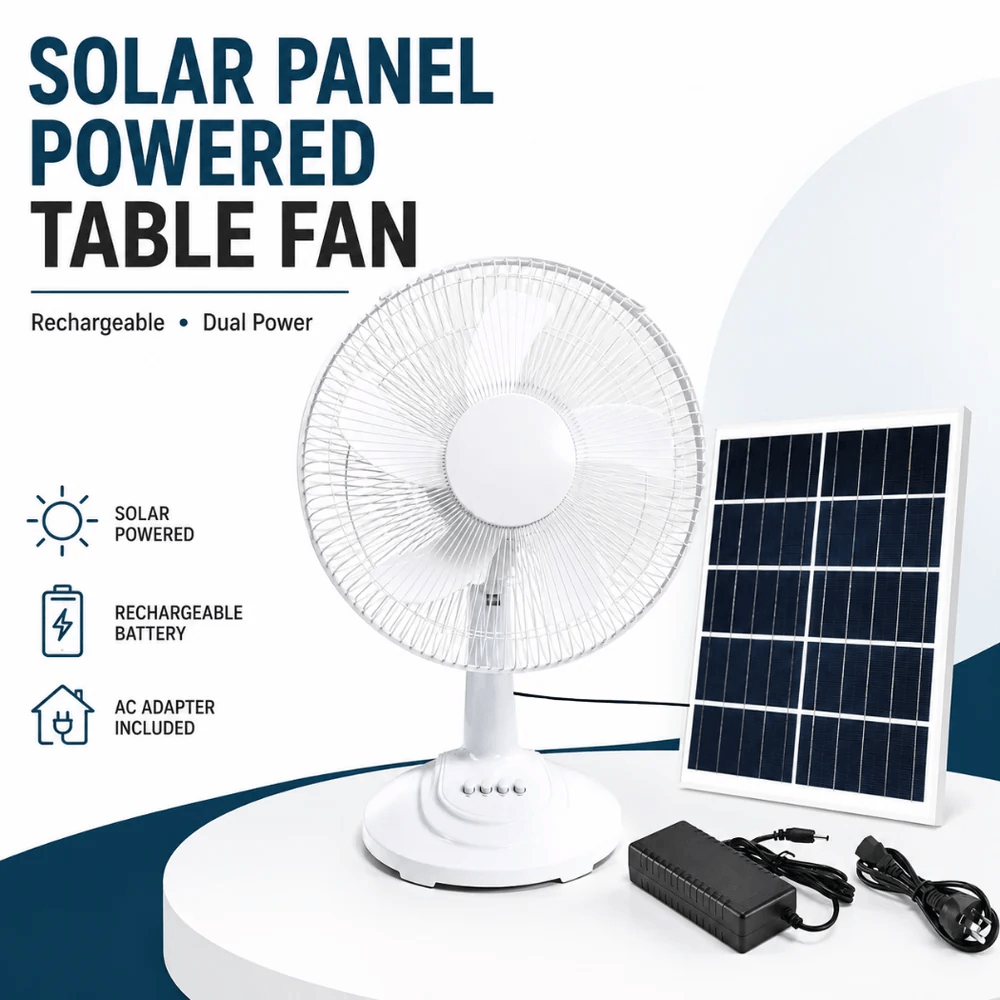
A typical solar fan system includes three main components:
- Solar Panel: Converts sunlight into electrical energy.
- Rechargeable Battery: Stores electricity for use when sunlight is unavailable.
- Electric Fan: Uses the generated or stored electricity to circulate air.
Some solar powered fans can operate directly from a solar panel during sunny conditions, while others use a rechargeable battery to provide a more consistent power supply.
Unlike air conditioners, solar fans do not actively refrigerate the air. Instead, they create airflow that helps people feel cooler through increased air movement and evaporation of perspiration.
For Australian households looking for a simple and economical cooling solution, solar fans can be a useful alternative or supplement to conventional electric fans.
2. Why Are Solar Powered Fans Suitable for Australian Homes?
Australia receives substantial sunshine throughout much of the year, making solar energy an attractive option for everyday household applications.
Solar powered fans offer several practical advantages.
Reduced Electricity Consumption
When operating on solar-generated electricity, a solar fan can reduce the amount of grid electricity required for cooling.
Although the savings from an individual fan may be relatively small, regular solar-powered operation can contribute to lower electricity consumption over time.
Convenient Indoor and Outdoor Use
Many portable solar fans can be used in different locations around the home, including:
- Living rooms and bedrooms
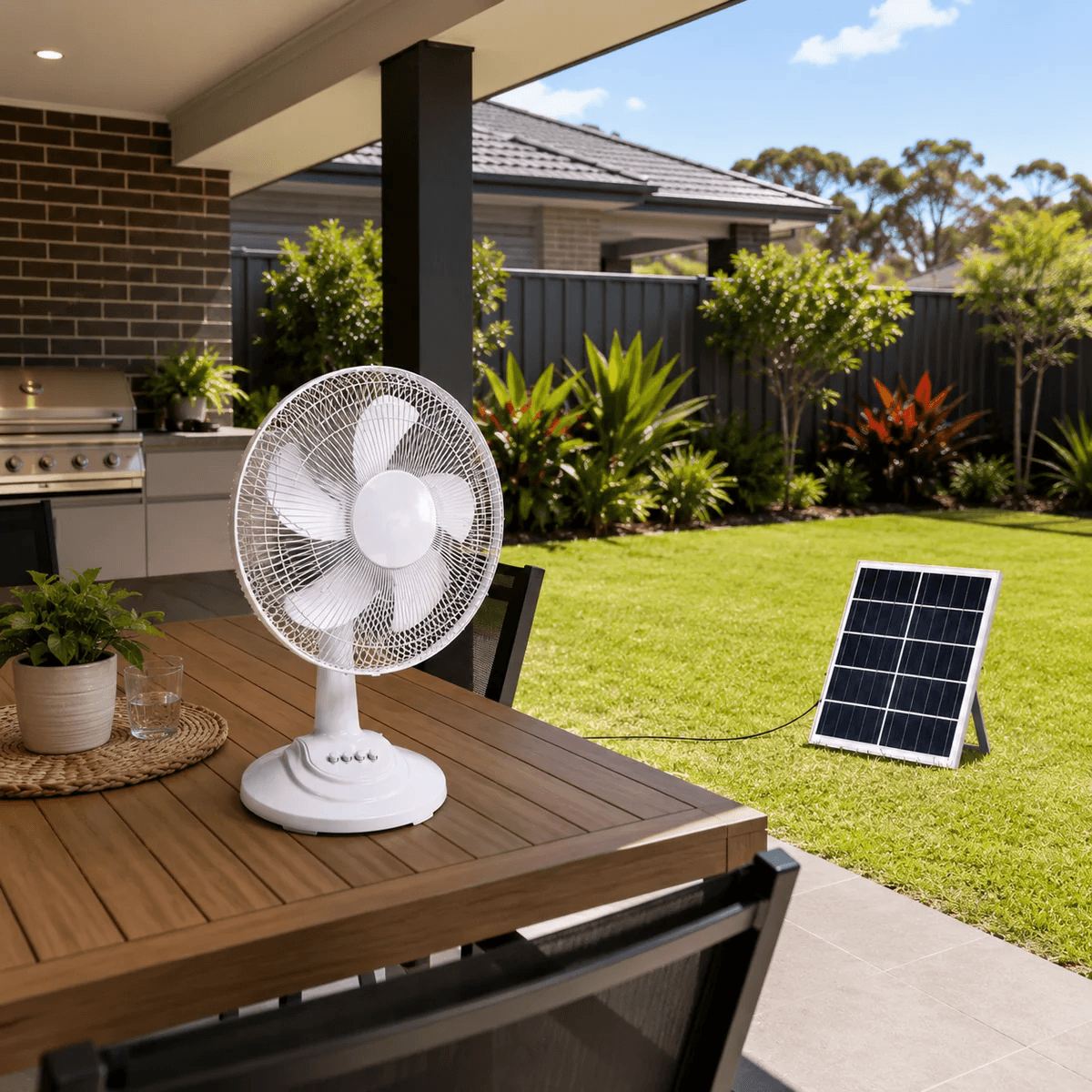
- Covered patios and verandahs
- Backyard entertaining areas
- Garages and workshops
- Camping and caravanning
Their portability makes them particularly useful for Australian households that enjoy spending time outdoors.
Useful During Power Outages
Solar fans equipped with rechargeable batteries may continue operating during electricity outages, provided their batteries have sufficient charge.
This can be particularly beneficial for households in rural or remote areas where power interruptions may occur.
3. Different Types of Solar Powered Fans
Solar powered fans are available in several designs, each suited to different applications.
Solar Tabletop Fans
Solar tabletop fans are generally compact, lightweight and portable.
They are suitable for personal cooling in bedrooms, offices, study areas and small outdoor spaces.
Best for: Personal cooling, desks, bedside tables and camping.
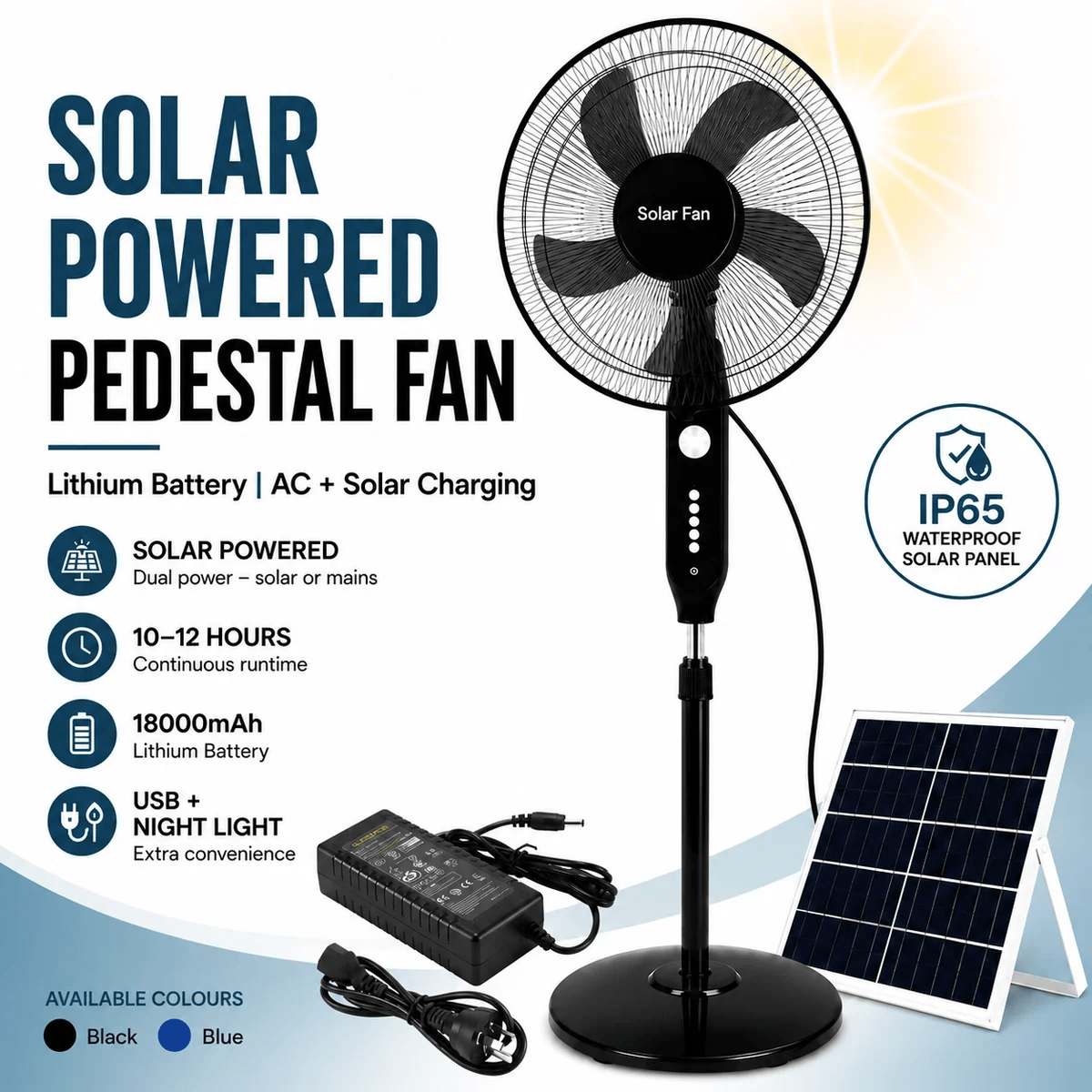
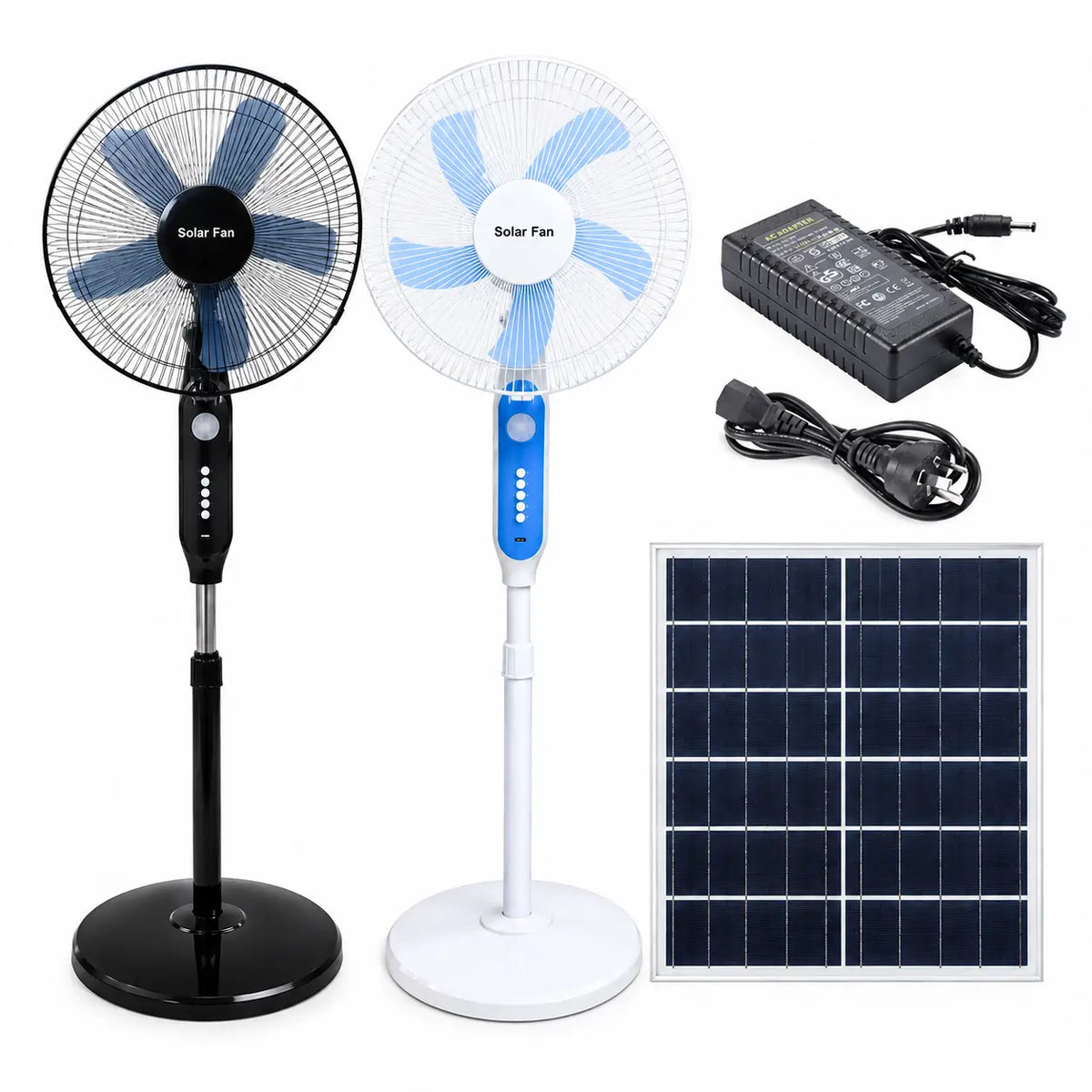
Solar Pedestal Fans
Solar pedestal fans are typically larger and designed to circulate air across a wider area.
Many feature adjustable heights, oscillation functions and multiple speed settings.
They are particularly suitable for living rooms, bedrooms and covered outdoor entertaining areas.
Best for: Family rooms, larger spaces and general household cooling.
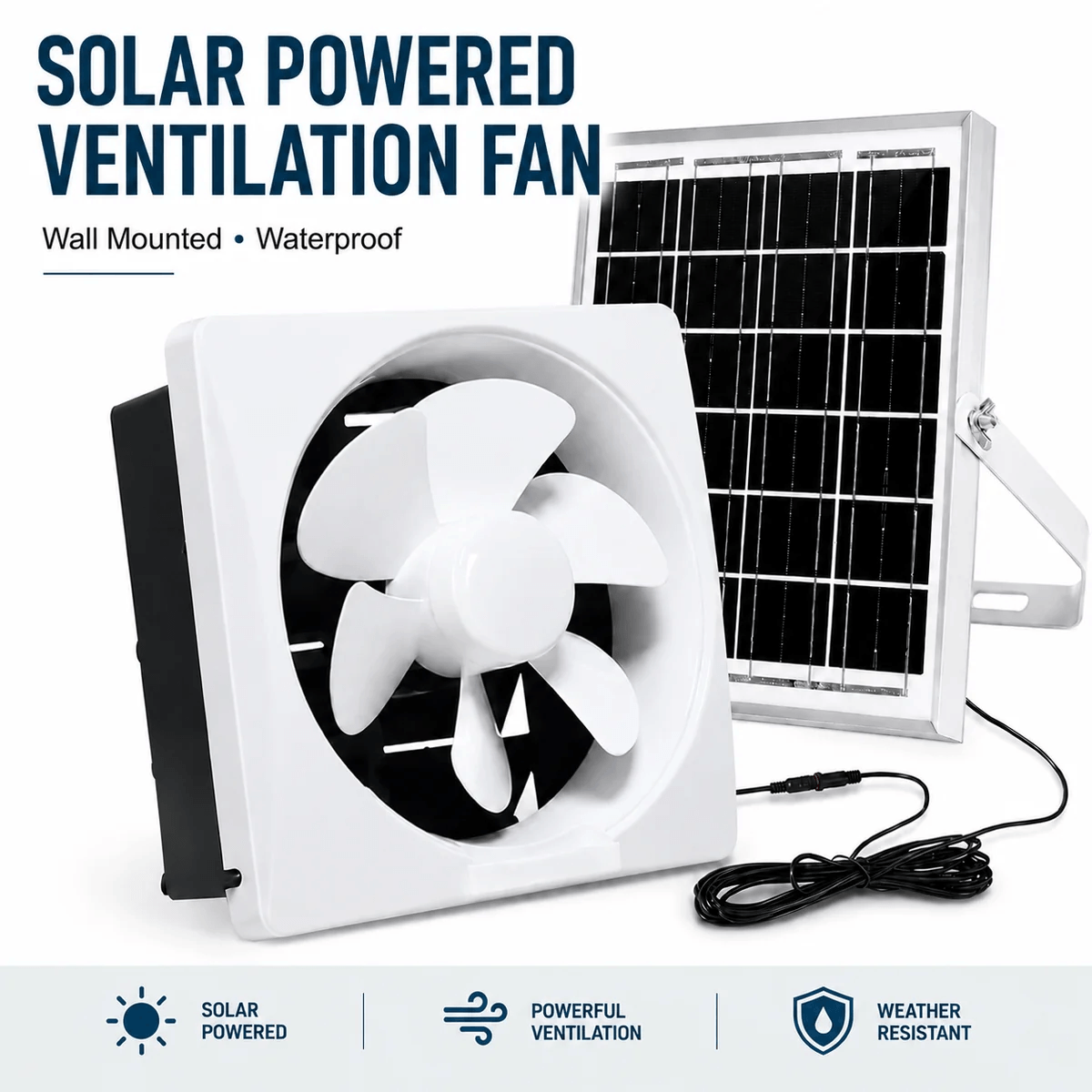
Solar Ventilation Fans
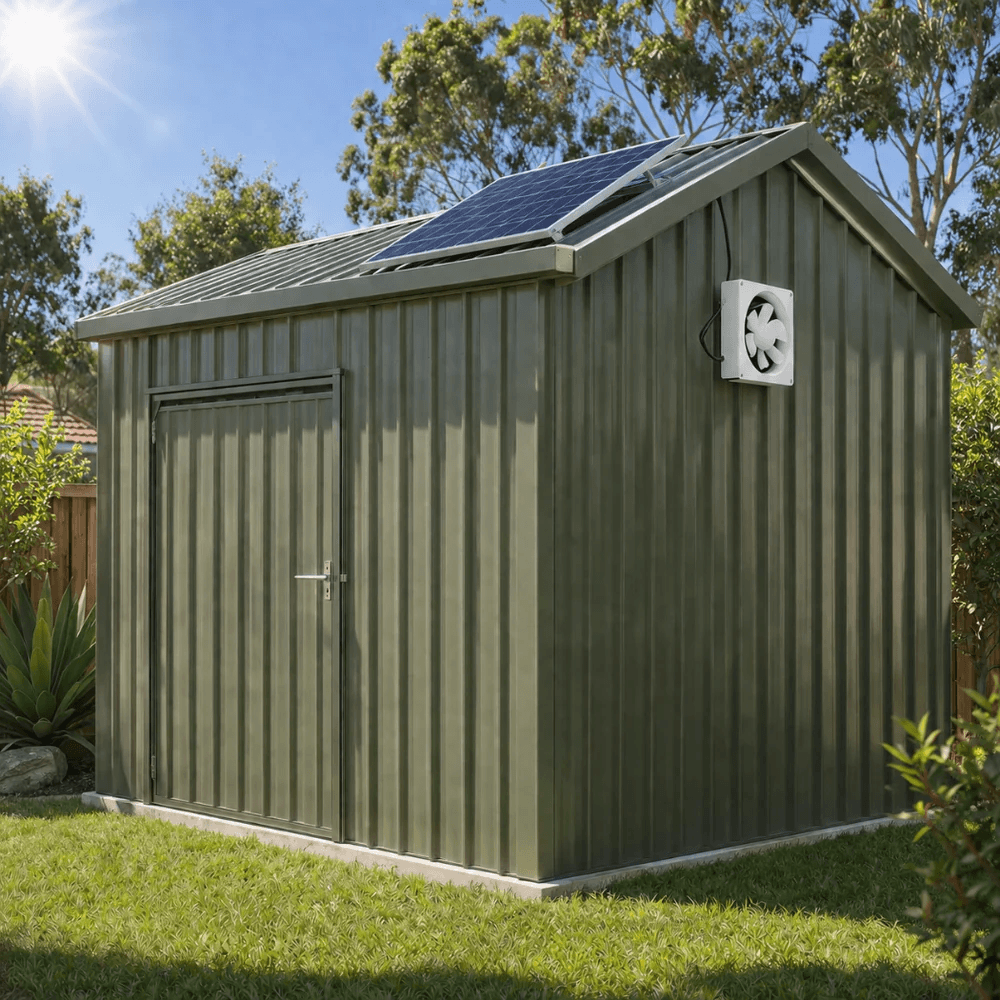
Solar ventilation fans are designed to move hot or stale air out of enclosed spaces.
They are commonly used in sheds, greenhouses, roof spaces and other areas requiring ventilation.
Unlike portable cooling fans, ventilation fans are primarily designed to improve airflow and remove accumulated heat.
Best for: Sheds, greenhouses and ventilation applications.
4. Can Solar Powered Fans Work Without Sunshine?
Yes. Many modern solar powered fans can operate without direct sunlight, depending on their power supply and charging options.
This is an important consideration for Australian households, particularly during cloudy weather or at night.
Solar Charging During Sunny Weather
During sunny conditions, the solar panel converts sunlight into electricity.
Depending on the fan's design, this electricity can power the fan directly, recharge its battery or perform both functions simultaneously.
Battery Operation at Night
Solar fans equipped with rechargeable batteries can operate using stored energy after sunset.
The operating time depends on several factors, including:
- Battery capacity
- Selected fan speed
- Motor power consumption
- Battery condition and charging level
Lower fan speeds generally consume less electricity, allowing longer operating times.
AC Adapter – A Convenient Backup Charging Option
One particularly useful feature of certain solar powered fans is their ability to recharge using an AC power adapter.
This provides additional flexibility when sunlight is limited.
For example, during several consecutive cloudy or rainy days, the solar panel may not generate enough electricity to fully recharge the battery.
Instead of relying entirely on sunshine, users can connect a compatible AC adapter to a household power outlet to recharge the fan.
This dual charging capability offers several advantages:
- Sunny days: Recharge using free solar energy.
- Cloudy or rainy days: Recharge using an AC adapter.
- Night-time: Operate using the rechargeable battery.
- Indoor use: Recharge conveniently without moving the fan outdoors.
For Australian families, a solar powered fan with both solar and AC charging options can provide greater convenience and reliability throughout the year.
Important: Not every solar fan supports AC charging. Always check the product specifications and use the manufacturer-approved adapter.
5. How to Choose the Right Solar Powered Fan
Before purchasing a solar powered fan, consider the following factors.
Fan Size and Airflow
A smaller tabletop fan may be sufficient for personal cooling, while a larger pedestal fan may provide better airflow across a living room or outdoor entertaining area.
Battery Capacity and Runtime
If you plan to use the fan at night or during power outages, battery capacity is particularly important.
Check the manufacturer's estimated operating time at different fan speeds.
Solar Panel Performance
Solar panel output affects how quickly the fan can recharge.
Larger or higher-output solar panels may provide faster charging under suitable sunlight conditions, although actual performance depends on weather, positioning and system efficiency.
Charging Flexibility
For everyday household use, consider a model offering both solar charging and AC adapter charging.
This allows the fan to remain useful during periods of limited sunshine.
Portability and Additional Features
Depending on your needs, useful features may include adjustable fan speeds, oscillation, remote control, timers and adjustable height.
6. Tips for Getting the Best Performance
A few simple practices can help improve the performance and lifespan of your solar powered fan.
Position the solar panel correctly. Place it where it receives direct sunlight, avoiding shadows from buildings, trees and other objects.
Keep the solar panel clean. Dust and dirt can reduce solar energy generation. Clean the panel periodically according to the manufacturer's instructions.
Charge the battery properly. Follow the recommended charging procedures and avoid using incompatible power adapters.
Select an appropriate fan speed. Lower speeds generally extend battery operating time.
Protect the equipment from weather. Unless specifically designed for outdoor exposure, keep the fan and electrical connections protected from rain and moisture.
With appropriate care, a quality solar powered fan can provide convenient cooling for many seasons.
7. Are Solar Powered Fans Worth Buying in Australia?
For many Australian households, solar powered fans can be a worthwhile addition to their cooling equipment.
They are particularly attractive for people who want to reduce grid electricity consumption, enjoy portable cooling or require an alternative cooling option during power outages.
However, it is important to understand their limitations.
Solar fans cannot replace air conditioning when significant indoor temperature reduction is required. Their performance also depends on fan size, battery capacity, solar charging conditions and airflow requirements.
For greater everyday flexibility, a rechargeable solar powered fan with an AC adapter charging option is often a practical choice.
It combines the benefits of solar energy with the convenience of conventional household electricity when necessary.
Final Thoughts
Solar powered fans provide a simple and practical way to take advantage of Australia's sunshine while improving everyday comfort.
Whether you need a compact tabletop fan for personal use or a larger pedestal fan for your family, choosing the right model depends on your cooling requirements, available space and preferred charging options.
For Australian households, models offering solar charging, rechargeable battery operation and AC adapter backup charging can provide a particularly versatile solution.
Explore the range of solar powered cooling solutions available at SolarEasy Australia and discover a convenient way to stay comfortable throughout the warmer months