
What Is a Solar Powered Fan and How Does It Work?
As Australians look for practical ways to stay comfortable during warmer weather, solar powered fans are becoming an alternative to conventional electric fans.
But what exactly is a solar powered fan, and how does it work?
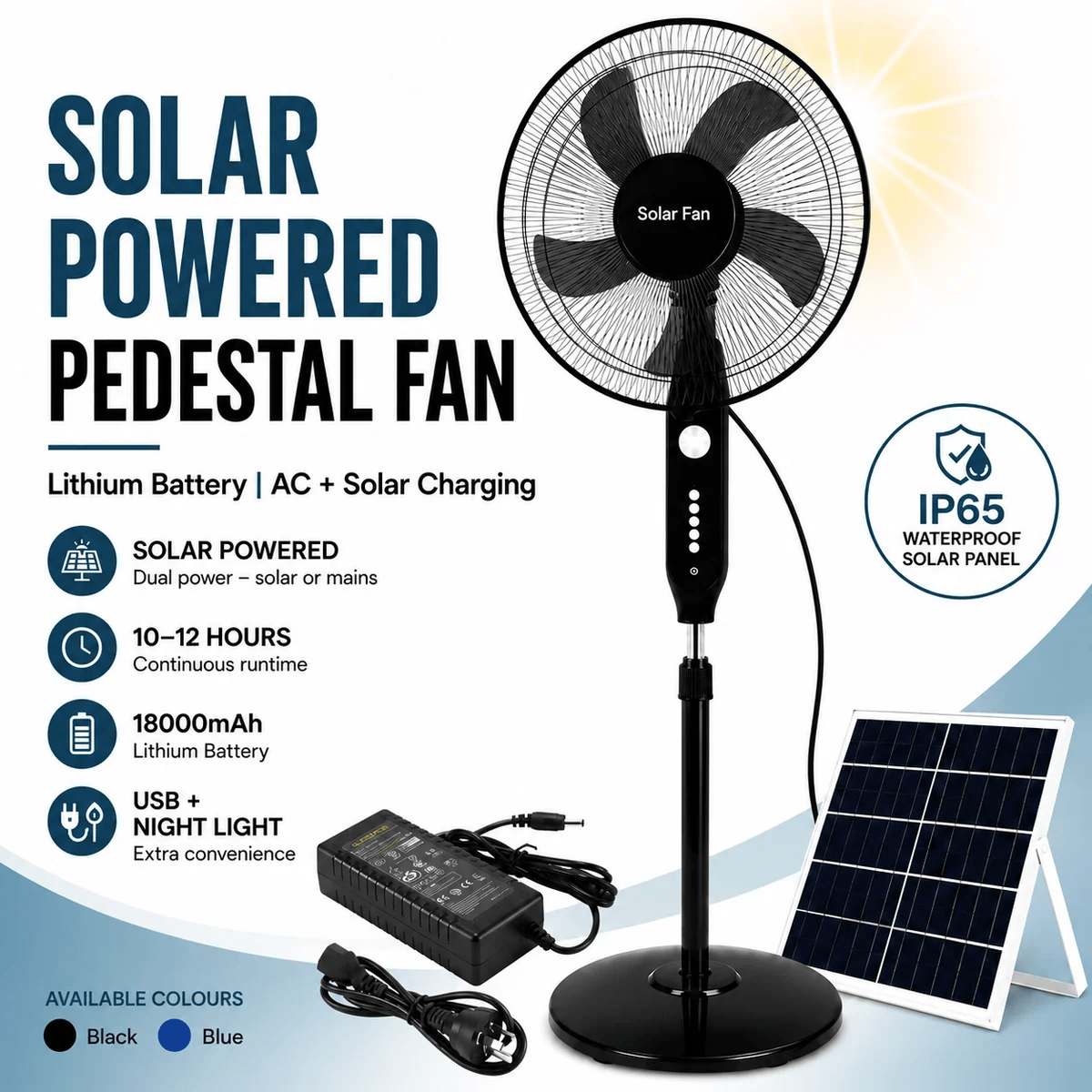
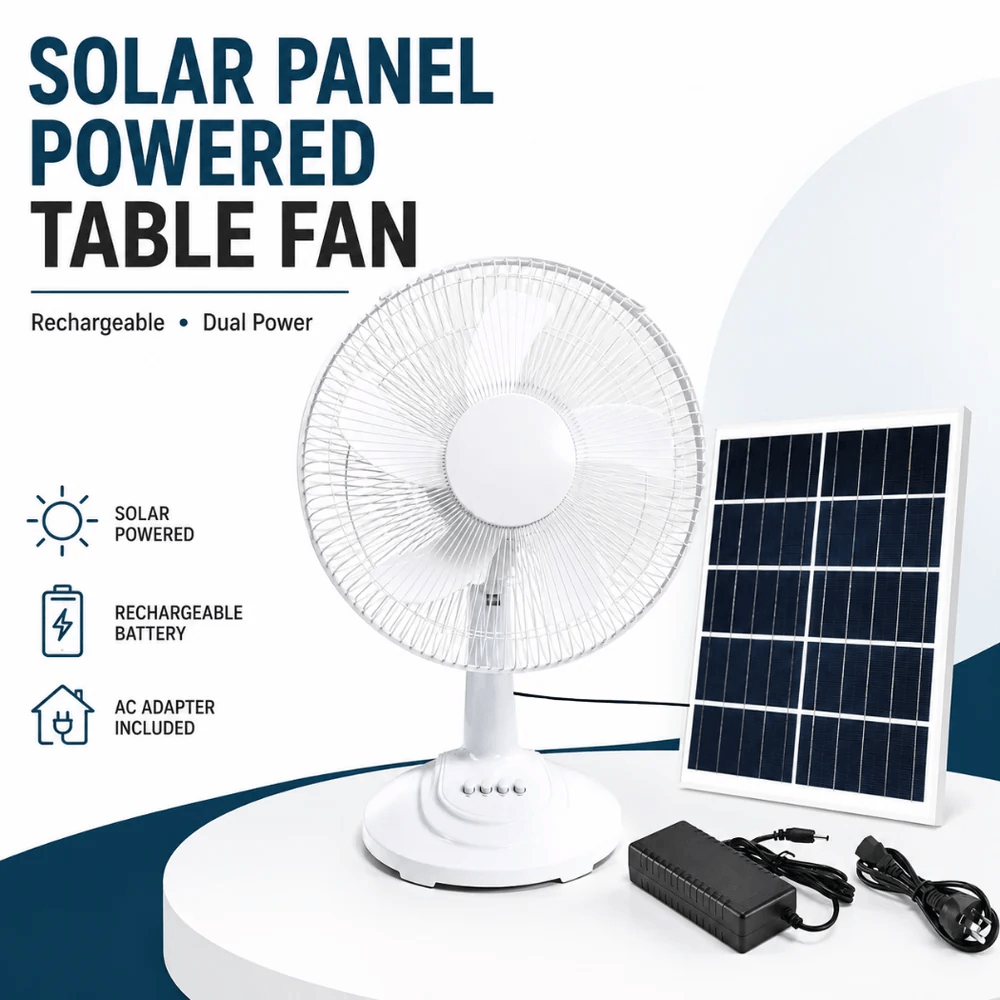
A solar powered fan is an electric fan that uses electricity generated by a solar panel to operate its motor, either directly or through a rechargeable battery.
Unlike conventional fans that rely on continuous household electricity, many modern solar powered fans can store energy during the day and operate later without being connected to a power outlet.
This makes them particularly convenient for homes, bedrooms, patios, camping trips and other locations where access to electricity may be limited.
To understand how these fans work, it helps to look at their main components and how electricity moves through the system.
1. What Is a Solar Powered Fan?
A solar powered fan is a ventilation or air-circulation device designed to operate using electricity generated from sunlight.
Its basic purpose is the same as that of a conventional electric fan: to move air and create a cooling breeze.
The main difference is where the electricity comes from.
A conventional household fan generally receives electricity directly from a power outlet.
A solar powered fan uses a solar panel to generate electricity, which can then power the fan or recharge its internal battery.
There are two common designs.
Direct Solar Powered Fans
These fans operate using electricity supplied directly by a solar panel.
They generally require sufficient sunlight to operate effectively.
When sunlight decreases, the fan may slow down or stop, depending on its electrical design.
Rechargeable Solar Powered Fans
Rechargeable solar fans include a battery that stores electricity generated by the solar panel.
The stored energy allows the fan to operate when sunlight is unavailable, including during the evening or at night.
Many portable solar fans sold for household and recreational use follow this design.
The key difference is battery storage: a rechargeable solar fan can continue operating after the sun goes down.
2. What Are the Main Components of a Solar Powered Fan?
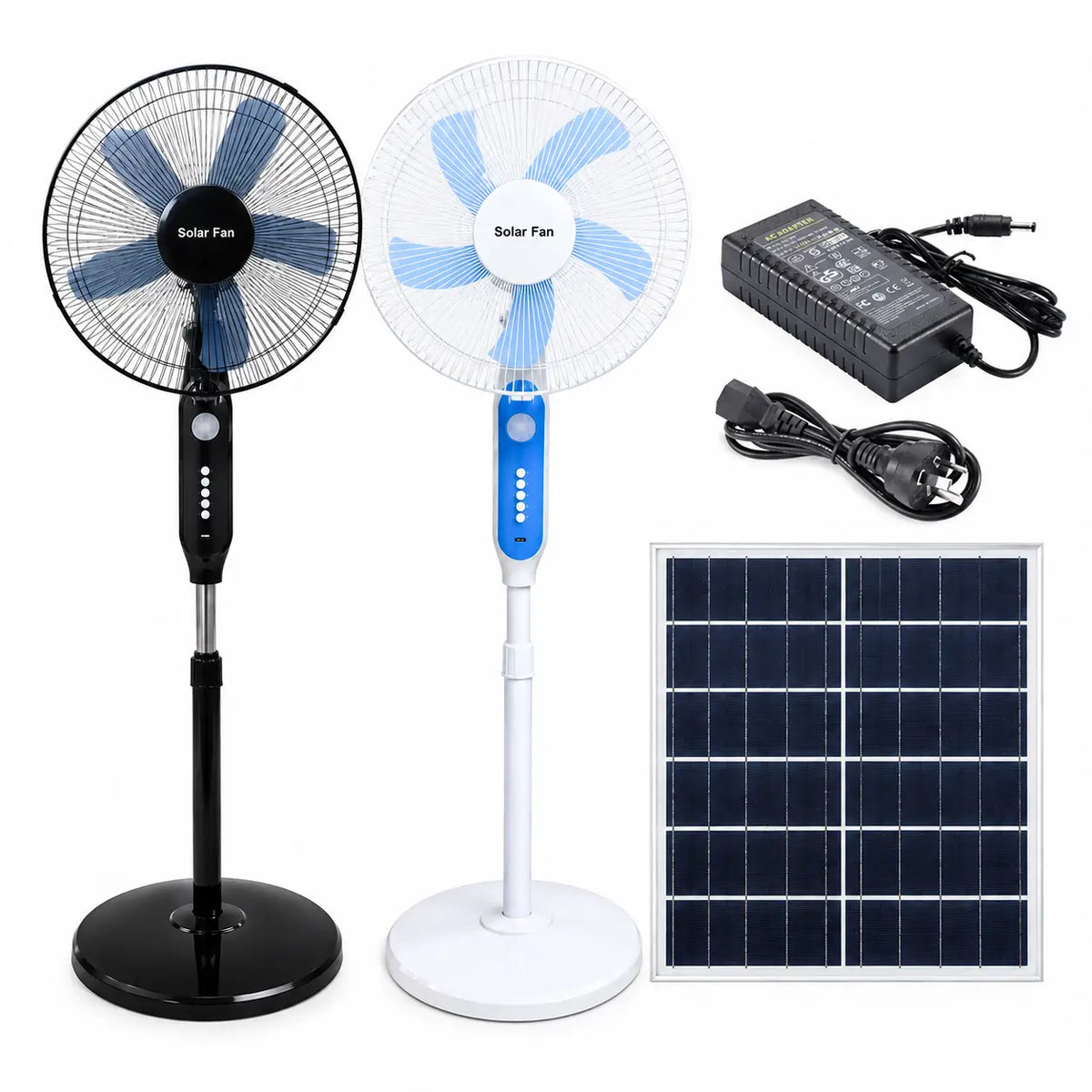
Most rechargeable solar powered fans contain four essential components.
1. Solar Panel
The solar panel collects sunlight and converts it into electrical energy.
Most solar panels use photovoltaic (PV) cells, which generate direct-current electricity when exposed to light.
The amount of electricity produced depends on factors such as sunlight intensity, panel size and panel efficiency.
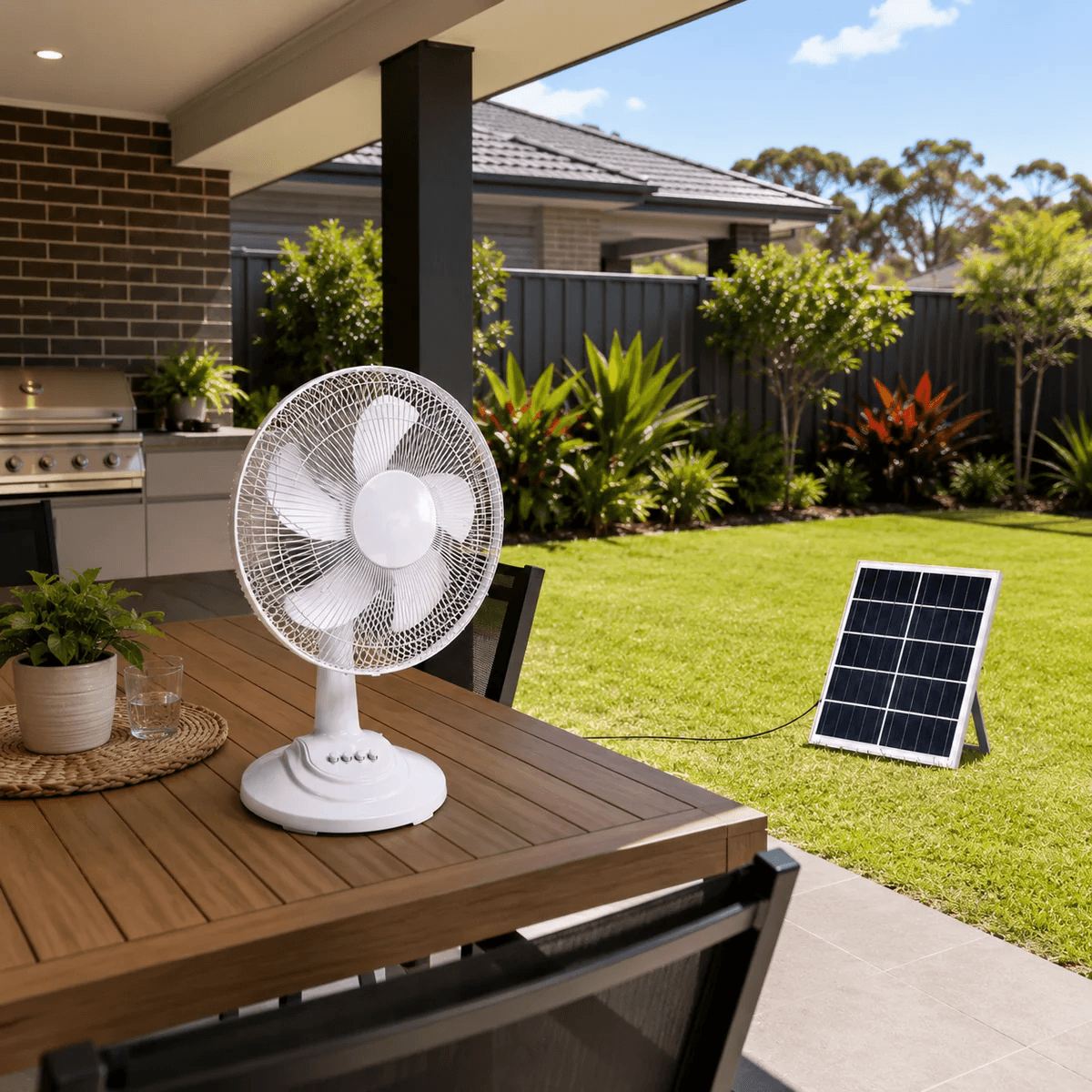
For portable models, the solar panel may be separate from the fan body.
This allows the panel to be positioned outdoors in sunlight while the fan remains indoors, provided the cable arrangement and manufacturer instructions permit it.
2. Rechargeable Battery
The rechargeable battery stores electrical energy for later use.
When the solar panel generates electricity, the charging system can direct suitable electrical power into the battery.
The stored energy can then operate the fan when the solar panel is not producing sufficient electricity.
Different solar fans use different battery capacities and battery chemistries.
A larger usable battery capacity generally allows the same fan to operate for longer, although actual runtime also depends on motor power consumption.
3. Electric Motor and Fan Blades
The electric motor converts electrical energy into mechanical movement.
When electricity reaches the motor, it rotates the fan blades.
The rotating blades move surrounding air, producing airflow that helps people feel cooler.
Some modern solar fans use energy-efficient brushless DC motors, which can offer efficient operation and reduced mechanical wear compared with certain traditional motor designs.
However, motor efficiency and noise levels vary between products.
4. Charging Controller and Electronic Circuitry
A rechargeable solar fan also contains electronic components that manage electricity flow.
Depending on the design, these circuits may regulate charging voltage and current, control fan speed and protect the battery against certain electrical conditions.
The charging controller helps ensure that electricity from the solar panel is delivered appropriately to the battery.
These components work together to make rechargeable solar operation possible.
3. How Does a Solar Powered Fan Work During the Day?
The operation of a rechargeable solar powered fan can be explained in four simple steps.
Step 1: The Solar Panel Receives Sunlight
When sunlight reaches the photovoltaic cells, the solar panel generates direct-current electricity.
Step 2: Electricity Enters the Charging System
The electricity travels through the connecting cable to the fan's charging circuitry.
The circuitry regulates the electrical input according to the system's design.
Step 3: The Battery Stores Energy
When charging conditions are suitable, electrical energy is stored in the rechargeable battery.
The amount stored depends on available solar power, charging time and battery capacity.
Step 4: The Fan Uses Electrical Energy
When the fan is switched on, electricity powers the motor, causing the blades to rotate and circulate air.
Some models can operate while charging, although this feature depends on the manufacturer's design.
Simple Solar Fan Energy Flow
Sunlight → Solar Panel → Charging Controller → Rechargeable Battery → Electric Motor → Airflow
This sequence illustrates the basic operation of a rechargeable solar powered fan.
In some designs, the charging system may also supply electricity to the motor while the solar panel is generating power.
4. How Does a Solar Powered Fan Work at Night?
A rechargeable solar powered fan does not need sunlight to operate at night.
Instead, it uses electricity stored in its battery during previous charging periods.
When the fan is switched on, the battery supplies electricity to the motor.
The motor rotates the fan blades and produces airflow in the same way as it does during daytime operation.
For models with a detachable solar panel, the panel can generally be disconnected once charging is complete, provided the manufacturer allows this.
The fan can then be moved to another location without maintaining a connection to the panel or household electricity.
For example, you might position the solar panel outdoors during the afternoon and use the fan in your bedroom that evening.
The fan's operating time depends on the remaining battery energy and the selected speed.
A fully charged battery does not guarantee that every model will operate throughout the night.
For a detailed explanation, see our guide: How Long Can a Solar Powered Fan Run? Understanding Battery Capacity & Runtime.
5. Does a Solar Powered Fan Need Direct Sunlight?
Direct sunlight generally provides the best conditions for solar charging.
However, solar panels can still generate electricity under some cloudy conditions.
When clouds reduce the sunlight reaching the panel, electricity generation usually decreases.
This means the battery may charge more slowly or receive insufficient energy for a full recharge.
A rechargeable solar fan can continue operating during cloudy weather using stored battery energy.
However, if poor sunlight continues for several days, the battery may eventually become depleted.
Some solar powered fans offer an additional charging option through a compatible AC adapter.
This allows the battery to be recharged using household electricity when solar charging is insufficient.
For more information, read Do Solar Powered Fans Work on Cloudy or Rainy Days? Understanding Dual-Power Advantages.
6. How Is a Solar Powered Fan Different From a Conventional Electric Fan?
Both solar powered fans and conventional electric fans use electric motors to move air.
Their main difference is the electricity supply.
| Feature | Rechargeable Solar Powered Fan | Conventional Mains Electric Fan |
|---|---|---|
| Main Energy Source | Solar panel and stored battery energy | Household electricity |
| Solar Charging | Yes | Generally no |
| Rechargeable Battery | Common in portable models | Not standard |
| Operation Without Mains Power | Yes, while battery energy remains | Generally no |
| Portable Operation | Possible without a power cable | Usually requires a power connection |
| Overnight Operation | Possible with sufficient battery charge | Requires mains electricity |
| Airflow | Depends on motor and fan design | Depends on motor and fan design |
Neither type automatically provides stronger airflow.
Cooling performance depends on the fan's design, motor and operating speed rather than simply whether it uses solar or household electricity.
For a more detailed comparison, see Solar Powered Fans vs Traditional Electric Fans: Which Is Better for Australian Homes?
7. Can a Solar Powered Fan Actually Cool a Room?
A solar powered fan creates airflow, but it does not operate like an air conditioner.
An air conditioner uses a refrigeration system to remove heat from an indoor space.
A solar powered fan primarily circulates air.
The moving air can help people feel cooler by increasing evaporation from the skin and improving convective heat transfer under suitable conditions.
However, a fan does not normally reduce the overall air temperature of a closed room.
This distinction is important when considering what a solar powered fan can realistically achieve.
Solar fans are best understood as air-circulation devices that improve personal comfort, rather than replacements for refrigerated air conditioning.
8. What Additional Features Do Modern Solar Powered Fans Offer?
Modern rechargeable solar fans may include several convenient features beyond basic airflow.
These features vary between models and should always be checked against the product specifications.
Portable, Cordless Operation
A rechargeable solar fan can be moved between different locations without remaining connected to a power outlet.
For example, it may be used in a living room during the afternoon and moved into a bedroom at night.
USB Mobile Phone Charging
Selected models include a USB output that allows the internal battery to charge compatible mobile phones and other small devices.
This can be useful when convenient access to electricity is limited.
Built-In Night Light
Some solar fans include a gentle night light for basic visibility during the evening.
The light is generally intended for convenience rather than illuminating an entire room.
Multiple Fan Speeds
Many models provide adjustable speed settings, allowing users to select their preferred airflow.
AC Charging Compatibility
Some rechargeable solar fans support both solar charging and charging through a compatible AC adapter.
This provides an alternative when sunlight is insufficient.
These features are not available on every solar fan. Always check the individual model's specifications before purchasing.
9. Where Are Solar Powered Fans Commonly Used?
Rechargeable solar powered fans can be useful in various locations.
In Australian homes, they may provide convenient personal airflow in bedrooms, living rooms and covered outdoor areas.
They can also be practical for camping, caravanning and temporary outdoor activities where access to household electricity is limited.
Their suitability depends on the fan's size, battery capacity and environmental protection.
For example, a fan designed for indoor use should not be exposed to rain simply because it includes a solar panel.
Similarly, a small portable fan may be suitable for personal cooling but may not provide sufficient airflow for a large space.
Choosing the right model requires considering how and where the fan will be used.
10. Are Solar Powered Fans Worth Understanding Before Buying?
Understanding the basic working principle of a solar powered fan helps explain what the product can and cannot do.
The solar panel generates electricity from sunlight.
The rechargeable battery stores energy for later use.
The motor converts electricity into airflow.
Together, these components allow many modern solar fans to operate without a continuous connection to household electricity.
Their convenience comes from combining solar charging, stored battery energy and portable operation.
However, actual performance depends on the specifications of the individual fan.
Battery capacity, motor efficiency, charging conditions and product design all influence the experience.
For a broader discussion of their advantages, read What Are the Benefits of Using a Solar Powered Fan?
Final Thoughts
A solar powered fan uses electricity generated by a solar panel to operate an electric motor and circulate air.
Rechargeable models include a battery that stores energy, allowing the fan to operate during the evening, at night or when direct sunlight is unavailable.
Some modern models also provide additional conveniences such as cordless portability, USB phone charging, built-in night lights and alternative AC charging.
The fundamental technology is straightforward:
Solar energy is converted into electricity, stored when appropriate, and used to power the fan whenever needed.
Understanding this process provides a useful foundation for choosing a solar powered fan that suits your home, lifestyle and everyday cooling requirements.
Explore solar powered cooling solutions at SolarEasy Australia.