
How Long Can a Solar Powered Fan Run? Understanding Battery Capacity & Runtime
One of the most common questions Australian buyers ask about solar powered fans is: How long can a solar powered fan run on a single charge?
The answer depends on several factors, particularly battery capacity, motor power consumption and fan speed.
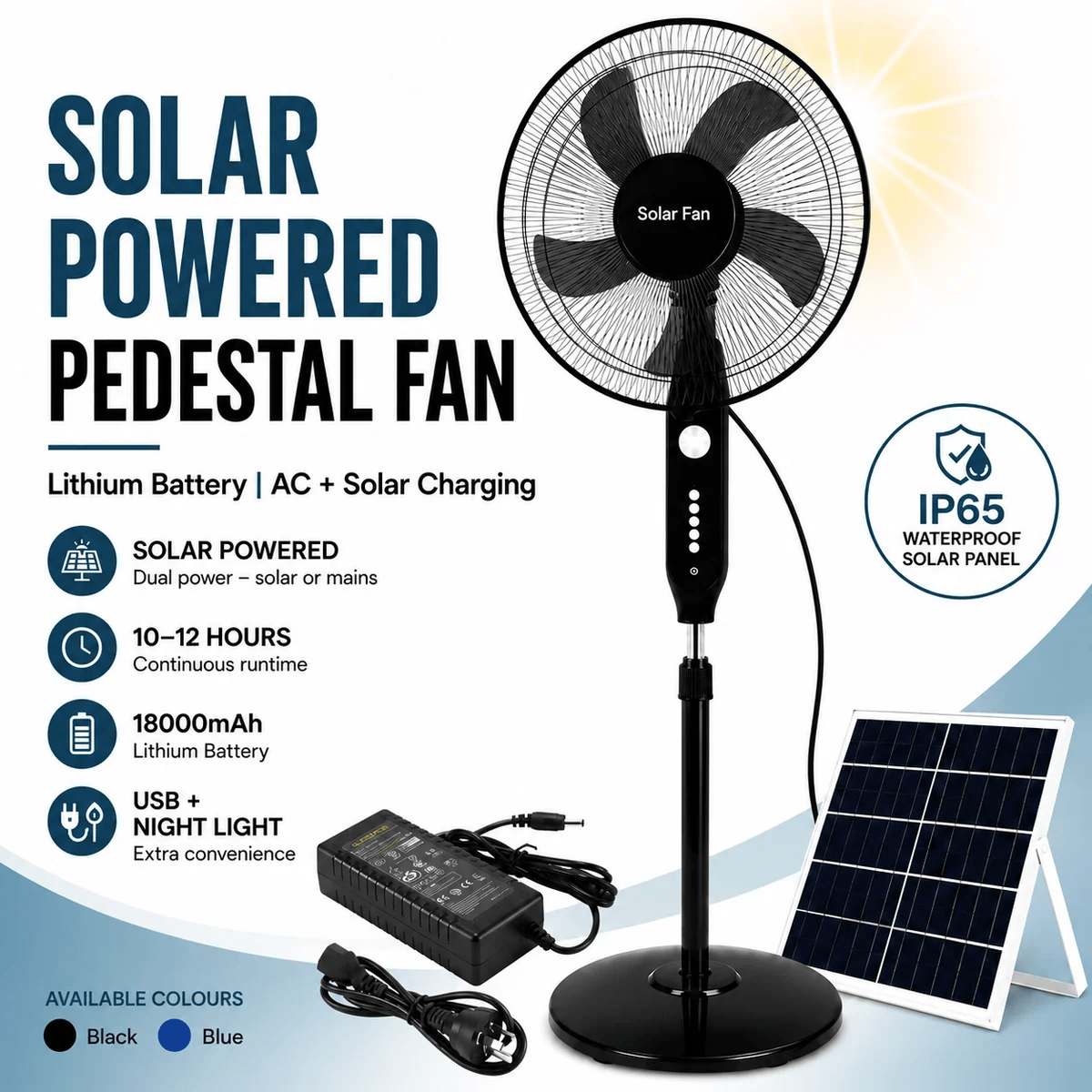
Some rechargeable solar fans can operate for several hours, while models with larger batteries and efficient motors may provide extended overnight use.
However, advertised battery runtime does not always reflect how long a fan will operate under everyday conditions.
Understanding what affects operating time can help you set realistic expectations and get better performance from your solar powered fan.
1. How Long Does a Solar Powered Fan Typically Run?
There is no single runtime that applies to every solar powered fan.
Operating time varies significantly between models because batteries and motors have different specifications.
For example, a compact rechargeable fan with a small battery may provide only a few hours of operation.
A larger model with greater battery storage and an efficient motor may operate for considerably longer, particularly at lower speeds.
The most important distinction is between maximum advertised runtime and actual runtime at your preferred fan speed.
Manufacturers often quote their longest operating time under low-speed conditions.
If you regularly operate your fan at medium or high speed, the battery may discharge much faster.
Example of Different Operating Times
Consider a hypothetical solar fan with a 60Wh battery.
| Fan Power Consumption | Theoretical Runtime |
|---|---|
| 5W | 12 hours |
| 10W | 6 hours |
| 15W | 4 hours |
| 20W | 3 hours |
These figures are calculated using the battery's nominal energy capacity.
Actual operating time may be shorter because not all stored energy is available for use, and electrical systems experience losses.
The table demonstrates an important principle:
The more electricity a fan consumes, the shorter its battery runtime will generally be.
2. How Does Battery Capacity Affect Runtime?
Battery capacity determines how much electrical energy a rechargeable solar fan can store.
A battery with greater usable energy capacity can generally operate the same fan for longer.
However, battery capacity is sometimes advertised using different measurements.
Understanding Watt-Hours (Wh)
Watt-hours measure stored electrical energy.
For example:
- A 40Wh battery stores 40 watt-hours of nominal energy.
- An 80Wh battery stores twice as much nominal energy.
- A 120Wh battery stores three times as much nominal energy.
If the same fan operates under identical conditions, a larger battery will generally provide a longer runtime.
What About Amp-Hours (Ah)?
Some manufacturers advertise battery capacity in amp-hours rather than watt-hours.
Amp-hours alone do not tell you the total stored energy because battery voltage also matters.
The relationship is:
Battery Energy (Wh) = Battery Voltage (V) × Battery Capacity (Ah)
For example:
A 6V 10Ah battery stores approximately 60Wh of nominal energy.
A 12V 10Ah battery stores approximately 120Wh.
Although both batteries are rated at 10Ah, the second stores twice as much nominal energy.
This is why watt-hours are more useful when comparing batteries with different voltages.
3. How Does Fan Speed Affect Battery Runtime?
Fan speed is one of the biggest factors affecting how long a rechargeable solar fan operates.
Most modern solar fans offer multiple speed settings.
At lower speeds, the motor generally consumes less electricity.
At higher speeds, power consumption increases, reducing the available operating time.
Example: Low, Medium and High Speed
Consider a hypothetical fan with a 90Wh battery.
| Fan Speed | Example Power Consumption | Theoretical Runtime |
|---|---|---|
| Low | 6W | 15 hours |
| Medium | 12W | 7.5 hours |
| High | 18W | 5 hours |
These figures are illustrative, not measured specifications for a particular product.
Actual power consumption depends on motor design and the fan's electronic controls.
Which Speed Is Best for Overnight Use?
For bedroom use, a lower fan speed may provide several advantages.
It generally consumes less electricity, produces less airflow noise and allows the battery to operate for longer.
However, the most suitable speed depends on your comfort requirements.
Practical Tip: If you want the fan to operate throughout the night, select the lowest speed that provides comfortable airflow.
4. Can a Solar Powered Fan Run All Night?
Yes, a rechargeable solar powered fan can run overnight if its battery has sufficient usable energy for the selected operating speed.
For example, suppose you want your fan to operate for eight hours while sleeping.
If the fan consumes an average of 8W:
8W × 8 hours = 64Wh
The fan would require at least 64Wh of usable battery energy.
Because some energy is lost during operation and battery discharge, a battery rated at exactly 64Wh may not provide a full eight hours.
A larger battery capacity may be necessary.
Does the Solar Panel Need to Stay Connected Overnight?
No, not for a rechargeable solar fan designed to operate independently from its battery.
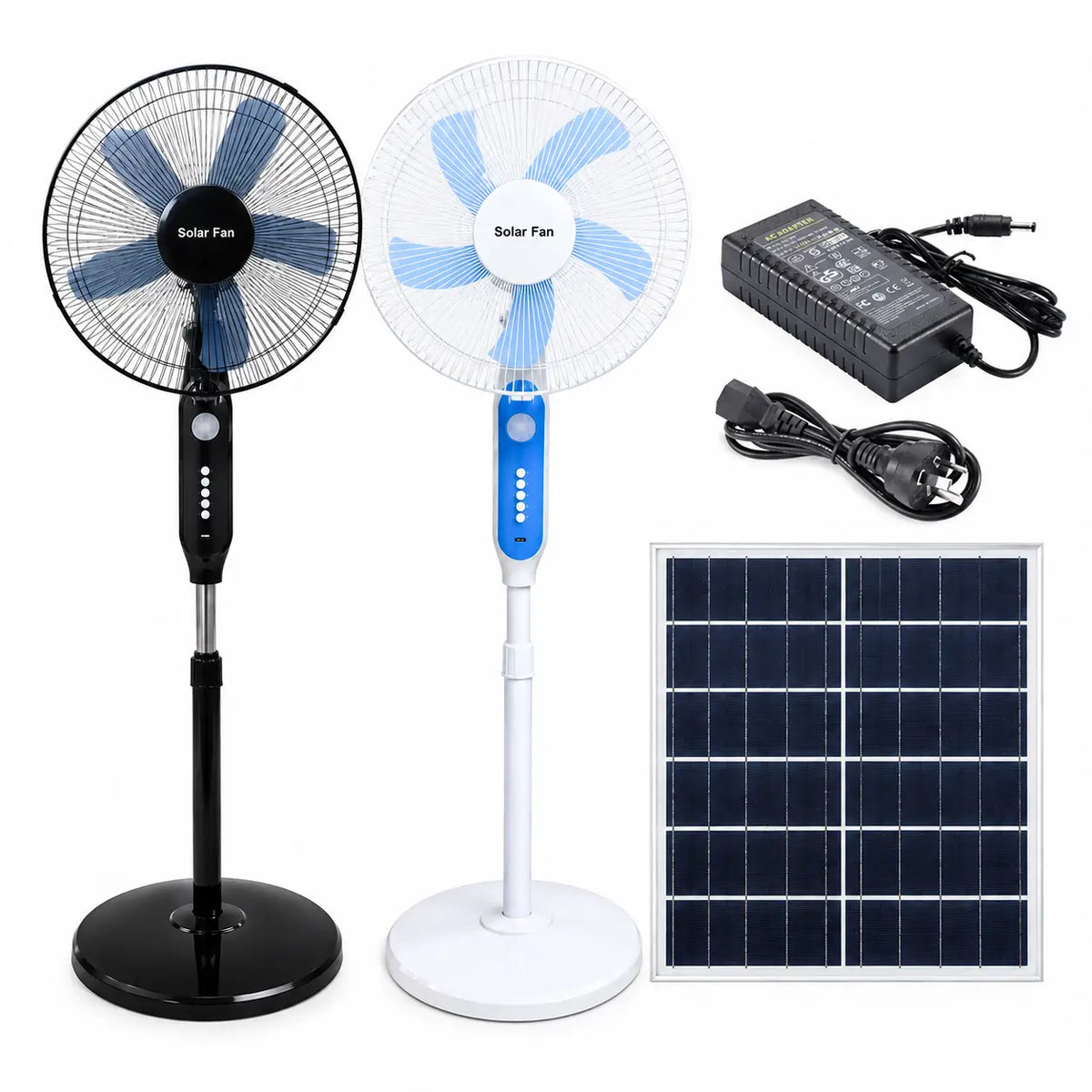
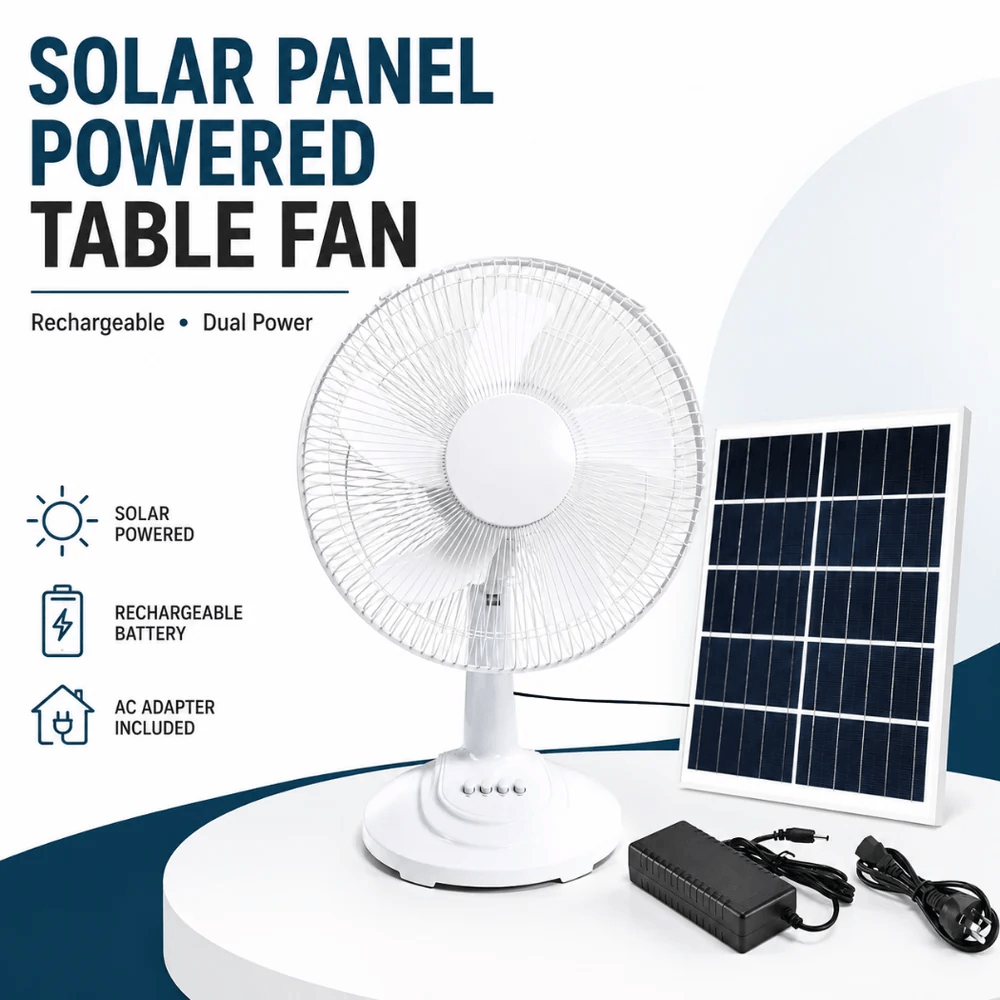
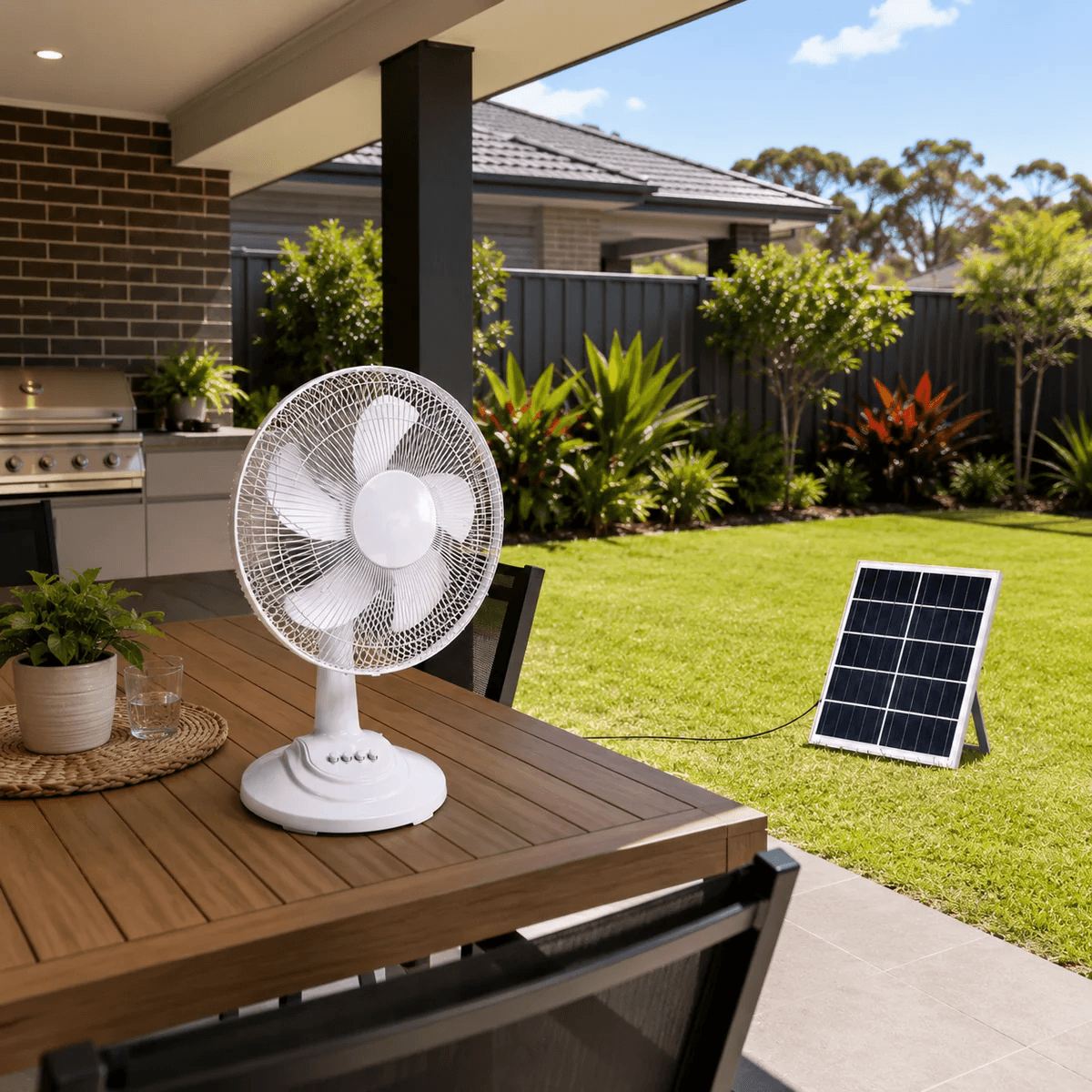
During the day, the solar panel can be positioned outdoors to collect sunlight and charge the battery.
At night, the panel can be disconnected if the manufacturer permits.
You can then move the fan into your bedroom, living room or another convenient location.
The fan operates using stored battery energy without requiring sunlight or a continuous power connection.
This makes rechargeable solar fans particularly convenient for bedrooms and other spaces where power outlets may not be readily available.
Important: A fan without battery storage cannot operate from solar energy alone after sunset.
5. Does Using a Solar Fan While Charging Affect Runtime?
Some solar powered fans support simultaneous charging and operation.
This means the fan can operate while its solar panel generates electricity.
However, the effect on battery runtime depends on the amount of electricity being generated and consumed.
When Solar Generation Exceeds Fan Consumption
If the charging system supplies more power than the fan requires, some remaining energy may be available to charge the battery.
When Solar Generation Is Lower Than Fan Consumption
If the fan consumes more electricity than the solar system supplies, the battery may continue discharging.
For example, suppose a fan consumes 15W while its solar charging system delivers 10W to the operating system.
The remaining 5W must come from the battery, assuming the system supports this arrangement.
Actual power flow depends on the fan's charging electronics and electrical design.
Therefore, operating a fan while charging does not necessarily mean the battery will remain fully charged.
Practical Tip: Check whether your model supports simultaneous charging and operation, and follow the manufacturer's instructions.
6. What Other Factors Can Reduce Solar Fan Runtime?
Battery capacity and fan speed are important, but several other factors can also affect operating time.
Battery Age and Condition
Rechargeable batteries gradually lose capacity as they age.
The rate of deterioration depends on battery chemistry, operating temperature, charging practices and usage.
An older battery may provide less runtime than it did when new.
Temperature
Extreme temperatures can affect battery performance.
High temperatures may accelerate battery ageing, while low temperatures can temporarily reduce available battery capacity.
Avoid leaving the fan or its battery in excessively hot locations, particularly inside a closed vehicle during Australian summer conditions.
Incomplete Charging
A partially charged battery contains less energy than a fully charged one.
If the solar panel receives insufficient sunlight during the day, the battery may not reach full charge.
This can reduce overnight operating time.
Additional Electrical Features
Some solar fans include USB charging outputs or built-in night lights.
These functions consume additional battery energy when used.
Their impact depends on the amount of electricity each feature requires.
7. Does USB Phone Charging Reduce Fan Runtime?
Yes.
Some rechargeable solar powered fans include a USB output that allows their internal battery to charge compatible devices, including iPhones and other mobile phones.
This can be useful during camping trips or temporary electricity outages.
However, the energy used to charge a phone is no longer available for fan operation.
A Practical Example
Suppose a fan has 80Wh of usable battery energy.
If charging a mobile phone consumes 15Wh from that battery, approximately 65Wh remains for other uses.
If the fan consumes 10W, its theoretical remaining runtime would be:
65Wh ÷ 10W = 6.5 hours
Without charging the phone, the same usable energy would theoretically provide eight hours of fan operation.
The actual result depends on USB conversion losses, phone charging requirements and fan power consumption.
Practical Tip: If overnight cooling is your priority, avoid using the fan's USB output to charge other devices unless necessary.
8. Does the Built-In Night Light Affect Battery Life?
Some solar powered fans include a small night light designed to provide gentle illumination.
Although these lights generally consume relatively little electricity, they still use battery energy.
For example, a hypothetical 1W night light operating for eight hours consumes:
1W × 8 hours = 8Wh
That energy would otherwise be available for fan operation.
The effect may be relatively small compared with the fan motor, but it becomes more noticeable when battery capacity is limited.
If your fan supports independent night-light control, switching the light off when it is not needed can help conserve battery energy.
9. How Can You Make Your Solar Fan Battery Last Longer Each Night?
Several practical habits can help maximise operating time.
Use a Lower Fan Speed
Reducing fan speed can significantly lower electricity consumption.
Charge the Battery Fully
Allow sufficient charging time before extended evening use.
Position the Solar Panel Correctly
Place the panel where it receives direct sunlight, following the manufacturer's installation instructions.
Limit Additional Battery Loads
Avoid unnecessary USB charging or night-light use when you need maximum fan runtime.
Keep the Battery Within Recommended Temperatures
Avoid excessive heat and follow the manufacturer's battery care instructions.
Maintain the Fan
Keep the fan blades and protective grille clean according to the manufacturer's instructions.
Dust accumulation can affect airflow and mechanical performance.
These practices can help maintain consistent performance, although they cannot overcome the physical limitations of the battery's capacity.
10. How to Check Whether a Solar Fan Will Last Through the Night
Before relying on a rechargeable solar fan for overnight use, perform a simple practical test.
First, fully charge the battery according to the manufacturer's instructions.
Next, select the fan speed you normally use while sleeping.
Operate the fan under typical conditions and record how long it runs before the battery becomes depleted or the fan stops.
If you normally use the night light, include it during the test.
This gives you a more realistic indication of operating time than relying solely on maximum advertised runtime.
It can also help you identify whether the fan's battery performance changes over time.
For more information about selecting suitable battery and solar panel capacities, read our guide: What Size Solar Powered Fan Do You Need? Understanding Fan Size, Airflow & Cooling Performance.
Final Thoughts
How long a solar powered fan can run depends primarily on battery capacity, fan power consumption and operating speed.
A fan with a larger battery may provide extended operation, but actual runtime also depends on how much electricity the motor and additional features consume.
For Australian households, rechargeable solar fans can offer convenient overnight cooling because they can operate using stored energy without keeping the solar panel connected.
Selected models also provide USB mobile phone charging and gentle night lights, although these features may reduce the energy available for cooling.
The most reliable way to evaluate battery runtime is to compare manufacturer specifications and, where possible, test the fan under your normal operating conditions.
Explore rechargeable solar powered cooling solutions from SolarEasy Australia to find a fan suited to your daily and overnight cooling needs.