
Do Solar Powered Fans Work on Cloudy or Rainy Days? Understanding Dual-Power Advantages
Australia is known for its sunshine, but even the sunniest regions experience cloudy weather, heavy rain and periods of limited sunlight.
If you are considering buying a solar powered fan, you may wonder: Will it still work when the sun isn't shining?
The short answer is yes — a rechargeable solar powered fan can continue operating during cloudy or rainy weather, provided its battery has sufficient stored energy.
However, there is an important difference between a fan continuing to operate and its solar panel generating enough electricity to recharge the battery.
On cloudy days, solar panels generally produce less electricity. During prolonged rainy weather, charging performance can become significantly limited.
This is particularly important when cloudy conditions continue for two or three consecutive days.
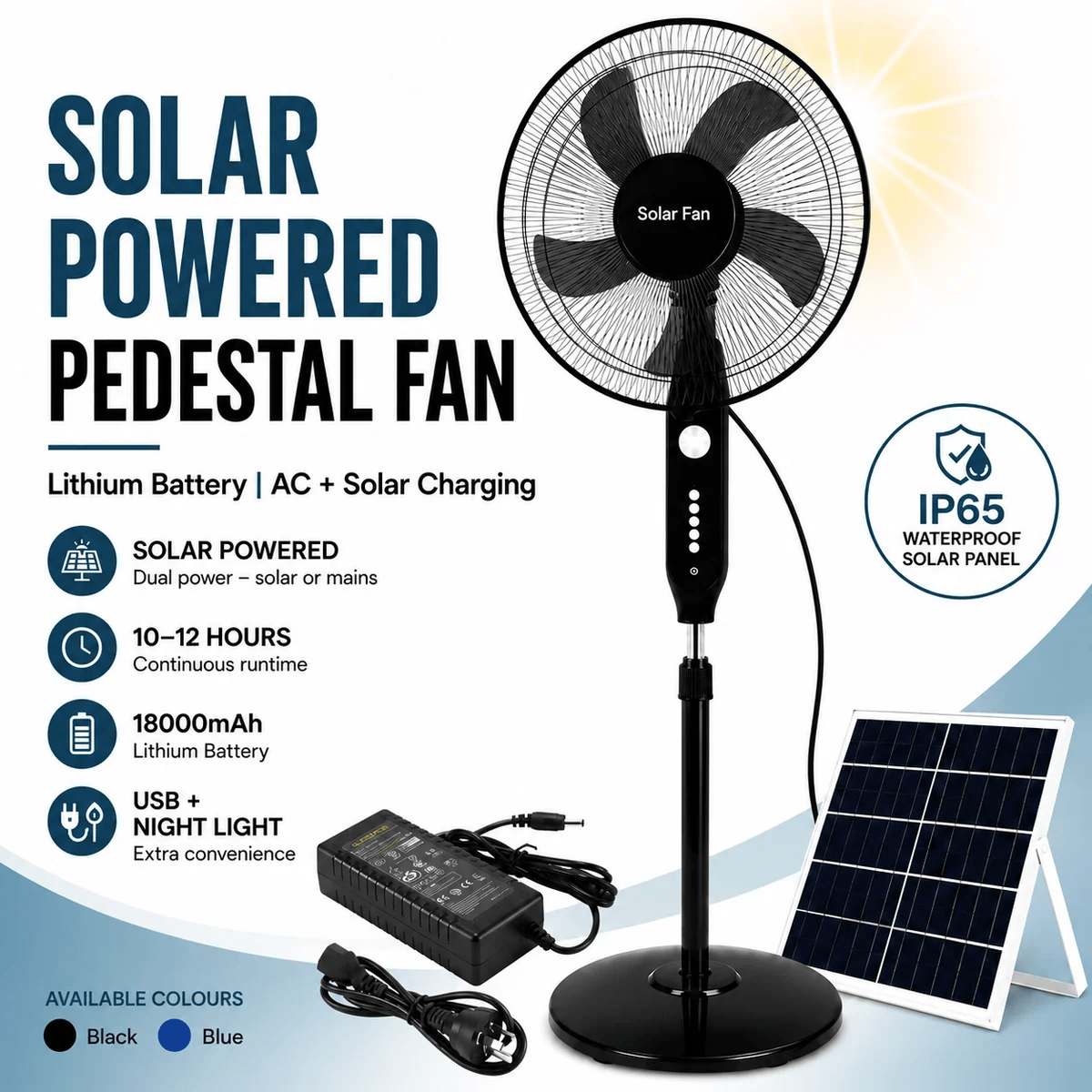
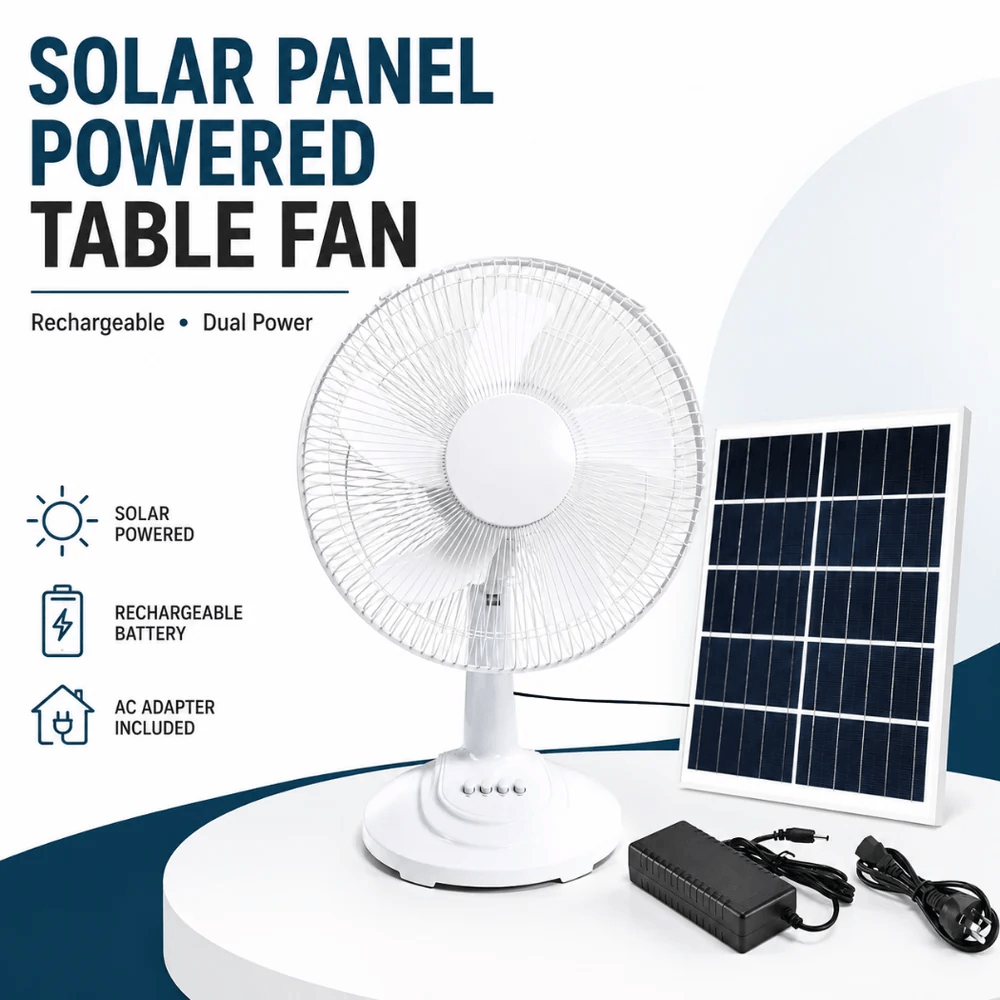
Fortunately, some modern solar powered fans support both solar charging and AC adapter charging, offering greater flexibility when sunshine is unreliable.
Let's explore what happens during different weather conditions and how to keep your solar fan operating when sunlight is limited.
1. Can Solar Powered Fans Work Without Direct Sunlight?
Yes, rechargeable solar powered fans can operate without direct sunlight.
The key is the rechargeable battery.
During sunny conditions, the solar panel generates electricity that can be stored in the fan's battery.
Once charged, the battery provides electricity to operate the fan independently of the solar panel.
What Happens When Clouds Cover the Sun?
When clouds reduce sunlight, the solar panel generally generates less electricity.
However, the fan can continue operating using energy already stored in its battery.
For example, imagine you fully charge your solar fan on Monday.
On Tuesday, the weather becomes cloudy.
Even though the solar panel may generate less electricity, you can still use the fan because the battery contains stored energy.
The available operating time depends on battery capacity and fan power consumption.
Key Point: A rechargeable solar fan does not require continuous sunshine to operate, but its battery must have sufficient energy.
2. Do Solar Panels Still Generate Electricity on Cloudy Days?
Yes. Solar panels can generate electricity under cloudy conditions because some sunlight still reaches the solar cells.
However, their output is generally lower than under strong direct sunlight.
Light Cloud Cover
Under light cloud cover, a solar panel may continue producing a useful amount of electricity.
Actual output depends on cloud thickness, sunlight intensity and panel orientation.
Heavy Cloud Cover
Under thick cloud cover, solar generation can fall substantially.
A panel rated at 30W under standard test conditions will not necessarily produce 30W during cloudy weather.
Its actual output may be only a fraction of its rated capacity.
Rainy Weather
During rain, solar panels may still generate some electricity from available daylight.
However, dark skies and heavy cloud cover can significantly reduce charging performance.
Rain itself does not automatically stop electricity generation, but the reduced sunlight associated with rainy weather is the main limitation.
Typical Weather Conditions
| Weather Condition | Expected Solar Charging Performance |
|---|---|
| Clear, sunny sky | Generally strongest |
| Partly cloudy | Variable, depending on cloud cover |
| Mostly cloudy | Reduced output |
| Heavy overcast | Often substantially reduced |
| Heavy rain and dark skies | Very limited generation may be available |
These are general comparisons rather than guaranteed output levels.
Important: Only solar panels rated for outdoor exposure should be left in rain. Keep the fan, battery, connectors and AC adapter protected according to the manufacturer's instructions.
3. What Happens During Two or Three Consecutive Rainy Days?
This is one of the most important practical considerations for Australian households.
A single cloudy day may not create a major problem if the battery was fully charged beforehand.
However, two or three consecutive days of heavy cloud or rain can significantly affect the fan's available battery energy.
Day One: Using Stored Battery Energy
Imagine your solar fan begins Monday morning with a fully charged battery.
The weather becomes overcast, and solar charging produces relatively little electricity.
You use the fan for several hours during the evening.
The battery now contains less energy than it did at the beginning of the day.
Day Two: Limited Battery Recovery
On Tuesday, cloudy weather continues.
The solar panel generates some electricity, but not enough to replace the energy consumed the previous evening.
You continue using the fan.
The battery's remaining charge decreases further.
Day Three: Battery Energy May Become Insufficient
By Wednesday, the battery may contain too little energy to support your normal operating time.
The fan may operate for fewer hours or stop when its battery reaches the manufacturer's low-charge limit.
This can happen even when the fan and solar panel are functioning normally.
Example: Three Days of Limited Sunshine
Consider a hypothetical fan with 80Wh of usable battery energy.
Assume it consumes 40Wh each evening and receives only 10Wh of solar energy per day.
| Day | Starting Battery Energy | Solar Energy Added | Evening Consumption | Remaining Energy |
|---|---|---|---|---|
| Monday | 80Wh | 10Wh | 40Wh | 50Wh |
| Tuesday | 50Wh | 10Wh | 40Wh | 20Wh |
| Wednesday | 20Wh | 10Wh | 40Wh required | Insufficient energy |
This simplified example assumes the stated energy is usable, ignores additional system losses and applies the battery's 80Wh capacity limit.
By the third evening, the fan cannot complete the planned operating period without additional charging.
Key Point: The main challenge during prolonged rainy weather is not whether the fan can operate without sunshine. It is whether enough energy can be replenished to support continued use.
4. How Does Dual-Power Charging Help During Rainy Weather?
Dual-power solar fans provide an alternative when solar charging becomes insufficient.
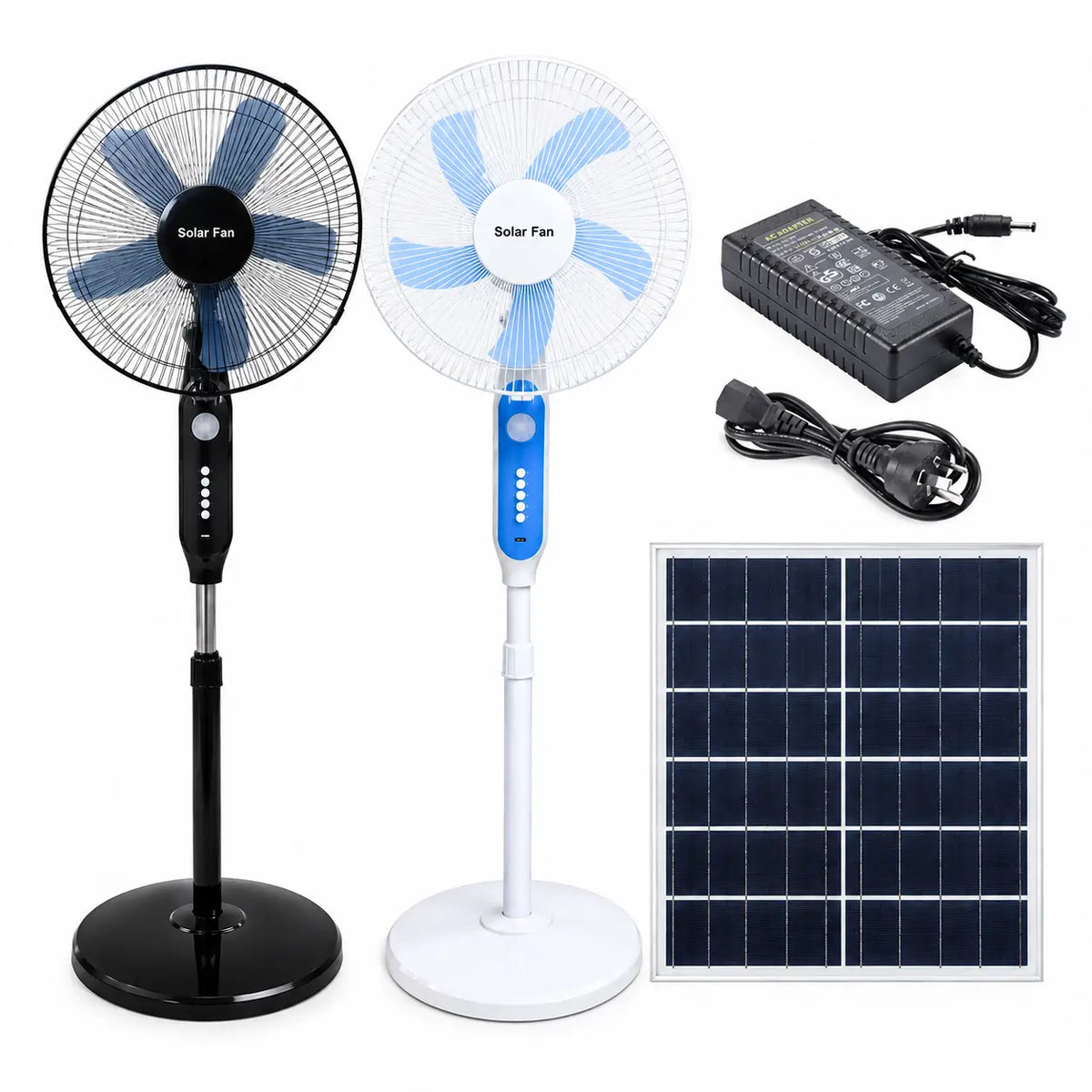
For this article, dual-power refers to a fan that supports both solar panel charging and charging through a compatible AC adapter.
Solar Charging During Sunny Weather
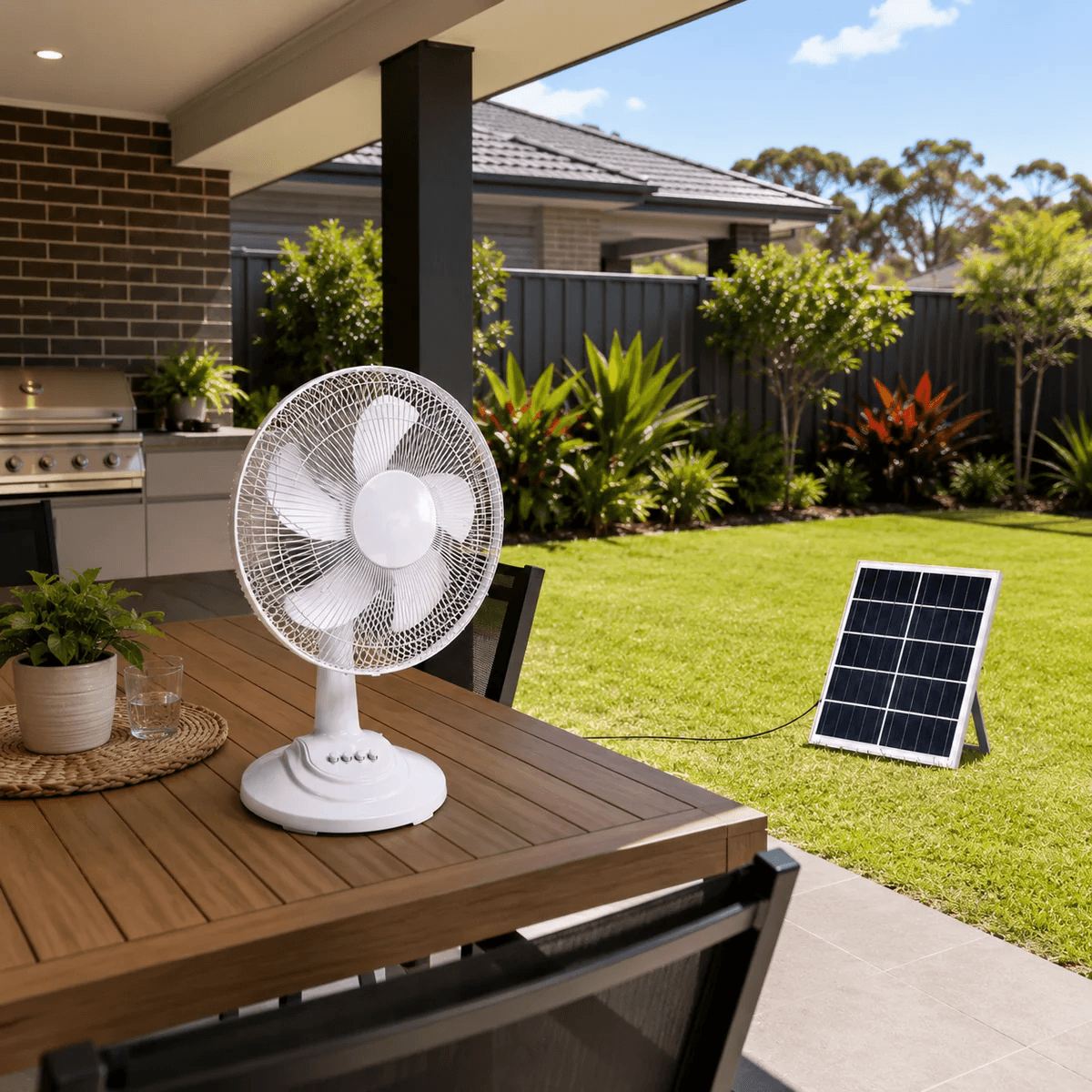
On sunny days, you can position the solar panel outdoors to recharge the battery.
This allows the fan to use renewable energy for charging.
AC Charging During Cloudy Weather
When heavy cloud or rain continues for several days, you can recharge a compatible fan using its approved AC adapter.
This provides an alternative source of electricity without waiting for suitable sunlight.
A Practical Australian Household Example
Imagine a family using a rechargeable solar fan in a bedroom during summer.
During normal sunny weather, the solar panel charges the battery throughout the day.
At night, the fan operates using stored battery energy.
However, a weather system brings three consecutive rainy days.
Rather than allowing the battery to become depleted, the family can use AC charging to replenish it, provided the model supports that feature.
When sunny weather returns, they can resume solar charging.
The advantage of dual-power charging is flexibility: solar energy when available and household electricity when needed.
It does not mean the fan can operate indefinitely without either sufficient sunlight or another charging source.
5. Can a Solar Fan Still Run Overnight After a Cloudy Day?
Yes, provided the battery contains enough stored energy.
A cloudy day does not automatically prevent overnight operation.
For example, if your fan begins the day with a nearly full battery and you use very little energy during daylight hours, it may still have enough charge for several hours of evening use.
However, if the battery was already partly depleted and solar charging was limited, overnight runtime may be shorter.
What Determines Overnight Performance?
Three factors are particularly important:
Remaining Battery Energy: How much usable energy is stored before bedtime?
Fan Speed: Higher speeds generally consume more electricity.
Additional Battery Loads: USB phone charging and built-in night lights consume energy that would otherwise be available for fan operation.
Practical Advice
If you expect limited sunshine the following day, consider using a lower fan speed overnight.
This may help conserve battery energy.
For a detailed explanation of operating time, see our article:
How Long Can a Solar Powered Fan Run? Understanding Battery Capacity & Runtime.
6. Can You Use a Solar Fan During a Power Outage and Rainy Weather?
Yes, a rechargeable solar fan can provide useful airflow during a power outage, even when the weather is cloudy or rainy.
However, this depends on the battery having sufficient stored energy.
Why Is Battery Storage Important?
During a household power outage, conventional mains-powered fans generally stop operating.
A rechargeable solar fan can continue operating independently of household electricity.
This may be useful during storms or temporary electricity interruptions.
What If the Outage Lasts Several Days?
If the power outage continues for two or three days and solar charging remains poor, the battery may eventually become depleted.
In this situation, AC charging will not be available unless another suitable electricity source is operating.
Therefore, dual-power capability alone does not guarantee continuous operation during an extended power outage.
Practical Tip: Before forecast severe weather, charge the fan fully while electricity is available and conserve battery energy if a prolonged outage occurs.
7. How Can You Improve Solar Charging During Cloudy Weather?
Although cloudy weather reduces solar generation, several practical steps can help maximise the available energy.
Position the Panel Outdoors
Place the solar panel where it receives the strongest available daylight.
Avoid unnecessary shading from buildings, trees and outdoor structures.
Adjust the Panel Orientation
Position the panel appropriately for your location and the sun's seasonal position.
Even during cloudy weather, avoiding poor orientation can help maximise available generation.
Keep the Panel Clean
Dust, dirt and debris can reduce the amount of light reaching the solar cells.
Clean the panel according to the manufacturer's instructions.
Reduce Electricity Consumption
Using a lower fan speed may help the battery last longer while charging conditions remain poor.
Use AC Charging When Necessary
If your fan supports AC adapter charging, use the approved adapter when solar charging cannot meet your requirements.
Important: Do not leave a non-weatherproof fan or electrical adapter exposed to rain while attempting to improve solar charging.
8. Should You Choose a Dual-Power Solar Fan for Australian Weather?
For Australian households that intend to use their solar fan regularly, dual-power charging can be a useful feature.
It provides more flexibility when weather conditions change.
Solar-Only Charging May Suit You If:
- You mainly use the fan during sunny weather.
- Your operating requirements are occasional.
- You have sufficient time between uses to recharge the battery.
- You do not depend on the fan for regular overnight operation.
Dual-Power Charging May Be Better If:
- You use the fan regularly throughout summer.
- You want reliable access to charging during cloudy or rainy periods.
- You frequently use the fan overnight.
- You live in an area where prolonged cloudy weather is common.
- You prefer the convenience of indoor AC charging when necessary.
However, not every solar powered fan includes AC charging.
Before purchasing, confirm the manufacturer's charging specifications and whether a compatible Australian AC adapter is supplied.
9. Frequently Asked Questions
Will a solar fan work on a completely cloudy day?
Yes, a rechargeable solar fan can operate using stored battery energy. Solar charging may continue at a reduced rate, depending on available daylight.
Can a solar fan charge in the rain?
A solar panel may generate electricity during rainy weather, but output is usually reduced. Only weather-rated panels and suitable connections should be exposed to rain.
What happens if it rains for three days?
If solar charging cannot replace the energy consumed, the battery will gradually become depleted. A model supporting AC charging can be recharged from household electricity when available.
Can I use my solar fan at night without the solar panel?
Yes, if the fan includes a rechargeable battery and is designed for independent battery operation.
Is a dual-power solar fan better for rainy weather?
It can be more convenient because a compatible AC adapter provides an alternative charging method when sunlight is insufficient.
Final Thoughts
Solar powered fans can continue operating during cloudy or rainy weather, provided they have sufficient stored battery energy.
Although solar panels can still generate electricity under cloud cover, charging performance is generally lower than during strong sunshine.
The challenge becomes more significant when rainy weather continues for two or three consecutive days, because the battery may not receive enough energy to replace daily consumption.
This is where dual-power solar fans offer a practical advantage.
By combining solar charging with compatible AC adapter charging, they provide greater flexibility for Australian households during changing weather conditions.
For regular household use, understanding battery limitations and planning for extended periods of poor sunlight can help you get more reliable performance from your solar powered fan.
Explore rechargeable solar powered cooling solutions from SolarEasy Australia.