
Solar Powered Security Camera Information Hub | Section 2: Types of Solar Powered Security Cameras
Solar powered security cameras are becoming increasingly popular among Australian homeowners, particularly for monitoring driveways, gardens, garages and outdoor areas without permanent electrical wiring.
When choosing a solar security camera, one important decision is whether to select a fixed camera or a PTZ (Pan-Tilt-Zoom) camera.
Both types can provide effective outdoor monitoring, but they differ in size, appearance, viewing flexibility and security applications.
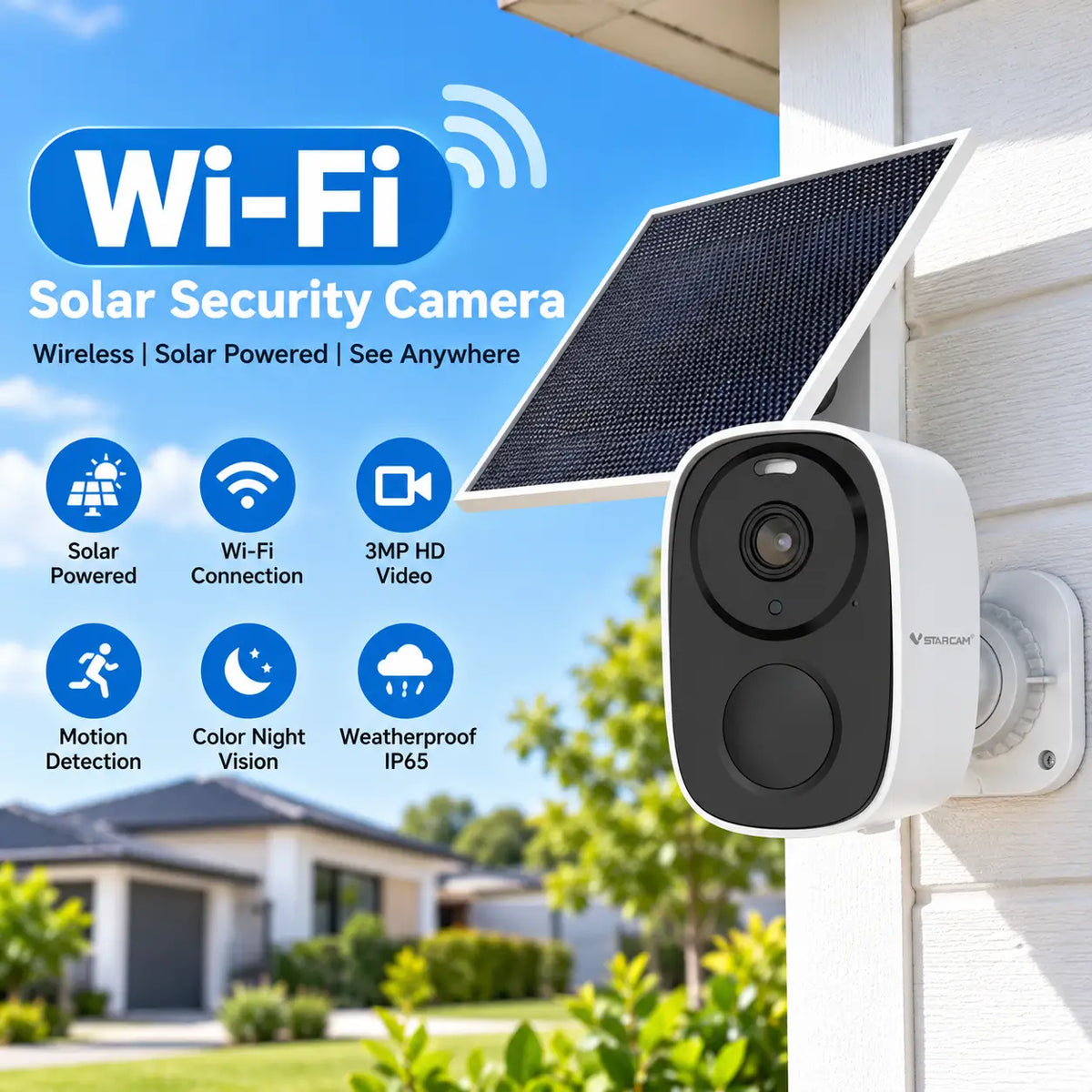
Fixed solar cameras are often compact and discreet, making them attractive to homeowners who prefer security equipment that does not stand out.
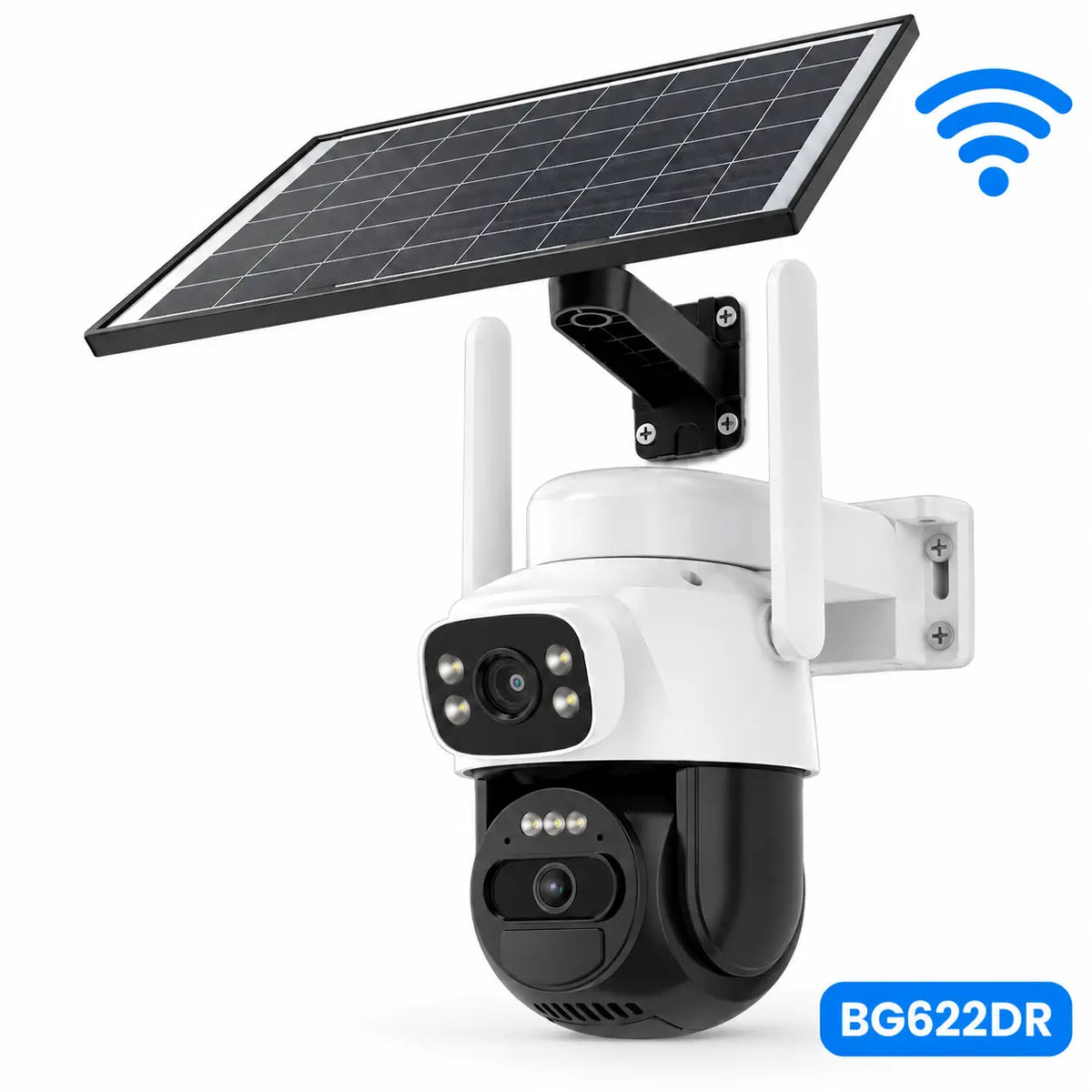
PTZ cameras, on the other hand, are frequently larger and more noticeable. Their visible presence may help discourage opportunistic intruders, while their ability to change viewing direction provides additional monitoring flexibility.
The choice is not simply about which camera has more features. It is also about whether you prefer discreet monitoring or a more visible security presence.
This guide explains the advantages and limitations of both camera types and helps Australian property owners understand which option may better suit their needs.
1. What Is a Fixed Solar Security Camera?
A fixed solar security camera monitors an area from a stationary viewing direction.
Once installed, the camera generally continues pointing towards the same location unless it is manually repositioned.
Fixed cameras are commonly used to monitor specific areas such as front doors, garage entrances, gates and pathways.
Compact and Discreet Design
One attractive feature of many fixed solar security cameras is their compact size.
Because they do not require motorised pan-and-tilt mechanisms, some fixed models can be designed with smaller, simpler camera housings.
This makes them appealing to homeowners who prefer security cameras that blend into their property's appearance.
For example, a small fixed camera installed beneath the eaves of an Australian home may be less noticeable than a larger motorised camera.
Some homeowners prefer this discreet appearance because they do not want their property to look heavily equipped with surveillance equipment.
A compact fixed camera can provide security monitoring without becoming a prominent visual feature of the home.
However, not all fixed cameras are small, and camera dimensions vary between manufacturers.
Consistent Monitoring of One Area
Another advantage of fixed cameras is their consistent viewing direction.
A camera positioned towards a driveway entrance will continue monitoring that area without rotating elsewhere.
This can be useful when a particular location requires ongoing attention.
For example, a homeowner may want to monitor a front gate rather than an entire garden.
A fixed camera can provide a straightforward solution for that purpose.
2. What Is a PTZ Solar Security Camera?
PTZ stands for Pan, Tilt and Zoom.
PTZ solar security cameras allow users to change the camera's viewing direction, providing greater flexibility when monitoring outdoor spaces.
Depending on the model, PTZ functions may include:
- Pan: Horizontal camera movement.
- Tilt: Vertical camera movement.
- Zoom: Digital or optical image magnification.
- Remote Control: Adjusting the viewing direction through a smartphone application.
- Auto Tracking: Automatically following detected movement on supported models.
These features can be particularly useful for monitoring larger outdoor areas.
Larger and More Noticeable Appearance
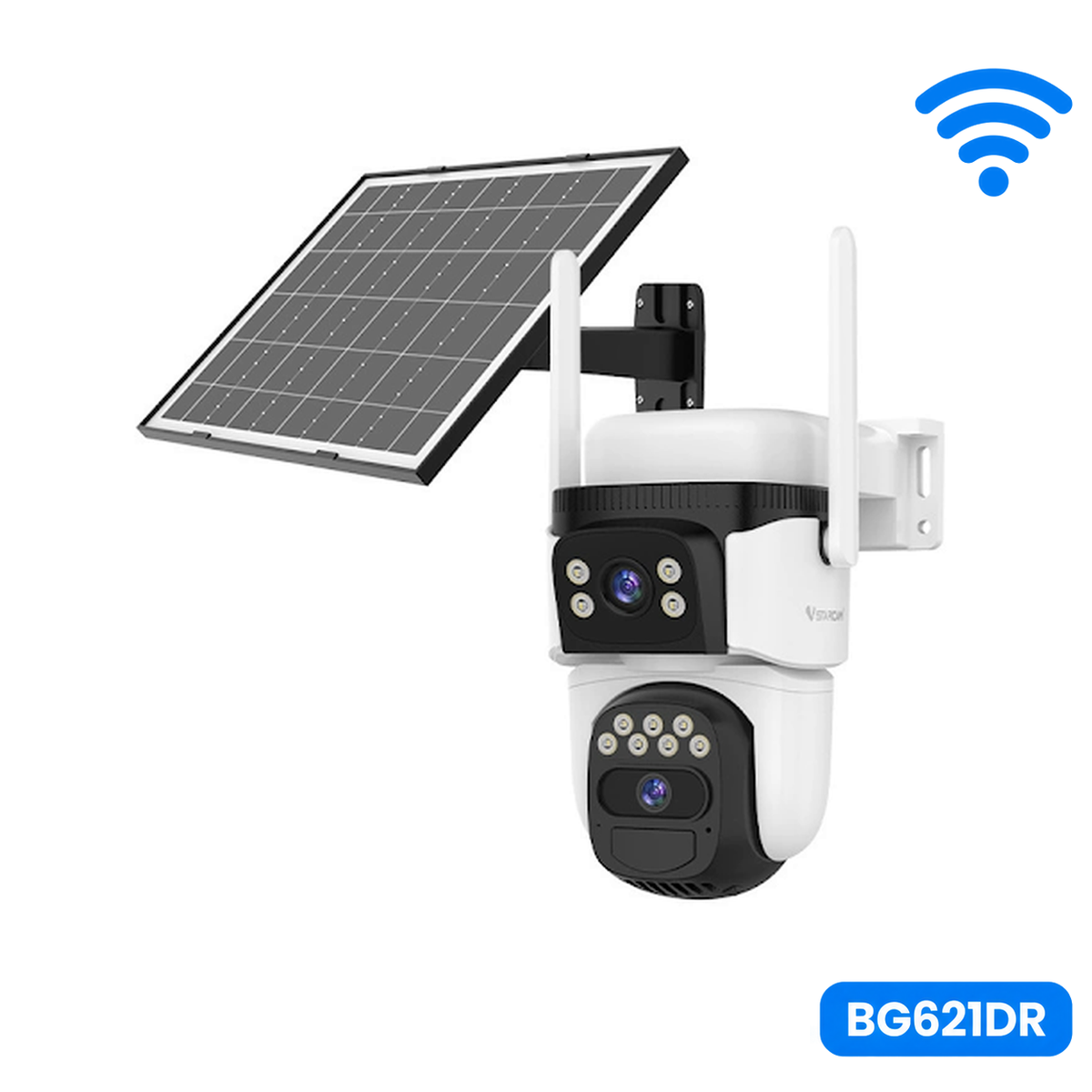
Many PTZ solar security cameras have larger housings because they incorporate motorised movement mechanisms and additional components.
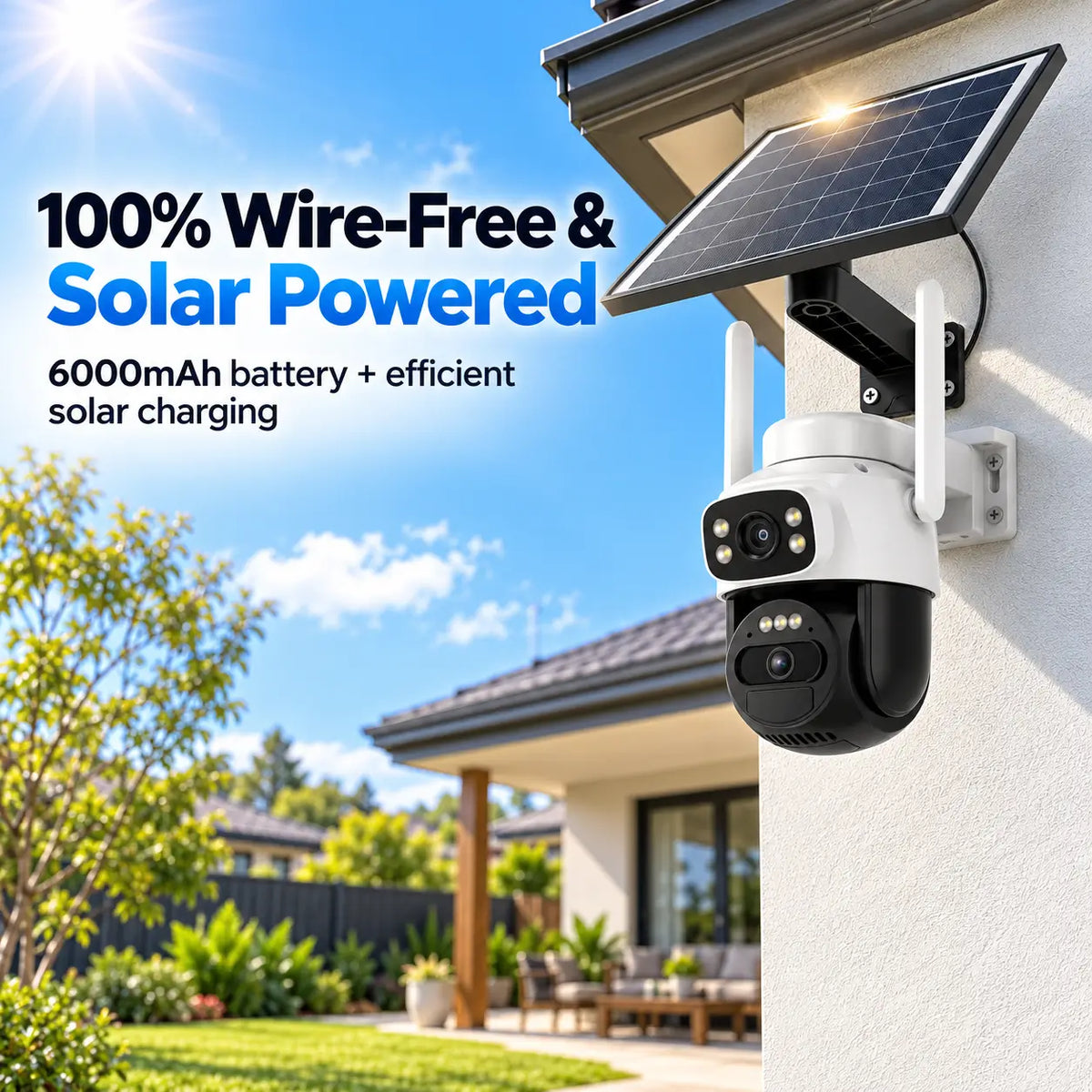
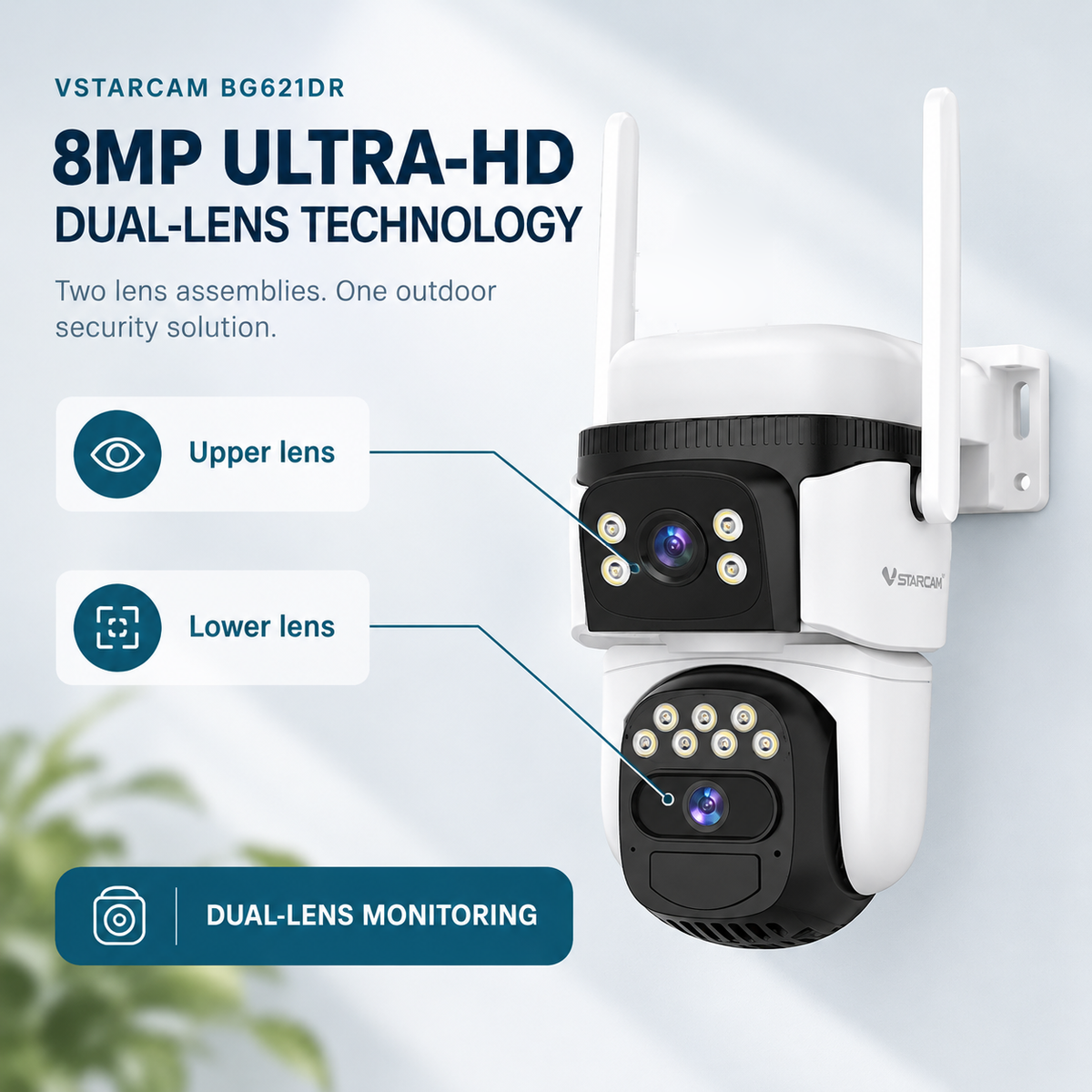
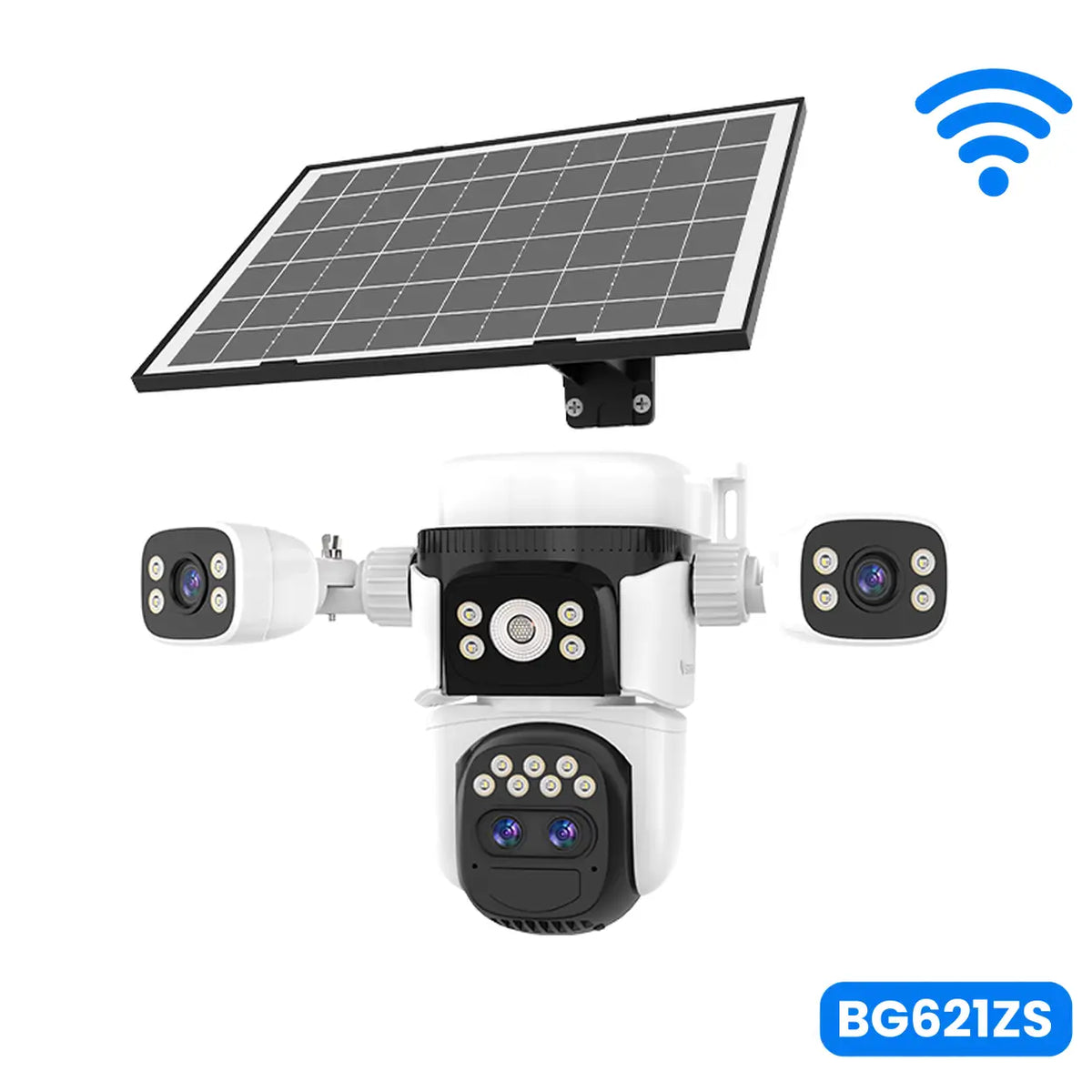
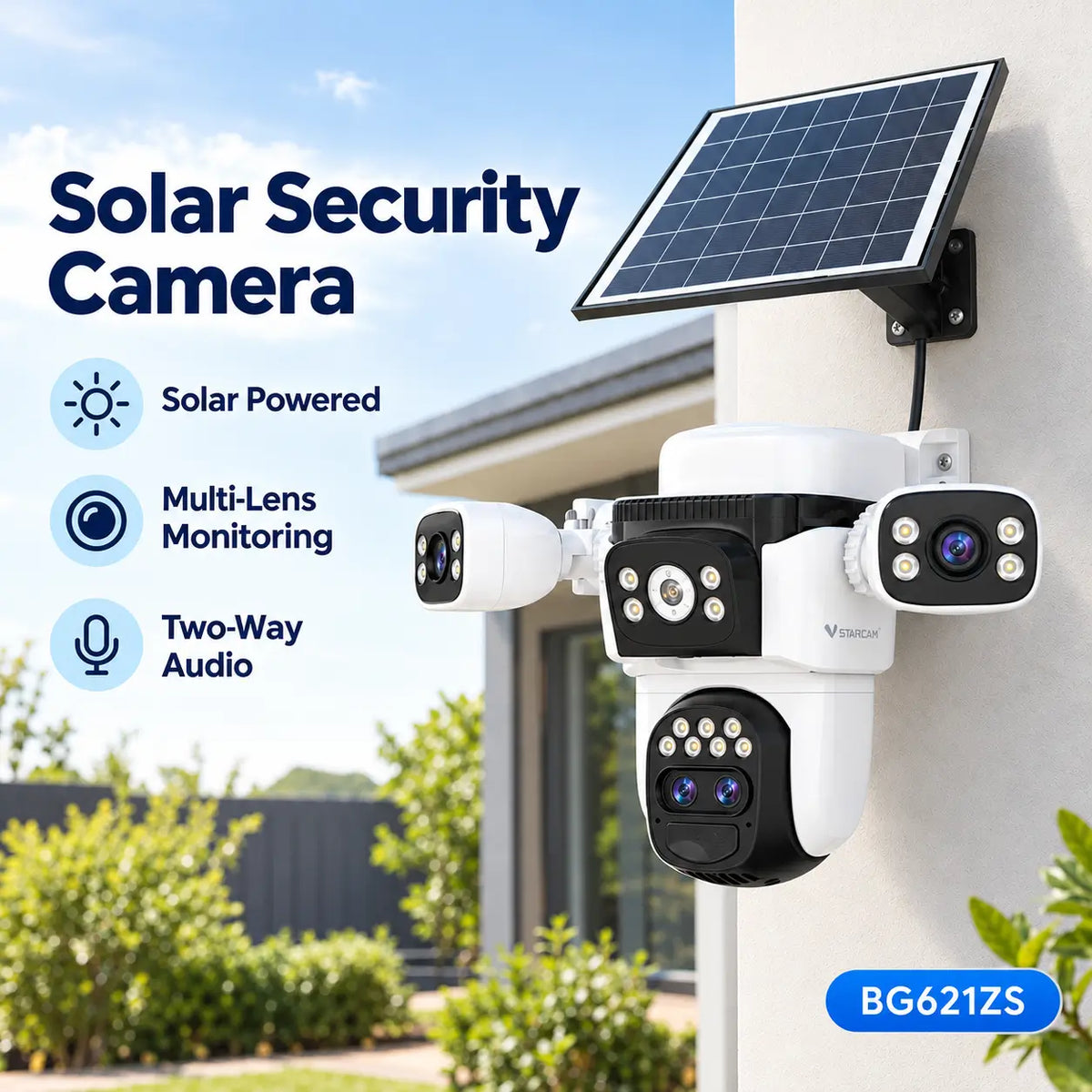
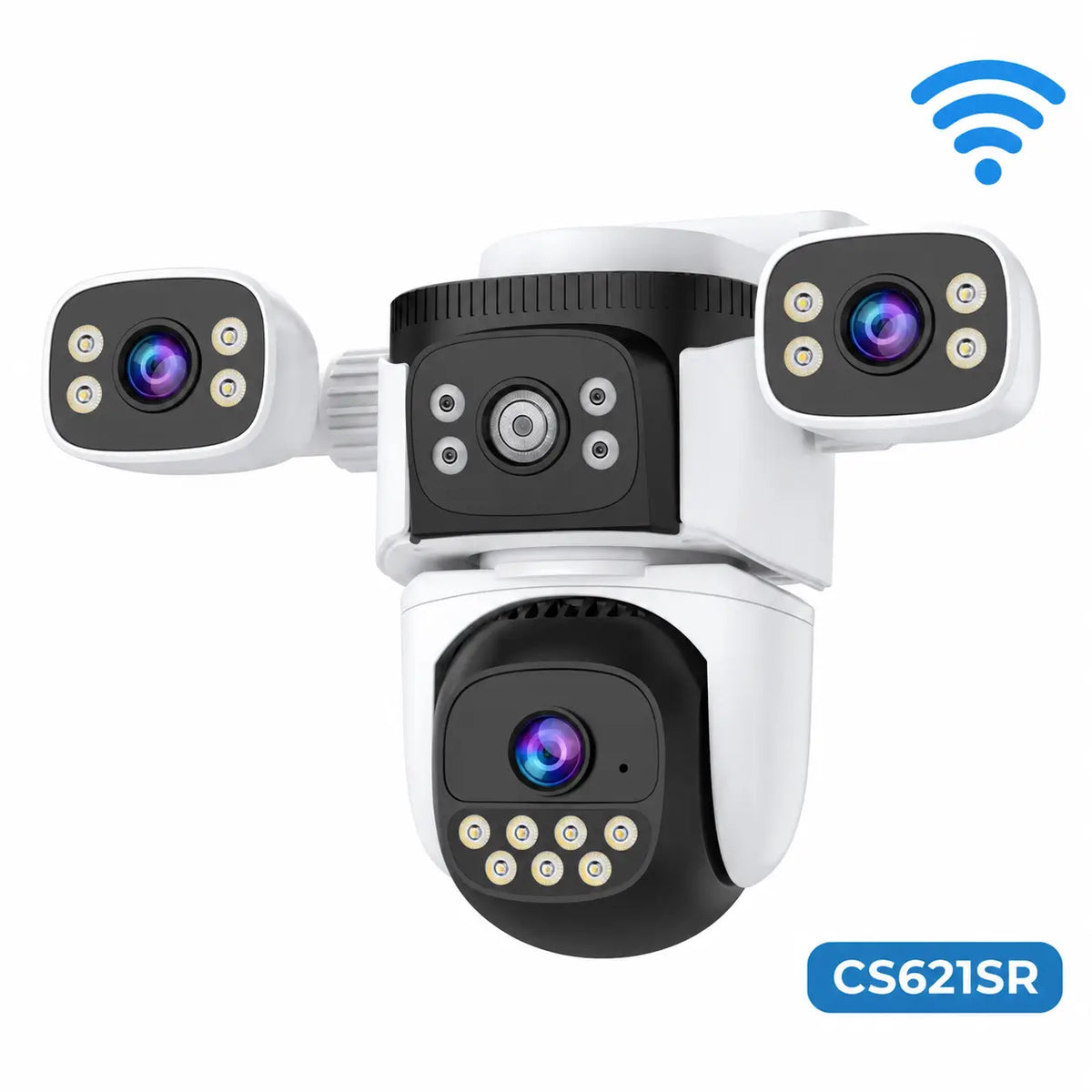
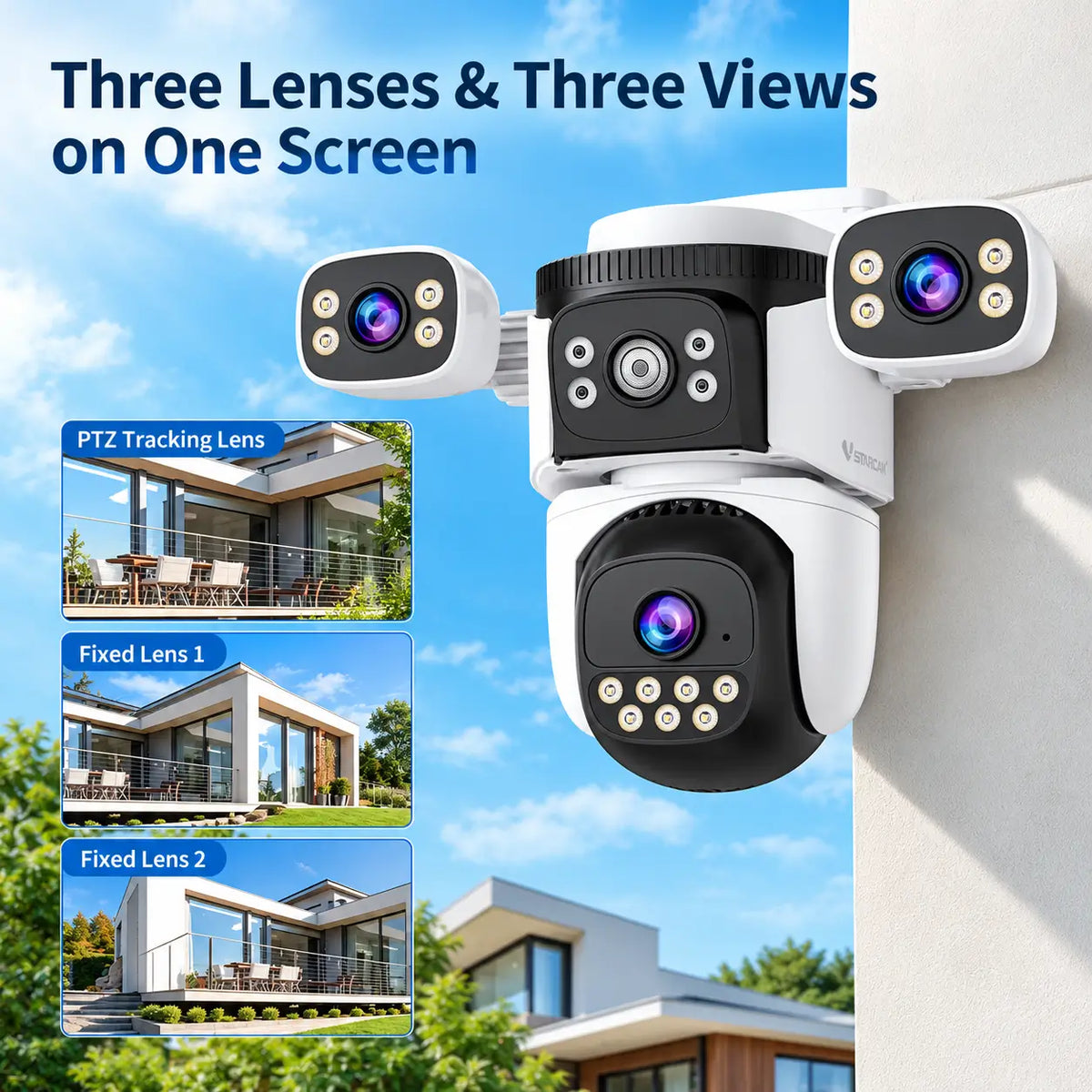
Some models also feature prominent antennas, external solar panels or multiple lenses.
As a result, they may be more visible when installed on a house, garage or outdoor structure.
While some homeowners prefer discreet cameras, others deliberately choose a larger, more noticeable security camera.
Visible Security as a Deterrent
A clearly visible security camera can signal that a property is being monitored.
For example, a PTZ camera mounted prominently near a driveway may be immediately noticeable to visitors approaching the property.
This visible presence may discourage some opportunistic trespassers or potential intruders.
For homeowners who want their security equipment to be easily recognised, this can be a practical advantage.
A larger PTZ camera may serve two purposes: monitoring outdoor activity and providing a visible indication that security measures are in place.
However, visibility alone cannot guarantee that criminal activity will be prevented.
The effectiveness of a camera as a deterrent depends on its location, visibility and the surrounding security arrangements.
3. Discreet Monitoring vs Visible Deterrence
One of the most interesting differences between fixed and PTZ solar security cameras is their appearance.
Some Australian homeowners prefer a small camera that blends into the building.
Others prefer a larger camera that makes their security arrangements obvious.
Both approaches have advantages.
Why Some Homeowners Prefer Smaller Cameras
A compact fixed camera may be suitable when:
- The homeowner prefers a clean exterior appearance.
- The camera is installed near a front entrance.
- The monitoring area is relatively small.
- A discreet camera design is desirable.
- A larger camera would look out of place.
For example, a modern Australian home with a minimalist exterior may benefit aesthetically from a small camera installed beneath the roofline.
Why Others Prefer Larger Cameras
A larger PTZ camera may be preferred when:
- The homeowner wants visitors to notice the security system.
- The property has a large driveway or entrance.
- Visible security equipment is part of the property's deterrence strategy.
- The camera needs to monitor several directions.
- The installation location can accommodate a larger device.
For example, a PTZ camera mounted near the entrance of a rural property may provide both flexible viewing and a noticeable security presence.
Neither approach is automatically better.
Some homeowners value discretion, while others value visibility. The preferred approach depends on the property's security objectives.
4. Fixed vs PTZ Solar Security Cameras: Key Differences
The following table summarises the main characteristics of both camera types.
| Feature | Fixed Solar Camera | PTZ Solar Camera |
|---|---|---|
| Viewing Direction | Stationary | Adjustable |
| Camera Size | Often compact | Often larger |
| Appearance | Can be discreet | Frequently more noticeable |
| Visible Deterrence | Depends on placement and design | May provide a stronger visible presence |
| Viewing Flexibility | Limited to installed direction | Can monitor different directions |
| Motorised Movement | Generally not required | Usually included |
| Motion Tracking | May support digital tracking features | Some models support motorised auto tracking |
| Power Consumption | Often relatively low | Motorised functions may increase consumption |
| Installation | Generally straightforward | Requires suitable clearance for movement |
| Suitable Applications | Entrances, gates and defined areas | Driveways, yards and larger outdoor spaces |
Actual performance varies between individual models.
For example, some fixed cameras have wide-angle lenses, while certain PTZ cameras offer limited movement ranges.
Consumers should compare the manufacturer's specifications rather than assuming every camera in a category performs identically.
5. Which Camera Provides Better Outdoor Coverage?
Camera coverage is another important consideration.
Fixed Camera Coverage
A fixed camera continuously observes the area within its field of view.
A wide-angle lens may allow it to monitor a relatively broad area without moving.
However, areas outside the camera's viewing angle will not be visible.
Fixed cameras are therefore particularly suitable for locations where the monitoring direction is predictable.
PTZ Camera Coverage
A PTZ camera can change its viewing direction to observe different parts of an outdoor area.
For example, a homeowner may rotate the camera between a driveway, garden gate and backyard.
Some models can automatically follow detected movement.
However, a PTZ camera cannot necessarily monitor every direction simultaneously.
When the camera is pointing towards one location, activity occurring outside its current field of view may not be recorded.
For properties requiring simultaneous monitoring of multiple directions, additional cameras or suitable multi-lens systems may be more appropriate.
6. Which Camera Is Better for Different Australian Properties?
Different outdoor locations may benefit from different camera designs.
| Location | Camera Type to Consider | Main Reason |
|---|---|---|
| Front Door | Compact Fixed Camera | Discreet monitoring of a defined entrance |
| Garage Entrance | Fixed Camera | Consistent viewing direction |
| Small Backyard | Fixed or PTZ | Depends on required viewing coverage |
| Large Residential Driveway | PTZ Camera | Adjustable viewing direction |
| Large Backyard | PTZ Camera | Flexible monitoring of outdoor areas |
| Farm Entrance | Fixed or PTZ | Depends on coverage and visibility preferences |
| Construction Site | PTZ Camera | Flexible viewing and visible security presence |
| Garden Shed | Compact Fixed Camera | Monitoring a specific location |
These recommendations are general examples.
A large property does not automatically require a PTZ camera, and a small property does not necessarily require a fixed camera.
Camera placement, field of view and the property's actual security requirements remain important.
7. What About Battery Life and Solar Charging?
Both fixed and PTZ cameras can operate using solar panels and rechargeable batteries.
However, their electricity consumption may differ.
Fixed Camera Power Consumption
Fixed cameras generally do not require electricity to operate motorised pan-and-tilt mechanisms.
This may help reduce power consumption, depending on the camera's overall design and recording activity.
PTZ Camera Power Consumption
PTZ cameras use electricity when their motors adjust the viewing direction.
Features such as automatic tracking, spotlights and frequent remote viewing may also affect battery consumption.
However, this does not mean that every PTZ camera has shorter battery life than every fixed camera.
Battery capacity, solar panel output, recording settings and power management design all influence operating time.
Consumers should review the manufacturer's stated operating conditions when comparing models.
8. What Should You Consider Before Choosing?
Before deciding between a fixed and PTZ solar security camera, consider three practical questions.
Do You Prefer a Discreet or Visible Camera?
If maintaining a clean exterior appearance is important, a compact fixed camera may be preferable.
If you want the camera to be easily noticed, a larger PTZ model may be more suitable.
Is the Monitoring Area Fixed or Wide?
A fixed camera is often appropriate for monitoring a specific entrance or gate.
A PTZ camera may provide greater flexibility when the viewing direction needs to change.
Do You Need Automatic Movement Tracking?
Some PTZ cameras can automatically follow moving people or vehicles.
This may be useful for certain outdoor monitoring applications.
However, tracking capabilities vary, and consumers should confirm the supported functions of the individual model.
Final Thoughts
Fixed and PTZ solar security cameras offer different advantages for Australian homes and outdoor properties.
Fixed solar security cameras are often compact, discreet and well suited to monitoring specific locations. Their smaller appearance can be particularly attractive to homeowners who prefer security equipment that blends into the property's exterior.
PTZ solar security cameras provide greater viewing flexibility and are often more visually prominent. Their noticeable appearance may also help discourage some opportunistic intruders by signalling that the property is monitored.
Both designs can provide practical security benefits.
The best choice depends on whether the homeowner prioritises discreet monitoring, visible deterrence, adjustable viewing coverage or a combination of these features.
Rather than assuming that a larger or more complex camera is automatically better, consumers should select a design that matches their property's monitoring requirements.
About SolarEasy
SolarEasy is an Australian-owned online retailer specialising in solar powered products for homes, gardens and outdoor applications.
Our Solar Powered Security Camera Information Hub provides practical educational resources to help Australian homeowners, builders and rural property owners understand solar security technology and make informed purchasing decisions.