
Solar Powered Security Camera Information Hub | Section 2: Types of Solar Powered Security Cameras
Solar powered security cameras are becoming an increasingly popular option for Australian homeowners, builders, property developers and rural property owners.
One of the most important decisions when choosing a solar security camera is whether to select a Wi-Fi model or a 4G model.
Both types can operate using solar energy and rechargeable batteries, but they use different methods to connect to a network.
Wi-Fi solar cameras are commonly installed around homes and businesses with an existing wireless network. In comparison, 4G solar cameras can operate in locations without access to a home or business Wi-Fi connection, provided suitable mobile network coverage is available.
However, 4G cameras are not only designed for farms or remote properties. They can also be useful for large Australian homes, detached buildings, construction sites and other locations where Wi-Fi coverage is limited.
This guide explains the main differences between Wi-Fi and 4G solar security cameras, their advantages and limitations, and how to determine which option is more suitable for different Australian properties.
1. What Is a Wi-Fi Solar Security Camera?
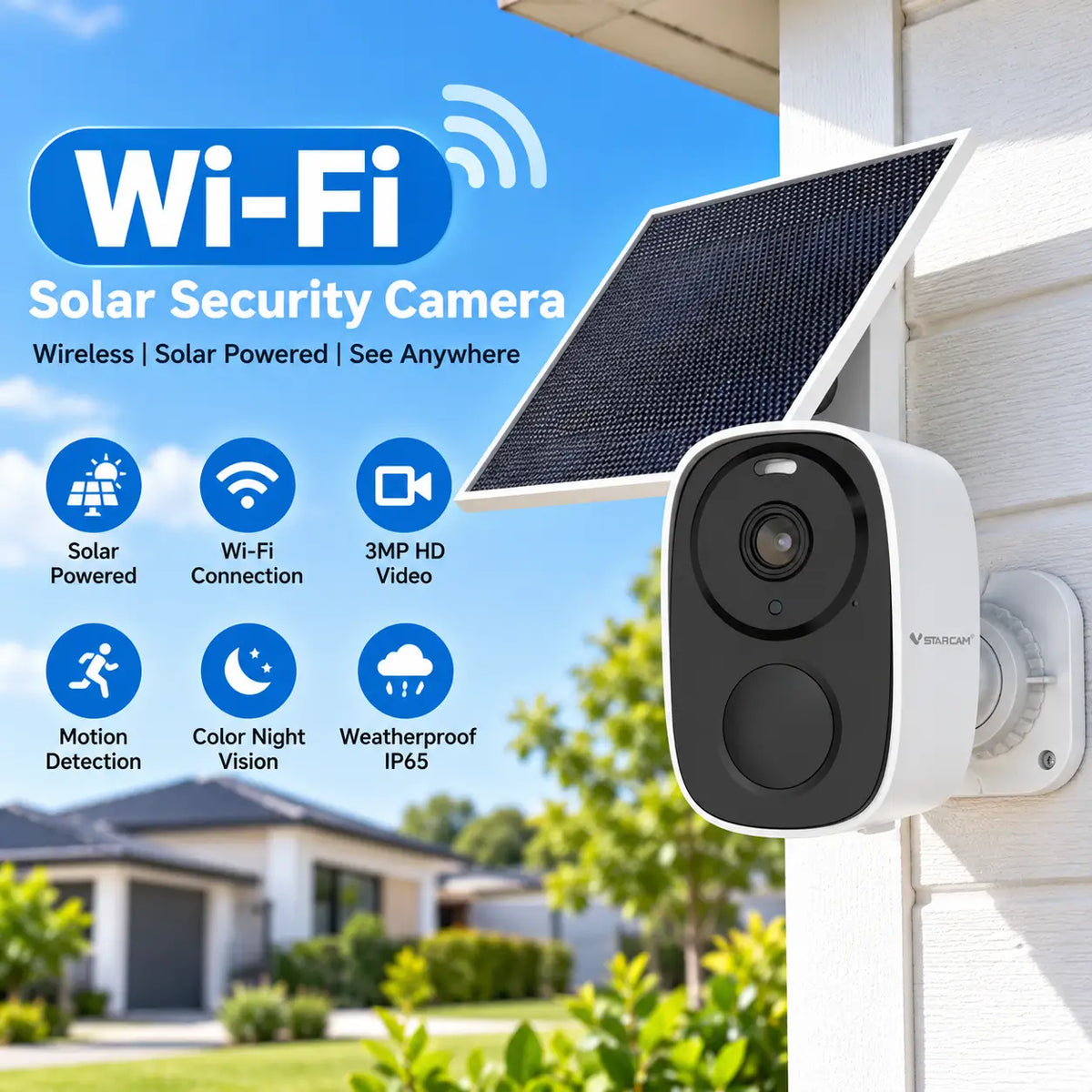
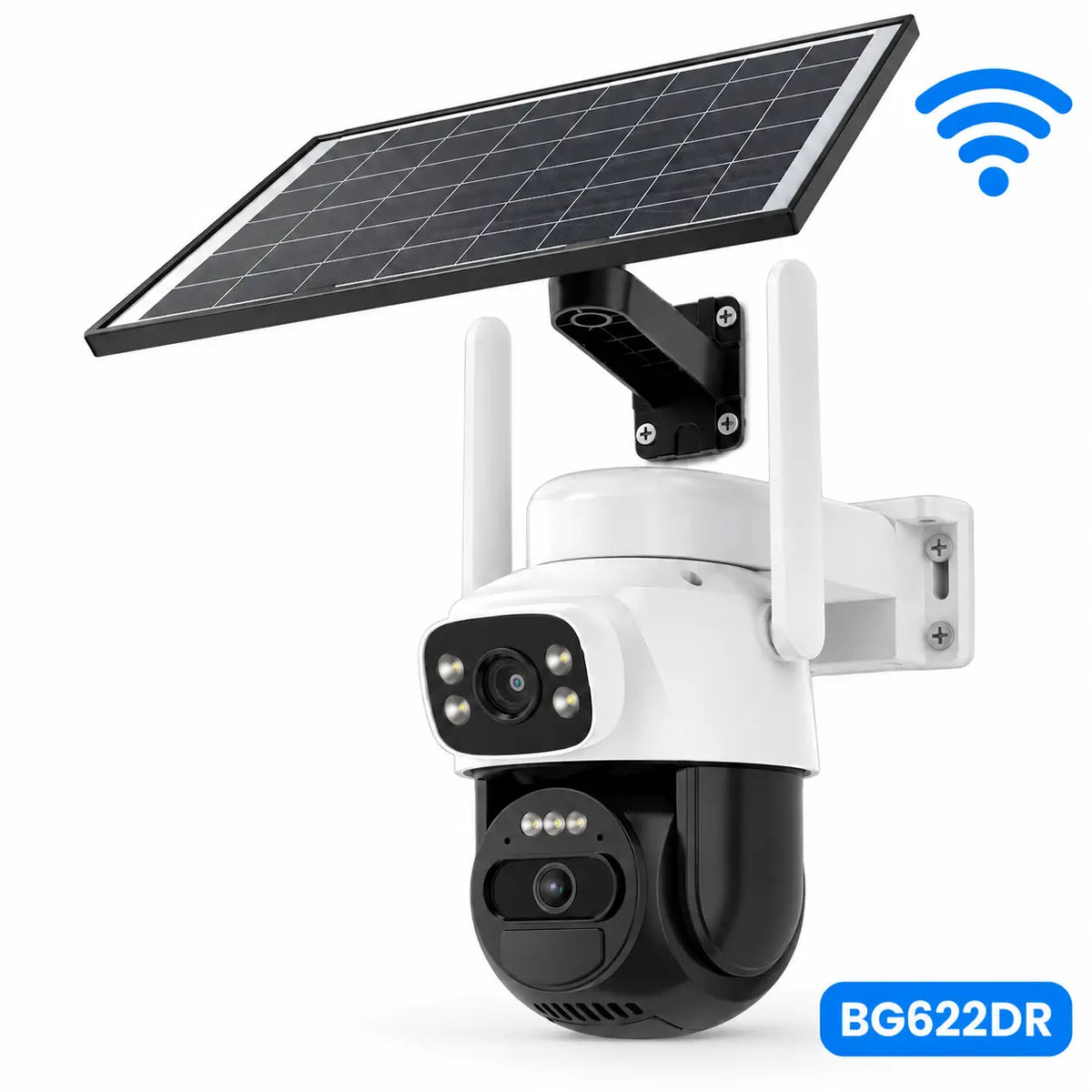
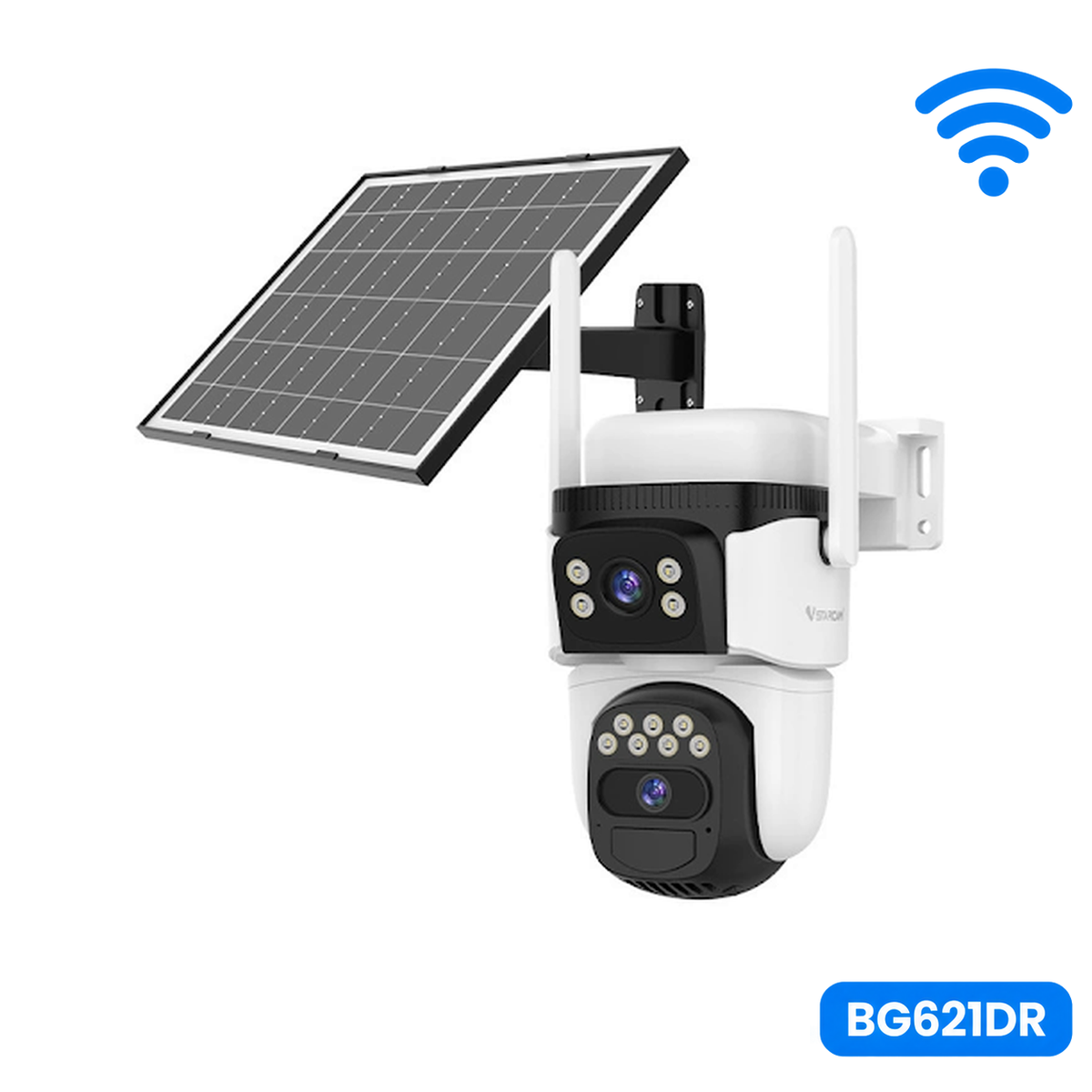
A Wi-Fi solar security camera connects wirelessly to a compatible Wi-Fi network, usually provided by a home or business router.
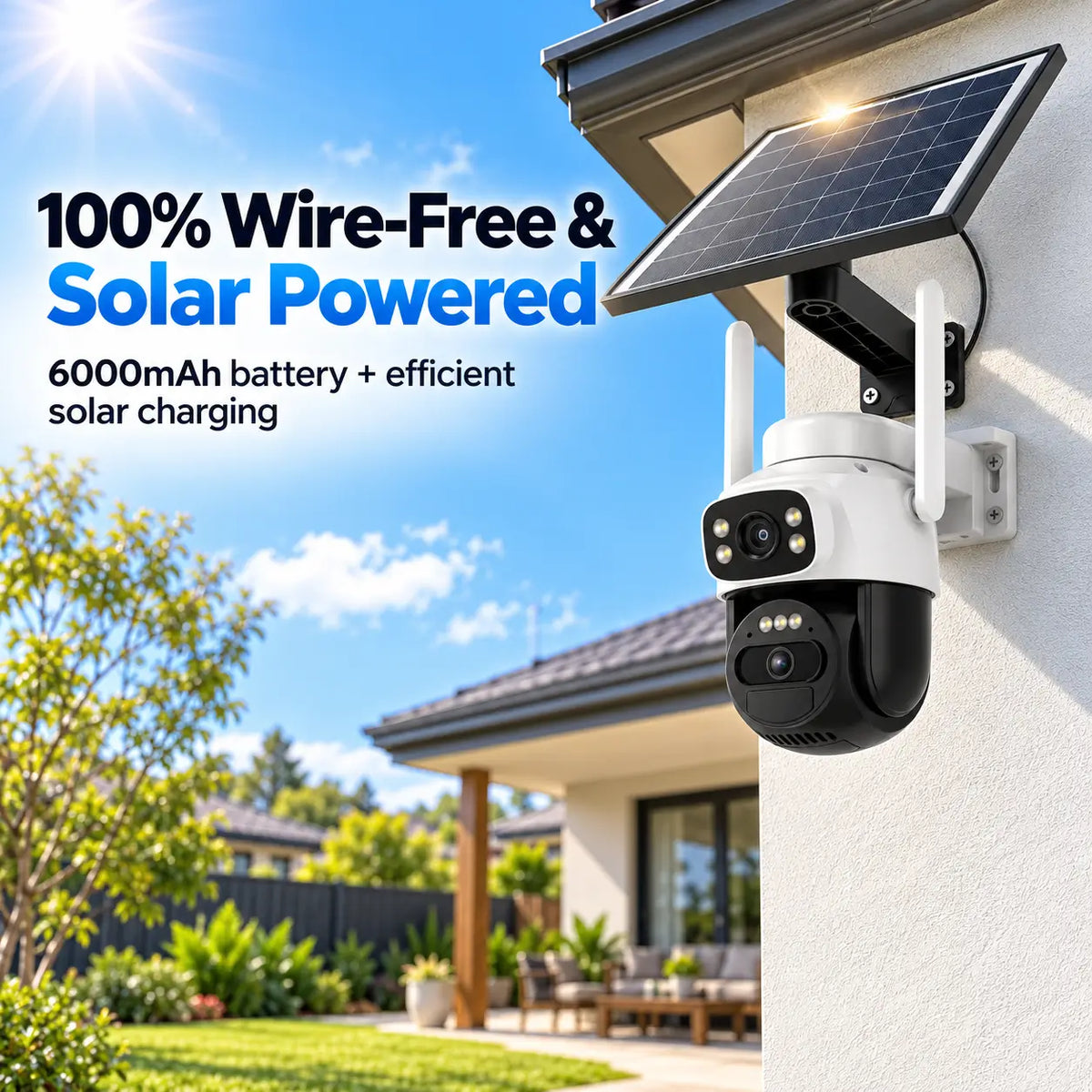
The camera uses solar energy and a rechargeable battery for power, while Wi-Fi provides its network connection.
When connected to a suitable network with internet access, compatible cameras can offer features such as:
- Live video viewing through a smartphone application.
- Motion detection notifications.
- Remote access to supported recordings.
- Two-way audio communication.
- Camera settings and remote management.
Wi-Fi solar security cameras are commonly used around residential properties.
Typical installation locations include front entrances, driveways, garages, backyards and garden areas.
The Importance of Wi-Fi Coverage
A Wi-Fi camera must be installed within reliable wireless network coverage to use its network-dependent features.
For example, a camera mounted near the front entrance may connect easily to the household router.
However, a camera installed at the far end of a large backyard may experience a weak or unreliable signal.
Walls, building materials, distance and interference can all affect Wi-Fi performance.
This is particularly relevant for larger Australian homes and properties with extensive outdoor areas.
2. What Is a 4G Solar Security Camera?
A 4G solar security camera connects through a compatible mobile telecommunications network rather than relying on a nearby Wi-Fi router.
These cameras typically require an activated SIM card and a suitable mobile data plan.
As long as adequate mobile network coverage and battery power are available, a 4G camera can provide supported remote monitoring functions without a fixed broadband connection.
Common features may include:
- Remote live viewing.
- Motion detection alerts.
- Video recording and playback.
- Two-way audio.
- Remote camera management.
Available functions depend on the specific camera model and mobile data service.
Does a 4G Camera Need Wi-Fi?
No. A genuine standalone 4G solar security camera does not require a home Wi-Fi network for its cellular connection.
However, it must support the mobile network frequencies and services available at its installation location.
It is also important to distinguish between a camera advertised as supporting 4G mobile connectivity and one advertised as supporting 5 GHz Wi-Fi.
These are different technologies.
3. Wi-Fi vs 4G Solar Security Cameras: Key Differences
The following table summarises the main differences.
| Feature | Wi-Fi Solar Camera | 4G Solar Camera |
|---|---|---|
| Network Connection | Local Wi-Fi network | Mobile cellular network |
| Home Router Required | Usually required for network access | Not required |
| SIM Card Required | No | Usually yes |
| Mobile Data Plan | Not normally required | Usually required |
| Suitable for Large Properties | Yes, within Wi-Fi coverage | Yes, where mobile coverage is available |
| Remote Locations | Limited by available Wi-Fi infrastructure | Suitable where mobile coverage exists |
| Construction Sites | Suitable if reliable Wi-Fi is available | Often practical without fixed internet |
| Ongoing Network Costs | Usually uses existing internet service | May incur mobile data charges |
| Remote Viewing | Supported with suitable internet access | Supported with suitable mobile data service |
| Solar Charging | Depends on solar panel and battery | Depends on solar panel and battery |
Neither connection type is automatically better.
The most appropriate choice depends on the installation location, available network coverage and ongoing operating requirements.
4. Why 4G Cameras Can Be Useful for Large Australian Homes
Many Australian houses have substantial outdoor areas, including long driveways, detached garages, large backyards and garden sheds.
Even when the house has a reliable internet connection, the household Wi-Fi signal may not reach every important outdoor location.
For example, consider a large residential property in Western Sydney.
The main house has a Wi-Fi router providing good indoor coverage.
However, the homeowner wants to monitor a rear boundary gate located approximately 60 metres from the house.
The Wi-Fi signal at that location may be weak or unavailable.
In this situation, there are two possible approaches.
Option 1: Extend the Existing Wi-Fi Network
The homeowner could consider installing a suitable outdoor Wi-Fi access point or another network extension solution.
This may allow a Wi-Fi solar camera to connect reliably.
However, extending network coverage may require additional equipment and installation work.
Option 2: Install a 4G Solar Security Camera
A 4G camera could provide an alternative by connecting directly to a mobile network.
This avoids the need to extend the household Wi-Fi network to that location.
However, the camera must have adequate mobile coverage, and an ongoing data plan may be required.
For large Australian properties, 4G cameras can therefore be useful even when the home already has broadband internet.
This is an important consideration for homeowners monitoring distant gates, garages, sheds or property boundaries.
5. Why 4G Solar Cameras Are Practical for Construction Sites
Construction sites are another important application for 4G solar security cameras.
Small builders and property developers may operate one or two residential construction sites at a time.
These sites often have valuable building materials, tools, equipment and partially completed structures.
However, permanent electricity and fixed internet connections may not yet be available.
Monitoring Building Materials and Equipment
A 4G solar security camera may help builders monitor activity around:
- Building material storage areas.
- Site entrances and temporary gates.
- Construction equipment.
- Tool storage containers.
- Partially completed residential buildings.
Depending on the camera's capabilities, builders may receive motion alerts and remotely view activity through a smartphone application.
Suitable for Small Builders and Developers
Consider a small Australian property developer constructing two houses at separate locations.
Each construction site may operate for several months before the buildings are completed.
Installing permanent broadband infrastructure solely for temporary monitoring may be inconvenient.
A compatible 4G solar camera can provide a more flexible option where suitable mobile coverage is available.
The camera may also be relocated to another project when construction is completed.
Important Construction Site Considerations
Construction environments can be demanding.
Cameras should be securely mounted and protected against accidental damage, theft and environmental exposure.
Mobile network coverage, solar panel positioning and battery endurance should also be assessed.
A camera can support site monitoring, but it should not be treated as a replacement for appropriate fencing, access control or other security measures.
6. Wi-Fi and 4G Cameras for Farms and Rural Properties
Rural properties are another common application for solar security cameras.
Farm entrances, equipment sheds, livestock areas and remote storage buildings may be located considerable distances from the main residence.
When Wi-Fi May Be Suitable
Wi-Fi cameras can be practical around farmhouses, workshops or buildings with reliable wireless coverage.
For example, a camera monitoring a shed close to the farmhouse may use the existing Wi-Fi network.
When 4G May Be More Suitable
A 4G camera may be preferable for a remote gate or storage area beyond the reach of the property's Wi-Fi network.
However, rural mobile coverage can vary significantly.
Some locations may have weak reception or no compatible mobile service.
Before purchasing a 4G camera, users should confirm network compatibility and check coverage at the intended installation location.
A coverage map is a useful starting point, but it does not guarantee reliable reception at every specific mounting position.
7. What Are the Ongoing Costs of Wi-Fi and 4G Cameras?
Operating costs are another important difference between the two camera types.
Wi-Fi Camera Costs
A Wi-Fi solar security camera normally uses an existing home or business internet connection.
This means a separate mobile data subscription is generally unnecessary.
However, optional cloud storage subscriptions or additional networking equipment may involve extra costs.
4G Camera Costs
A 4G solar security camera usually requires a compatible SIM card and mobile data service.
Data consumption depends on factors such as:
- Frequency and duration of remote live viewing.
- Video resolution and compression.
- Video uploads and cloud storage.
- Recording and notification features.
- Camera configuration.
A camera that frequently uploads video may consume substantially more mobile data than one that primarily records locally.
Consumers should review the manufacturer's estimated data usage and the mobile provider's plan conditions before purchasing.
8. Which Camera Should You Choose?
The following examples provide a practical starting point.
| Installation Location | Suggested Option | Reason |
|---|---|---|
| Front entrance with strong home Wi-Fi | Wi-Fi | Uses existing network |
| Garage within reliable Wi-Fi range | Wi-Fi | No separate mobile plan normally needed |
| Large backyard beyond Wi-Fi coverage | Wi-Fi extension or 4G | Depends on network extension practicality |
| Rear property boundary | 4G may be suitable | Useful when Wi-Fi is unavailable |
| Residential construction site | 4G | Often lacks permanent internet infrastructure |
| Temporary building project | 4G | Can be relocated between projects |
| Farmhouse and nearby sheds | Wi-Fi | Suitable where network coverage exists |
| Remote farm entrance | 4G | Useful where mobile coverage is available |
| Location without Wi-Fi or mobile coverage | Alternative connection required | Neither option provides reliable remote access without suitable connectivity |
These examples are general guidance.
A property's network conditions should always be assessed before choosing a camera.
9. Common Misunderstandings About Wi-Fi and 4G Cameras
Does a 4G Camera Work Anywhere in Australia?
No. A 4G camera requires compatible mobile network coverage.
Remote locations without suitable cellular service may not support reliable remote monitoring.
Is a 4G Camera Always Better Than Wi-Fi?
No. Where reliable Wi-Fi already exists, a Wi-Fi camera may be more economical and convenient.
4G is particularly useful when suitable Wi-Fi infrastructure is unavailable or impractical to extend.
Does a Solar Camera Need Internet to Record Video?
Not necessarily.
Some Wi-Fi and 4G cameras support local recording without an active internet connection.
However, remote viewing, cloud services and smartphone notifications may require connectivity.
Recording behaviour varies between models.
Final Thoughts
Wi-Fi and 4G solar security cameras offer different approaches to outdoor monitoring.
Wi-Fi cameras are often suitable for Australian homes and businesses with reliable existing wireless coverage.
4G cameras provide additional flexibility for locations without convenient Wi-Fi access.
Importantly, 4G solar cameras are not limited to farms and remote rural properties.
They can also be valuable for large suburban homes, distant garages, backyard boundaries, residential construction sites and temporary building projects.
For small builders and property developers, 4G solar cameras may offer a practical way to monitor construction activity without installing permanent internet infrastructure.
Ultimately, the best choice depends on network availability, monitoring requirements, installation conditions and ongoing costs.
Choose Wi-Fi when reliable wireless coverage is available. Consider 4G when Wi-Fi is unavailable or difficult to extend, provided suitable mobile network coverage exists.
About SolarEasy
SolarEasy is an Australian-owned online retailer specialising in solar powered products for homes, gardens and outdoor applications.
Our Solar Powered Security Camera Information Hub provides practical educational resources to help Australian homeowners, builders, property developers and rural property owners understand solar security technology and make informed purchasing decisions.