
Frequently Asked Questions About Victorian Solar Post & Pillar Lights
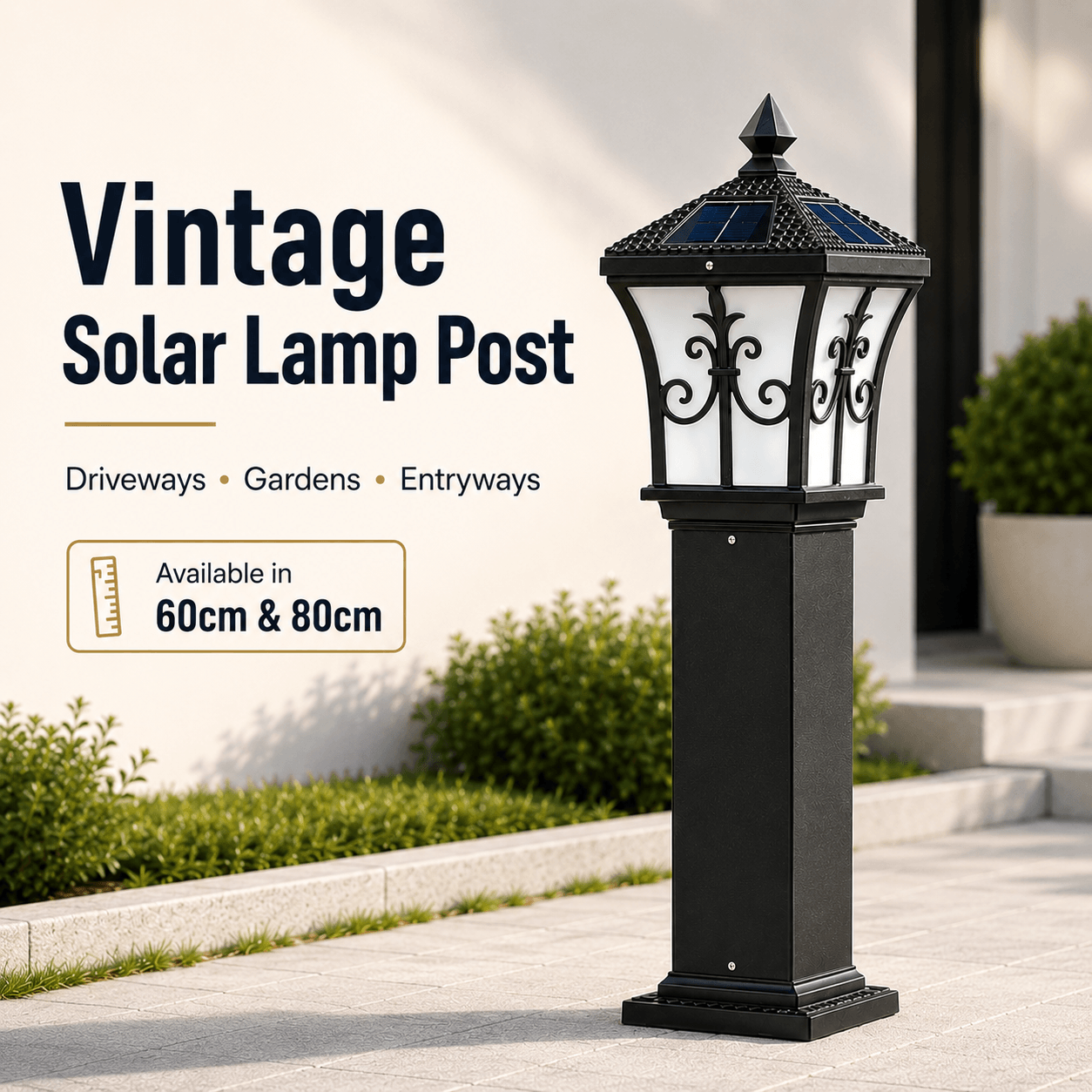
Victorian solar post and pillar lights offer a practical way to bring classic, heritage and antique-inspired character to an Australian home without the need for mains electrical wiring. They are often chosen for driveway entrances, front gates, garden pillars, pathways and outdoor entertaining areas where appearance is just as important as illumination.
If you are considering Victorian-style solar lighting for your property, the following questions cover some of the most common things homeowners want to know before making a purchase.
What is the difference between a solar pillar light and a solar post light?
The main difference is where the light is installed and its overall height.
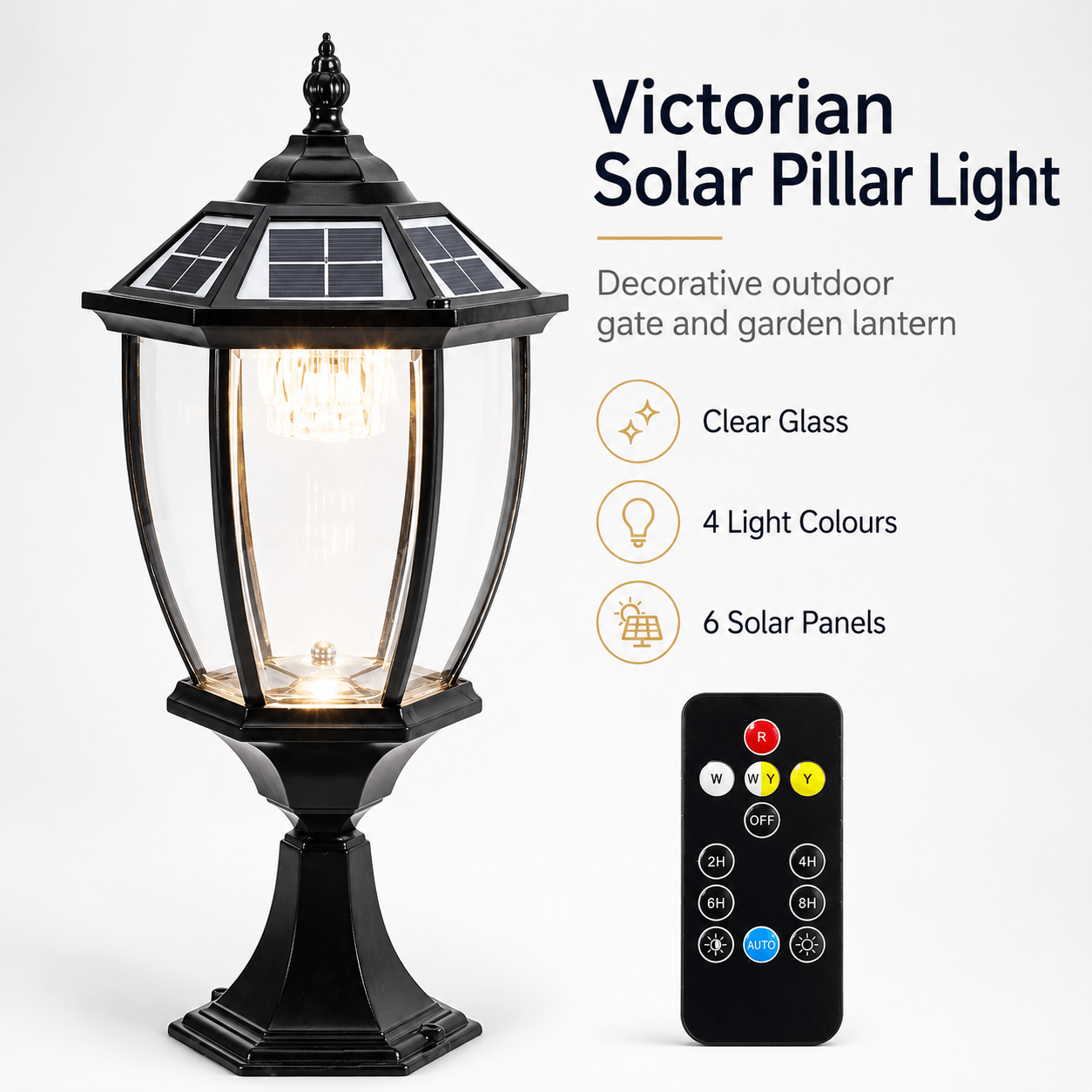
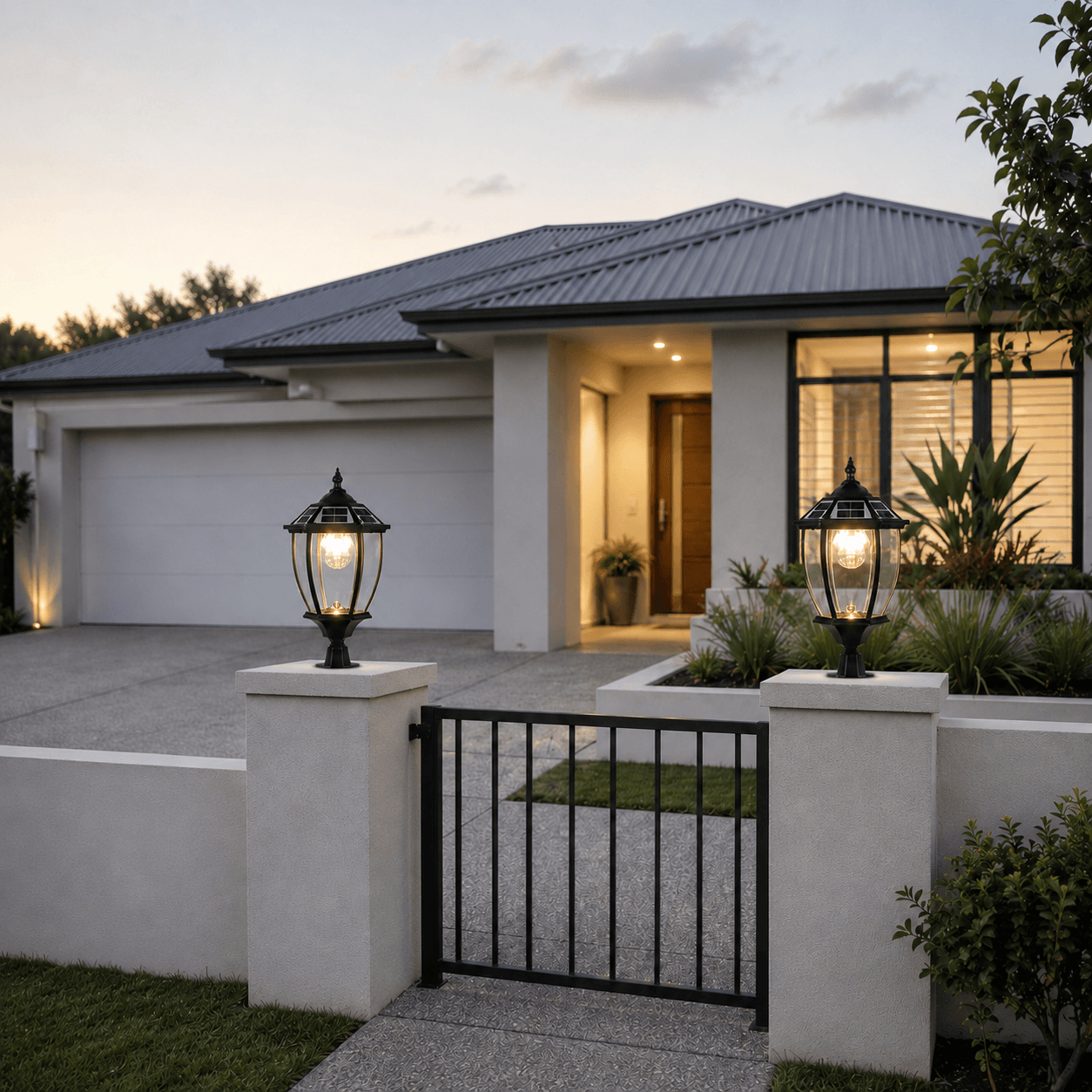
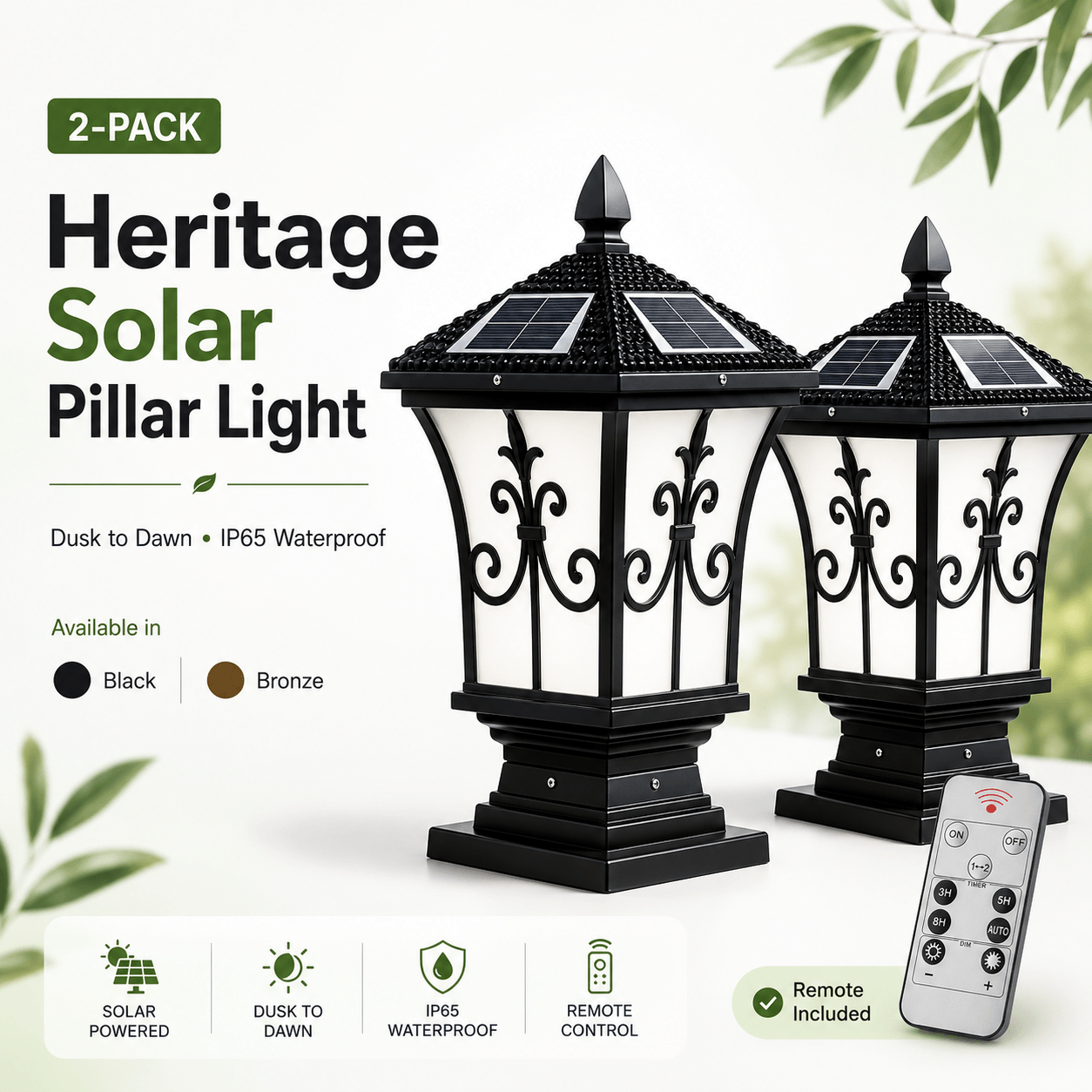
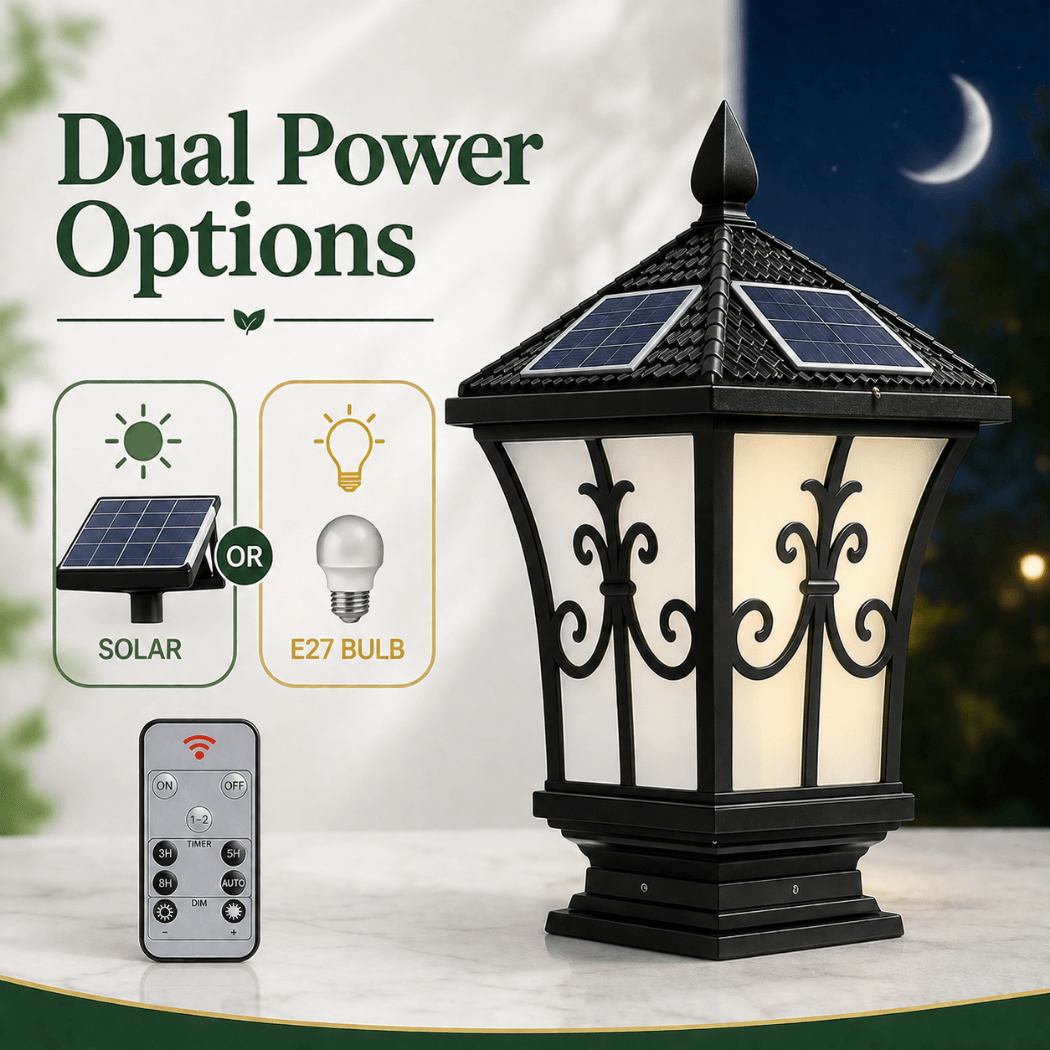
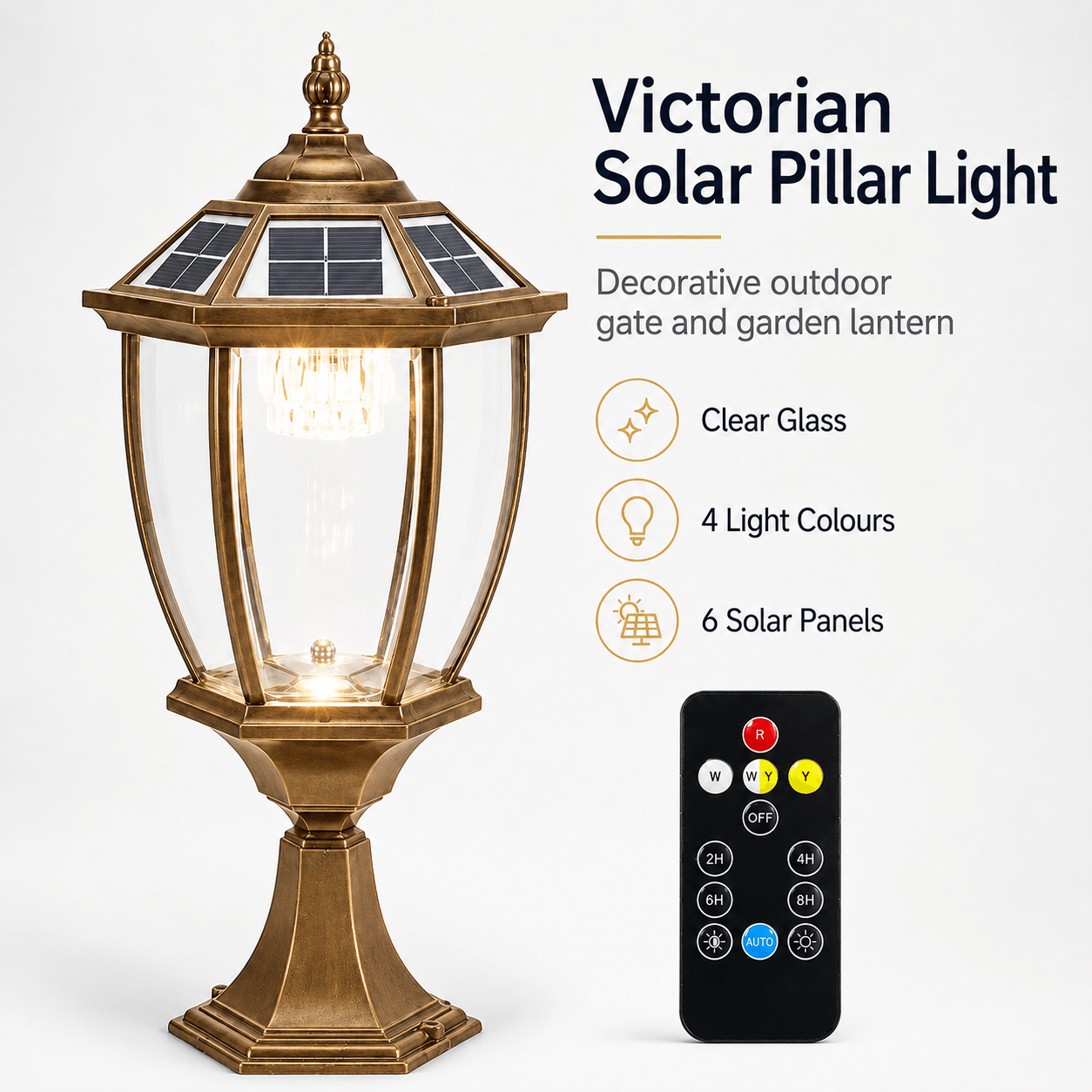
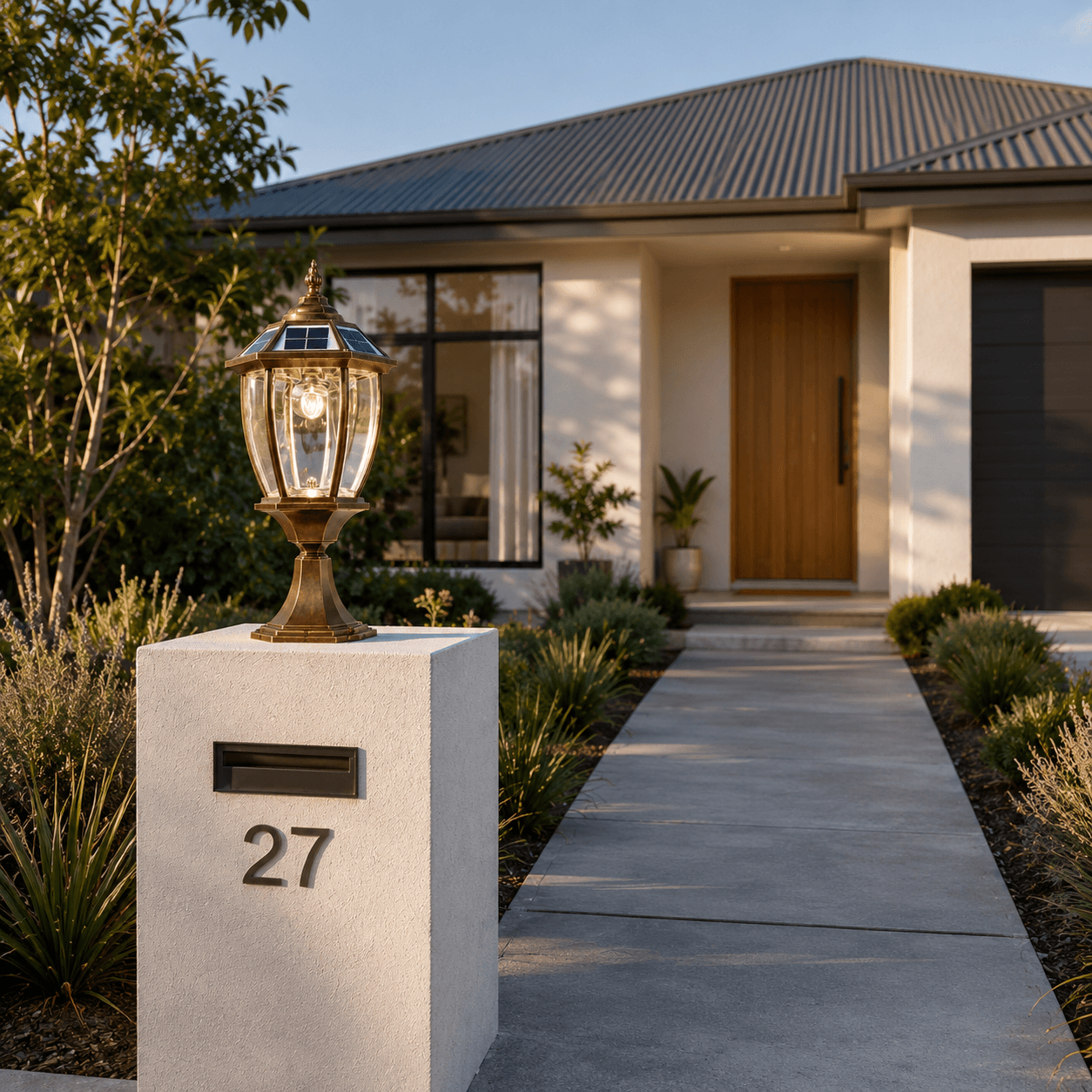
A solar pillar light is normally mounted directly on top of a masonry pillar, brick column, fence post or entrance pier. Because the pillar itself provides the height, the light generally consists mainly of the lantern head and mounting base.
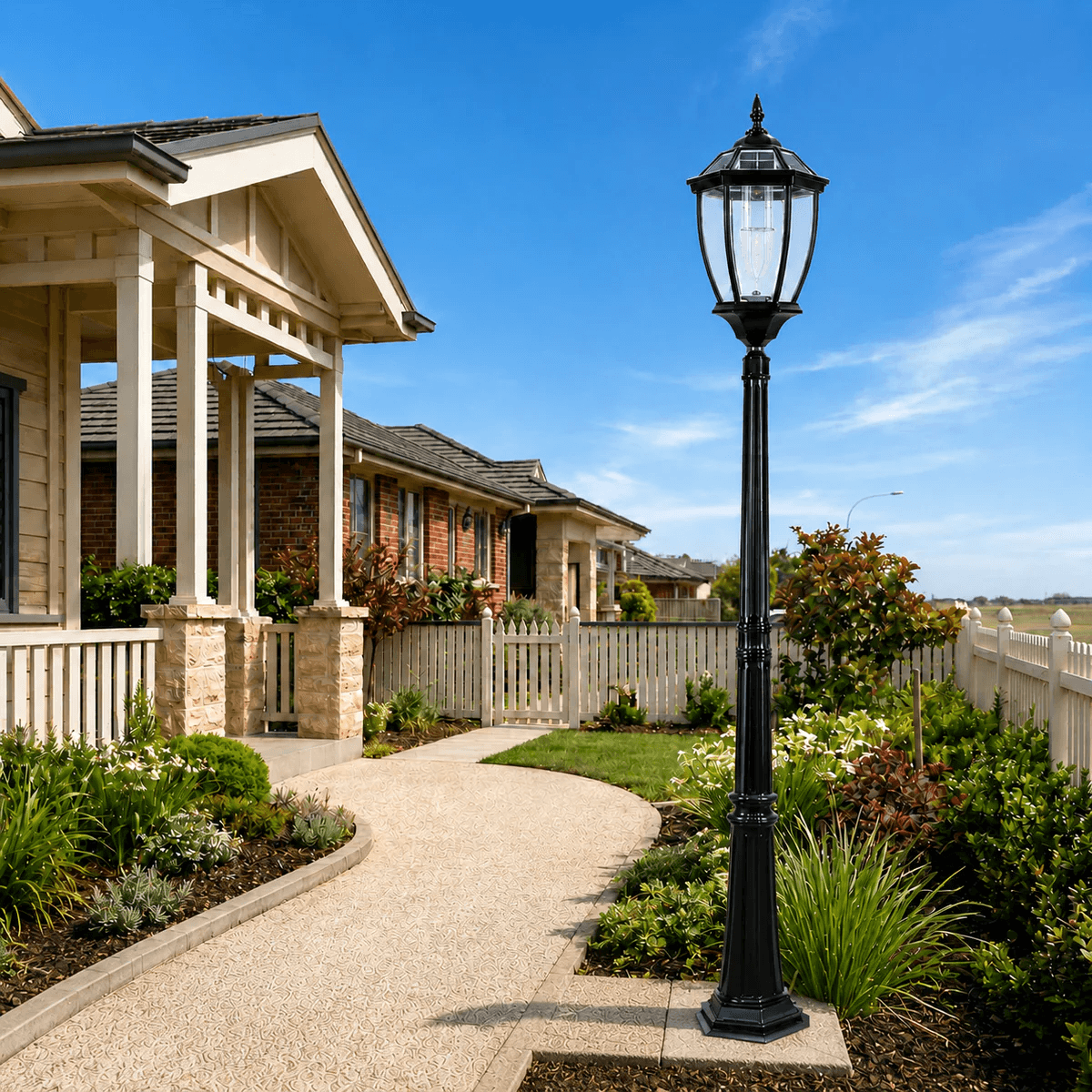
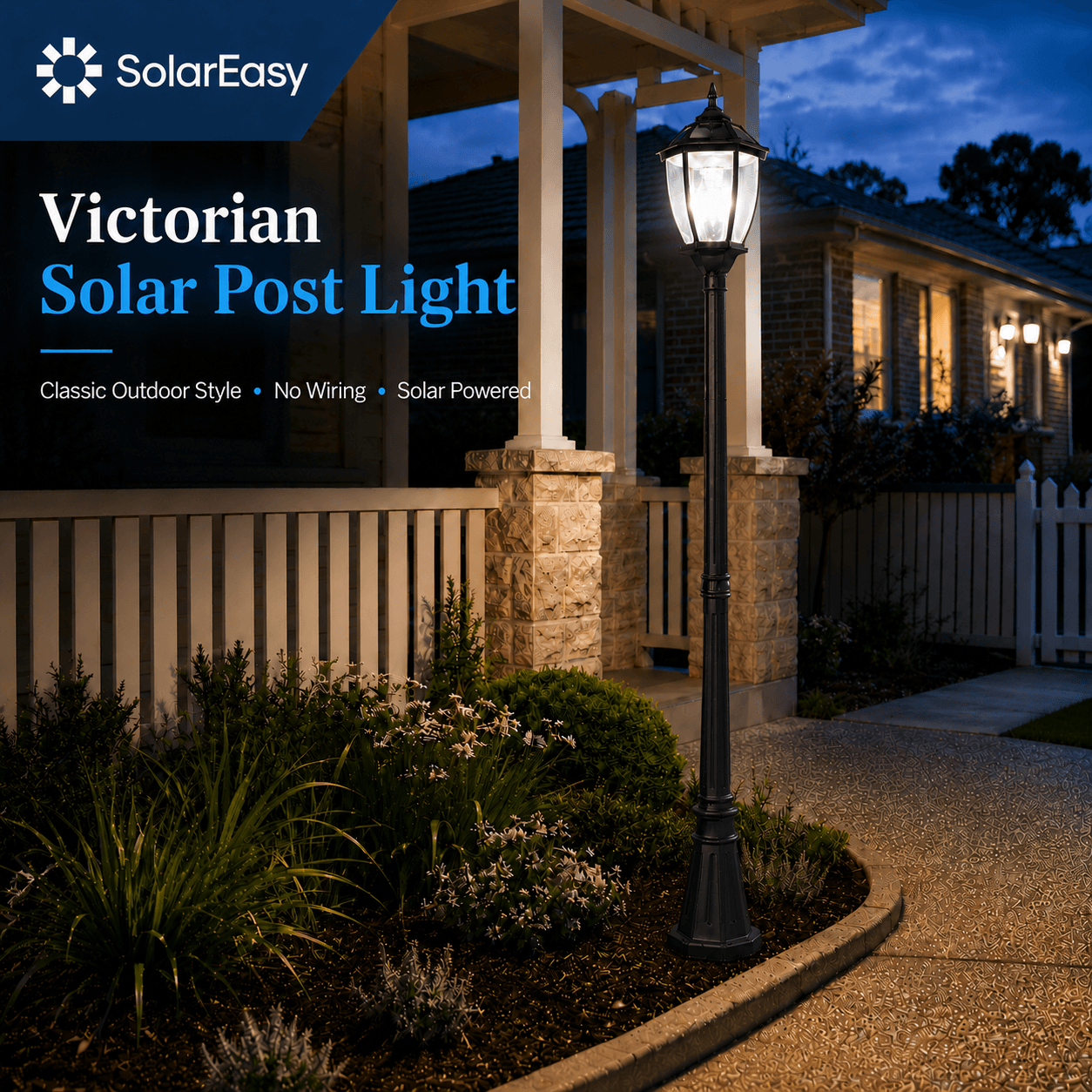
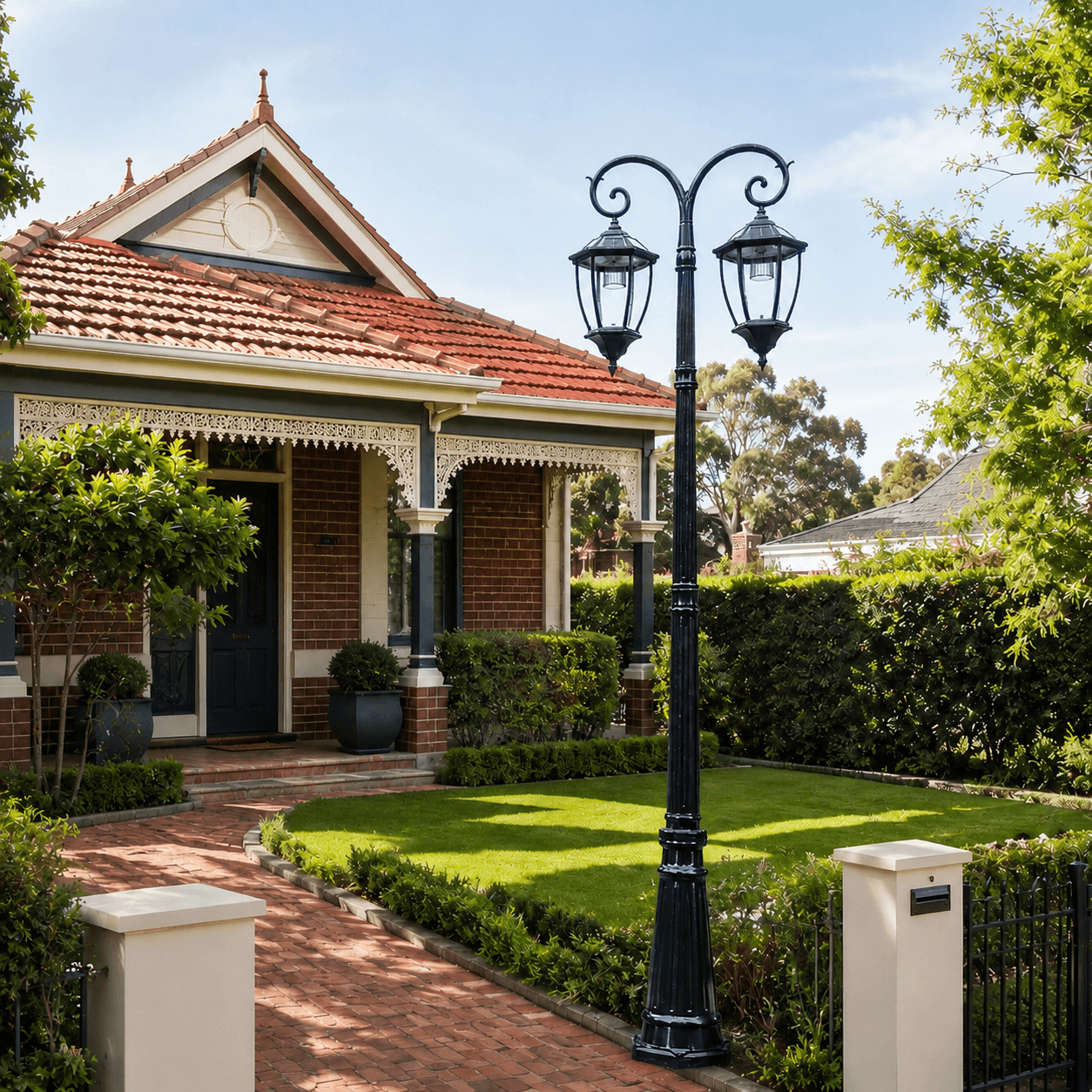
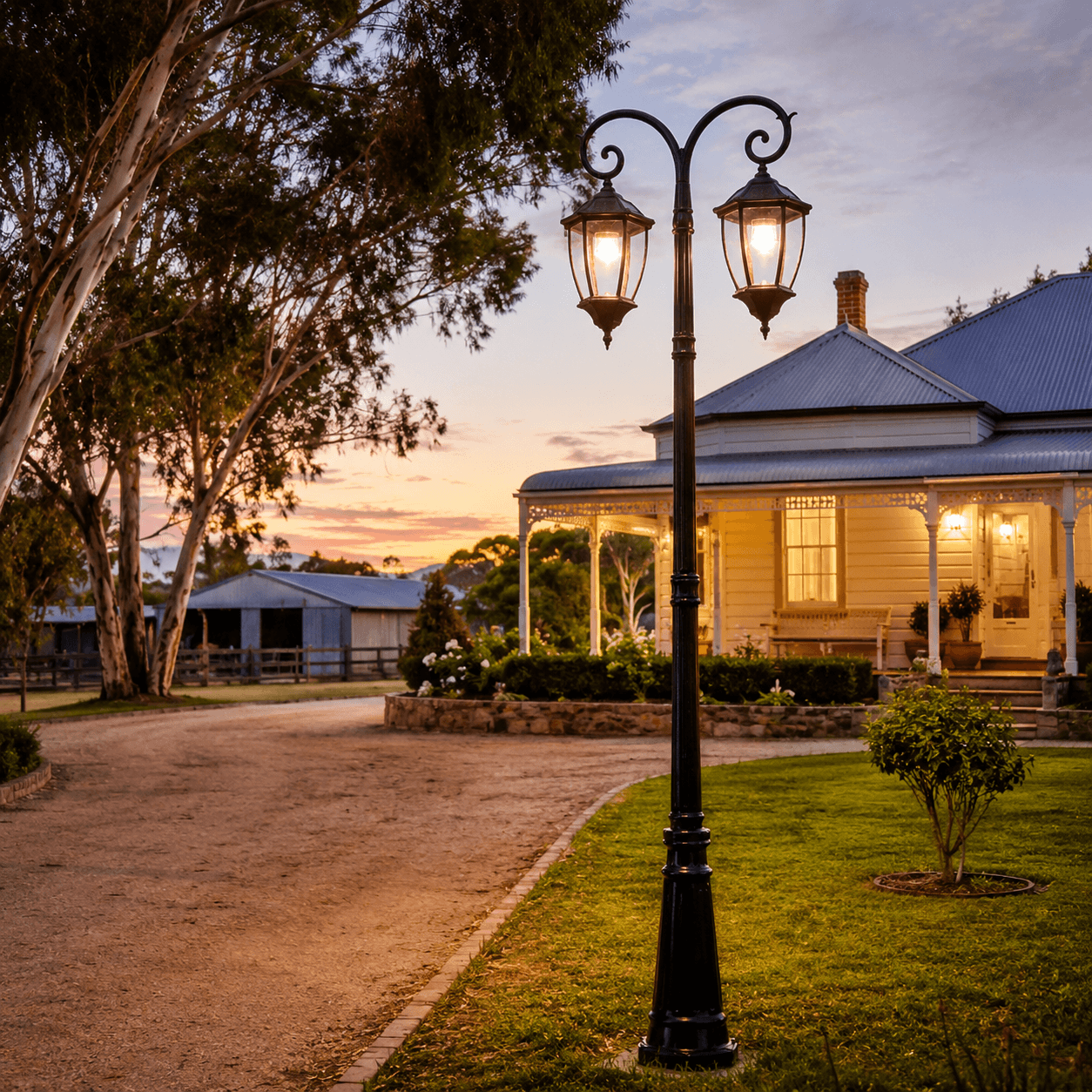
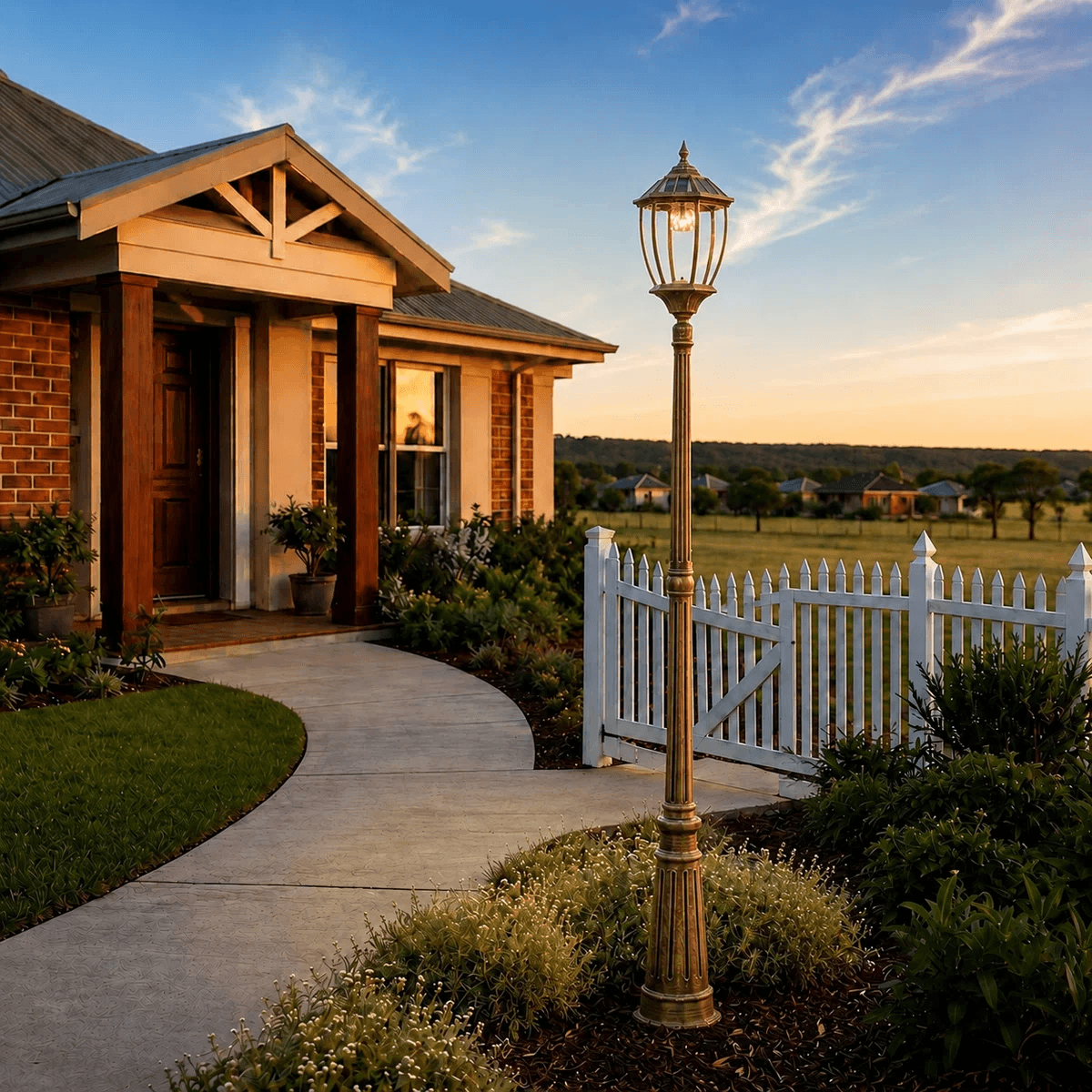
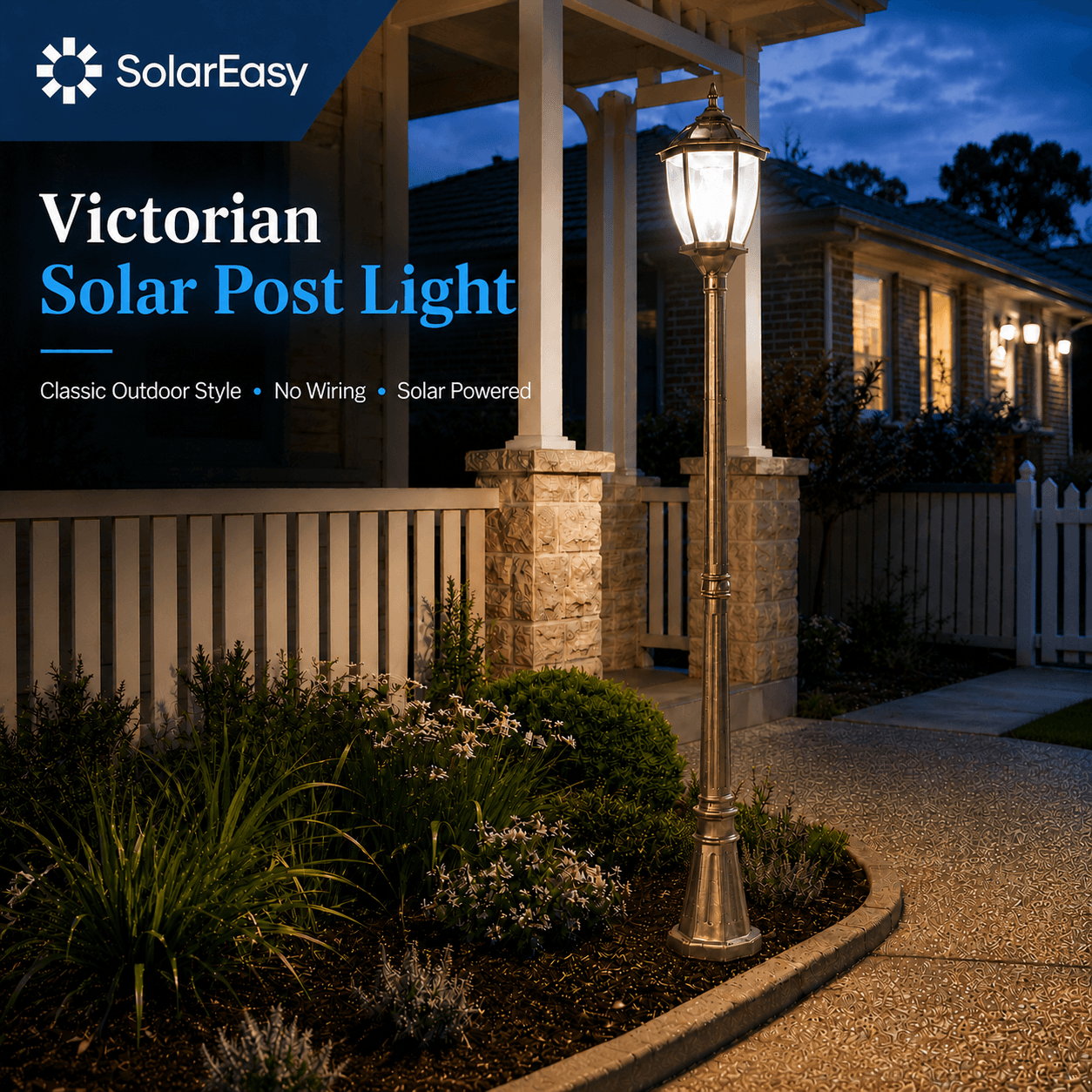
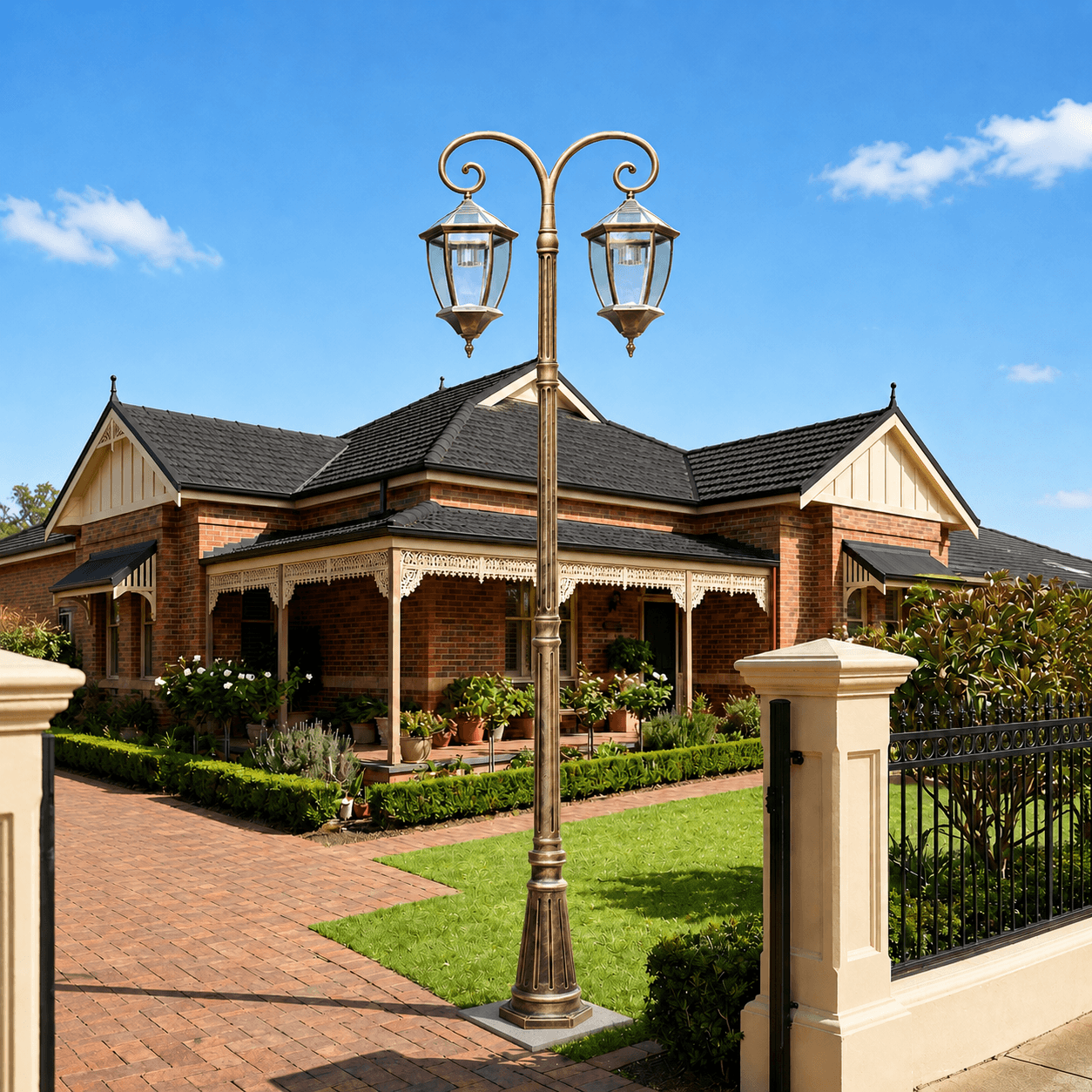
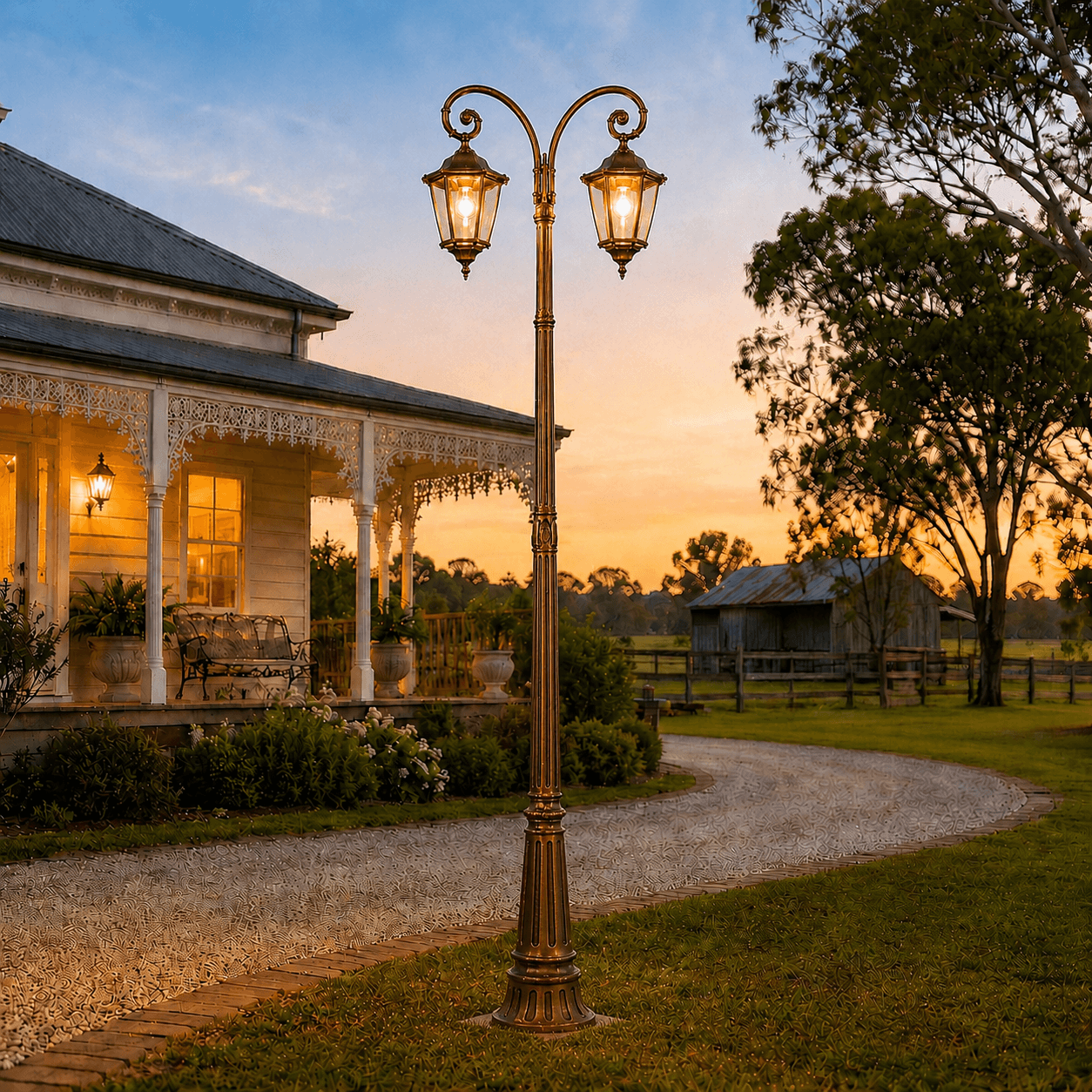
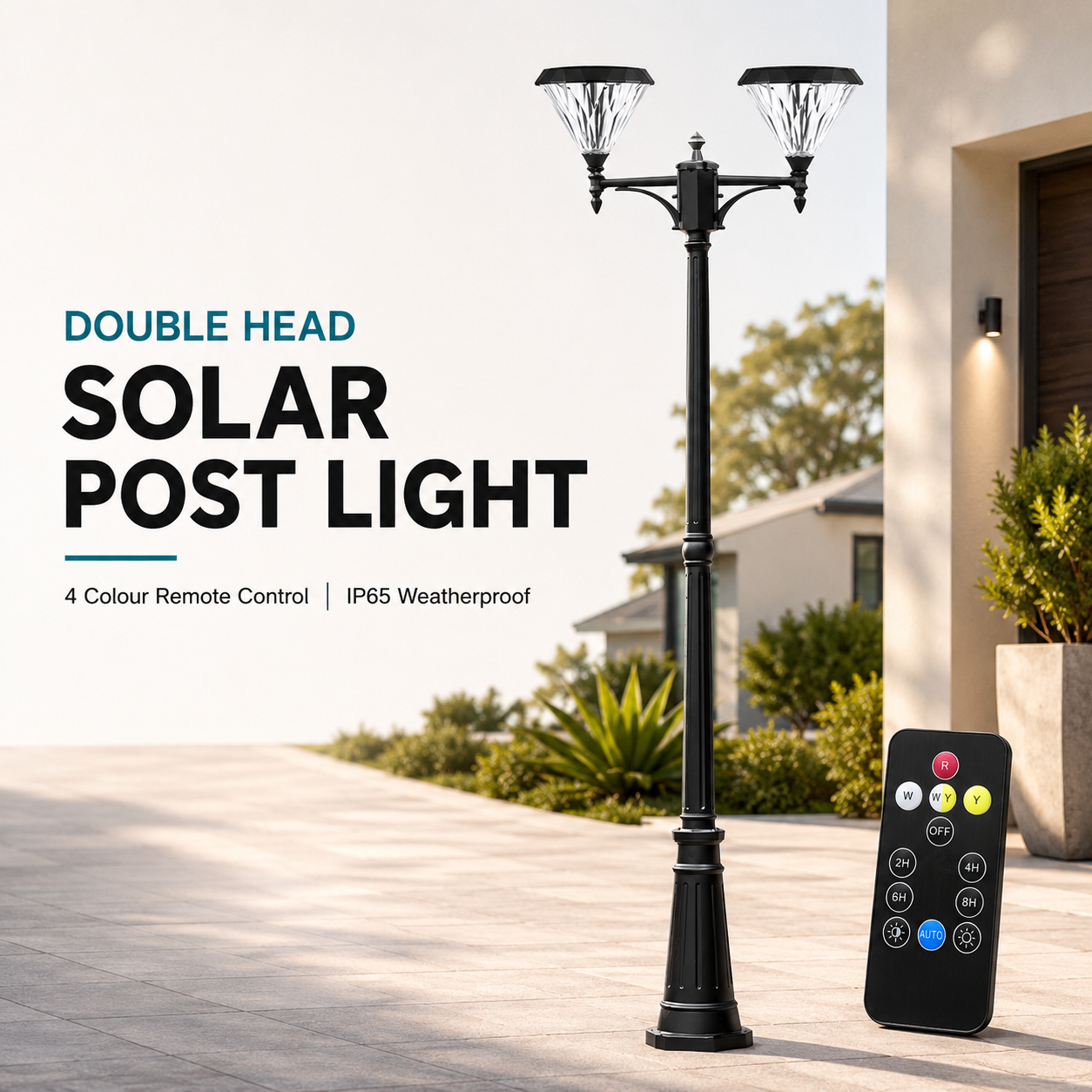
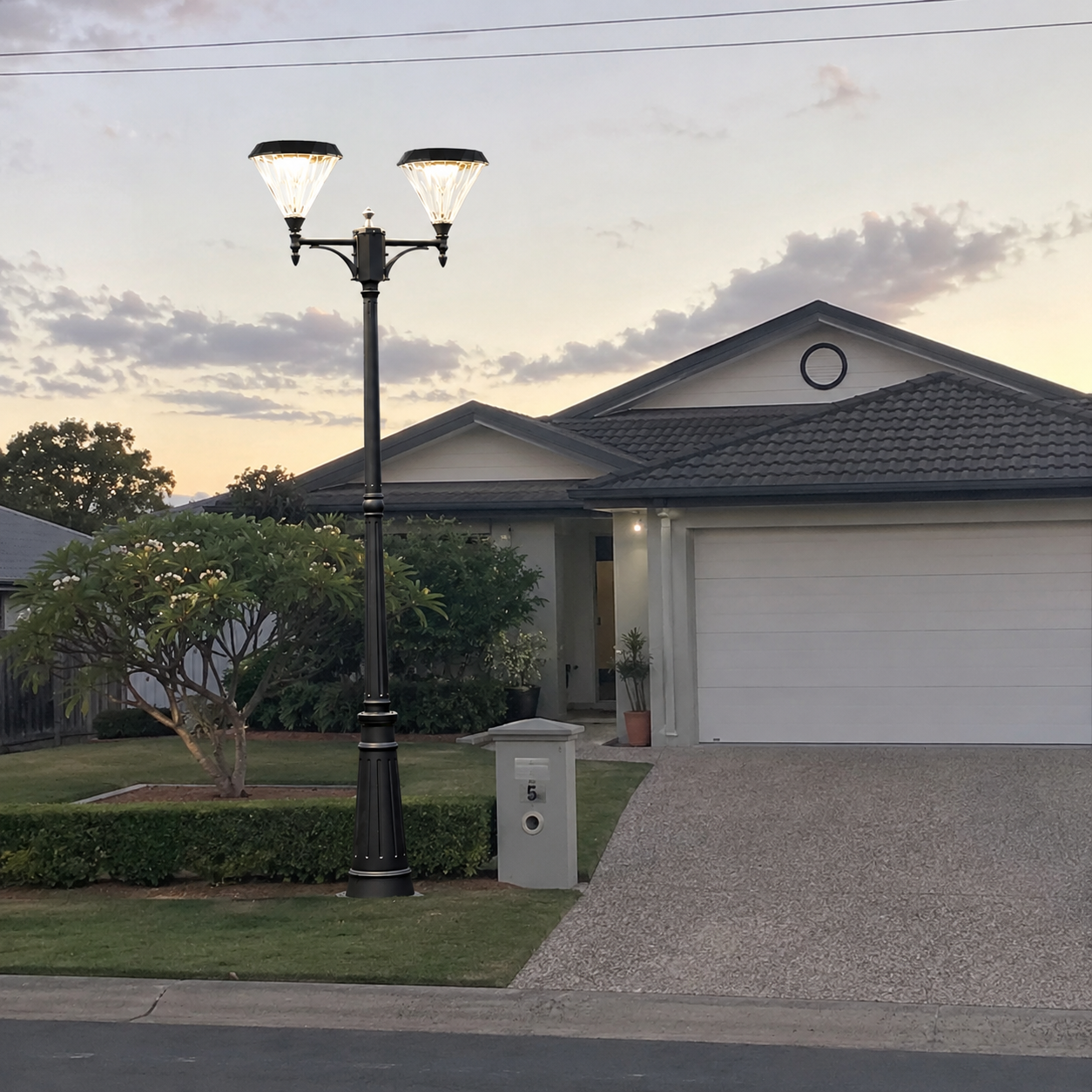
A solar post light uses a taller post or pole to raise the lantern above ground level. It is commonly installed beside driveways, garden paths, entrances and landscaped areas.
Both can provide the same Victorian, classical or heritage appearance. The best choice depends mainly on where you want to install the light.
Are Victorian solar post and pillar lights suitable for Australian homes?
Yes. Victorian-style outdoor lighting works particularly well with many architectural styles found across Australia.
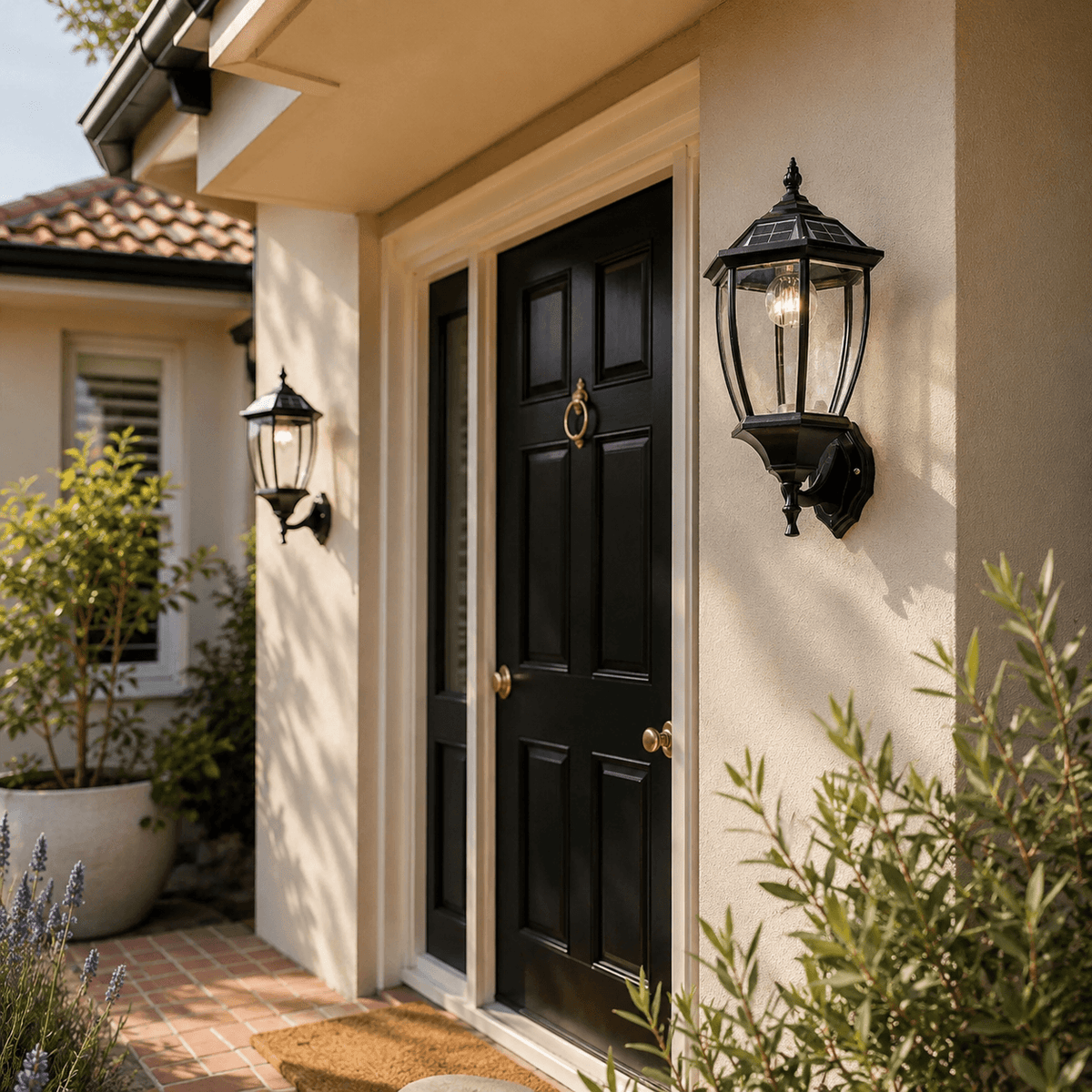
It can complement Victorian, Federation, heritage-inspired, traditional and country-style homes, as well as brick homes with decorative gates or masonry pillars.
It can also be used with more contemporary homes when the owner wants to introduce a stronger classical feature around the driveway, garden or entrance.
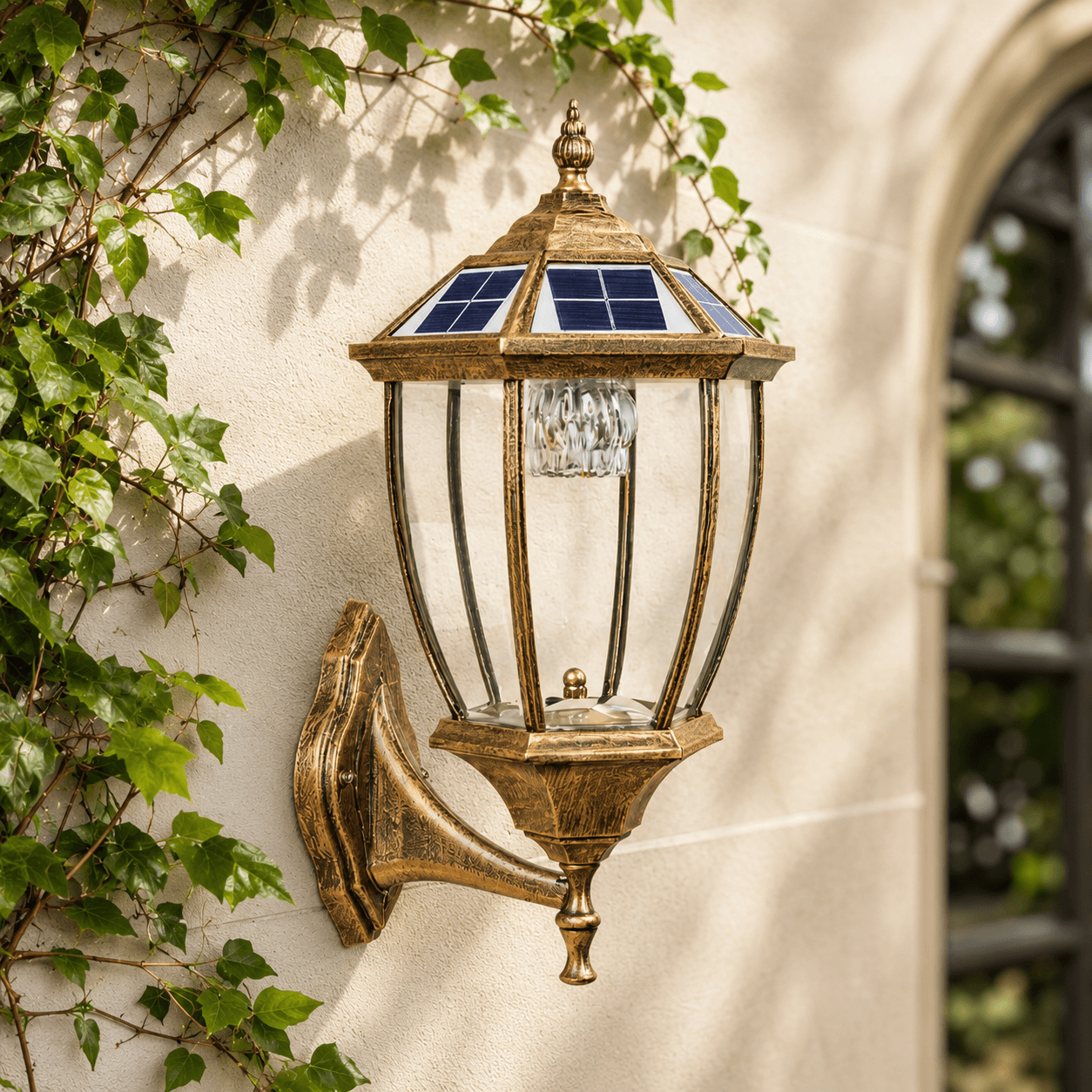
The black lantern-style appearance, clear glass panels and traditional proportions can help create a more established and welcoming outdoor character.
Do I need an electrician to install a solar post or pillar light?
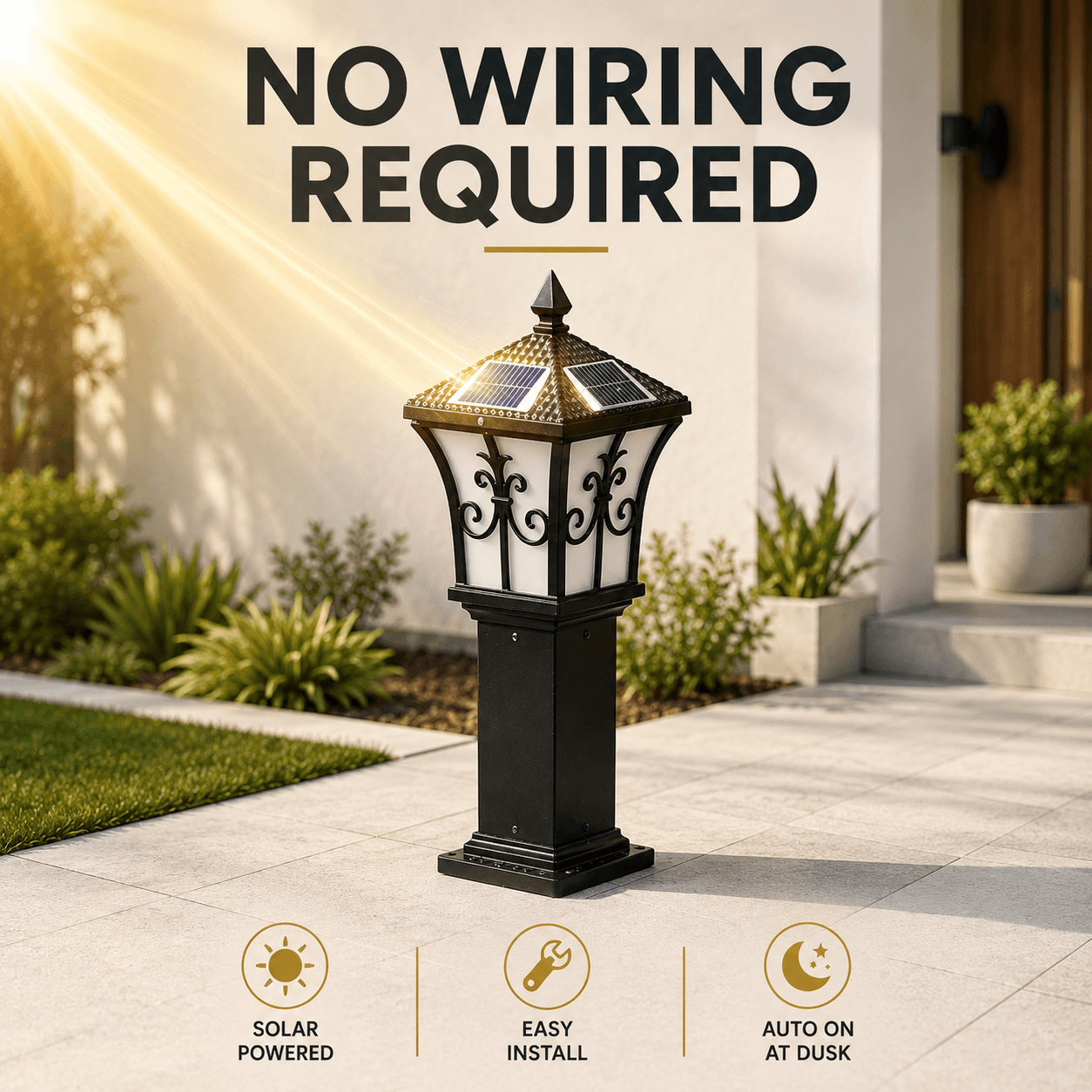
In most normal installations, a solar light does not require connection to household mains electricity.
The solar panel collects energy during the day and stores it in the internal rechargeable battery. This means there is generally no need to run electrical cables from the house to the light.
This can make solar lighting particularly convenient for locations such as driveway entrances, garden paths, gates and boundary pillars where installing mains wiring may otherwise involve trenching or additional electrical work.
The physical light or post should still be installed securely on a suitable surface.
How much sunlight do solar post and pillar lights need each day?
Solar lights perform best when their solar panels receive several hours of good direct sunlight during the day.
For Australian homes, try to position the light where the solar panel is not heavily shaded by trees, roofs, fences or nearby buildings.
A location that appears sunny in the morning may become shaded later in the day, so it is useful to observe the area over several hours before deciding on the final installation position.
The more effectively the battery charges during the day, the better the light is generally able to perform at night.
Will the lights still work on cloudy or rainy days?
Yes, solar lights can still collect energy under cloudy conditions, but charging is normally less effective than on a clear, sunny day.
After several days of heavy cloud or rain, you may notice that the light operates for fewer hours at night.
This is normal for solar-powered lighting because the available nighttime energy depends on how much solar energy was collected and stored during the day.
Good placement in an open, sunny area helps maximise charging throughout the year.
How long will the light stay on at night?
Runtime depends on several factors, including the amount of sunlight received during the day, battery charge level, season and weather conditions.
SolarEasy Victorian-style lights are designed for automatic evening operation, making them suitable for decorative lighting around entrances, pillars, pathways and gardens.
During periods of strong sunshine, the battery will generally receive a better charge. During winter or prolonged cloudy weather, available operating time may be reduced.
Keeping the solar panel clean and free from shade can also help maintain better charging performance.
Are Victorian solar pillar and post lights bright enough to light a driveway or garden?
Victorian solar post and pillar lights are primarily designed as decorative and ambient outdoor lighting.
They can help define an entrance, highlight a driveway edge, illuminate a pillar or add gentle visibility around a garden or pathway. Their main purpose, however, is to improve the appearance and atmosphere of the property.
They should not be confused with high-powered solar street lights, floodlights or dedicated security lights.
If your main requirement is strong illumination over a large driveway, car park or security area, a higher-output solar floodlight or street light would normally be more suitable.
What is the difference between warm white and cool white?
The difference is mainly the appearance and atmosphere created by the light.
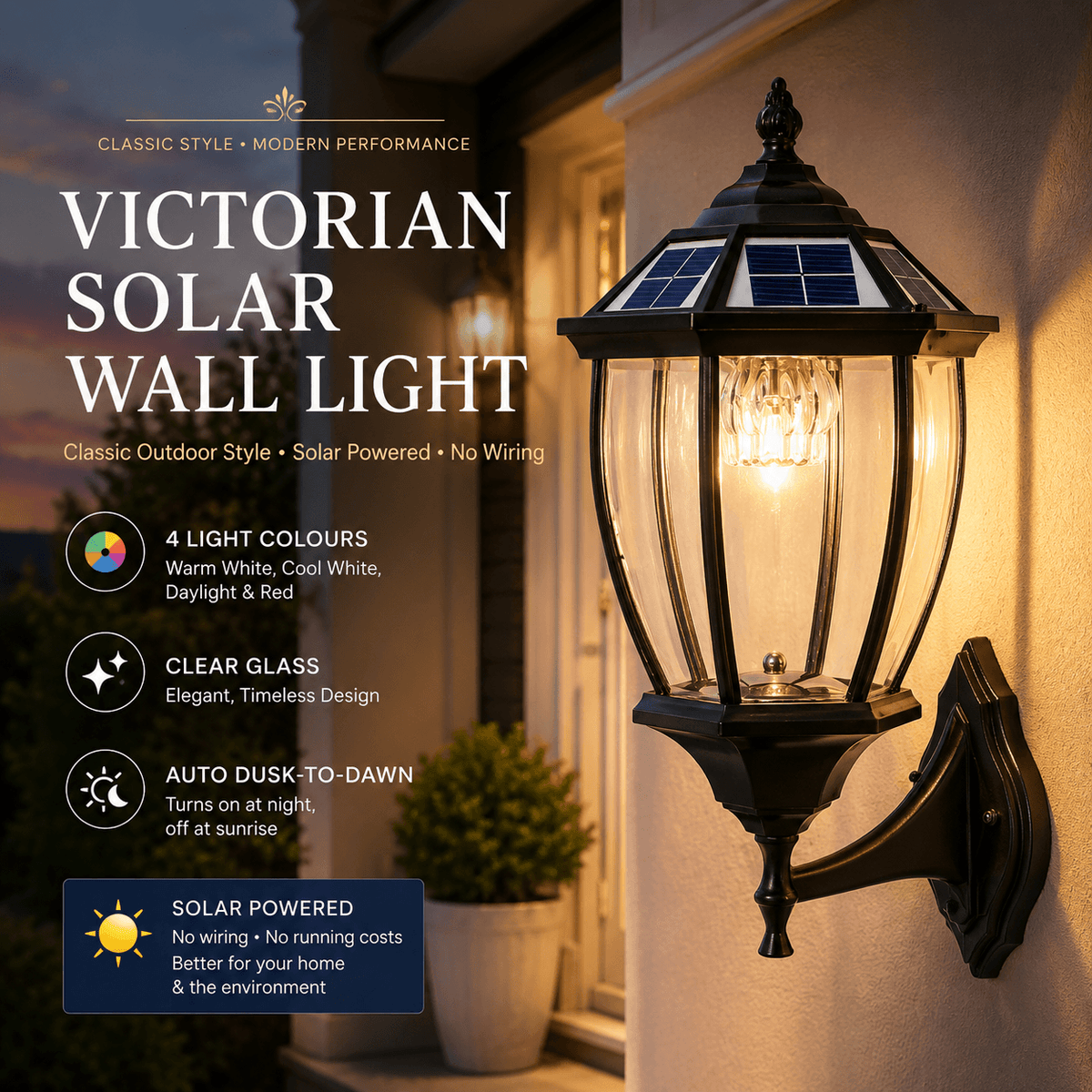
Warm white produces a softer, warmer glow. It works particularly well with Victorian, classical, antique and heritage-style architecture and can give an entrance or garden a more traditional and welcoming appearance.
Cool white produces a cleaner, whiter appearance and may suit homeowners who prefer a brighter or slightly more contemporary look.
The best choice depends on the architecture of your home, surrounding outdoor lighting and your personal preference.
Which light colour is better for a Victorian or heritage-style home?
For a strongly traditional Victorian or heritage appearance, warm white is usually the most natural choice.
Its softer colour works particularly well with brickwork, stone pillars, wrought-iron gates and traditional garden landscaping.
However, cool white can also look attractive, especially where the property already uses cooler-coloured exterior lighting.
There is no single correct choice. The important consideration is how the light colour works with the overall appearance of your home and outdoor area.
Can I change between warm white and cool white?
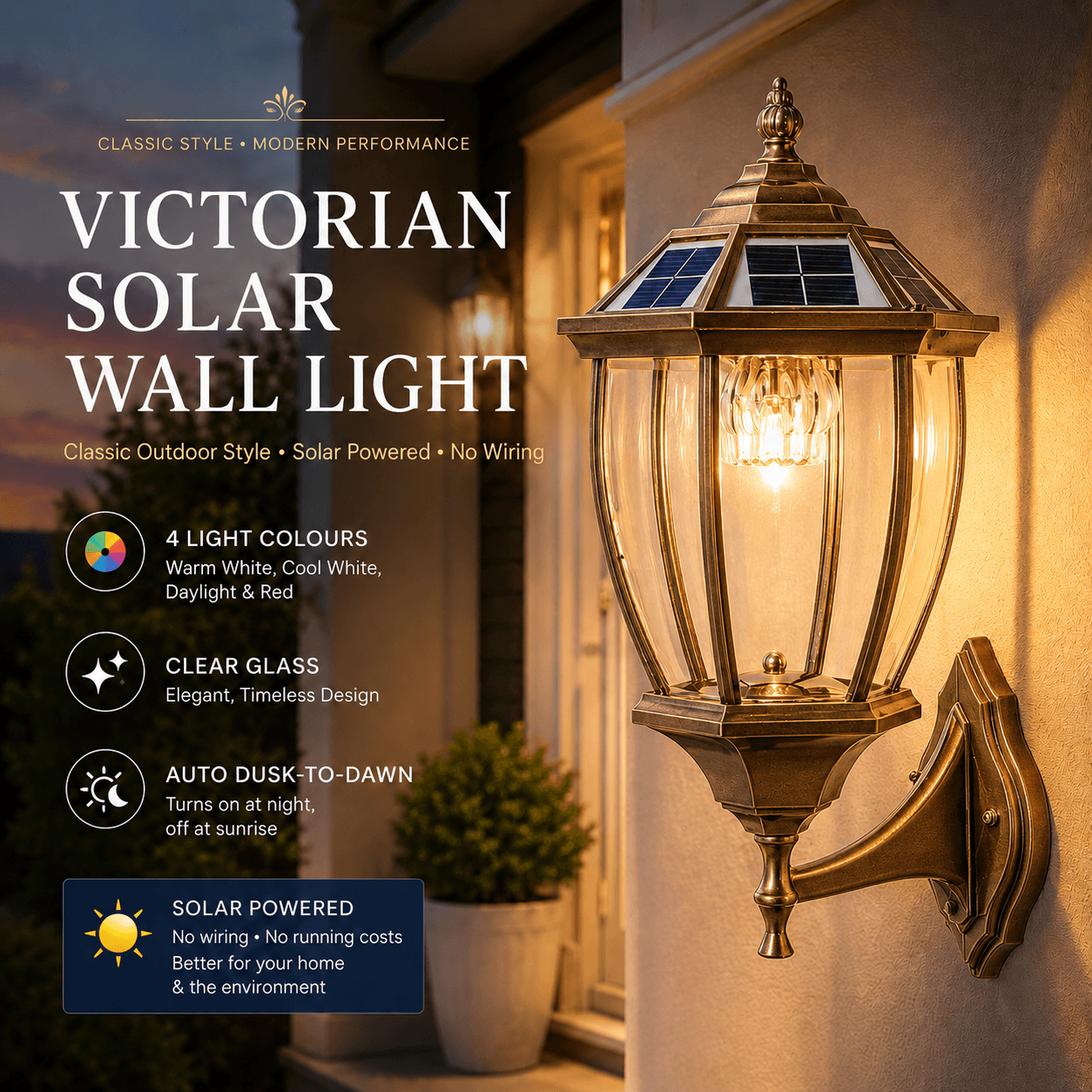
Yes. One of the useful features of SolarEasy Victorian solar post and pillar lights is the ability to select between warm white and cool white lighting.
This gives homeowners greater flexibility than a light with only one fixed colour.
For example, you may prefer warm white for a more traditional heritage atmosphere but later decide that cool white better matches new exterior lighting or landscaping.
Having both options available means the lighting style can be adjusted without replacing the entire fixture.
Can the same Victorian light head be used as both a pillar light and a post light?
Within the compatible SolarEasy Victorian range, the same style of lantern head can be used with suitable pillar and post configurations.
This means the Victorian lantern head used on a pillar installation can also be paired with a compatible post arrangement.
The benefit is greater flexibility when planning an outdoor lighting design. For example, a homeowner may use matching pillar lights at the driveway entrance and matching post lights further along the garden or pathway.
Because the lantern style remains consistent, the entire property can maintain a coordinated classical appearance.
Are the lights automatic?
Yes. Solar outdoor lights are designed to operate automatically using a light-sensitive control system.
During daylight hours, the solar panel charges the internal battery.
As daylight fades, the light can switch on automatically, and when daylight returns the following morning, it switches off and begins charging again.
This dusk-to-dawn operation is particularly convenient for entrance and garden lighting because homeowners do not need to manually switch the lights on every evening.
Can Victorian solar lights stay outdoors all year?
Victorian solar post and pillar lights are designed as outdoor lighting products and are intended to remain outside under normal weather conditions.
Good construction is important because outdoor fittings are exposed to sunlight, rain, wind, dust and changing temperatures throughout the year.
Simple maintenance can help keep them performing and looking their best. Periodically clean the solar panel and glass surfaces and check that the light remains securely mounted.
If the property is located in an especially harsh coastal or exposed environment, more frequent inspection and cleaning may be beneficial.
How many post or pillar lights should I install?
There is no fixed number because every property is different.
For a driveway entrance with two pillars, installing one matching light on each pillar can create an attractive symmetrical appearance.
Post lights can be positioned beside driveways, along pathways or around landscaped areas, depending on the size and design of the property.
Rather than installing as many lights as possible, consider where lighting will make the greatest visual difference.
Common positions include:
- either side of a driveway entrance
- on front gate pillars
- beside garden pathways
- near front entrances
- around landscaped garden features
- along larger driveways or property approaches
A balanced layout generally looks more refined than placing lights too closely together.
How do I choose the right Victorian solar post or pillar light for my home?
Start with the installation location.
If you already have masonry pillars or entrance columns, a pillar light will usually be the most natural choice. If you need the light to stand independently beside a driveway, pathway or garden, a post light may be more suitable.
Next, consider the height and scale of the surrounding area. A larger entrance or longer driveway may suit a taller post, while a smaller garden or low pillar may benefit from a more compact installation.
Then consider the architectural appearance of your home. Victorian, classical, heritage and antique-style lanterns work particularly well where you want to create a traditional or established look.
Finally, think about your preferred lighting atmosphere. Warm white can reinforce a classic heritage appearance, while cool white gives a cleaner and brighter visual effect.
The objective is not simply to choose a light that fits physically. A well-selected Victorian solar light should look as though it naturally belongs with the house, entrance and surrounding landscape.
Choosing With Confidence
Victorian solar post and pillar lights combine traditional outdoor styling with the convenience of modern solar technology.
For many Australian homeowners, their greatest advantage is not simply the light they produce, but the way they can transform the appearance of an entrance, driveway or garden after sunset.
By considering the installation position, available sunlight, required height, preferred light colour and overall architectural style, you can select a solar light that provides both practical ambient illumination and lasting visual appeal.
For more detailed information, explore our guides covering Victorian solar light selection, product quality, installation, placement, maintenance and home design before choosing the configuration that best suits your property.