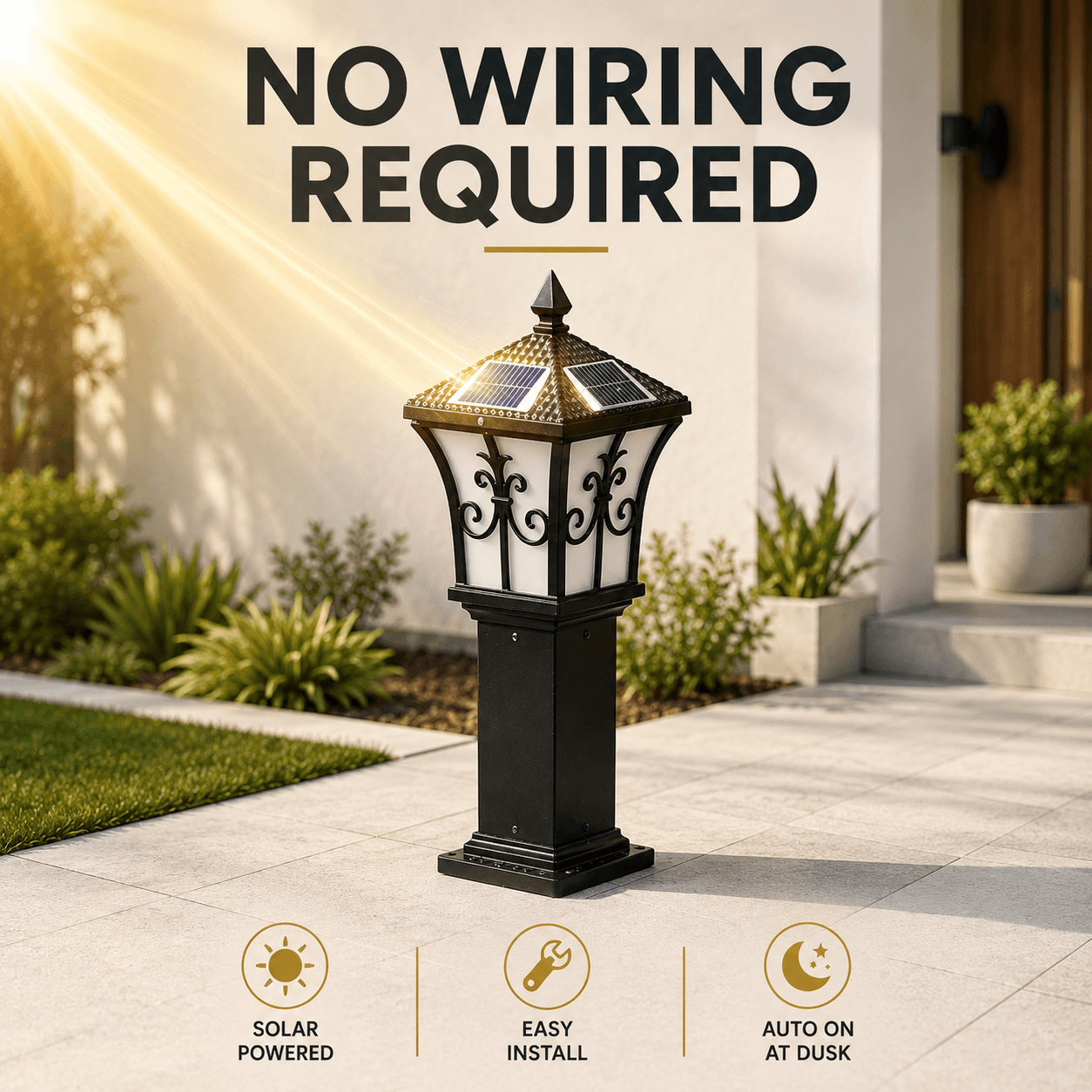

When choosing an outdoor solar light, it is easy to focus on brightness, battery capacity, solar panel size or price. But there is another important factor that is often overlooked: what the light is made from.
Many entry-level solar garden lights, post lights and outdoor lights use plastic housings to keep manufacturing costs and retail prices down. Plastic can be perfectly suitable for some light-duty applications, but for a solar light that will remain outdoors throughout the year, the construction material can make a significant difference to its durability and long-term appearance.
This is particularly important in Australia, where outdoor lighting can be exposed to strong UV radiation, summer heat, heavy rain, wind and, in coastal areas, salt-laden air.
For homeowners looking for a more durable outdoor solar lighting solution, aluminium alloy construction is well worth considering.
Australian Conditions Can Be Tough on Outdoor Solar Lights
Outdoor solar lights have a harder job than many people realise. Unlike indoor lighting, they are continuously exposed to changing weather conditions.
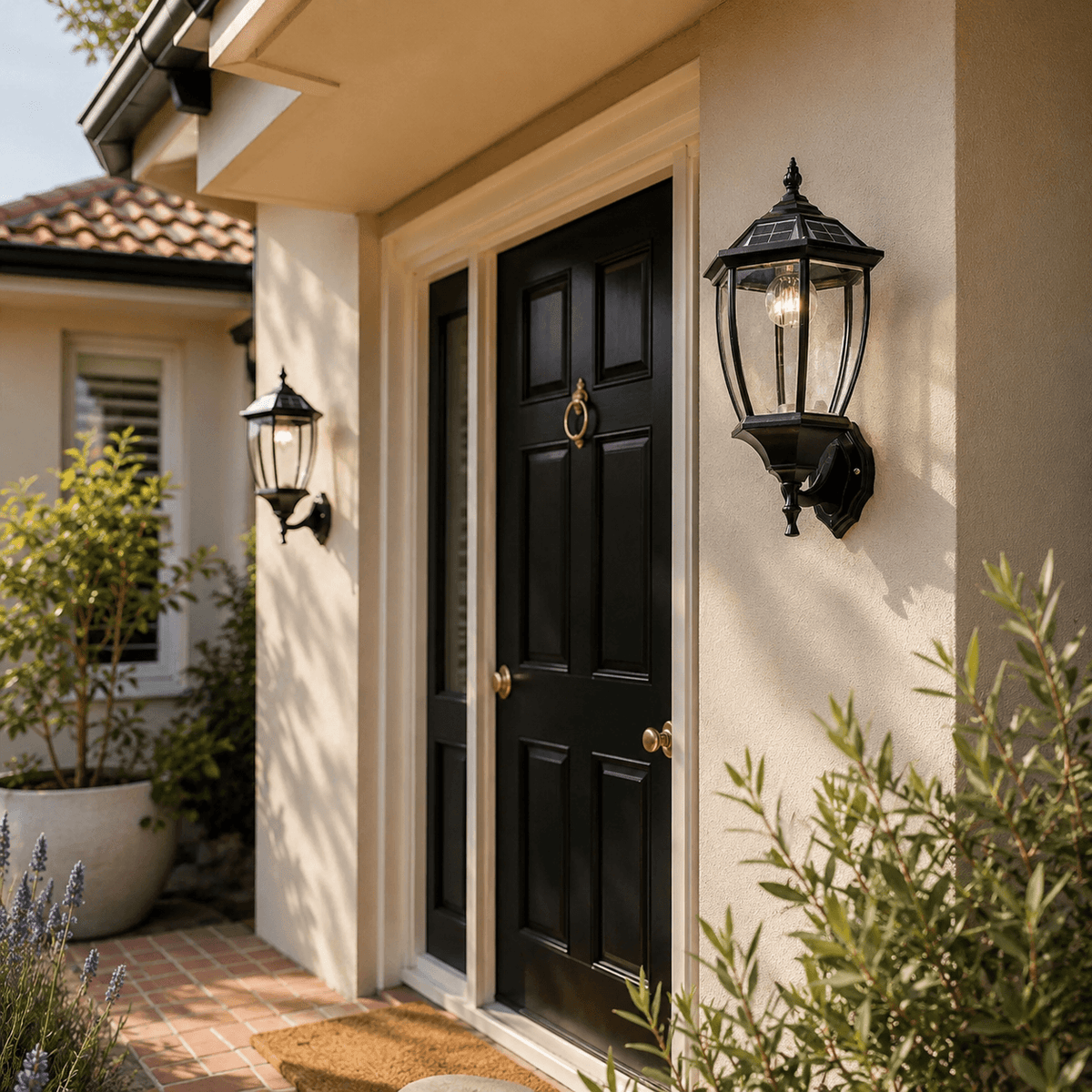
In Australia, that can include intense sunlight and UV exposure during summer, high daytime temperatures, sudden temperature changes, heavy rain and storms. Homes near the coast may also experience salty and humid conditions that can accelerate deterioration of outdoor materials.
Over several years, these conditions can affect not only how a solar light looks, but also the integrity of its housing.
This is why two solar lights that look quite similar when new may perform very differently after several Australian summers.
The quality of the battery, solar panel and LEDs certainly matters, but the housing protecting those components matters too.
Aluminium Alloy vs Plastic Solar Lights
Plastic is widely used in affordable outdoor solar lighting, and there is nothing inherently wrong with that. It is lightweight, inexpensive and easy to manufacture.
However, prolonged exposure to sunlight and weather can cause some plastics to fade, become brittle or lose strength over time, particularly if lower-grade materials are used.
Aluminium alloy offers a different set of characteristics.
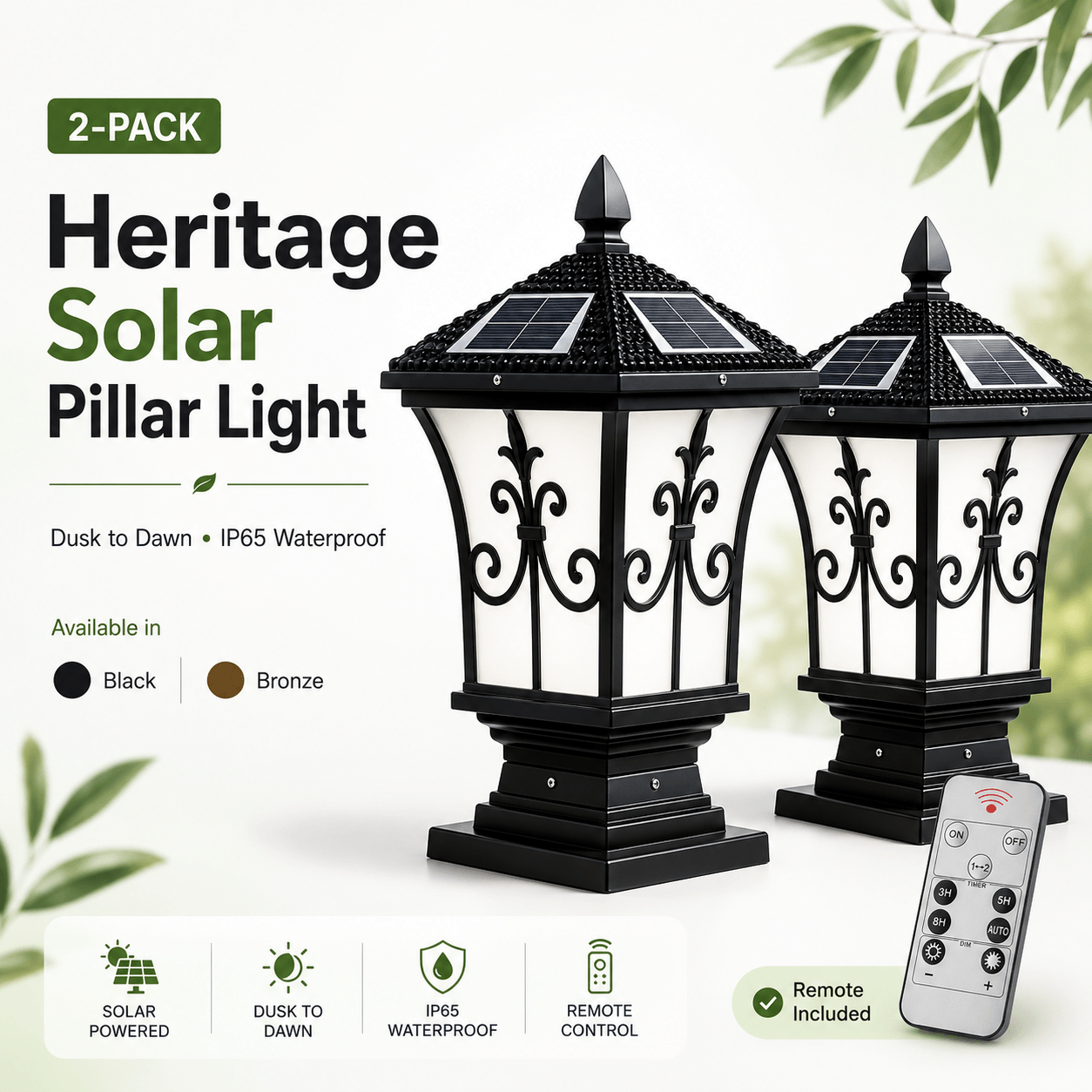
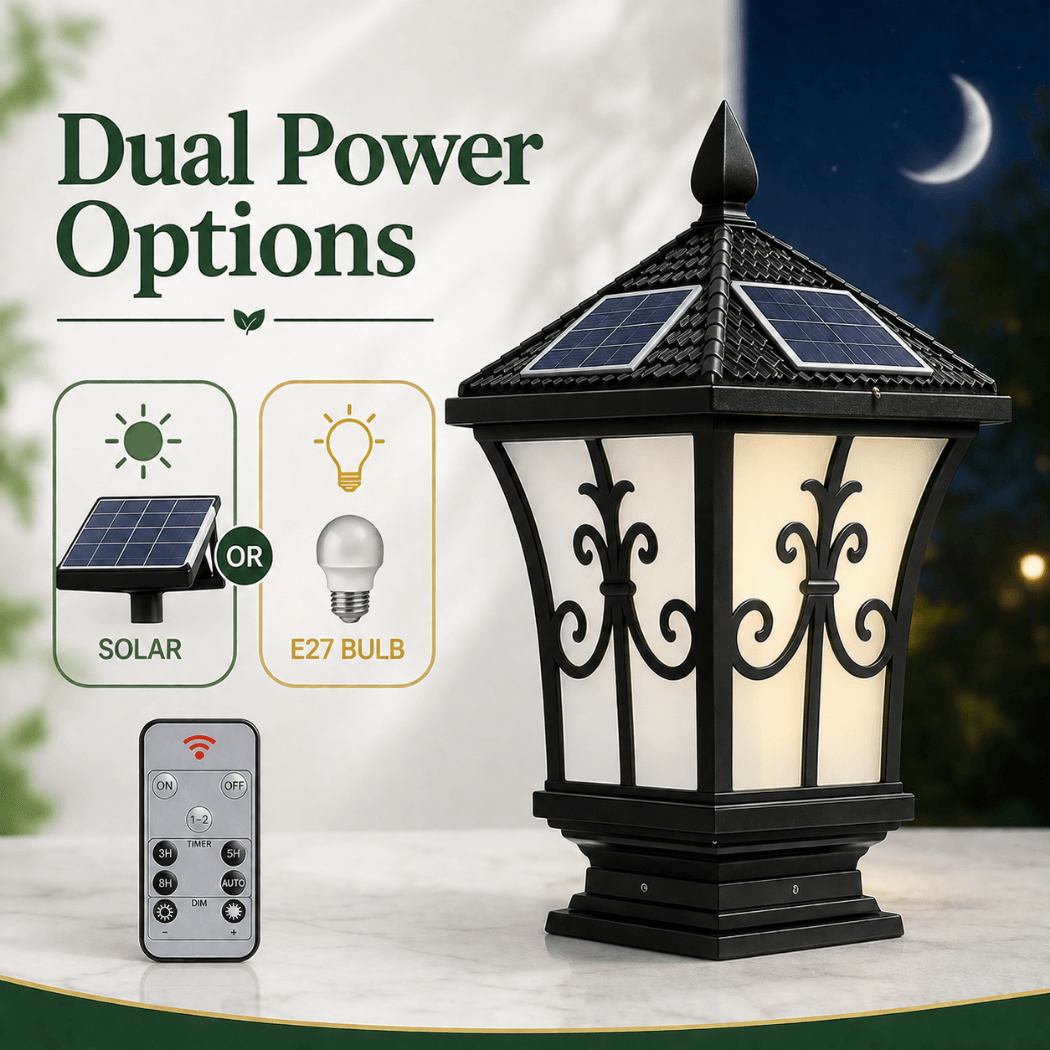
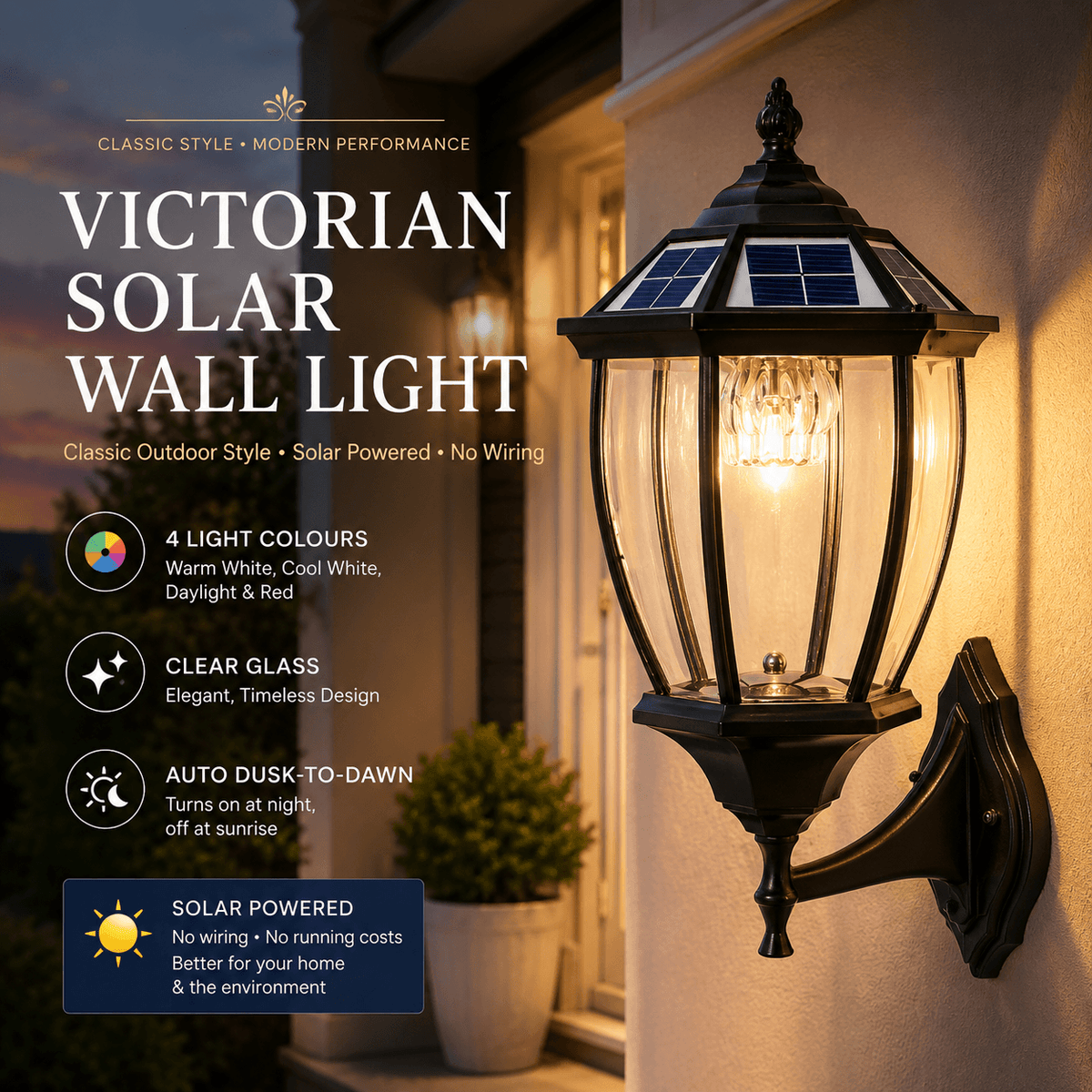
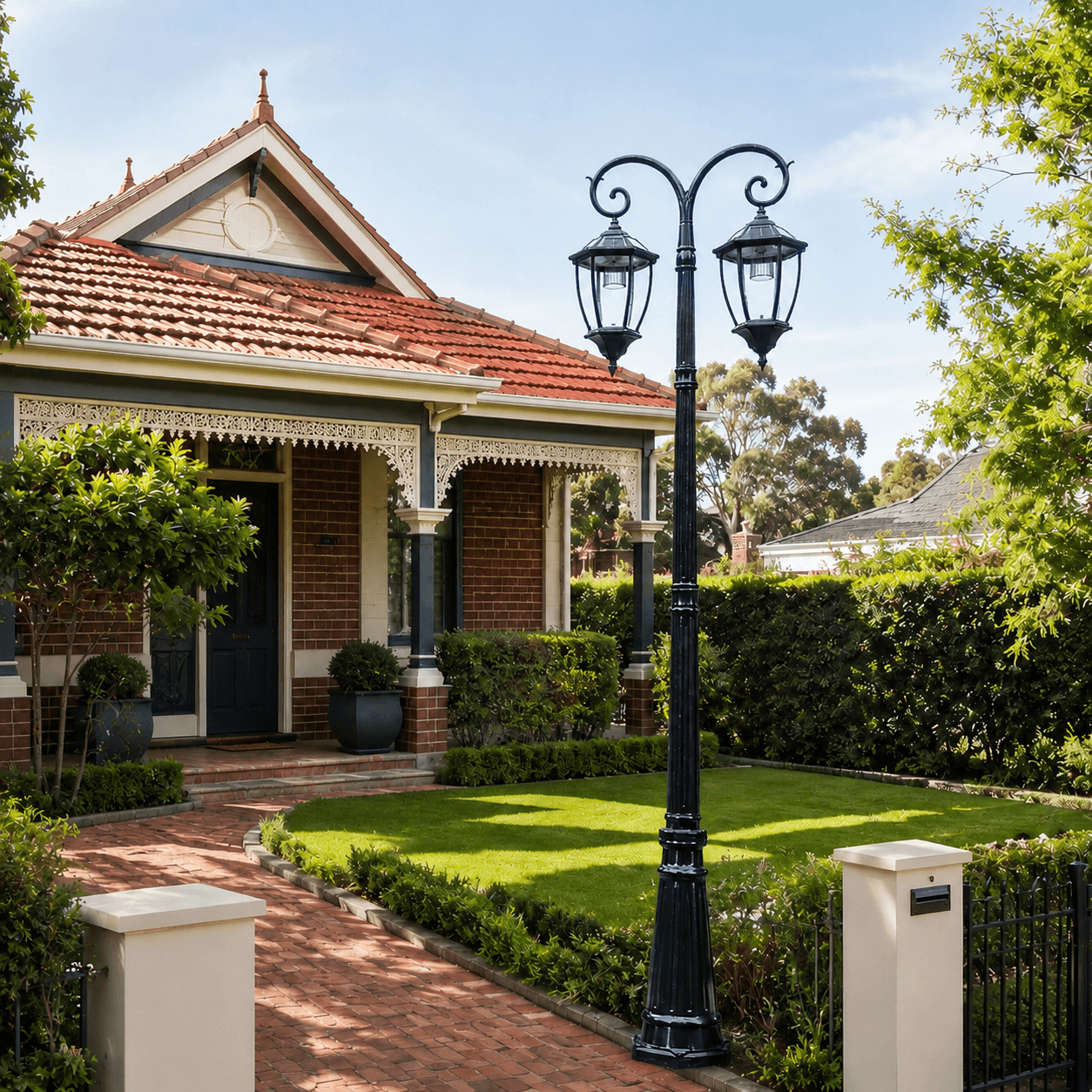
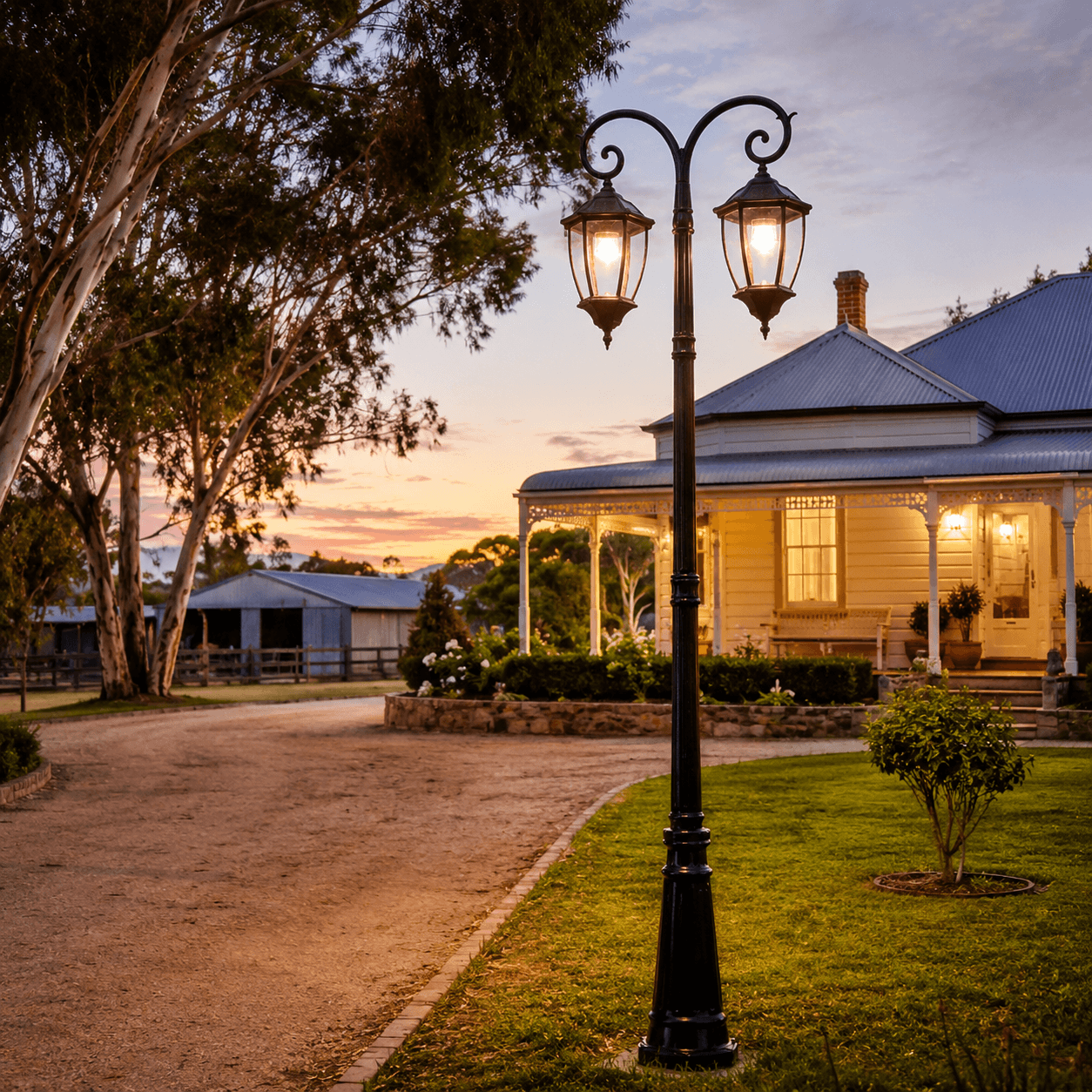
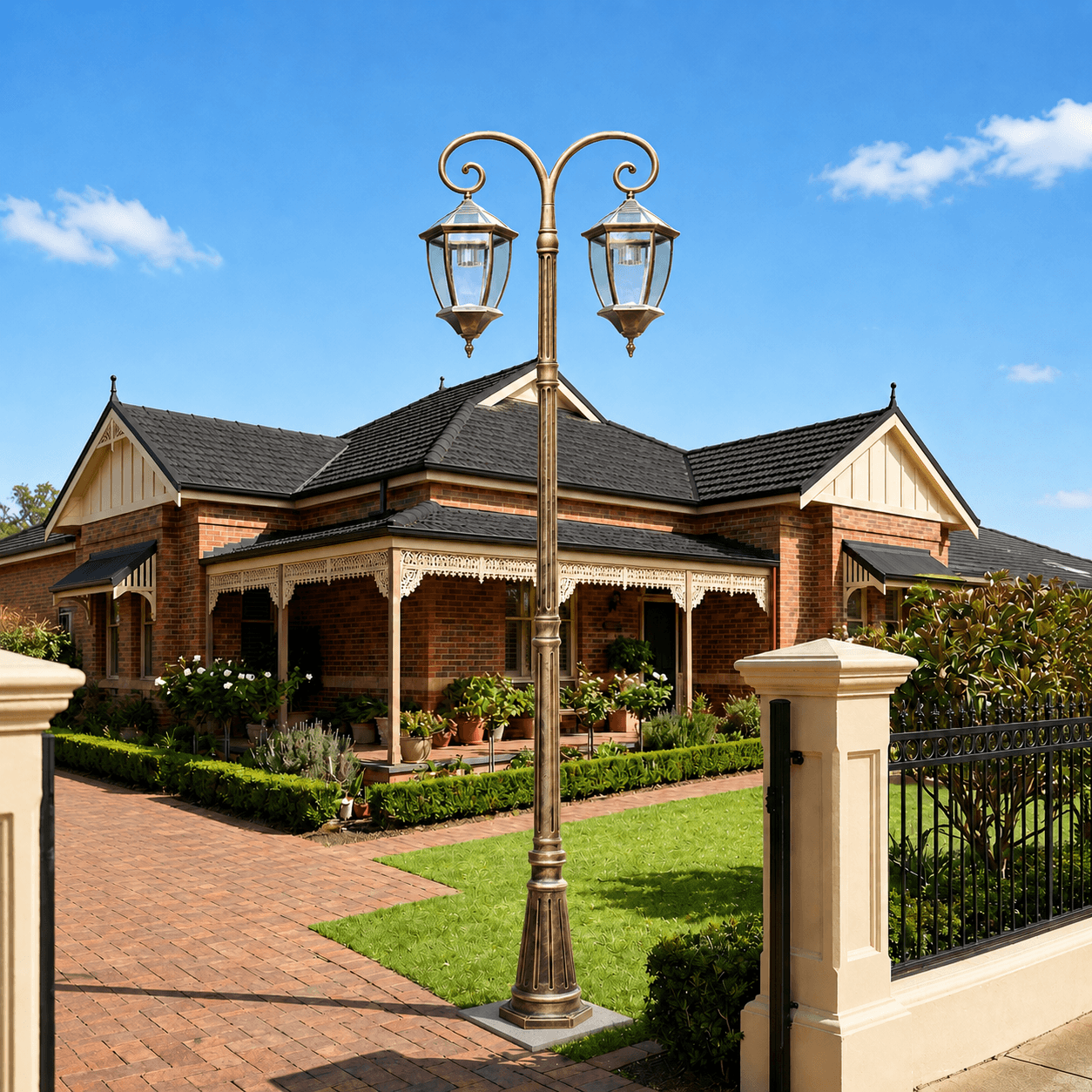
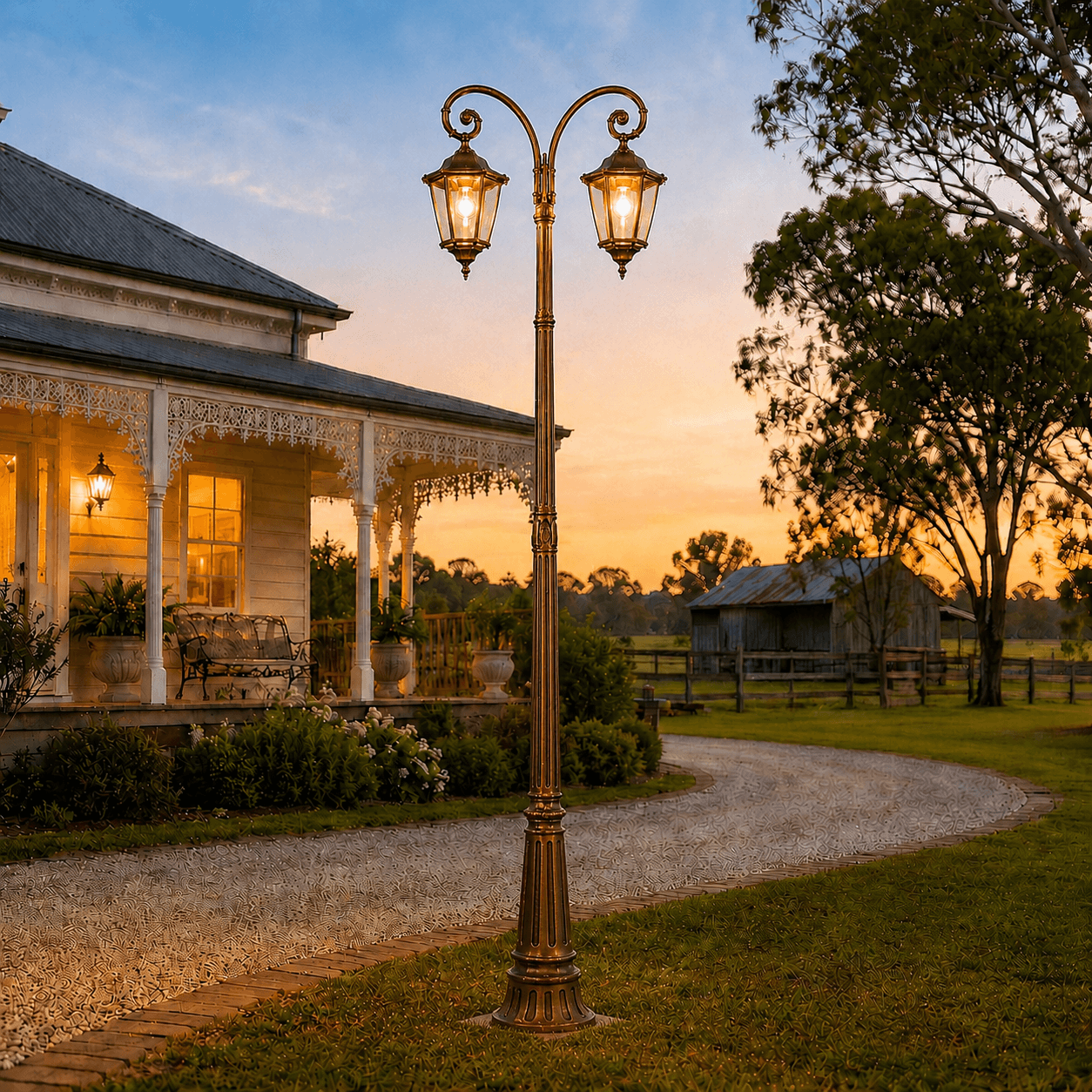
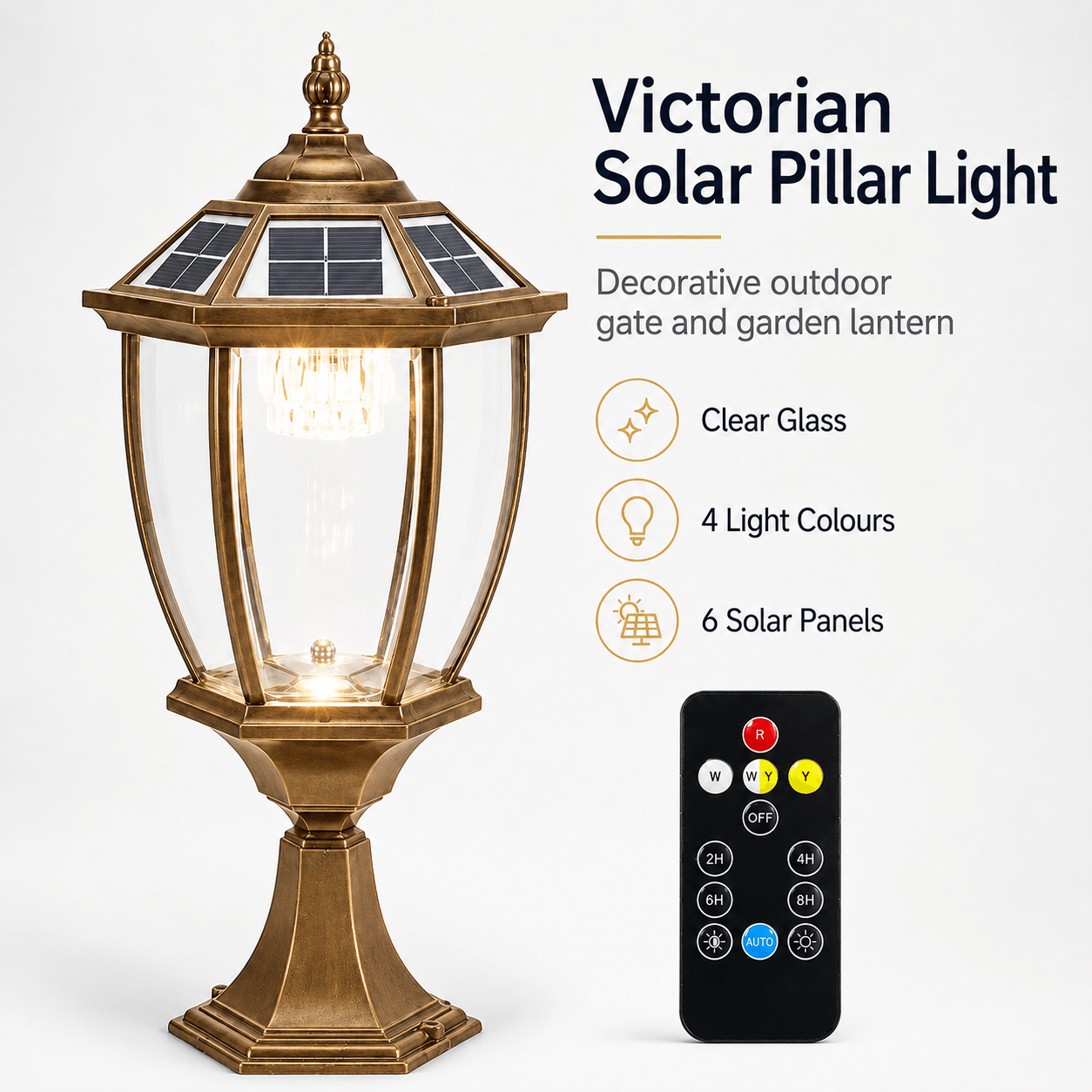
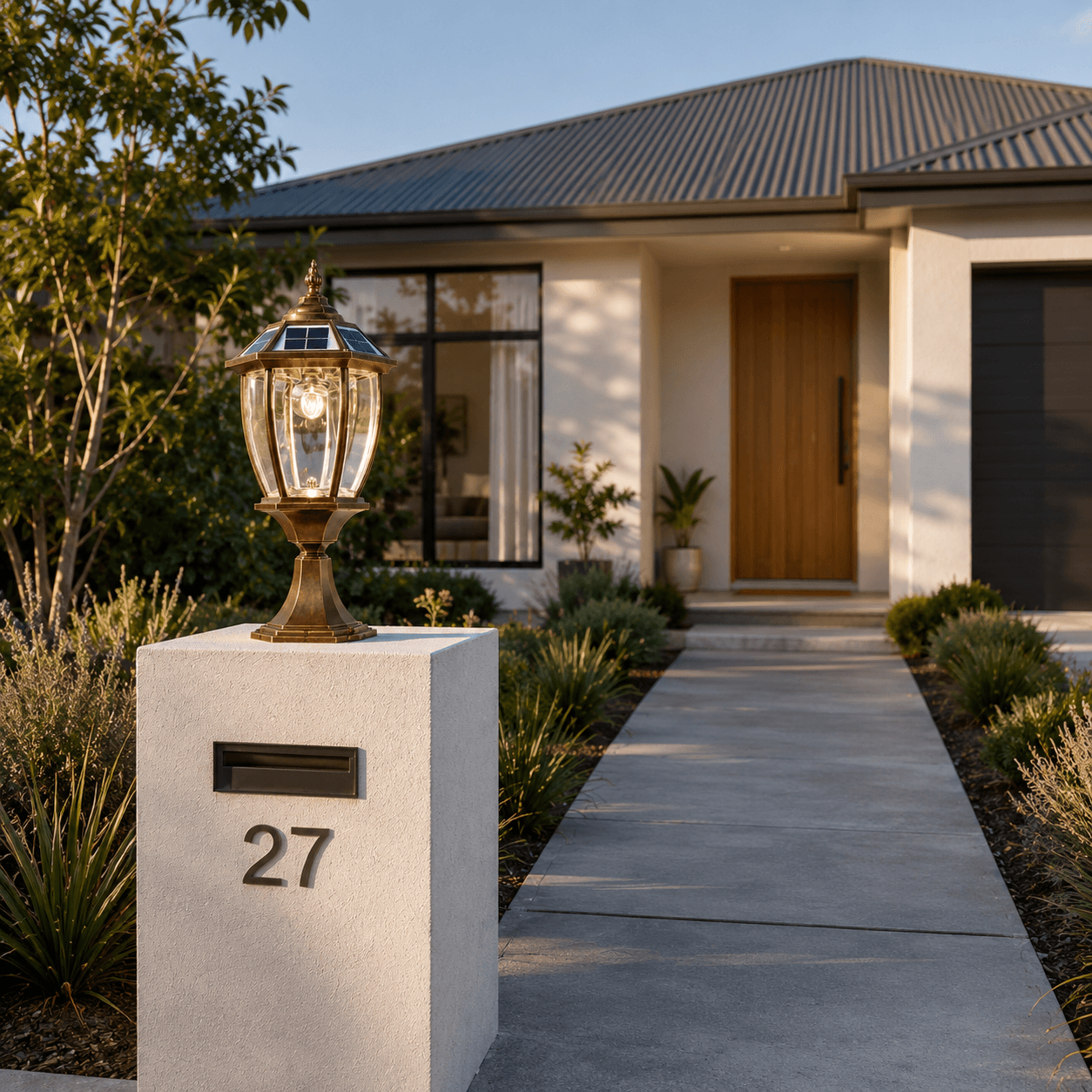
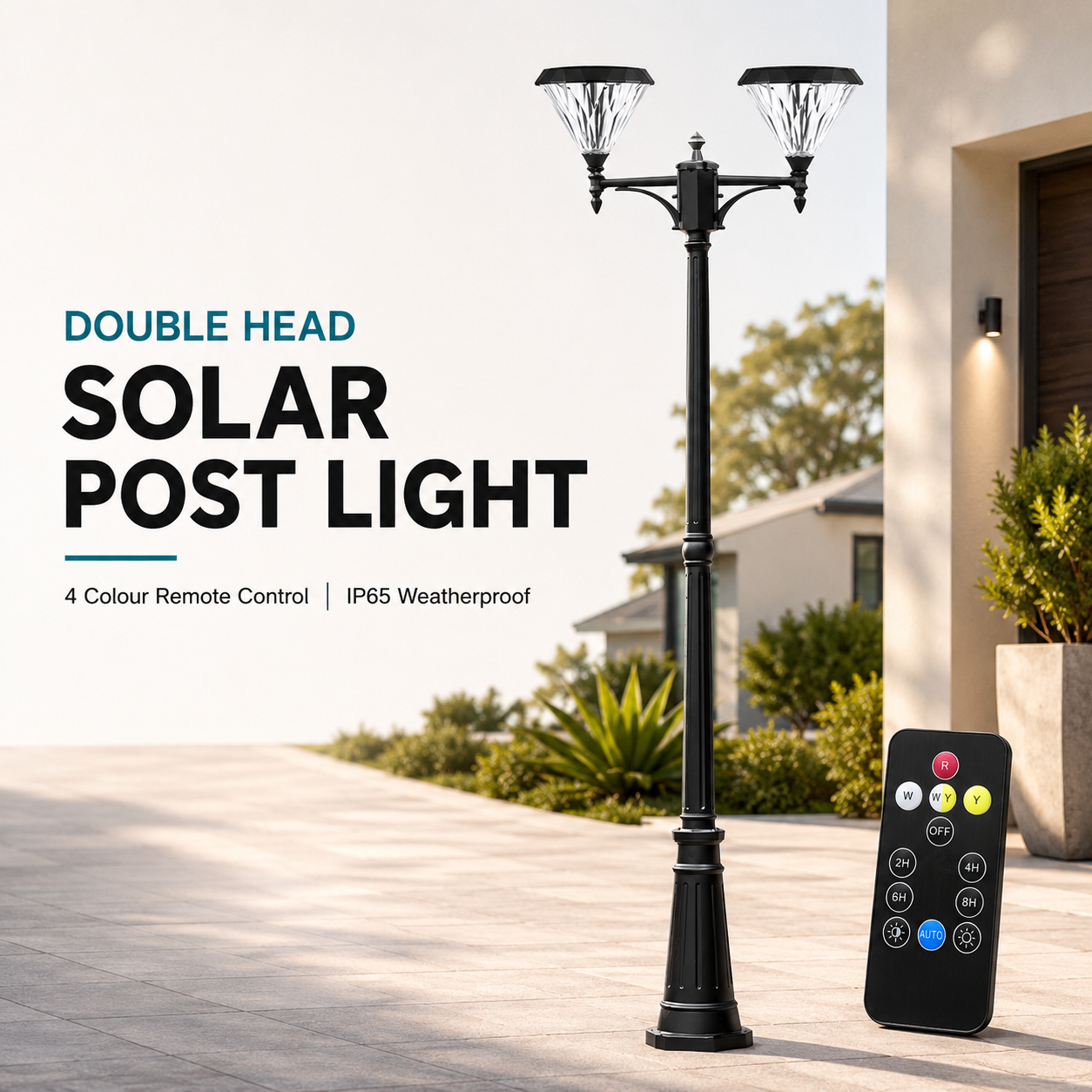
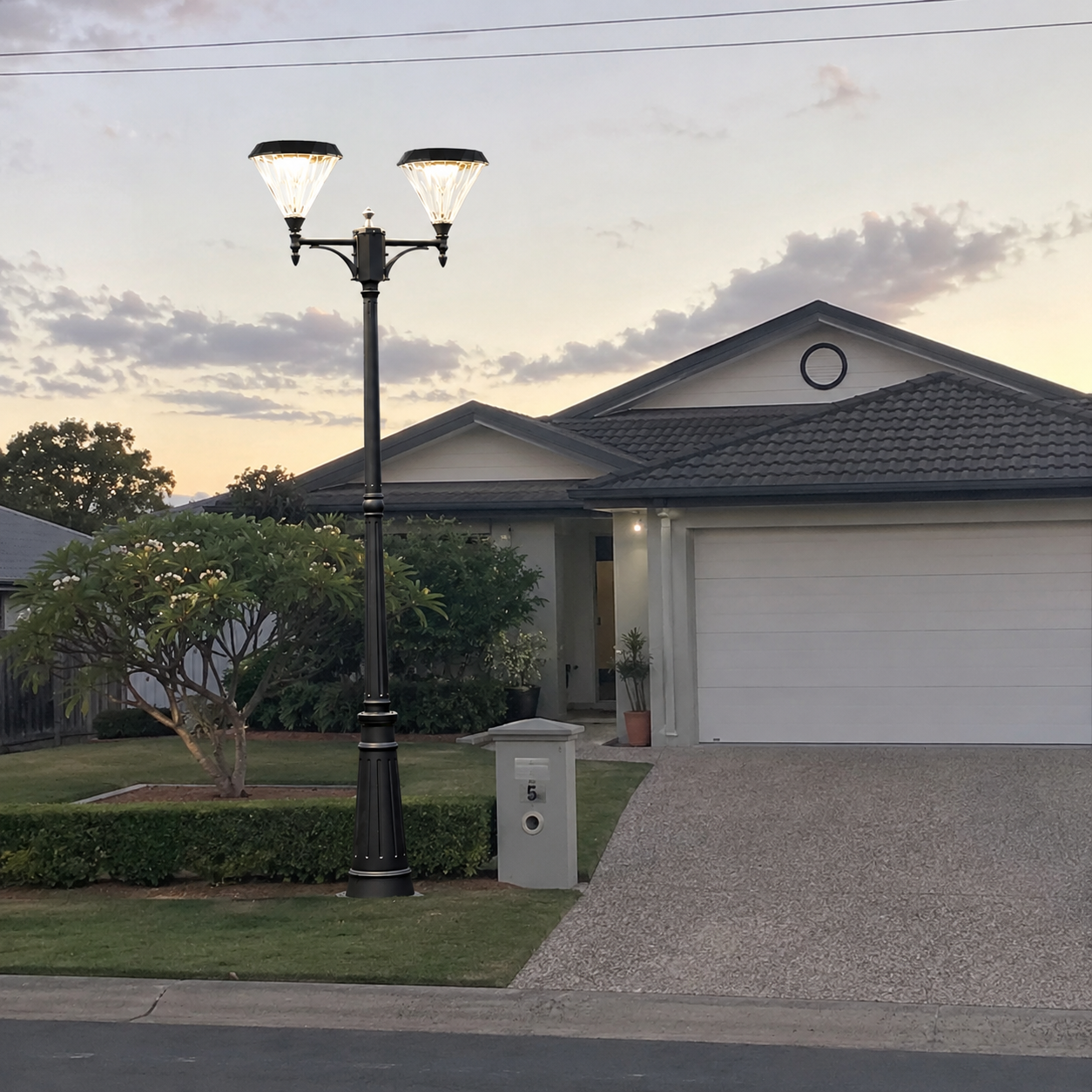
It provides a strong and rigid structure while remaining relatively lightweight. Unlike plastic, aluminium itself is not susceptible to UV-related brittleness in the same way. This makes it particularly suitable for larger outdoor products such as solar post lights, solar pillar lights, solar street lights and solar flood lights.
For a homeowner, the difference is not simply "metal versus plastic". It is about choosing a construction material that is better suited to long-term outdoor exposure.
Strength Without Excessive Weight
One of aluminium alloy's major advantages is its strength-to-weight ratio.
Outdoor lights need enough structural strength to cope with wind, installation stresses and everyday knocks, but making a light unnecessarily heavy creates its own problems.
Aluminium alloy provides good rigidity without the excessive weight associated with some other metals.
This is particularly useful for larger solar lighting products. A solar street light or flood light may need to support a solar panel, battery, LEDs and electronic components while being mounted several metres above the ground.
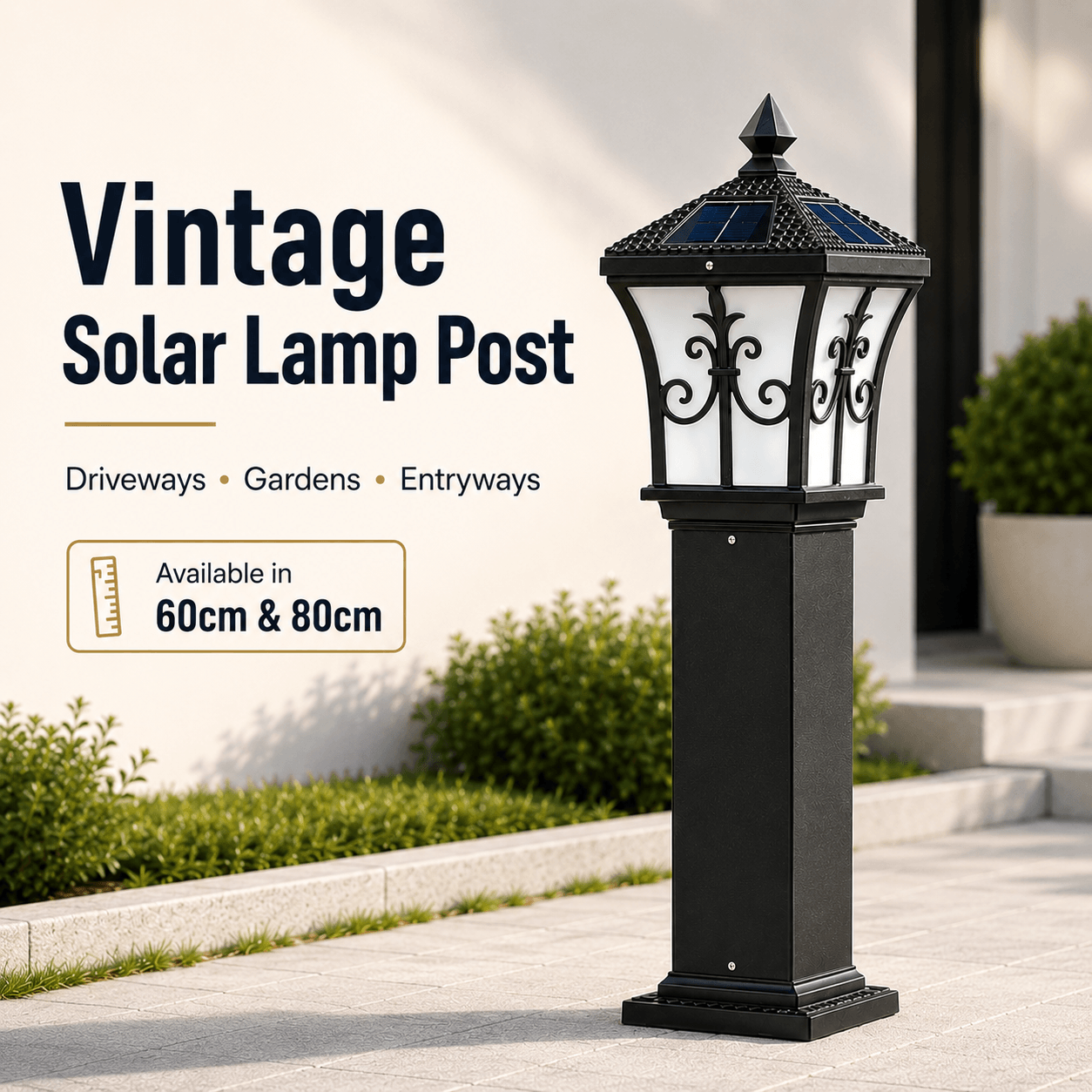
For decorative products such as solar post and pillar lights, a rigid aluminium housing can also help the light maintain its shape and appearance over time.
Better Resistance to Outdoor Deterioration
Corrosion is another consideration when choosing outdoor lighting.
Aluminium naturally develops a thin oxide layer on its surface that helps protect the underlying metal. Appropriate surface treatments can provide additional protection.
Many quality aluminium outdoor lighting products use protective finishes such as powder coating, which can improve weather resistance while also providing an attractive and durable exterior finish.
However, not every aluminium solar light uses the same alloy, coating or manufacturing process. Buyers should therefore avoid assuming that every product labelled "aluminium" offers identical performance.
This is especially worth considering for Australian coastal properties, where outdoor fixtures may face greater exposure to moisture and airborne salt.
Aluminium Can Help With Heat Management
There is another advantage that is less visible: heat dissipation.
LEDs, batteries and electronic control components can all be affected by excessive heat. Aluminium is a good conductor of heat, which is one reason it is widely used in LED lighting housings and heat sinks.
A well-designed aluminium light housing can assist in transferring heat away from heat-generating components more effectively than many plastic housings.
This does not mean that an aluminium body automatically guarantees longer battery or LED life. Product design, component quality and thermal management all matter.
Nevertheless, for higher-output solar lighting—particularly solar flood lights and solar street lights—the thermal characteristics of aluminium can be a useful part of the overall design.
Durability Is About More Than the Housing
Material is important, but it should never be considered in isolation.
When comparing outdoor solar lights, Australian homeowners should also look at:
- Housing material – Is it plastic, aluminium or another material?
- IP rating – Is the product appropriately rated for outdoor dust and water exposure?
- Battery type and capacity – A quality housing cannot compensate for a poor battery.
- Solar panel quality – The panel needs to generate sufficient energy for the application.
- Construction and sealing – Look at how well the light, switches, cable entries and electronic components are protected.
- Warranty and local support – These can be useful indicators when comparing products intended for long-term use.
Rather than choosing a solar light based on one impressive specification, it is better to consider the complete product.
Is an Aluminium Solar Light Worth Paying More For?
That depends on where and how the light will be used.
For a small decorative garden light that may only be used occasionally, an inexpensive plastic model may be perfectly adequate.
But if you are installing a larger solar post light, pillar light, flood light or street light that you expect to remain outside year after year, investing in better construction can make more sense.
Replacing a cheap outdoor light repeatedly is not necessarily cheaper in the long run. There is also the inconvenience of removing, replacing and reinstalling the product.
For permanent or semi-permanent outdoor installations, durability should therefore be considered alongside the initial purchase price.
Choosing Solar Lights for Australian Homes
There is no single material that makes a solar light automatically "good". Battery quality, solar panel performance, waterproofing, LED efficiency and overall engineering remain equally important.
But the housing is the structure that protects many of those components from the outside environment.
For Australian homes exposed to strong sunshine, heat, rain and changing weather conditions, aluminium alloy solar lights can offer important advantages in strength, weather resistance, structural stability and heat management.
So, next time you compare two outdoor solar lights that appear similar but have noticeably different prices, look beyond the wattage and battery specifications.
Check what they are made from.
Sometimes, the material you can see on the outside tells you a great deal about how the product has been designed for the years ahead.