
What Does IP65 / IP66 Mean for an Outdoor Solar Light?
When shopping for an outdoor solar light, you will often see ratings such as IP65, IP66 or sometimes IP67 listed in the product specifications.
Most buyers understand that these numbers have something to do with waterproofing, but the meaning is not always clear.
Does IP65 mean the light can be left outside in the rain?
Is IP66 much better than IP65?
And does a higher IP rating automatically mean the solar light is better quality?
To answer these questions, it helps to understand what an IP rating actually measures.
What Does IP Mean?
IP stands for Ingress Protection.
The rating describes how well an enclosure is protected against the entry of solid particles, such as dust, and water.
An IP rating normally contains two numbers.
For example:
IP65
The first number refers to protection against solids and dust.
The second number refers to protection against water.
So in IP65:
- 6 refers to dust protection
- 5 refers to water protection
This makes the rating much easier to understand.
How Do You Read an IP Rating?
For most outdoor solar lighting, the ratings buyers commonly see are IP65, IP66 and IP67.
| Rating | Dust Protection | Water Protection |
|---|---|---|
| IP65 | Dust-tight | Protected against water jets |
| IP66 | Dust-tight | Protected against powerful water jets |
| IP67 | Dust-tight | Protected against temporary immersion in water under specified conditions |
The first number is the same in all three examples.
A rating of 6 means the enclosure is designed to be dust-tight.
The main difference is therefore the second number, which describes the level of protection against water.
What Does IP65 Mean for a Solar Light?
An IP65 solar light is designed to resist dust and normal exposure to outdoor water.
For many outdoor applications, IP65 provides a suitable level of protection.
An IP65 solar light can generally be used in locations exposed to:
- Rain
- Dust
- Garden irrigation splash
- Normal outdoor weather
- Wind-driven moisture
This is why IP65 is commonly used for products such as:
- Solar garden lights
- Solar pillar lights
- Solar wall lights
- Outdoor decorative lights
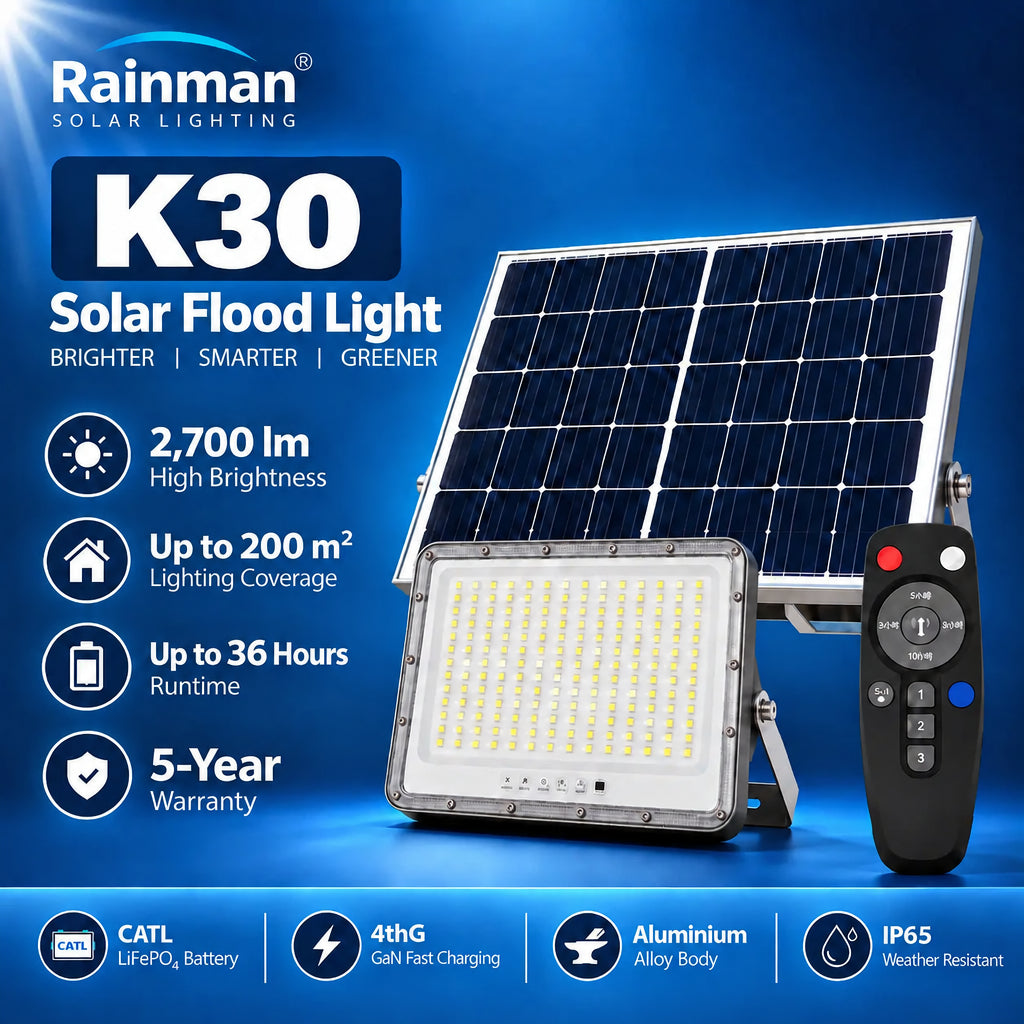
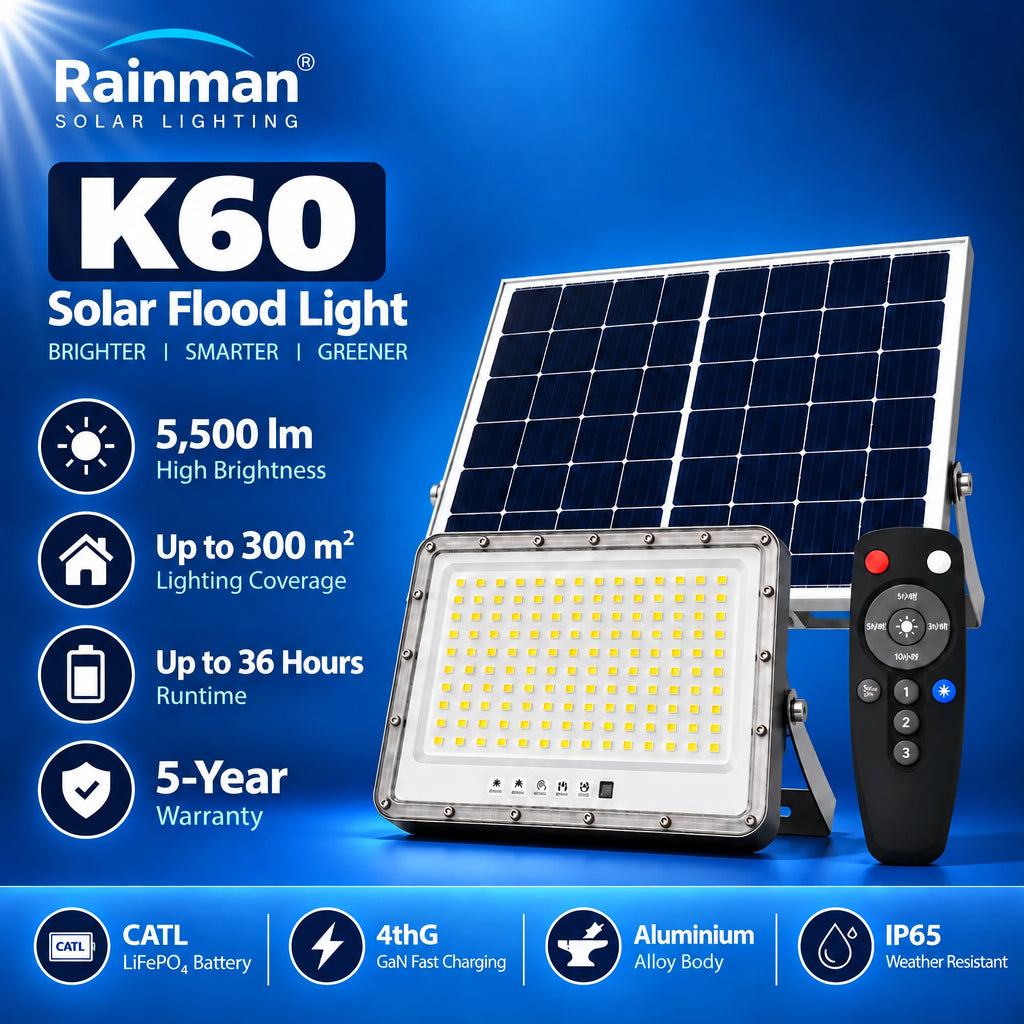
- Many solar flood lights
For a typical residential outdoor installation, IP65 is often sufficient.
However, IP65 does not mean that the light is designed to operate underwater.
A light installed in a location where water regularly pools around the fitting, or where it may become submerged, is facing a very different condition from normal rain exposure.
The simple rule is:
IP65 is suitable for normal outdoor weather, but it should not be treated as an underwater rating.
What Does IP66 Mean?
IP66 provides a higher level of protection against water than IP65.
Both IP65 and IP66 are dust-tight.
The difference is that IP66 is tested against more powerful water jets.
This makes IP66 particularly useful for outdoor lighting installed in more exposed locations.
Examples may include:
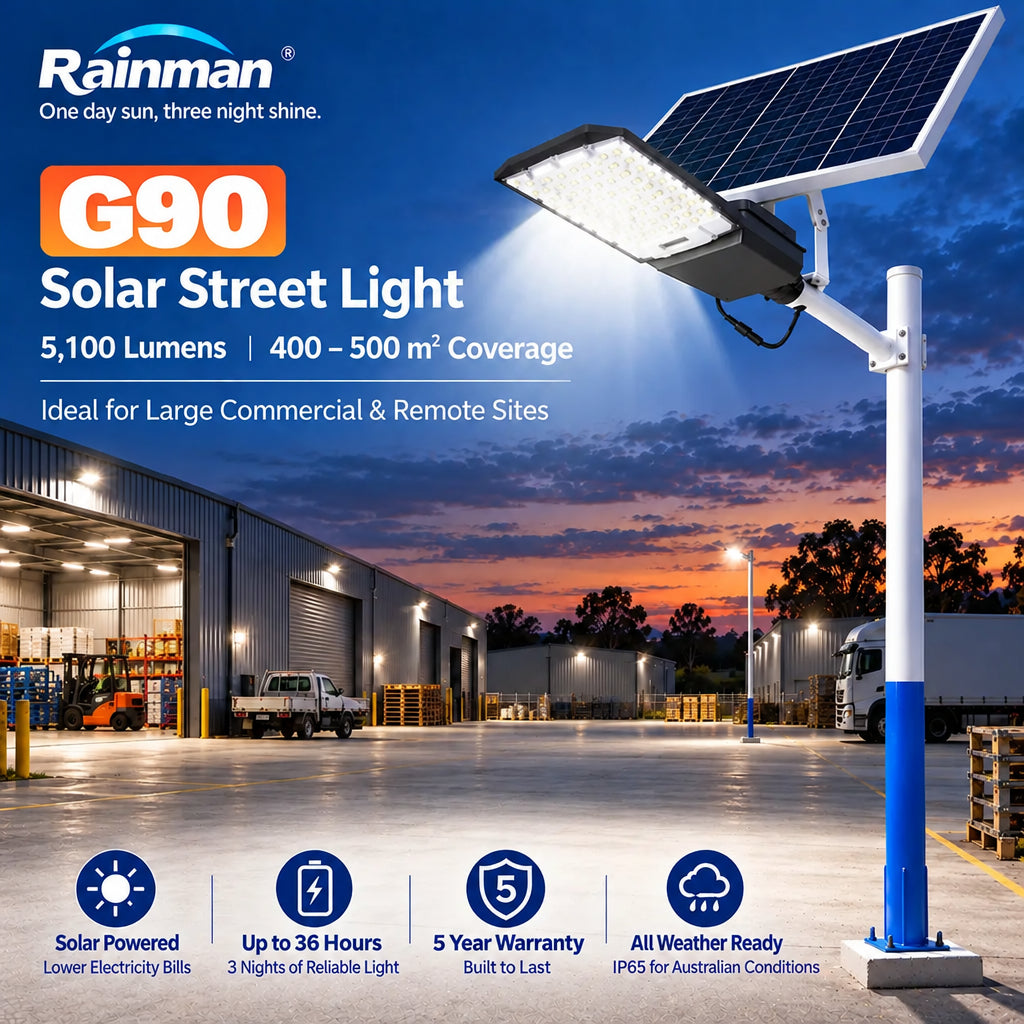
- Solar street lights
- Commercial solar flood lights
- Farm properties
- Industrial areas
- Open car parks
- Pole-mounted lighting
- Remote outdoor installations
A solar street light mounted high on a pole may be exposed to strong wind-driven rain from several directions.
A commercial flood light installed in an open yard may also receive more severe weather exposure than a decorative light mounted close to a protected house wall.
For these applications, the additional water protection offered by IP66 can be valuable.
Is IP66 Better Than IP65?
From the point of view of water protection, IP66 provides a higher level of protection than IP65.
But that does not mean every outdoor solar light needs to be IP66.
The correct rating depends on the application.
For example, consider a Victorian-style solar pillar light installed at the entrance of a residential driveway.
It may be exposed to normal rain and dust, but it is unlikely to experience the same environmental conditions as a commercial street light installed several metres above an open road.
In that situation, IP65 may be entirely suitable.
On the other hand, a solar street light installed on an exposed rural property may benefit from IP66 protection.
So the right question is not:
"Is IP66 better than IP65?"
A better question is:
"Which level of protection is appropriate for where this light will be installed?"
What About IP67?
Some outdoor solar lights are advertised as IP67.
IP67 also has the highest dust-protection digit of 6, but it includes protection against temporary immersion in water under specified test conditions.
That is a higher level of water-ingress protection than IP65 or IP66 for that particular test category.
However, this does not automatically mean that an IP67 solar light is the best choice for every outdoor application.
A normal solar flood light or solar street light is not intended to operate underwater.
If the product is being installed well above ground and only needs to withstand rain, dust and normal outdoor weather, IP65 or IP66 may already be completely appropriate.
A higher number is useful only when the application genuinely requires that level of protection.
Does a High IP Rating Mean the Solar Light Is High Quality?
Not necessarily.
This is one of the most important things to understand when comparing outdoor solar lights.
The IP rating tells you about resistance to dust and water entering the enclosure.
It does not tell you everything about the quality or expected life of the product.
For example, the IP rating does not directly tell you about:
- Battery quality
- LED quality
- Solar panel quality
- UV resistance
- Housing strength
- Corrosion resistance
- Temperature tolerance
- Bracket strength
- Electronic component quality
- Expected service life
A low-cost plastic solar light may carry an IP65 claim, but that does not necessarily mean it will withstand years of harsh outdoor exposure.
Plastic can become brittle after prolonged UV exposure.
Seals can deteriorate.
Cheap connectors can weaken.
Metal components can corrode.
A well-built outdoor solar light therefore needs much more than an IP number.
Why Housing Material Still Matters
The material used for the light housing can make a significant difference to long-term durability.
For small decorative solar lights, plastic may be perfectly adequate.
For larger or more demanding outdoor lighting applications, especially commercial flood lights and street lights, aluminium housings are often preferred.
Aluminium can offer advantages such as:
- Better structural strength
- Better heat dissipation
- Improved resistance to cracking
- Better suitability for larger lighting systems
- Longer-term outdoor durability when properly finished
This does not mean every aluminium light is automatically good quality.
But for heavy-duty outdoor solar lighting, the housing material is an important specification to consider alongside the IP rating.
Australian Conditions Are About More Than Rain
When choosing an outdoor solar light in Australia, water resistance is only one part of the environmental challenge.
Outdoor lighting can also be exposed to:
- Strong sunlight
- High UV levels
- Summer heat
- Dust
- Sudden temperature changes
- Heavy rain
- Coastal salt exposure in some locations
A product may technically resist water entry but still deteriorate over time because of poor-quality plastics, seals, coatings or internal components.
This is especially important for solar lights because the battery and electronics are often built into the outdoor housing.
Heat can affect battery performance.
UV exposure can degrade plastic.
Poor seals can become less effective as materials age.
Corrosion can affect brackets, screws and electrical connections.
For Australian conditions, buyers should therefore look at overall construction quality, not just waterproofing.
Installation Can Affect Water Resistance
Even a properly rated IP65 or IP66 product can experience problems if it is installed incorrectly.
The product is designed to resist water when installed in the intended orientation and configuration.
Problems can occur if:
- Cable entries face upwards when they should not
- Connectors are left loose
- Rubber seals are damaged
- Covers are not properly secured
- Cables are cut or modified incorrectly
- Holes are drilled into the housing
- Water is allowed to pool around the fitting
- Waterproof connectors are not fully tightened
Solar lighting systems with separate solar panels may also use cables and connectors between the panel and the light.
These connections also need appropriate weather protection.
A simple principle is:
A weather-resistant product still needs to be installed the way it was designed to be installed.
What IP Rating Should You Look for?
There is no single IP rating that is ideal for every outdoor solar light.
A general guide may look like this:
| Application | Typical Rating to Consider |
|---|---|
| Protected outdoor decorative lighting | IP44–IP55 may be suitable depending on exposure |
| Solar garden, wall or pillar light | IP65 is commonly suitable |
| Outdoor solar flood light | IP65–IP66 |
| Solar street light | IP66 is commonly preferred for exposed installations |
| Highly exposed industrial environment | IP66 or higher may be appropriate depending on conditions |
These are general examples rather than a substitute for checking the requirements of a particular installation.
Exposure level matters.
A light mounted under an awning is in a very different environment from a light mounted on an open pole in a rural field.
What Should You Check Before Buying?
When comparing outdoor solar lights, do not stop at the words "waterproof" or "IP65".
Ask a few more questions.
What Is the Actual IP Rating?
Look for a clearly stated IP rating rather than vague descriptions such as "weatherproof".
What Is the Housing Made From?
For larger flood lights and street lights, construction material can have a major influence on long-term durability.
Are the Connectors Weather-Resistant?
This is particularly important for products with a separate solar panel.
Is the Light Suitable for Permanent Outdoor Installation?
Some products are intended for occasional outdoor use rather than continuous exposure.
Can the Product Handle Heat and UV?
This is particularly relevant in Australia.
What Warranty Is Provided?
A warranty gives you another indication of how much confidence the supplier has in the product.
Is Local Support Available?
If the light is installed on a farm, driveway or commercial property, being able to contact the supplier can be valuable if a problem develops later.
IP Rating Is Only One Part of a Good Solar Light
A common mistake is to compare two products and assume the one with the higher IP number must be the better light.
In reality, outdoor solar lighting should be considered as a complete system.
A good solar light needs:
- Appropriate weather protection
- Durable housing
- Reliable seals
- Good-quality battery
- Efficient LEDs
- A properly sized solar panel
- Strong mounting hardware
- Suitable temperature tolerance
- Appropriate warranty and support
An IP66 rating is useful, but it cannot compensate for a poor battery, weak housing or badly designed solar charging system.
In the same way, a well-designed IP65 light may be an excellent choice when used in the environment it was designed for.
Final Takeaway
The difference between IP65 and IP66 is relatively straightforward.
IP65 means the enclosure is dust-tight and protected against water jets.
IP66 is also dust-tight but provides protection against more powerful water jets.
For normal residential outdoor solar lighting, IP65 is often suitable.
For more exposed applications such as commercial solar flood lights and solar street lights, IP66 may provide a more appropriate level of protection.
But the IP rating should never be used as the only measure of product quality.
A durable outdoor solar light also depends on the housing, seals, battery, solar panel, connectors, installation quality and the ability of the materials to withstand long-term outdoor exposure.
The best approach is therefore not simply to look for the highest IP number.
Instead, choose a solar light with a protection level and overall construction quality that suit the environment where it will actually be used.