
How Long Does a Solar Flood Light Battery Last?
The battery is one of the most important components in any solar flood light.
The solar panel collects energy during the day, but it is the battery that stores that energy and makes it available at night. If the battery is poor quality, too small, badly managed or repeatedly exposed to extreme conditions, the performance of the entire light will eventually suffer.
This is why many solar flood lights seem excellent when they are new but gradually provide shorter runtime after one, two or three years.
A large battery specification does not automatically mean a long-lasting battery. Battery chemistry, cell quality, charging control, operating temperature and depth of discharge all play a major role in determining how long the battery will actually last.
Battery Runtime and Battery Lifespan Are Not the Same Thing
When people talk about battery life, they are often referring to two different things.
The first is runtime per night.
This means how many hours the light can operate after the battery has been charged.
The second is service life.
This means how many years the battery can continue to provide useful performance before its capacity falls significantly.
A new solar flood light may operate for 10 hours after a full charge. After several years of daily charging and discharging, the same battery may still work, but perhaps only provide six or seven hours of useful lighting.
This gradual reduction in capacity is normal for rechargeable batteries.
The important question is how quickly that degradation happens.
Battery Chemistry Makes a Big Difference
Not all lithium batteries are the same.
Solar lighting products may use different lithium-ion battery chemistries, depending on the design, cost and intended application.
For commercial solar flood lights and solar street lights, LiFePO₄, or lithium iron phosphate, is particularly attractive because of its cycle performance, thermal stability and suitability for repeated charging and discharging.
Solar lights operate almost every day.
During daylight hours, the solar panel charges the battery. At night, the battery supplies power to the LEDs. This repeated cycle places very different demands on a battery compared with a device that may only be charged occasionally.
For this reason, battery chemistry should be considered as part of the complete solar lighting design.
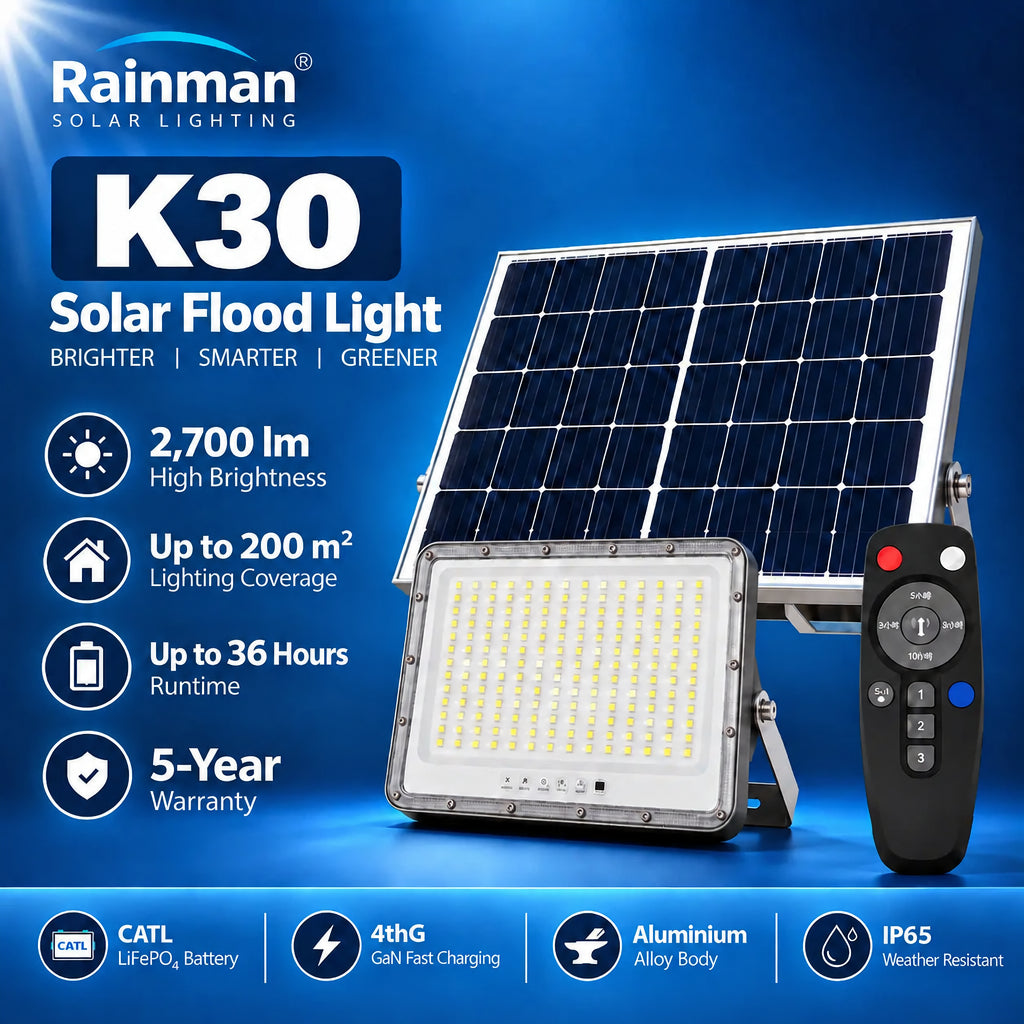
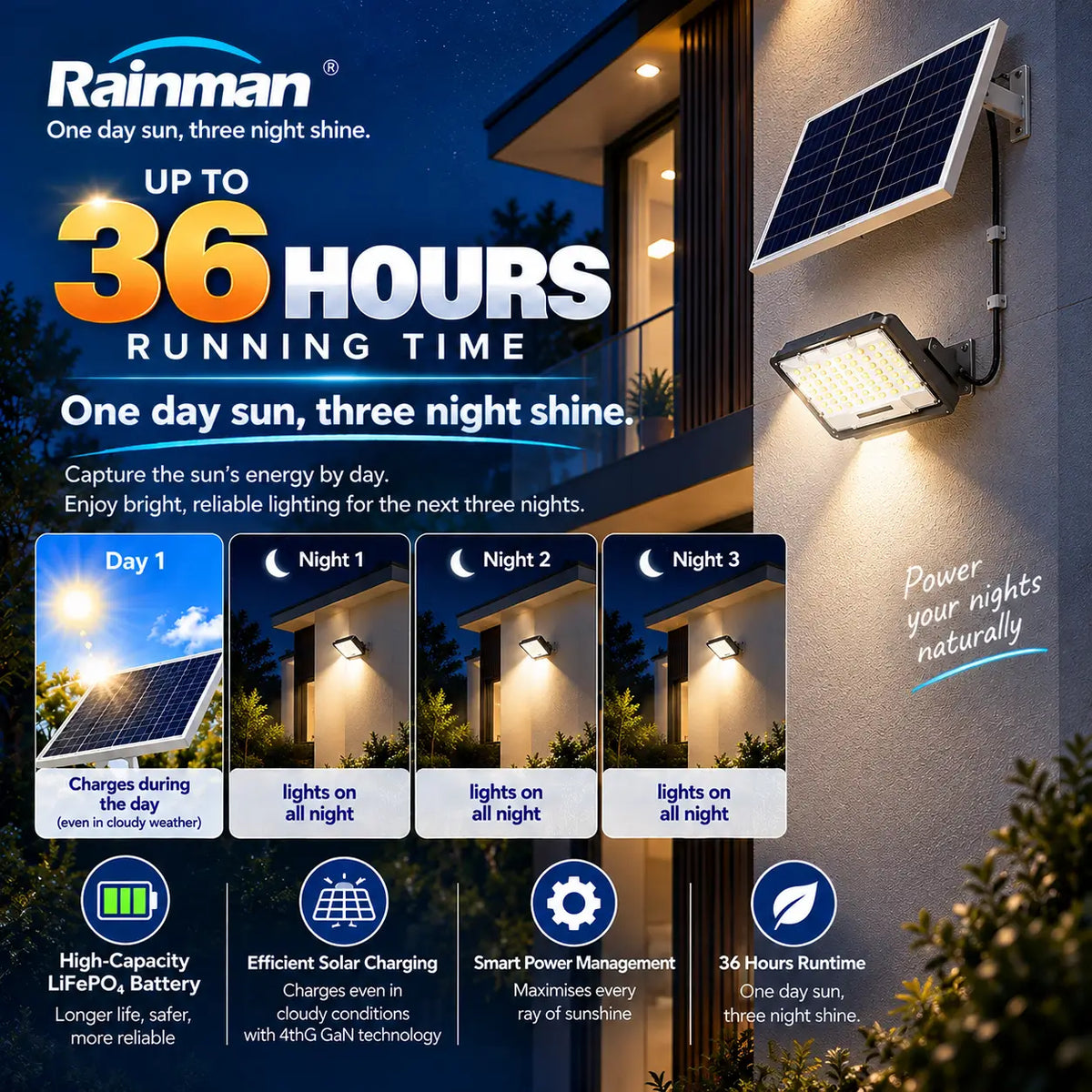
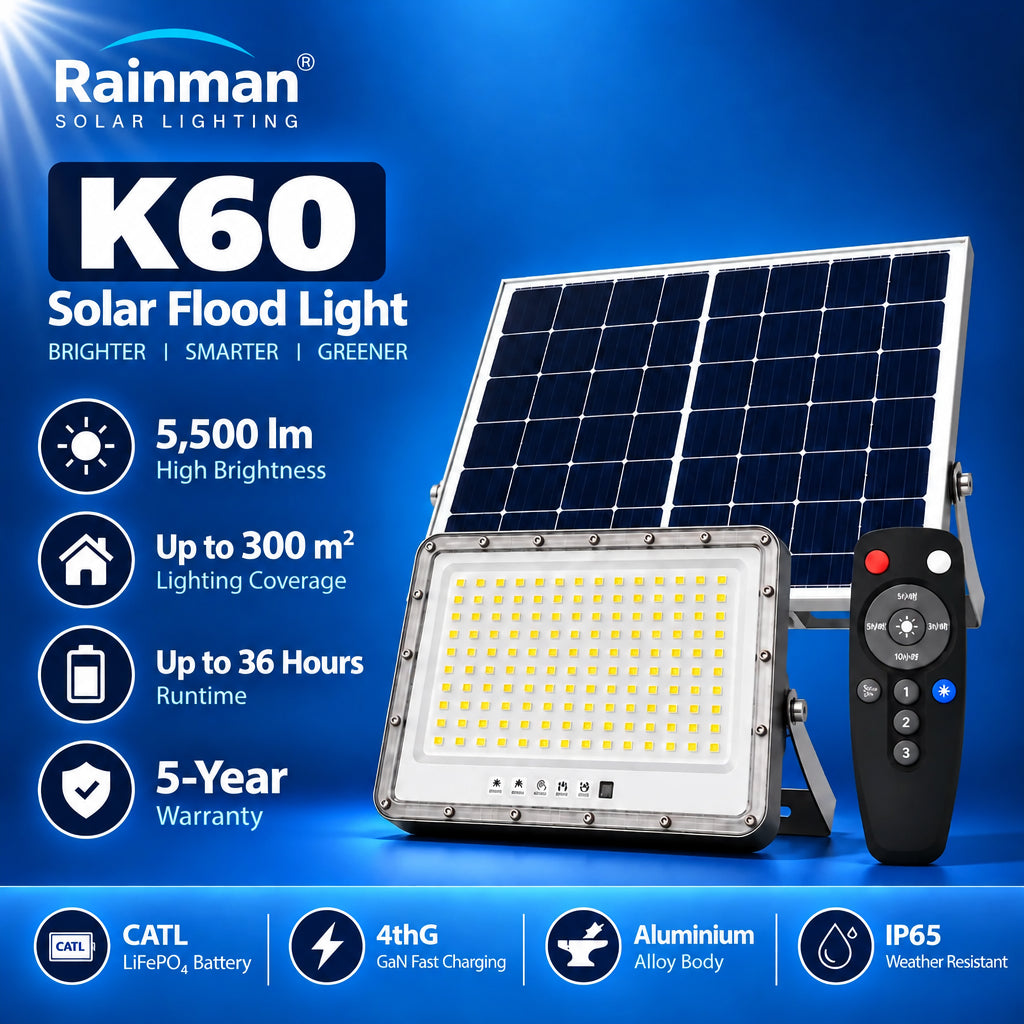
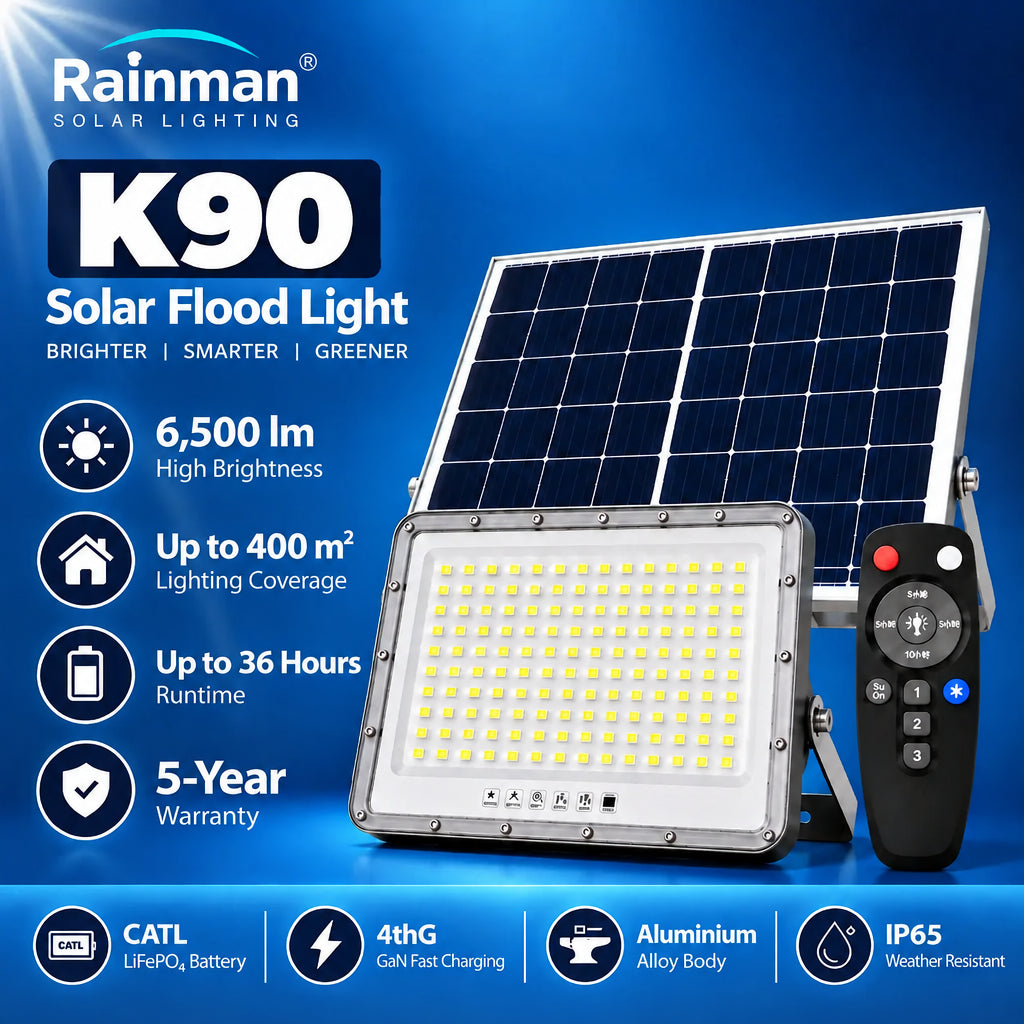
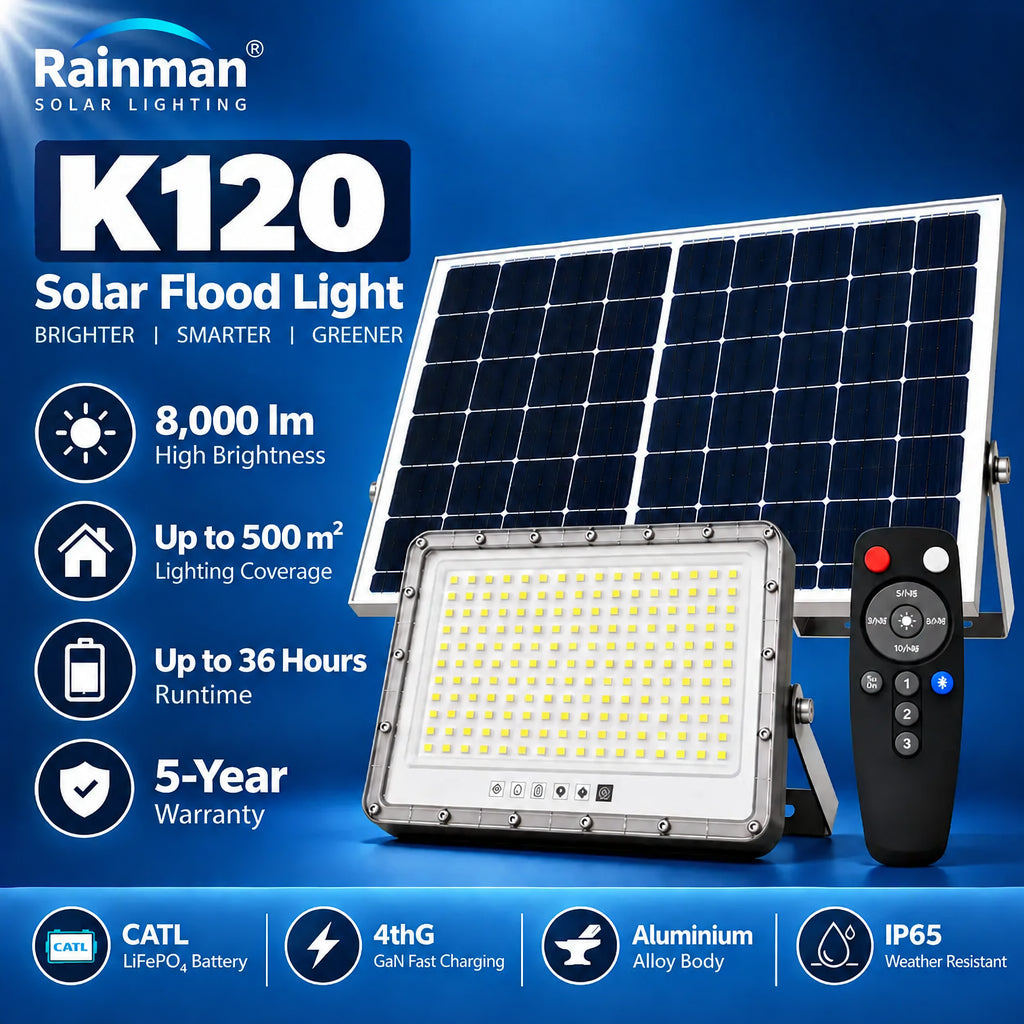
SolarEasy / Rainman commercial solar flood lights and street lights use CATL 33155 LiFePO₄ battery cells.
The reason for using this type of cell is not simply to have a larger battery specification on paper. The objective is to support dependable daily cycling and long-term commercial outdoor operation.
However, even a high-quality LiFePO₄ cell still depends on good system design. A quality battery can be damaged or degraded prematurely if it is repeatedly overcharged, deeply discharged or exposed to excessive heat.
What Is Battery Cycle Life?
Rechargeable batteries have what is known as a cycle life.
A charging cycle generally refers to the battery being discharged and then recharged.
For a solar flood light operating every night, that means the battery may go through hundreds of charging and discharging cycles every year.
This is important because batteries do not normally remain at their original capacity forever.
Over time, their ability to store energy gradually decreases.
Cycle life does not mean that a battery works perfectly for a certain number of cycles and then suddenly stops.
Instead, the capacity usually declines progressively.
For example, the light may originally operate all night. Several years later, the battery may still function but hold less energy, resulting in shorter runtime.
Higher-quality battery cells generally provide more consistent performance over repeated cycles.
Depth of Discharge Can Strongly Affect Battery Life
One of the most important factors affecting rechargeable battery life is how deeply the battery is discharged.
Imagine two similar solar lights.
The first uses nearly all of its battery capacity every night.
The second has a larger battery and only uses a portion of its available capacity under normal operating conditions.
The second battery is generally under less stress.
This is why a larger battery can sometimes improve product lifespan, not simply because it stores more energy, but because it may avoid being pushed close to empty every night.
Good solar lighting systems can also use intelligent power management.
For example, the controller may reduce brightness later in the night or prevent the battery from discharging below a safe voltage.
This protects the battery while still maintaining useful lighting.
A well-designed dusk-to-dawn solar flood light should therefore balance brightness and runtime rather than simply use maximum output until the battery is nearly empty.
Heat Is One of the Biggest Enemies of Batteries
Australian outdoor conditions can be demanding for batteries.
During summer, a solar flood light or street light may be exposed to strong direct sunlight for many hours.
The ambient air temperature may already be high, while the temperature inside the housing can become even higher.
Rechargeable batteries generally age faster when they are repeatedly exposed to excessive heat.
This is why thermal design matters.
Battery quality alone is not enough.
The position of the battery inside the housing, ventilation, heat transfer from the LED assembly and the overall construction of the light can all influence battery temperature.
In a poorly designed product, the battery may be located close to hot electronic components or receive heat from the LED assembly.
In a better-designed product, the system attempts to minimise unnecessary thermal stress.
This becomes particularly important in commercial solar lighting, where the product may be expected to operate every night for many years.
Winter Can Reduce Runtime Without Damaging the Battery
Australian winter conditions create a different challenge.
In winter, the main problem is often not battery temperature but reduced solar charging.
The days are shorter, the sun is lower in the sky and cloudy weather may reduce solar energy even further.
As a result, the battery may not reach a full charge every day.
The light may therefore operate for fewer hours during winter, particularly after several cloudy days.
This does not automatically mean that the battery is faulty.
It may simply mean that less energy has entered the system.
This is an important distinction.
A battery with good capacity cannot supply energy that the solar panel has not collected.
That is why solar panel size, panel position, battery capacity and nighttime power consumption must all be considered together.
Do Not Compare Batteries Using Ah Alone
Battery capacity is commonly advertised in amp-hours, or Ah.
This figure is useful, but it can also be misleading if the voltage is ignored.
For a more meaningful comparison, battery energy should be considered in watt-hours, or Wh.
The calculation is simple:
Watt-hours = Battery voltage × Amp-hours
For example, a 6.4V 36Ah battery stores approximately:
6.4 × 36 = 230.4Wh
This is much more useful than simply saying the battery is 36Ah.
Consider two hypothetical batteries:
- 12V 20Ah
- 6V 40Ah
Someone looking only at the Ah figure may assume the 40Ah battery stores twice as much energy.
It does not.
The first stores about 240Wh.
The second also stores about 240Wh.
Their actual stored energy is therefore very similar.
This is why buyers should be cautious when comparing solar flood light battery specifications based only on Ah.
Cell Quality Matters as Much as Battery Size
Two batteries can have the same voltage and capacity on paper but perform very differently over time.
The reason is that cell quality matters.
Battery cells vary in manufacturing consistency, internal resistance, cycle performance, thermal behaviour and quality control.
This is one reason reputable cell manufacturers are important in commercial products.
SolarEasy / Rainman uses CATL 33155 LiFePO₄ cells in our commercial solar flood lights and street lights.
Using a known battery cell specification provides greater consistency and traceability compared with products that simply advertise a large battery capacity without identifying the type or source of the cells.
For a buyer, this is worth considering.
A large Ah number may look impressive, but it tells you very little about how well that battery will perform after several years of daily cycling.
The Controller Helps Protect the Battery
The battery does not work alone.
The solar controller plays an important role in protecting it.
Depending on the system, the controller may manage:
- Solar charging
- Overcharge protection
- Over-discharge protection
- Low-voltage cut-off
- Power regulation
- Dusk-to-dawn operation
- Intelligent dimming
- Battery protection functions
Without good control, even a quality battery may experience unnecessary stress.
For example, allowing the battery to discharge too deeply every night can accelerate capacity loss.
Incorrect charging control may also reduce battery life.
This is another reason why buyers should judge a solar flood light as a complete system rather than simply comparing battery specifications.
Can the Battery Be Replaced?
Battery replacement is another factor that is often overlooked when buying solar lights.
Some low-cost integrated solar lights are effectively disposable.
Once the internal battery deteriorates, replacing it may be difficult or uneconomical.
For commercial lighting, serviceability can be much more important.
If the LED housing, solar panel and structure are still in good condition, replacing a battery after years of service may extend the useful life of the entire product.
This can reduce long-term ownership cost and avoid replacing a complete lighting system unnecessarily.
Before buying a commercial solar flood light or street light, it is therefore worth asking whether replacement batteries or spare parts are available.
How Many Years Should a Good Solar Battery Last?
There is no single number that applies to every solar flood light battery.
Actual service life depends on many factors, including:
- Battery chemistry
- Cell quality
- Number of charging cycles
- Depth of discharge
- Operating temperature
- Controller quality
- Solar charging conditions
- Nighttime power consumption
- Installation environment
A high-quality LiFePO₄ battery system is generally chosen for applications where repeated cycling and multi-year operation are important.
However, battery lifespan should always be considered together with the design of the complete light.
SolarEasy / Rainman commercial solar flood lights and street lights are supplied with 3-year or 5-year warranty coverage depending on the model.
The warranty is not simply about one component. It reflects the importance of designing the battery, solar panel, LED, controller and housing as one complete system intended for dependable commercial outdoor operation.
What Should Buyers Check Before Buying?
When comparing solar flood lights, look beyond the battery Ah number.
Check:
- Battery chemistry
- Battery voltage
- Battery capacity in Ah
- Total stored energy in Wh
- Cell manufacturer or cell specification
- Solar panel wattage
- Charging controller
- Low-voltage protection
- Warranty period
- Availability of replacement batteries or spare parts
You should also ask whether the battery capacity realistically matches the claimed brightness and nighttime runtime.
If a very small solar panel and battery are paired with extremely high advertised wattage, the numbers may not be physically realistic.
Look Beyond the Biggest Battery Number
A good solar flood light battery is not simply the one with the biggest Ah number.
It is a battery that is correctly sized for the light, made from quality cells, protected by a good controller and operated within a well-balanced solar system.
For long-term outdoor lighting, battery quality matters every night.
The best design is one where the battery does not have to work at its limit every day simply to meet an impressive specification.
A good solar flood light battery is properly sized, well managed and designed to deliver reliable energy night after night for years.