
Why Aluminium Housing Matters for Solar Flood Lights in Australia
When choosing a solar flood light, most buyers naturally look at brightness, battery capacity, solar panel size and runtime.
The housing material is often much further down the list.
It may seem that the housing simply holds everything together and keeps the rain out. In reality, it has a much more important role. For a well-designed solar flood light, the housing forms part of the thermal management, structural support and weather protection of the entire system.
This becomes particularly important in Australia, where an outdoor solar light may spend years exposed to strong sunlight, summer heat, rain, dust, wind and changing temperatures.
The housing is not simply a box around the electronics. It is part of the engineering of the entire solar light.
Australian Conditions Can Be Tough on Outdoor Solar Lights
Solar lighting faces an interesting challenge.
A solar light needs to be installed where its solar panel receives good sunlight. But that same exposure also subjects the product to heat and ultraviolet radiation day after day.
Depending on where the light is installed in Australia, it may experience:
- Strong UV exposure
- High summer temperatures
- Heavy rain
- Dust and dirt
- Strong wind
- Repeated heating and cooling
- Coastal salt exposure
A solar flood light installed on a farm shed, driveway, warehouse, car park or commercial property may remain outdoors continuously for many years.
That means material selection matters.
A product that performs perfectly during its first few months may still develop problems later if its housing, seals or internal components were not designed for long-term outdoor exposure.
Aluminium Helps Move Heat Away From the LEDs
One of the biggest advantages of aluminium in LED lighting is its ability to conduct heat.
LEDs are much more energy efficient than traditional incandescent lighting, but they still generate heat.
That heat needs somewhere to go.
In a well-designed light, heat moves away from the LED assembly into the surrounding structure and is eventually released into the outside air.
A simplified heat path looks like this:
LED → PCB / Heat Transfer Surface → Aluminium Housing → Outside Air
Because aluminium conducts heat effectively, the housing itself can form part of the heat-dissipation system.
Look at the rear of many quality commercial LED flood lights and you will often see fins or raised sections built into the housing. These increase the available surface area and help release heat into the surrounding air.
In other words, the housing can effectively act as a large heat sink.
This is not simply about making the product feel solid. It is about controlling the operating temperature of the LEDs and electronics inside.
Why LED Temperature Matters
LEDs are often advertised as having extremely long operating lives.
However, those lifespan figures should not be considered separately from operating temperature.
Heat is one of the major factors affecting LED performance and electronic component life.
If an LED assembly continuously operates at excessive temperature, several problems may develop over time:
- Faster lumen depreciation
- Reduced LED efficiency
- Possible colour shift
- Increased stress on the LED driver
- Faster ageing of electronic components
Lumen depreciation is particularly important.
An LED does not necessarily suddenly stop working when it gets old. Instead, its light output can gradually decrease.
Good thermal management helps slow this process.
This is why a well-designed commercial solar flood light should not only use efficient LEDs. It should also provide an effective path for the heat generated by those LEDs to escape.
Aluminium vs Plastic Housing
Plastic is widely used in solar lighting, particularly in smaller and lower-cost products.
This does not mean all plastic housings are poor quality.
High-quality UV-stabilised engineering plastics can provide excellent outdoor performance when they are properly selected and designed.
However, there are significant differences between these materials when they are used for larger or higher-output commercial lighting.
Heat dissipation: Aluminium conducts heat very effectively and can become part of the LED cooling system. Most plastics have much lower thermal conductivity.
Structural strength: Aluminium provides a rigid structure that is particularly useful for larger flood lights mounted on poles, walls and brackets.
UV resistance: Aluminium itself does not become brittle from UV exposure in the same way that some low-grade plastics can, although the quality of its surface coating still matters.
Long-term stability: A properly designed aluminium housing can maintain its shape and mounting integrity through years of heating, cooling and outdoor exposure.
For small decorative solar lights, plastic may be entirely appropriate.
For larger commercial solar flood lights and street lights expected to provide dependable service for many years, aluminium alloy offers several important engineering advantages.
UV Exposure Can Accelerate Material Ageing
Australia's strong sunlight creates another challenge for outdoor lighting.
Some lower-grade plastics may gradually deteriorate after prolonged UV exposure.
Depending on the material, this can result in:
- Fading
- Yellowing
- Loss of surface finish
- Brittleness
- Cracking
The problem is not purely cosmetic.
If a housing becomes brittle or begins cracking, its ability to protect the electronics inside can also be compromised.
Even a small crack around a screw, joint or cable entry may eventually allow moisture to enter.
Aluminium does not experience the same type of UV degradation, although its surface treatment remains important.
Quality outdoor aluminium products may use suitable coatings or finishes to provide additional protection against weather exposure and corrosion.
Structural Strength Matters More Than It May Seem
A commercial solar flood light may be installed several metres above the ground on a pole, wall, shed or other structure.
Once installed, it can be exposed to wind, vibration and repeated temperature changes for years.
The mounting points therefore need to remain stable.
A rigid aluminium housing provides strong support for:
- Mounting brackets
- Screws and bolts
- LED assemblies
- Lenses
- Internal electronics
- Cable connections
This becomes increasingly important as the size and weight of the light increase.
A small garden solar light and a large commercial solar flood light perform very different jobs. The materials suitable for one are not necessarily the best choice for the other.
For commercial installations, mechanical strength is part of reliability.
Does Aluminium Make a Light Waterproof?
Not by itself.
A common mistake is to assume that because a housing is metal, the product must automatically have better waterproofing.
Water resistance depends on the design of the complete enclosure.
Important areas include:
- Lens seals
- Housing joints
- Rubber gaskets
- Cable entries
- Connectors
- Screw holes
- Control buttons
- Drainage design
The IP rating of the complete light is therefore more important than the housing material alone.
However, housing rigidity can contribute to long-term sealing performance.
Outdoor products repeatedly heat up during the day and cool down at night. Over years, this creates expansion and contraction.
A rigid, dimensionally stable enclosure can help maintain consistent pressure around seals and joints.
This is another example of how structural design and waterproofing are connected.
What About Corrosion?
Aluminium has excellent potential for outdoor use, but it would be incorrect to say that aluminium can never corrode.
Corrosion resistance depends on several factors, including:
- Aluminium alloy quality
- Surface treatment
- Powder coating or other protective finishes
- Fastener material
- Installation environment
- Exposure to salt and chemicals
This is particularly relevant in coastal areas of Australia, where salt carried by the air can create a more aggressive environment for outdoor equipment.
Good product design therefore considers not only the main housing material but also coatings, screws, brackets and connections.
Properly finished aluminium can provide excellent long-term corrosion resistance for outdoor lighting applications.
Housing Design Can Also Affect Battery Life
Heat management is not only about protecting the LEDs.
Inside a solar lighting system there may also be a battery, controller, LED driver, PCB and other electronic components.
As discussed in our article on solar flood light battery lifespan, excessive heat can accelerate battery ageing.
This means the thermal design of the light should consider the complete system.
For example, the location of the battery relative to the LED heat source can matter. The way heat moves through the housing can matter. The internal arrangement of components can matter.
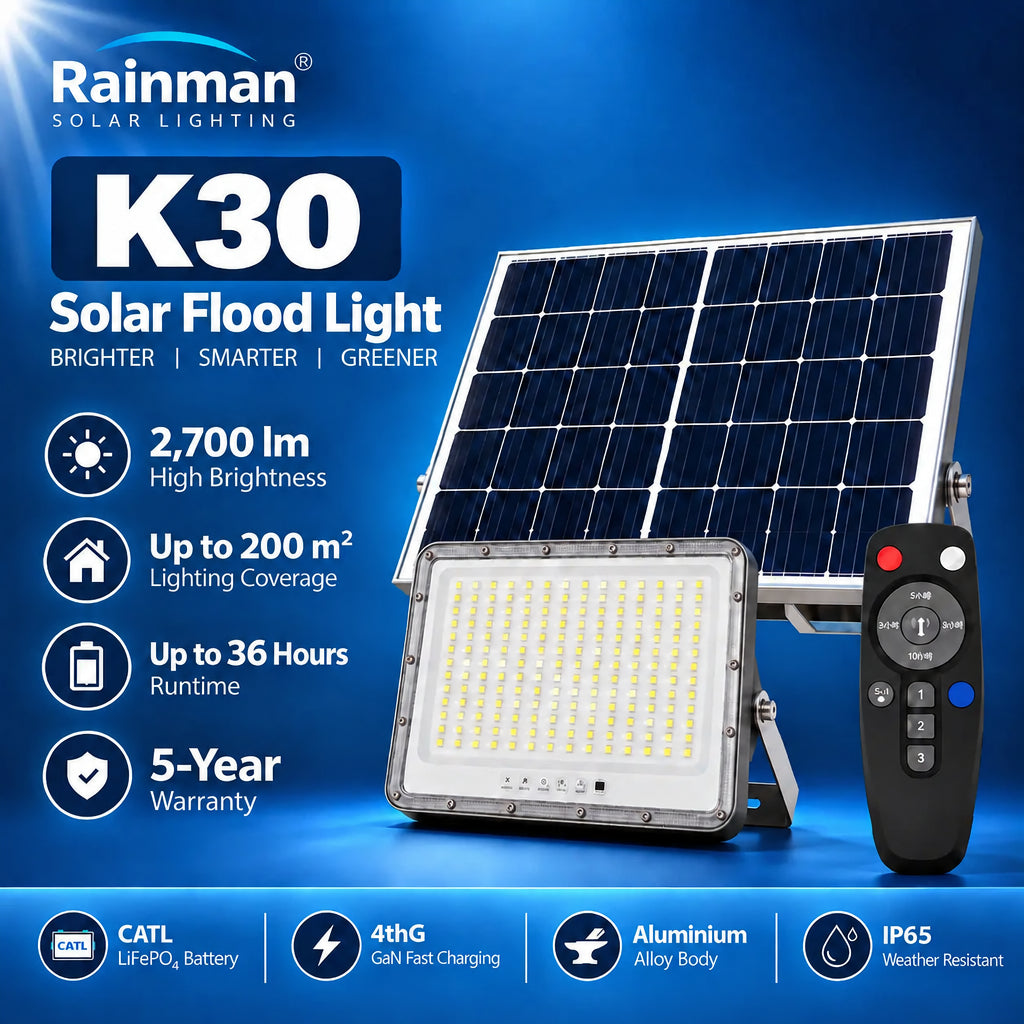
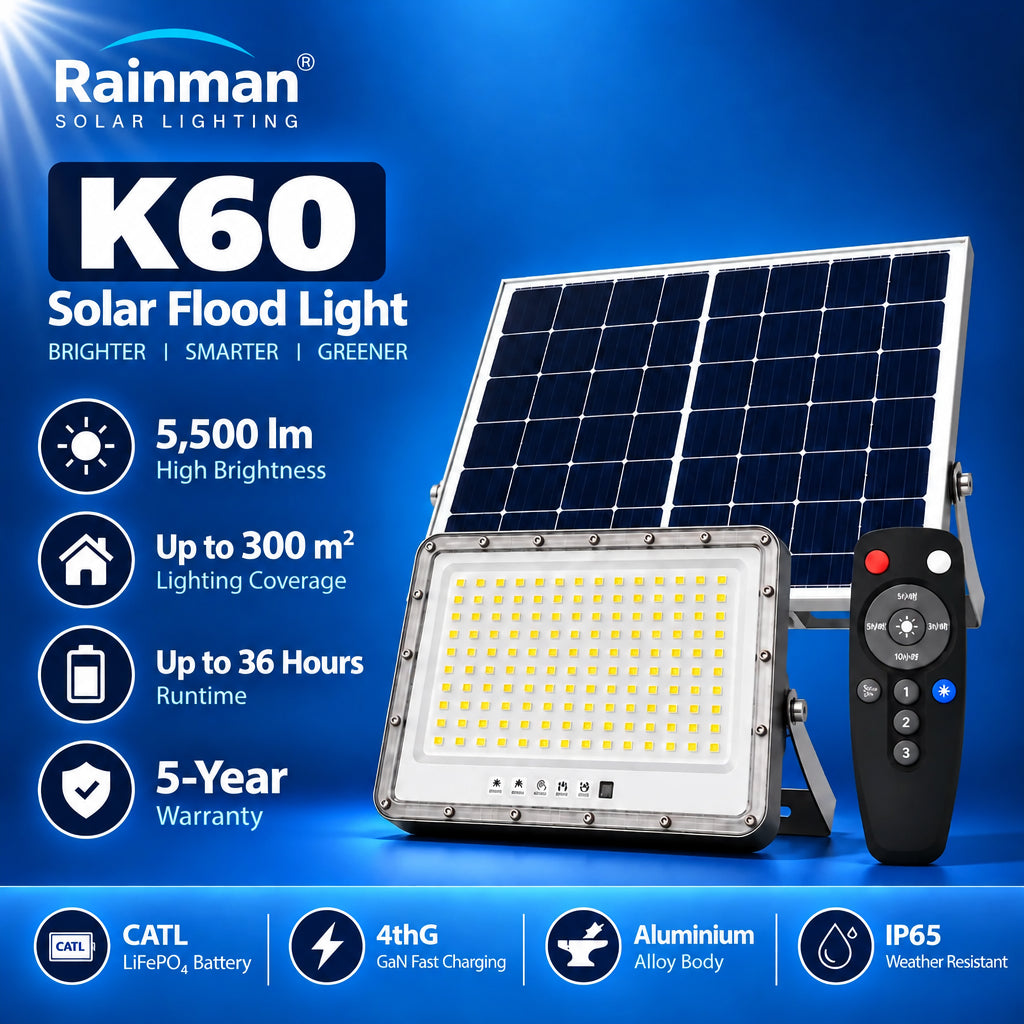
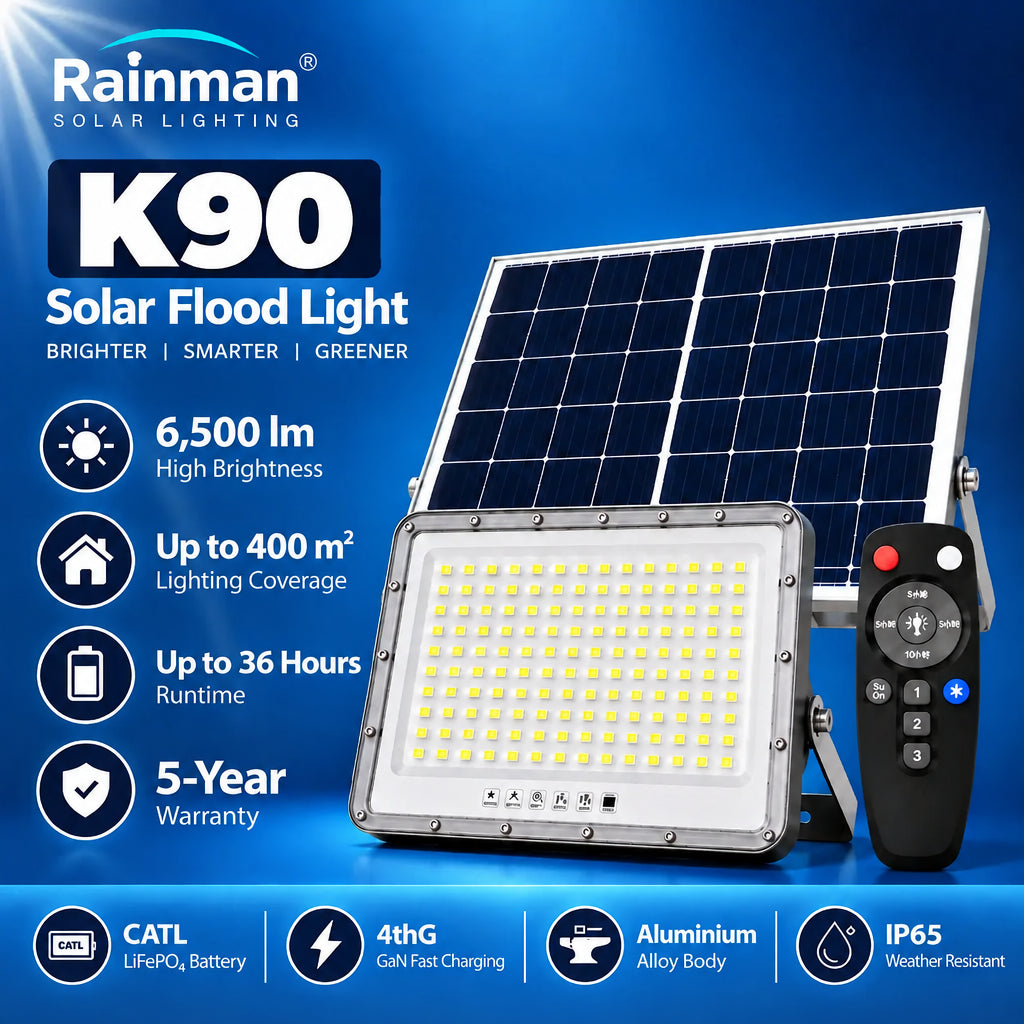
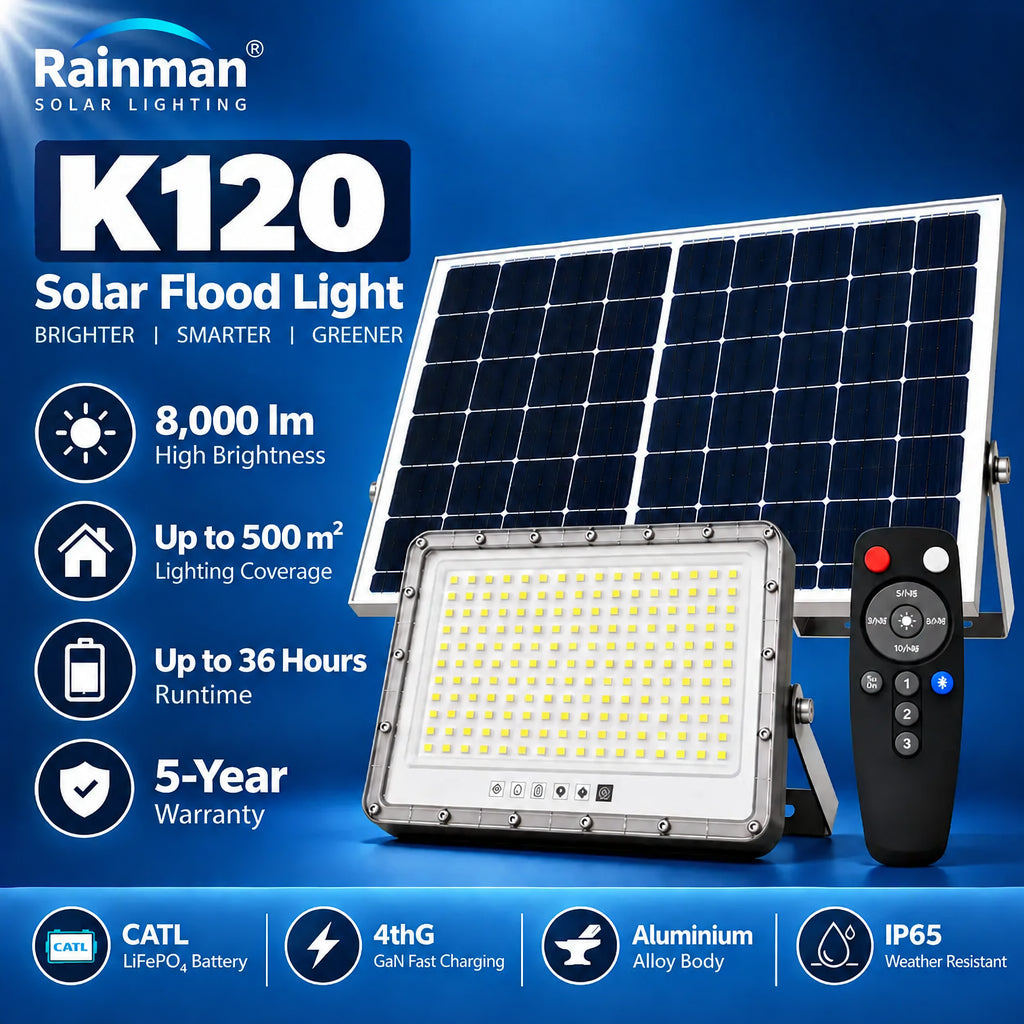
SolarEasy / Rainman commercial solar flood lights and street lights use CATL 33155 LiFePO₄ battery cells. LiFePO₄ is well suited to repeated cycling and long-term applications, but even a quality battery benefits from avoiding unnecessary thermal stress.
A good housing therefore does more than protect the LEDs. It helps create a suitable environment for all the components inside the light.
Why SolarEasy / Rainman Uses Aluminium Alloy Housing
For SolarEasy / Rainman commercial solar flood lights and street lights, our objective is long-term outdoor reliability rather than simply achieving impressive specifications when the product is new.
Our commercial lighting systems use aluminium alloy housings because of their combination of:
- Effective heat dissipation
- Structural strength
- Outdoor durability
- Dimensional stability
- Suitability for commercial installations
But housing material is only one part of the system.
A reliable solar flood light needs the solar panel, battery, LEDs, controller, housing and waterproofing to work together.
This is why our commercial product design combines components such as CATL 33155 LiFePO₄ battery cells, aluminium alloy construction, appropriately sized solar panels and controlled LED power management.
Depending on the model, SolarEasy / Rainman commercial solar flood lights and street lights are supported by 3-year or 5-year warranty coverage.
For commercial outdoor lighting, long-term reliability should be engineered into the complete product rather than relying on one impressive specification.
What Should You Check Before Buying?
When comparing solar flood lights, asking whether the housing is aluminium is a good starting point, but it should not be the only question.
Consider:
- What material is the main housing made from?
- Does the housing provide effective heat dissipation?
- Are cooling fins or other heat-management features visible?
- What type of surface coating is used?
- What is the IP rating?
- How are cables and connectors sealed?
- Is the mounting bracket strong enough for the size of the light?
- Are the fasteners suitable for outdoor use?
- Is the product intended for long-term commercial installation?
- What warranty does the supplier provide?
These questions provide a much better picture of product quality than simply comparing advertised wattage.
Housing Is Part of the Engineering
When looking at a solar flood light, it is easy to think of the housing as simply the outer shell.
For a properly engineered commercial light, it is much more than that.
The housing helps transfer heat away from the LEDs. It supports the mounting structure. It protects the battery and electronics. It contributes to long-term sealing stability and must withstand years of Australian weather.
This is why material selection becomes increasingly important as solar lighting moves from small decorative products to larger commercial applications.
For a commercial solar flood light, the housing is part of the thermal, structural and weather-protection system—not simply an outer shell.
A quality aluminium housing helps protect the components inside, manage heat and provide the structural durability needed for years of Australian outdoor use.