
Can a Solar Flood Light Really Last 50,000 Hours? Understanding LED Lifespan and System Reliability
If you have compared LED solar flood lights online, you have probably seen claims such as 30,000 hours, 50,000 hours or even longer LED life.
At first glance, 50,000 hours sounds extraordinary.
If a light operated for eight hours every night, 50,000 hours would theoretically represent more than 17 years of LED operating time.
So does this mean a solar flood light advertised with a 50,000-hour LED lifespan will actually remain outdoors and operate reliably for 17 years?
Not necessarily.
The important distinction is that LED lifespan and complete solar light lifespan are not the same thing.
A quality LED can potentially provide a very long operating life under appropriate conditions. But a solar flood light is an entire system containing LEDs, a battery, solar panel, controller, driver, wiring, housing, seals and other components.
For a solar flood light to provide genuinely long service life, all of these components need to work reliably together.
What Does "50,000-Hour LED Life" Actually Mean?
One common misunderstanding is that an LED rated for 50,000 hours will operate at exactly the same brightness for 49,999 hours and then suddenly fail.
That is generally not how LEDs age.
LEDs usually experience gradual lumen depreciation.
In other words, they can continue operating while their light output slowly decreases over time.
LED lifespan figures are therefore generally associated with expected light-output maintenance under specified operating and thermal conditions.
This is very different from saying:
"This complete solar flood light is guaranteed to operate for 50,000 hours."
The LED may be capable of very long life, but another component could become the limiting factor first.
That distinction is particularly important when comparing solar flood lights.
Why Do Some Solar Lights Fail Long Before Their LEDs?
Consider what is actually inside a solar flood light.
The LEDs are only one part of the system.
A typical system also includes:
- Solar panel
- Rechargeable battery
- Solar charge controller
- LED driver
- PCB and electronic components
- Wiring and connectors
- Housing
- Lens and seals
- Mounting components
Any one of these can affect the useful life of the complete product.
For example, the LEDs may still be perfectly capable of producing light, but if the battery has deteriorated significantly, there may no longer be enough stored energy to operate them throughout the night.
Similarly, a controller failure, water ingress or damaged connection could stop the light from operating even though the LEDs themselves are still functional.
This explains why a low-cost solar light can advertise a long LED lifespan but still fail after only a few years.
The lifespan of the LED is not automatically the lifespan of the complete solar lighting system.
LED Quality Still Matters
Although complete system design is extremely important, the quality of the LEDs themselves should not be overlooked.
LEDs can vary in:
- Efficiency
- Manufacturing quality
- Heat tolerance
- Lumen maintenance
- Colour consistency
- Long-term reliability
A more efficient LED can produce useful light while consuming less electrical power.
That provides an important advantage in solar lighting.
Every watt used by the LED must first be generated by the solar panel and stored in the battery.
If the LED system requires less energy to produce the required illumination, the battery experiences less demand and the solar panel has less energy to replace the following day.
Therefore, LED efficiency affects much more than brightness.
It can influence the energy balance of the entire solar lighting system.
Heat Is One of the Biggest Factors Affecting LED Life
LEDs are efficient, but they are not heat-free.
Part of the electrical energy supplied to an LED becomes light, while some becomes heat.
That heat needs to be removed.
If heat remains concentrated around the LED junction and electronic components, operating temperatures increase.
Over long periods, excessive temperature can contribute to:
- Faster lumen depreciation
- Reduced LED efficiency
- Colour changes
- Driver degradation
- Electronic component ageing
- Reduced overall reliability
This is why the 50,000-hour figure should never be considered separately from thermal management.
A quality LED operating within an appropriately designed thermal environment may provide very long service.
The same LED operated continuously at excessive temperature may age considerably faster.
Why Aluminium Housing Helps
This connects directly with an important point discussed in our previous article about aluminium solar flood light housings.
A properly designed aluminium housing can become part of the light's heat-management system.
Heat can move from the LED assembly through the PCB and heat-transfer surfaces into the aluminium body, where the larger surface area helps release it into the surrounding air.
Cooling fins can further increase this surface area.
This is one reason commercial LED flood lights commonly use aluminium alloy housings.
The housing is therefore doing more than protecting the components from physical damage and weather.
It can effectively act as a heat sink.
For long-term LED reliability, that is extremely important.
More Power Is Not Always Better for LED Life
There is another connection between lifespan and the exaggerated wattage claims discussed earlier in this Solar Flood Light Information Hub.
Driving LEDs harder can produce more light—but it can also produce more heat and consume more battery energy.
Imagine two lighting systems using similar LEDs.
One continuously drives the LEDs close to their maximum practical output.
The other operates them at a carefully controlled level that still provides the required illumination.
The second system may place less thermal and electrical stress on the LEDs, driver and battery.
This is why good engineering is not simply about obtaining the highest possible brightness.
For a commercial solar flood light expected to operate every night, the objective should be to find the right balance between:
Brightness + Efficiency + Runtime + Temperature + Component Life
A very bright first night means little if the system cannot maintain reliable performance over the following years.
The Battery Can Determine Whether the LEDs Reach Their Potential
Even if the LEDs themselves are capable of a very long operating life, they still depend on the battery every night.
This is why battery quality is such an important part of long-term solar light reliability.
A poor-quality battery may gradually lose capacity after repeated charging and discharging.
The LEDs may still be in excellent condition, but the light begins switching off earlier because the battery can no longer store enough energy.
Eventually, the owner may describe the entire light as having "failed", even though the LEDs themselves have not reached the end of their useful life.
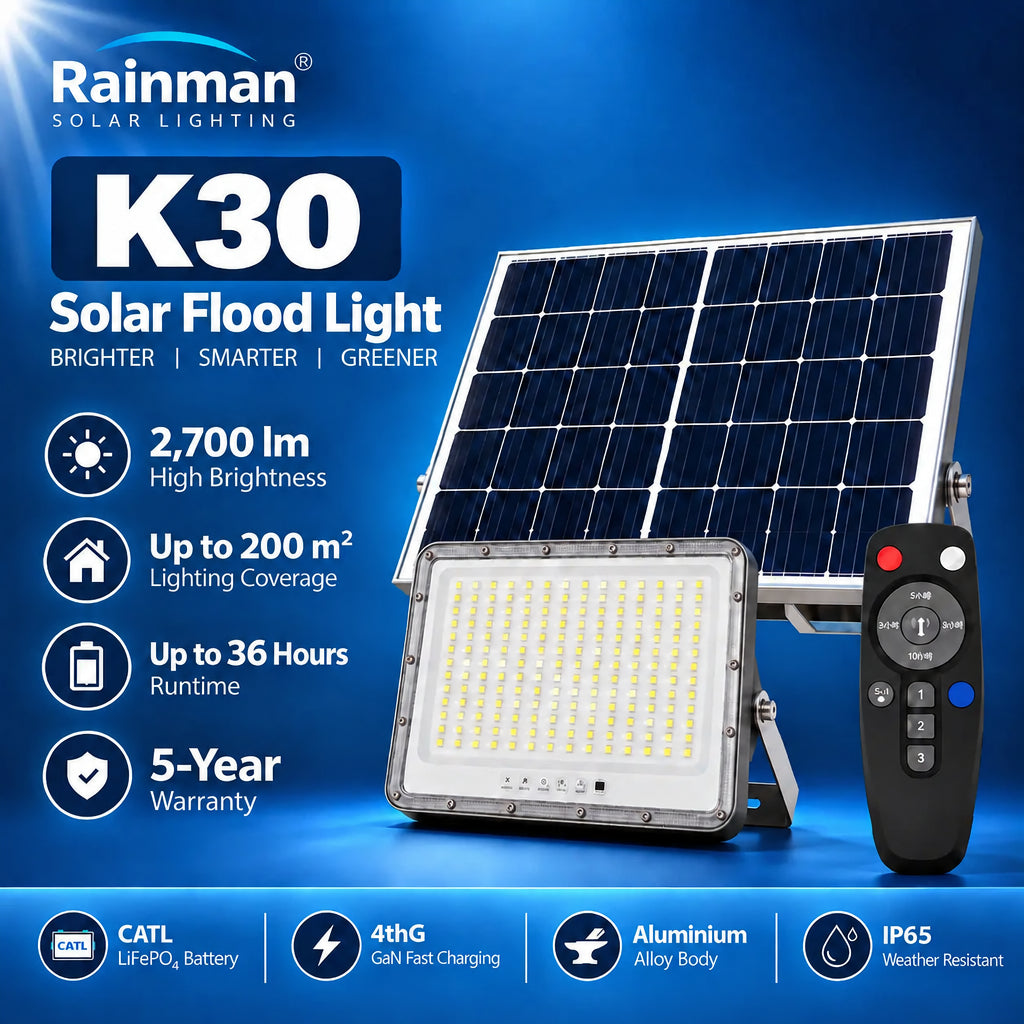
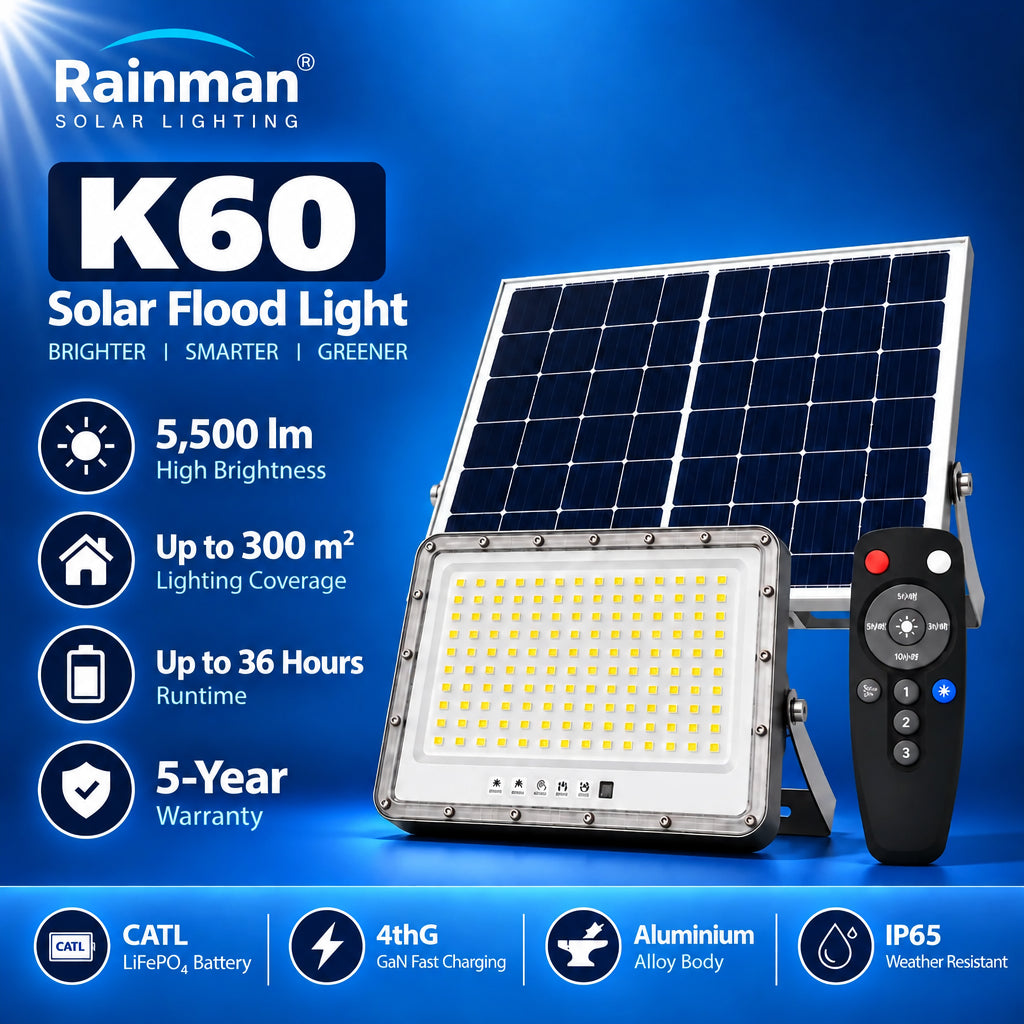
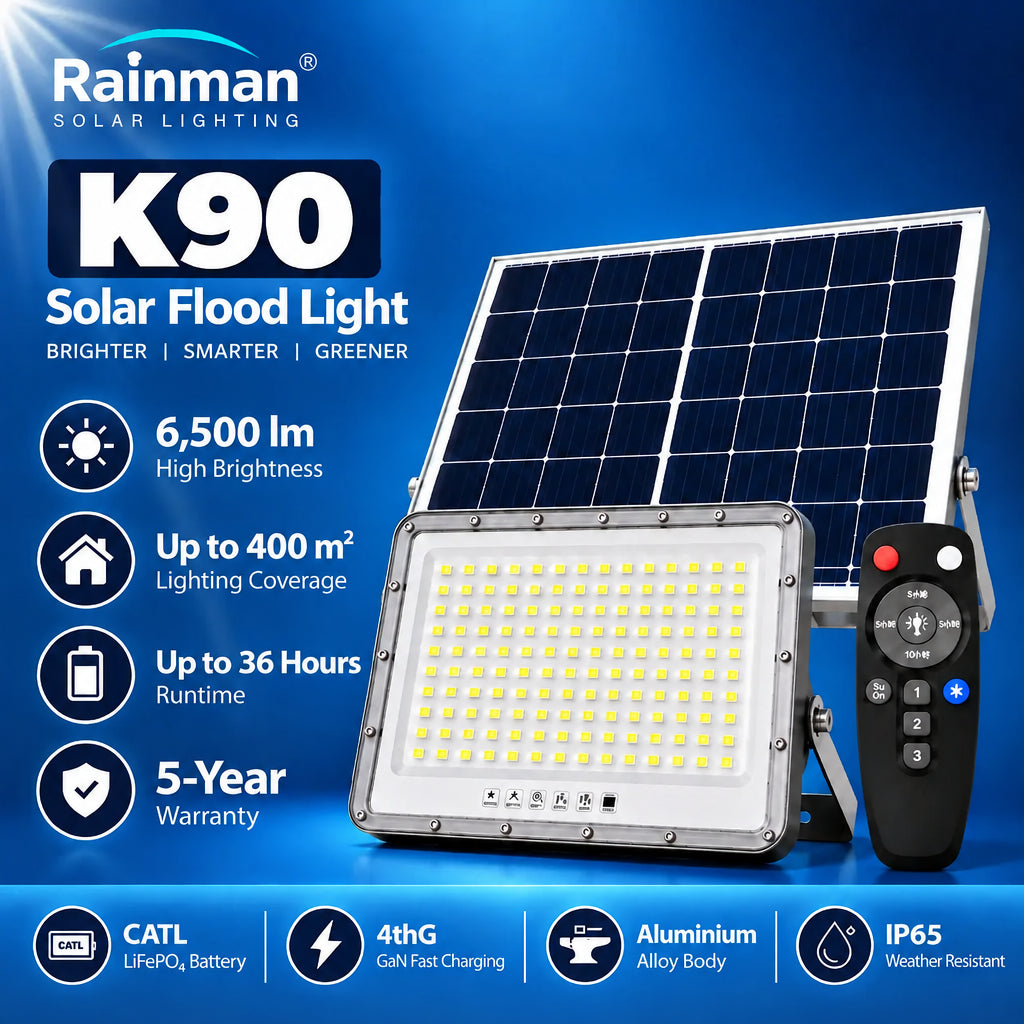
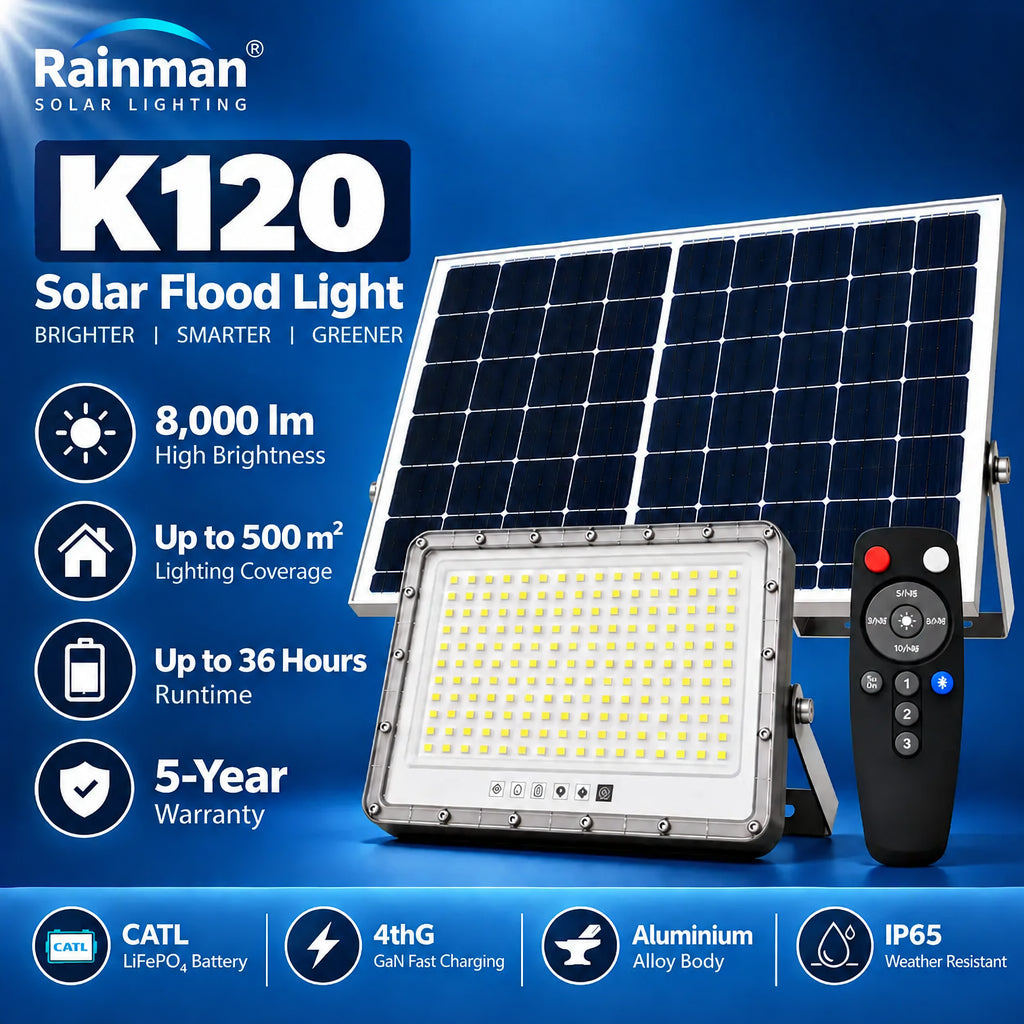
For SolarEasy / Rainman commercial solar flood lights and street lights, we use CATL 33155 LiFePO₄ battery cells.
CATL is a major global battery manufacturer whose battery technology is used across demanding energy-storage and electric-vehicle applications.
For our solar lighting application, LiFePO₄ technology provides important characteristics including good cycle performance, thermal stability and suitability for repeated charging and discharging.
However, using a quality battery cell is only one part of the solution.
Good Battery Management Is Just as Important
Installing a quality battery and then repeatedly pushing it to its limits would defeat much of the benefit.
The controller must manage how the battery is charged and discharged.
Depending on the system design, battery management may include:
- Charging regulation
- Overcharge protection
- Low-voltage protection
- Over-discharge protection
- Power management
- Dusk-to-dawn control
- Intelligent dimming
This is particularly important for solar lighting because available solar energy changes from day to day.
A clear summer day may provide abundant charging energy. Several cloudy winter days may provide much less.
A well-designed system needs to manage those changing conditions while protecting the battery and maintaining useful lighting.
That is why SolarEasy / Rainman focuses on the complete system rather than relying on one impressive component specification.
The Solar Panel Must Also Be Properly Matched
There is little benefit in installing a large battery if the solar panel is too small to recharge it properly.
Likewise, an efficient LED and quality battery cannot perform as intended if the system regularly consumes more energy at night than the solar panel can replace during the day.
This brings us back to one of the most important principles in solar lighting:
Everything must be balanced.
The relationship between:
Solar panel → Battery → Controller → LED
determines how the system performs night after night.
The housing and thermal design then help protect those components from heat and the outdoor environment.
Long lifespan is therefore not created by one "magic" component.
It comes from complete system engineering.
Why Warranty Matters When Evaluating Lifespan Claims
Consumers should also consider the warranty when comparing claims about long product life.
It is easy to print "50,000 Hours" on a product listing.
A warranty is different because the supplier is standing behind the product for a defined period.
For selected Rainman commercial solar lighting models, we provide a 5-year warranty. Other SolarEasy commercial models may carry a 3-year warranty, depending on the product.
For products designed for long-term outdoor use, we believe warranty support should form an important part of the purchasing decision.
A long LED-life specification is useful, but buyers should also ask:
Who is standing behind the complete product if something goes wrong?
Can a Quality Solar Flood Light Last for Many Years?
Yes—but the answer depends on much more than the LED lifespan printed on the specification sheet.
A genuinely durable solar flood light needs:
- Quality LEDs
- Effective heat management
- Quality battery cells
- Correct battery capacity
- Proper charging and discharge control
- Appropriately sized solar panel
- Reliable electronics
- Durable aluminium housing
- Effective waterproofing
- Quality manufacturing
- Long-term supplier support
When these elements are properly engineered together, the LEDs have a much better opportunity to deliver the long operating life they are capable of.
This is the philosophy behind SolarEasy / Rainman commercial solar lighting.
Rather than treating a large wattage number or a 50,000-hour LED claim as proof of quality, we focus on building a balanced system around the light source—including CATL 33155 LiFePO₄ battery cells, aluminium alloy construction, controlled power management and long-term warranty support.
Do Not Judge Lifespan by One Number
So, can a solar flood light really achieve 50,000 hours of LED operation?
A quality LED operating under appropriate electrical and thermal conditions can potentially provide an extremely long operating life.
But that is only part of the story.
For the customer, the more important question is not:
"How many hours is the LED rated for?"
It is:
"Has the complete solar lighting system been designed to allow the LED, battery and electronics to continue working reliably together for many years?"
That is the difference between an LED lifespan specification and genuine product reliability.
Long-lasting solar lighting is not created by one impressive number. It is created by quality components, balanced engineering, good thermal management and a supplier prepared to stand behind the complete product.