
Solar Flood Lights vs Solar Street Lights – What's the Difference?
Solar flood lights and solar street lights can look quite similar at first. Both normally use a solar panel, rechargeable battery and LED light source, and both are designed to provide outdoor lighting without requiring mains electricity.
However, they are not exactly the same product.
The main difference is not simply the wattage or the size of the light. It is how the light is distributed, where the light is installed, and what type of area it is designed to illuminate.
Understanding these differences can help you choose a solar lighting system that is better suited to your property rather than simply buying the product with the largest advertised wattage.
What Is a Solar Flood Light?
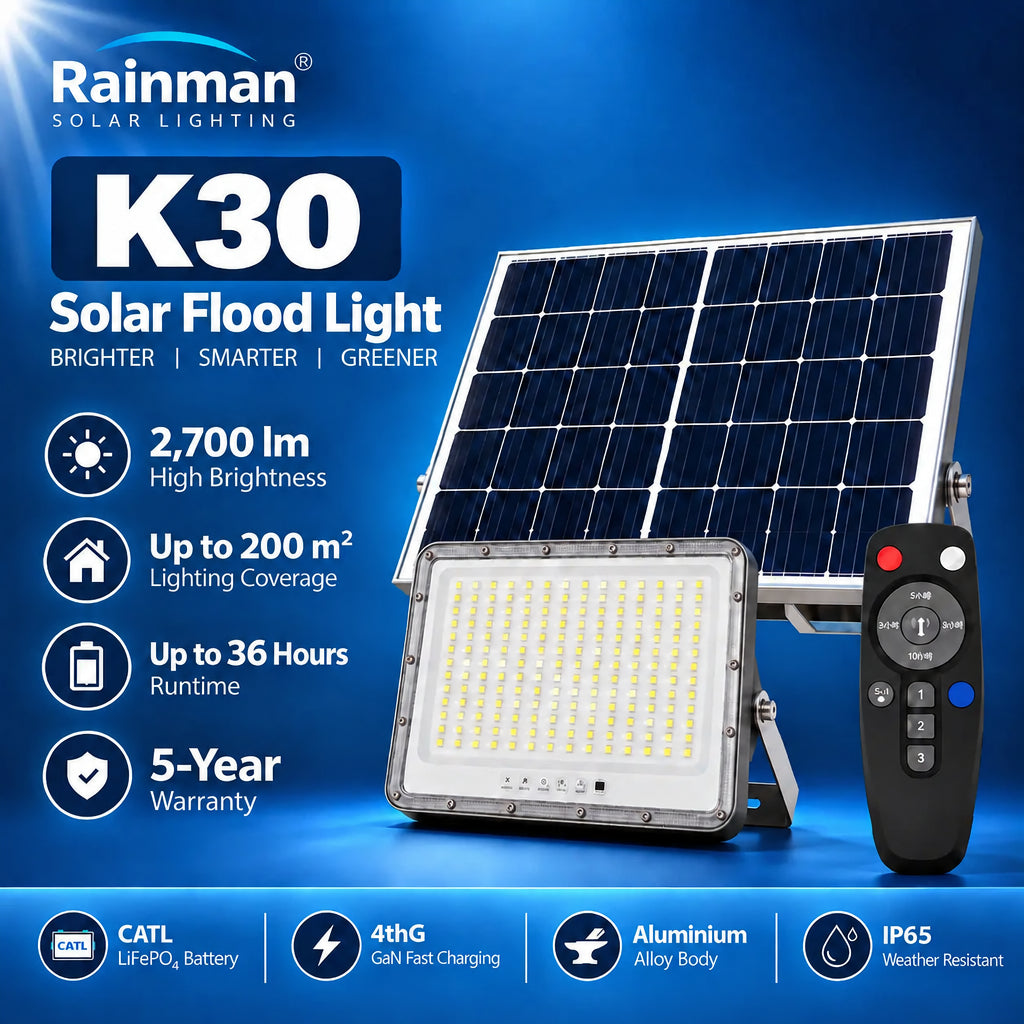
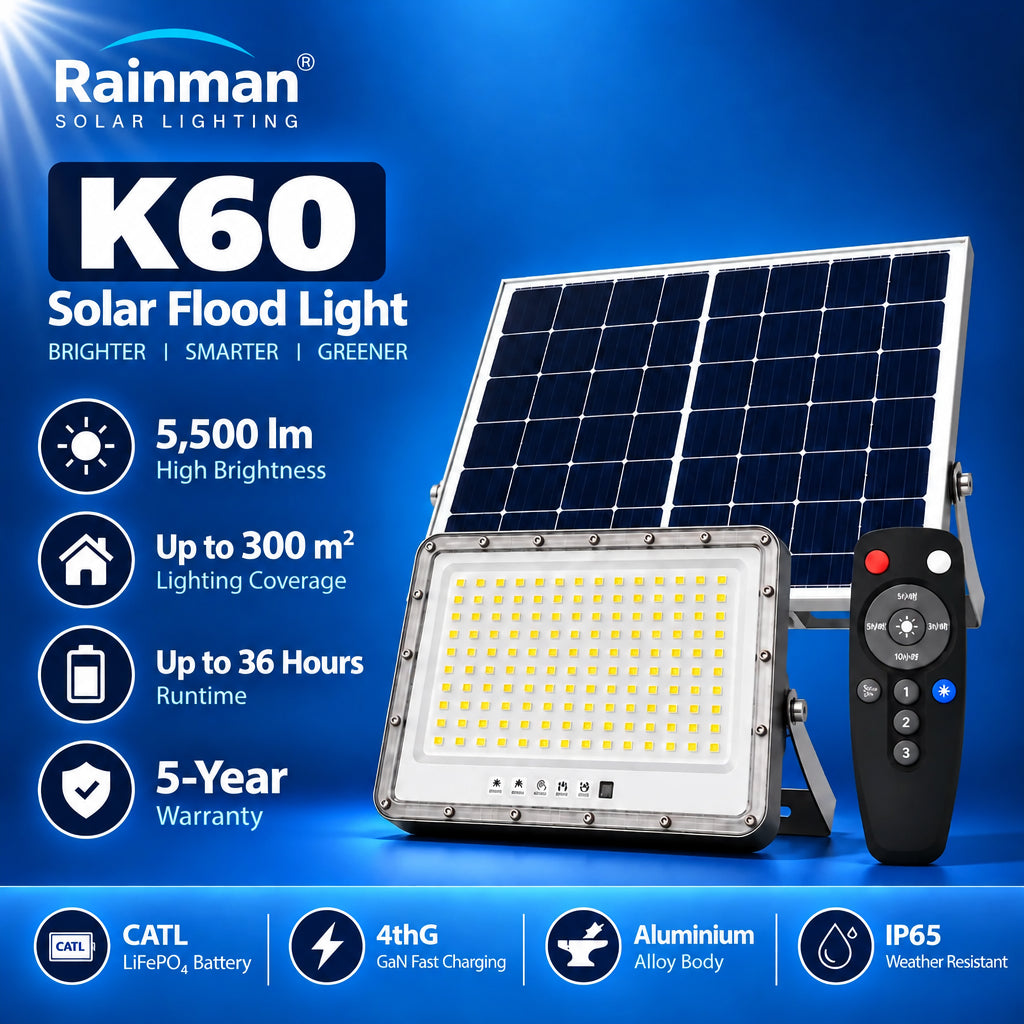
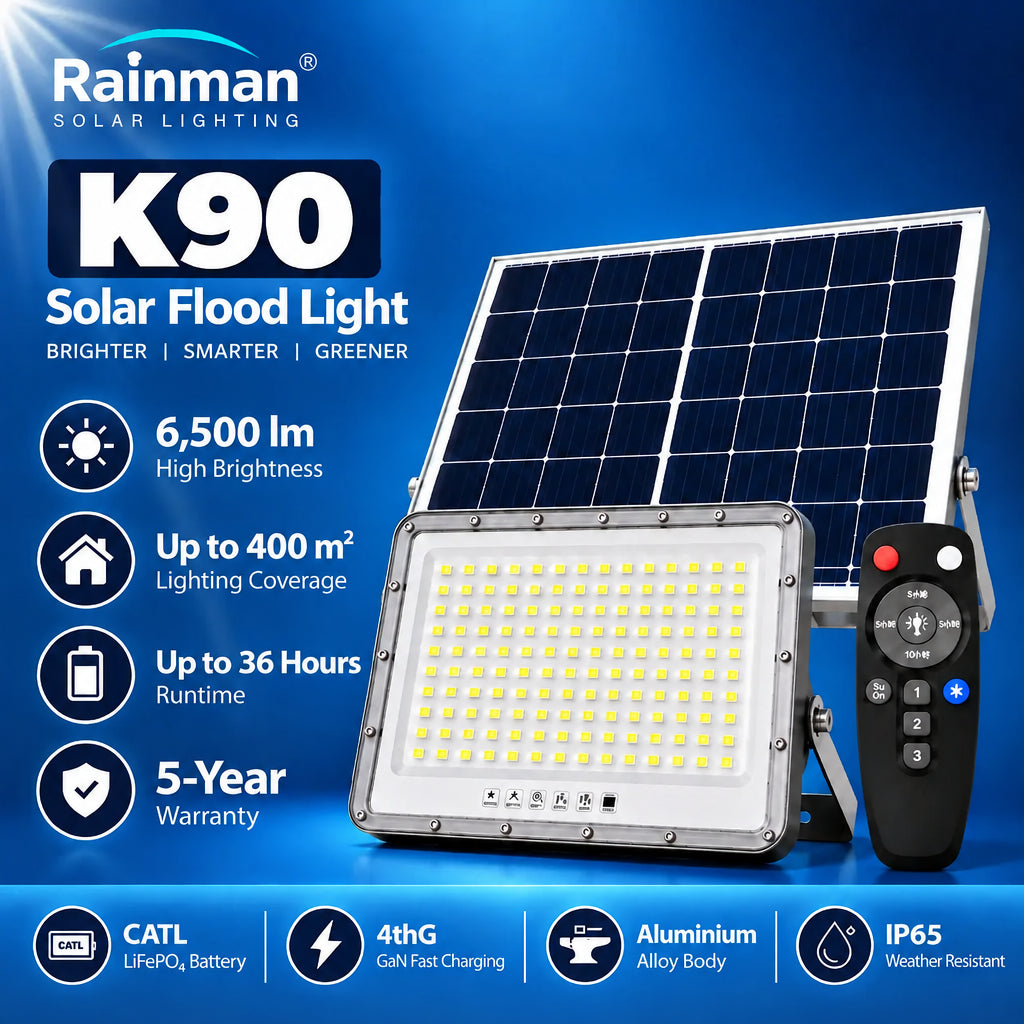
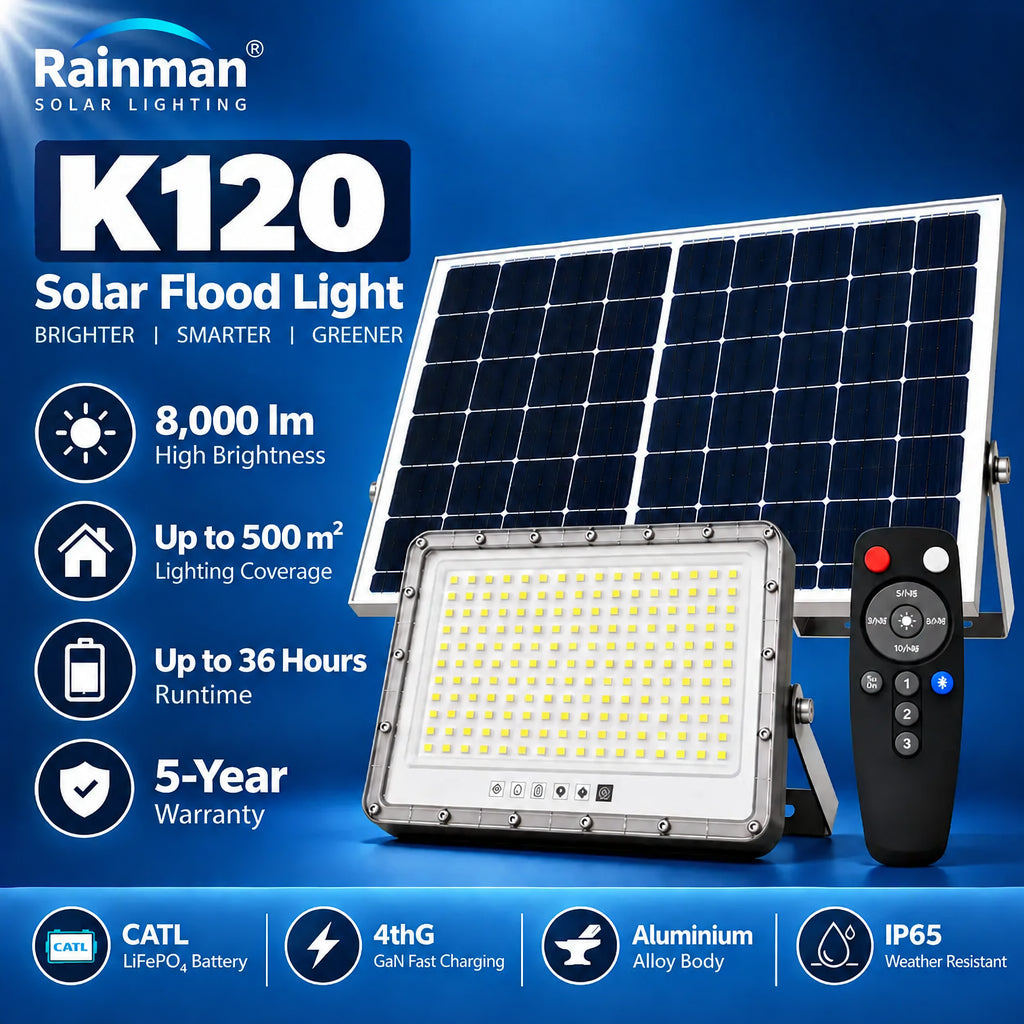
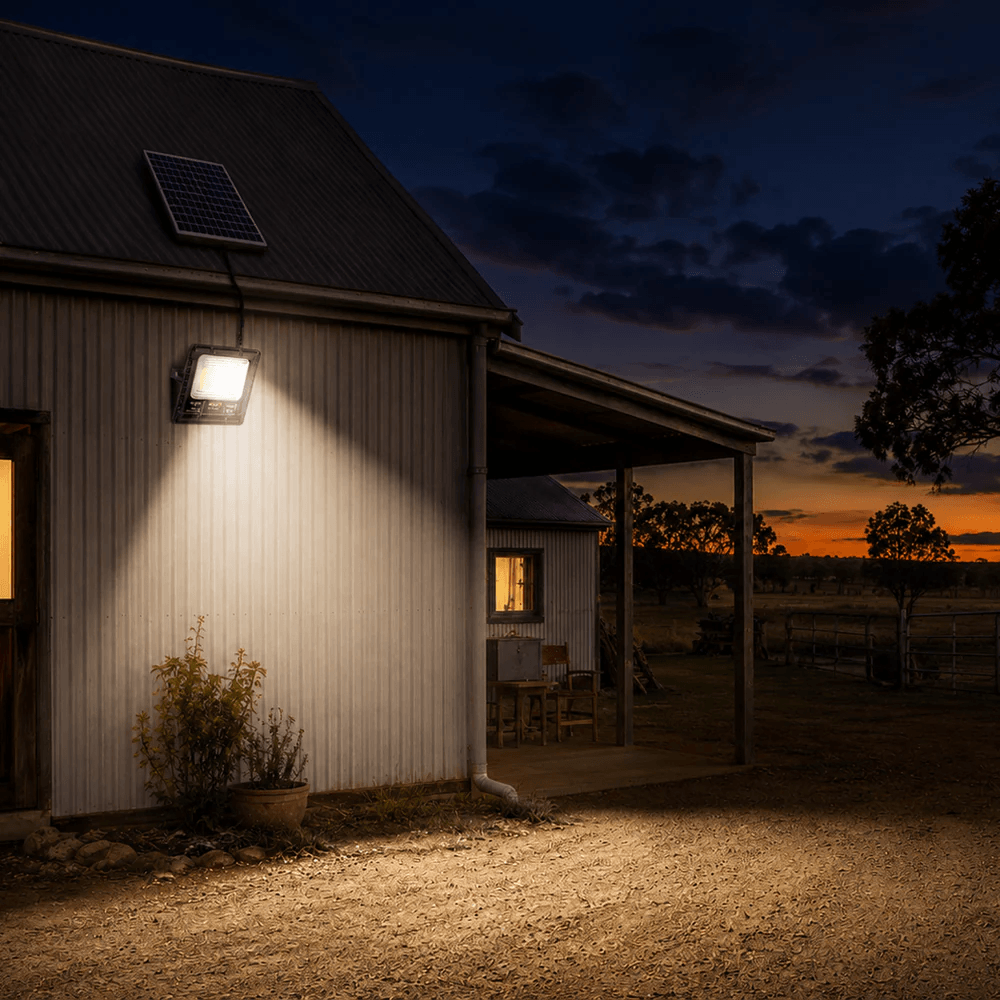
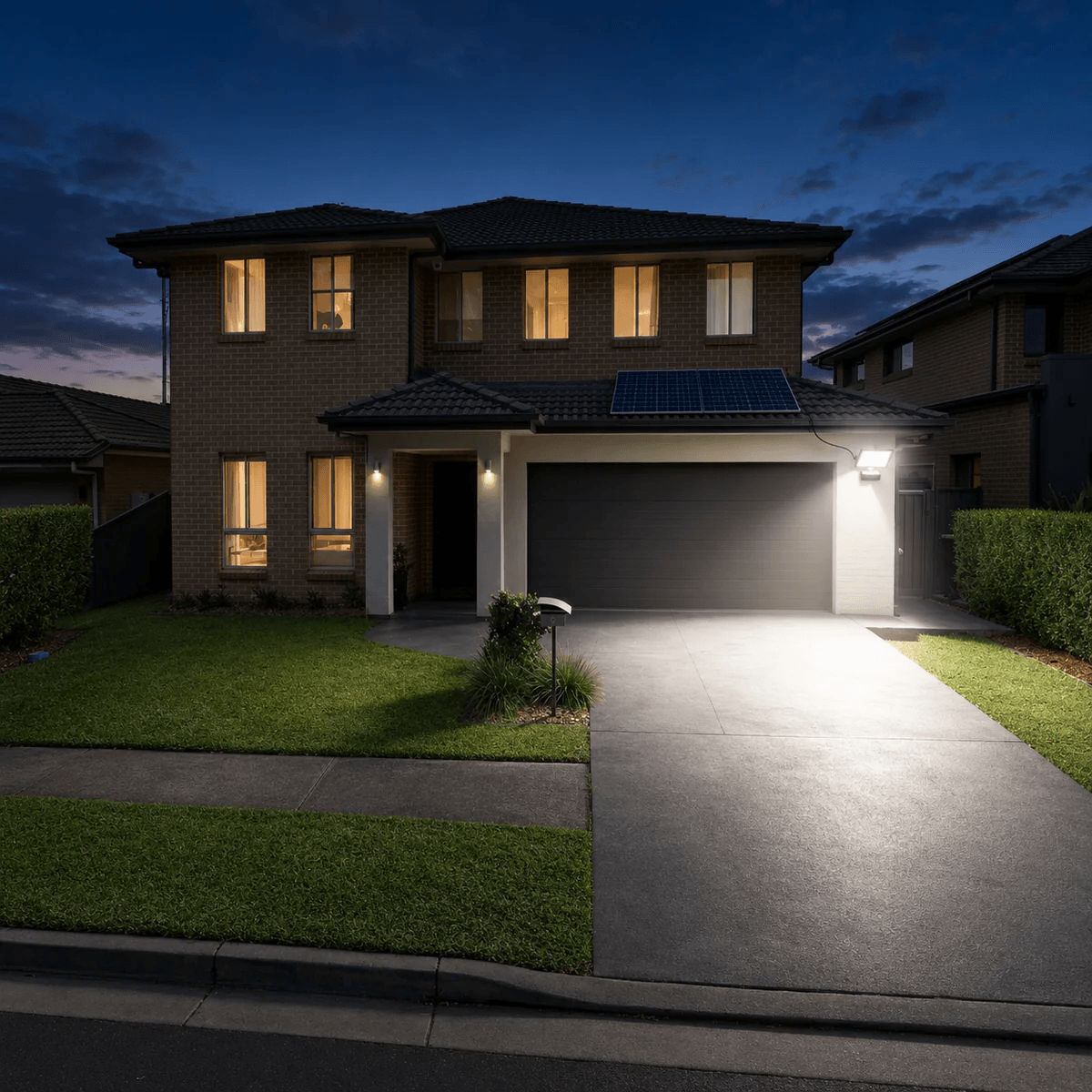
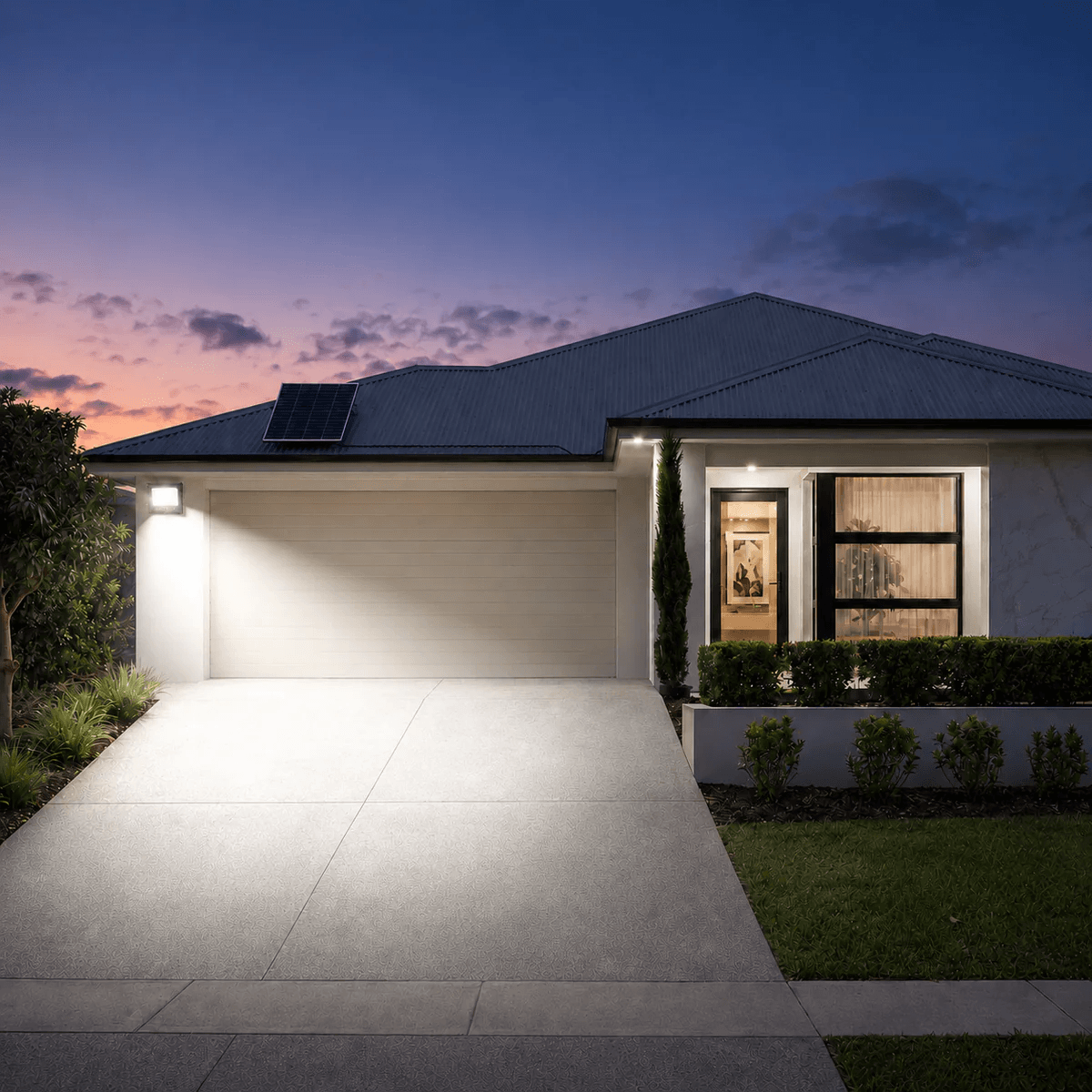
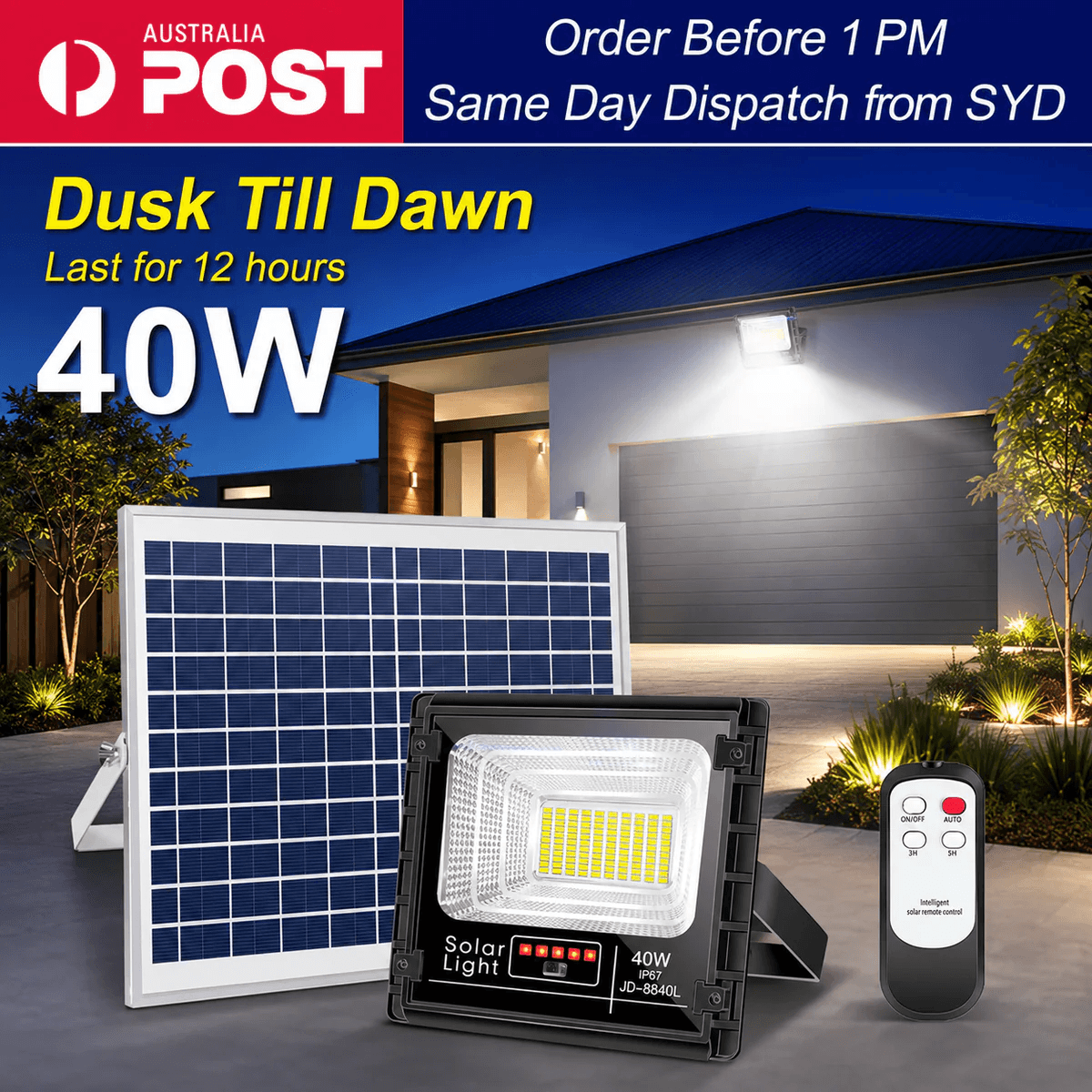
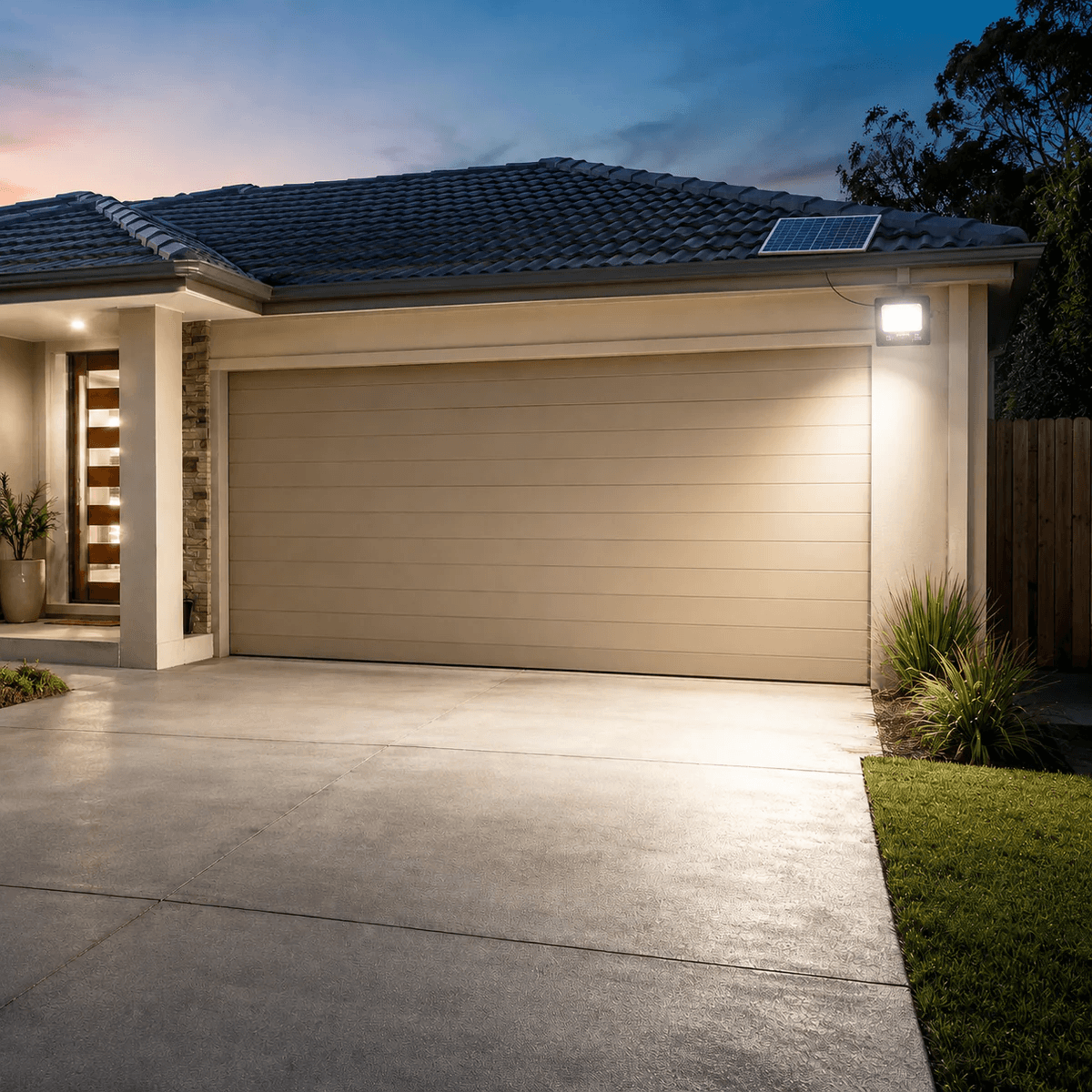
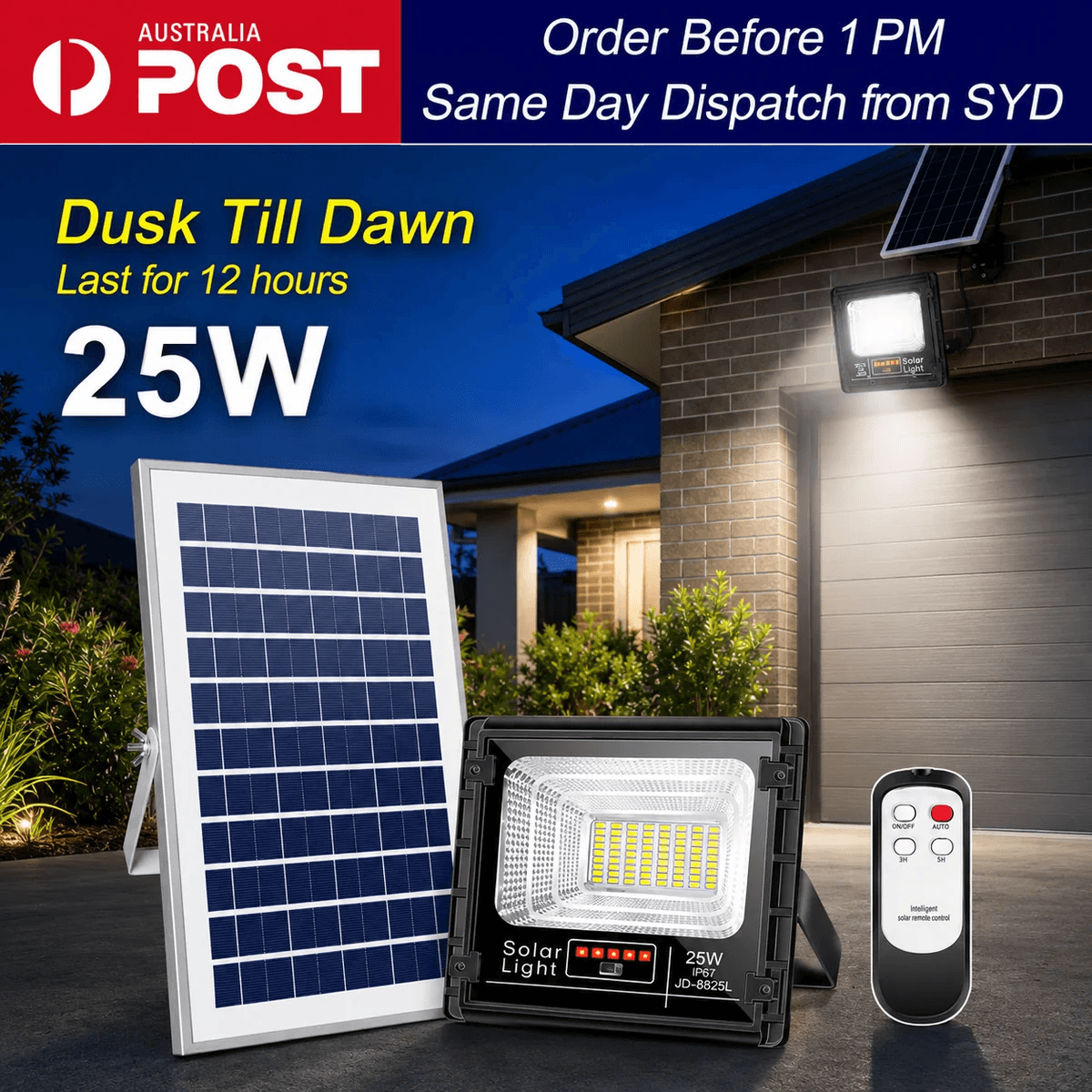
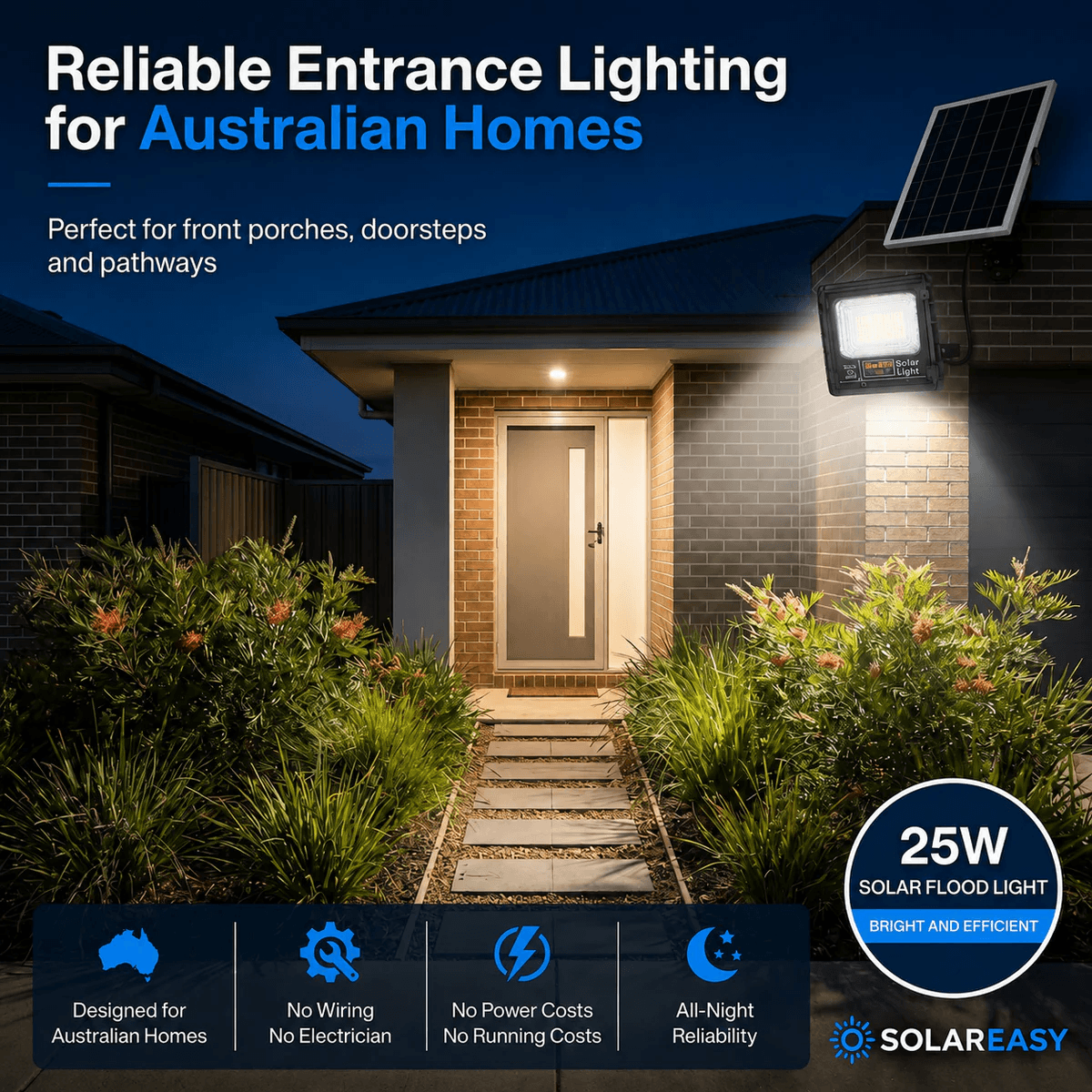
A solar flood light is generally designed to spread light across a relatively wide area.
Instead of concentrating the light along one narrow direction, a flood light normally provides a broad beam that can cover yards, building surrounds, parking areas, sheds and other open spaces.
Solar flood lights are commonly installed on:
- Building walls
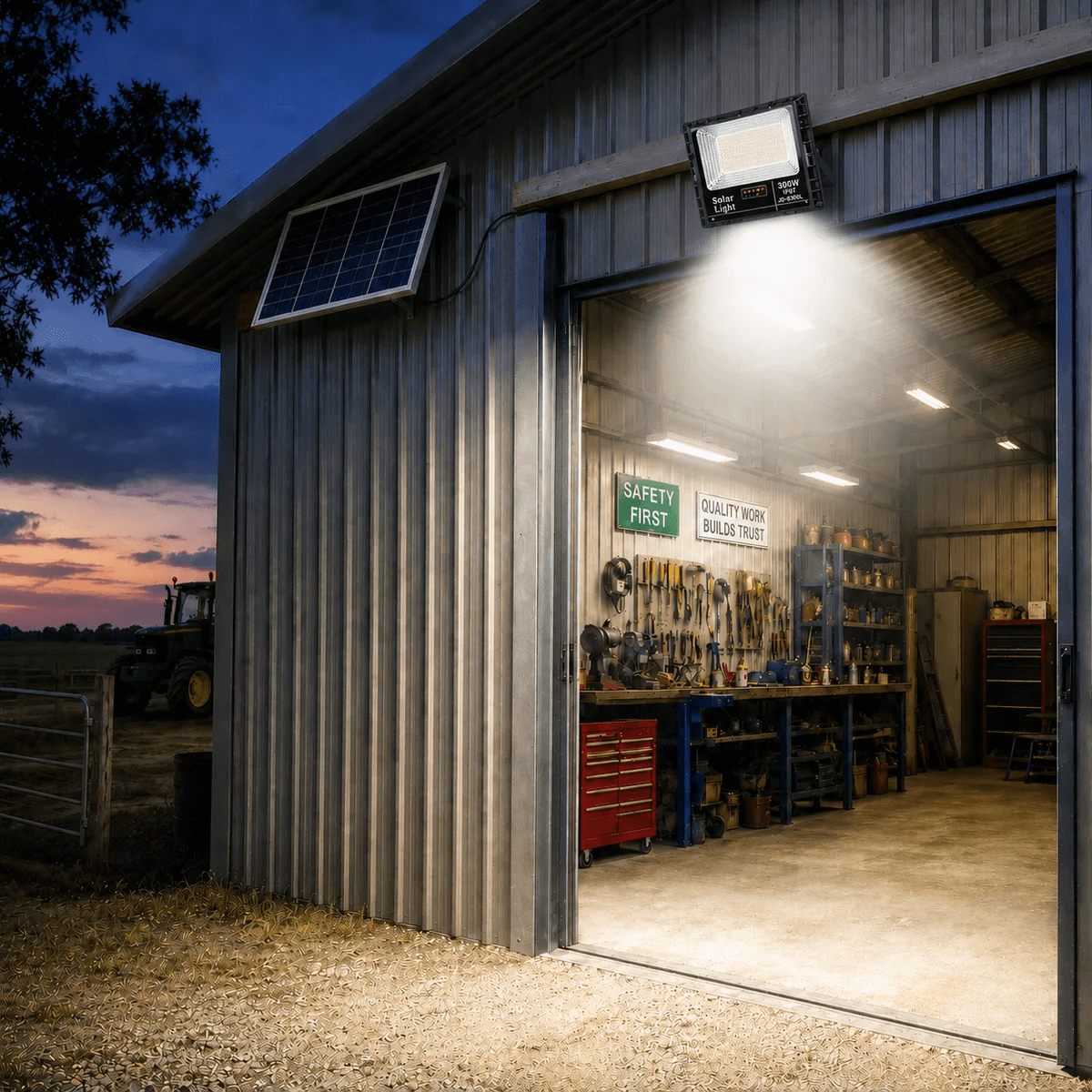
- Sheds and warehouses
- Posts or poles
- Carports
- Fences
- Commercial buildings
- Farm structures
Because they can be mounted in many different locations, flood lights are usually quite flexible.
For example, if you want to illuminate the area beside a shed, a large backyard, a loading area or the front of a commercial building, a solar flood light may be the more practical option.
The key idea is simple:
Flood lights are primarily designed to illuminate an area.
What Is a Solar Street Light?
A solar street light is generally designed to illuminate roads, driveways, pathways and similar linear areas.
They are normally installed higher above the ground, often on a dedicated pole, so the light can be distributed along the road surface below.
Typical applications include:
- Private roads
- Long driveways
- Farm roads
- Rural properties
- Car park access lanes
- Industrial sites
- Commercial entrances
- Pathways and internal roads
Compared with a flood light, a properly designed street light usually places more emphasis on distributing useful light along the ground rather than simply producing a wide circle of brightness around the fitting.
This is particularly important for taller installations.
A street light installed several metres above the ground needs to direct its available light efficiently towards the road or driveway below.
The basic principle is:
Street lights are primarily designed to illuminate a route or roadway.
Solar Flood Light vs Solar Street Light – Main Differences
| Feature | Solar Flood Light | Solar Street Light |
|---|---|---|
| Main purpose | Illuminate a broad area | Illuminate a road or pathway |
| Light distribution | Wide-area beam | More directional road coverage |
| Typical installation | Wall, building or pole | Usually a dedicated pole |
| Installation height | Low to medium, sometimes high | Usually higher |
| Typical use | Yard, shed, building, car park | Driveway, road, pathway |
| Installation flexibility | Very flexible | More purpose-specific |
These differences may sound simple, but they can significantly affect the real-world lighting result.
A bright flood light installed in the wrong position may still leave part of a driveway poorly illuminated.
Likewise, a street light designed for road coverage may not be the best choice for illuminating the entire side of a building.
Which One Is Brighter?
This is where solar lighting can become confusing.
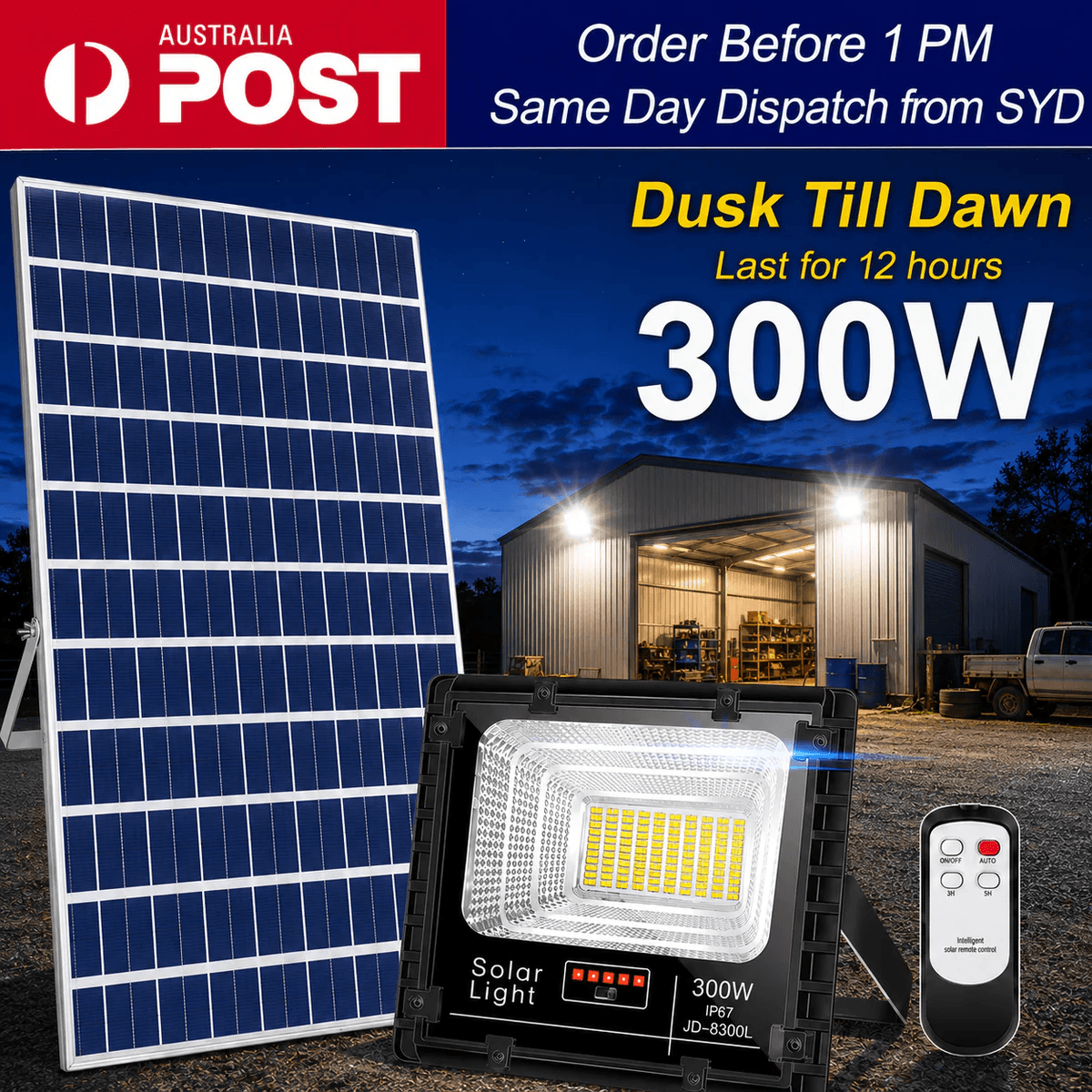
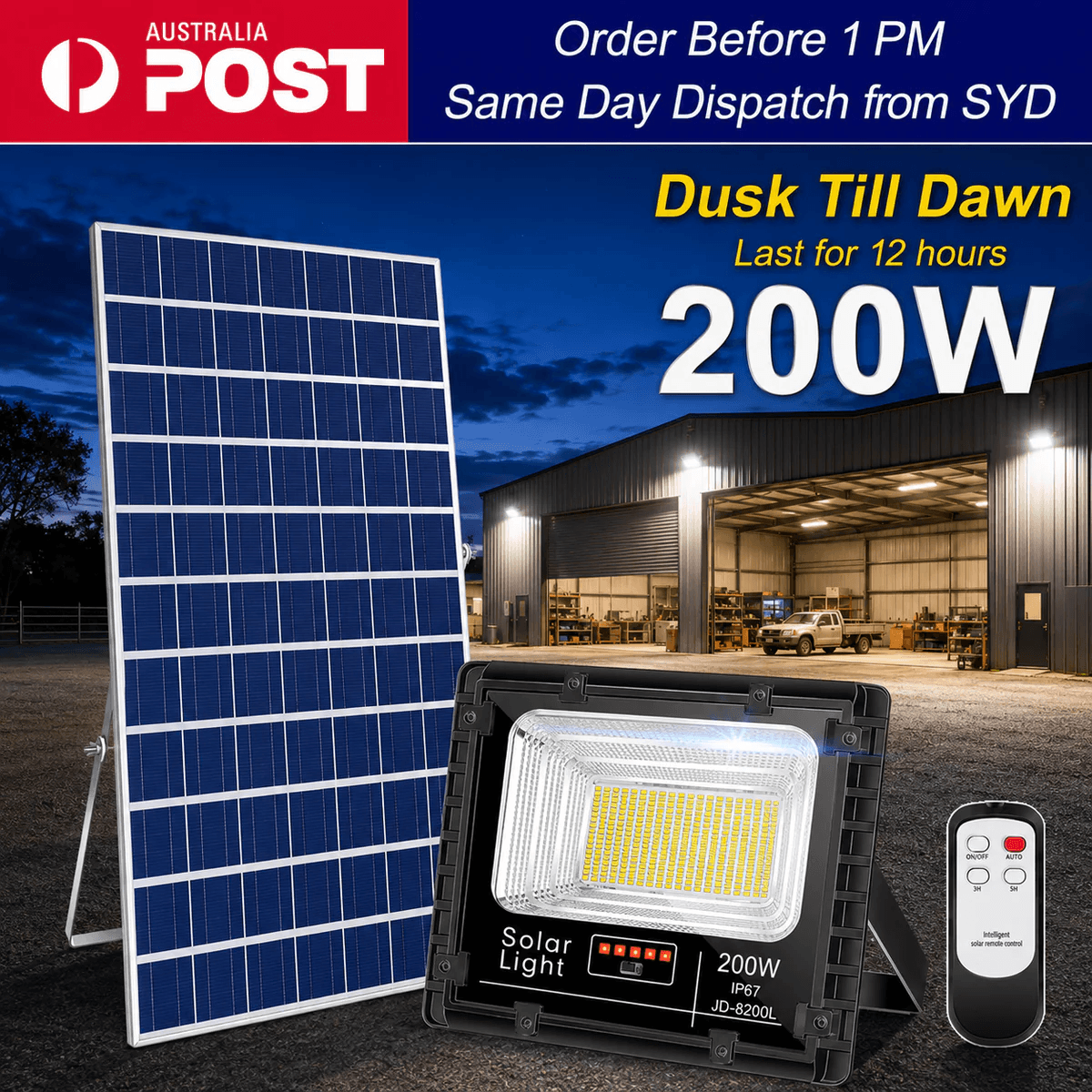
Many products are advertised online as 500W, 1000W, 2000W or even higher. Buyers may naturally assume that the highest wattage product must also be the brightest.
However, those numbers do not always represent the actual continuous electrical consumption of the light.
For solar lighting, it is much more useful to consider:
- Actual lumen output
- Beam angle
- Light distribution
- Installation height
- LED efficiency
- Battery capacity
- Solar panel size
- Operating mode
Two lights with similar lumen output can produce very different results simply because they distribute their light differently.
A flood light may spread its lumens across a wide area.
A street light may direct more of its available light towards a narrower section of road.
Therefore, asking whether a flood light or a street light is "brighter" does not always lead to the right answer.
A better question is:
Which light puts enough usable illumination where you actually need it?
Which One Needs a Larger Battery and Solar Panel?
Another common misunderstanding is that street lights always require much larger batteries and solar panels than flood lights.
That is not necessarily true.
The required solar panel and battery capacity mainly depend on:
- Actual LED power consumption
- Number of operating hours
- Brightness level
- Local solar conditions
- Winter charging conditions
- System efficiency
- Whether the light runs continuously or uses a motion sensor
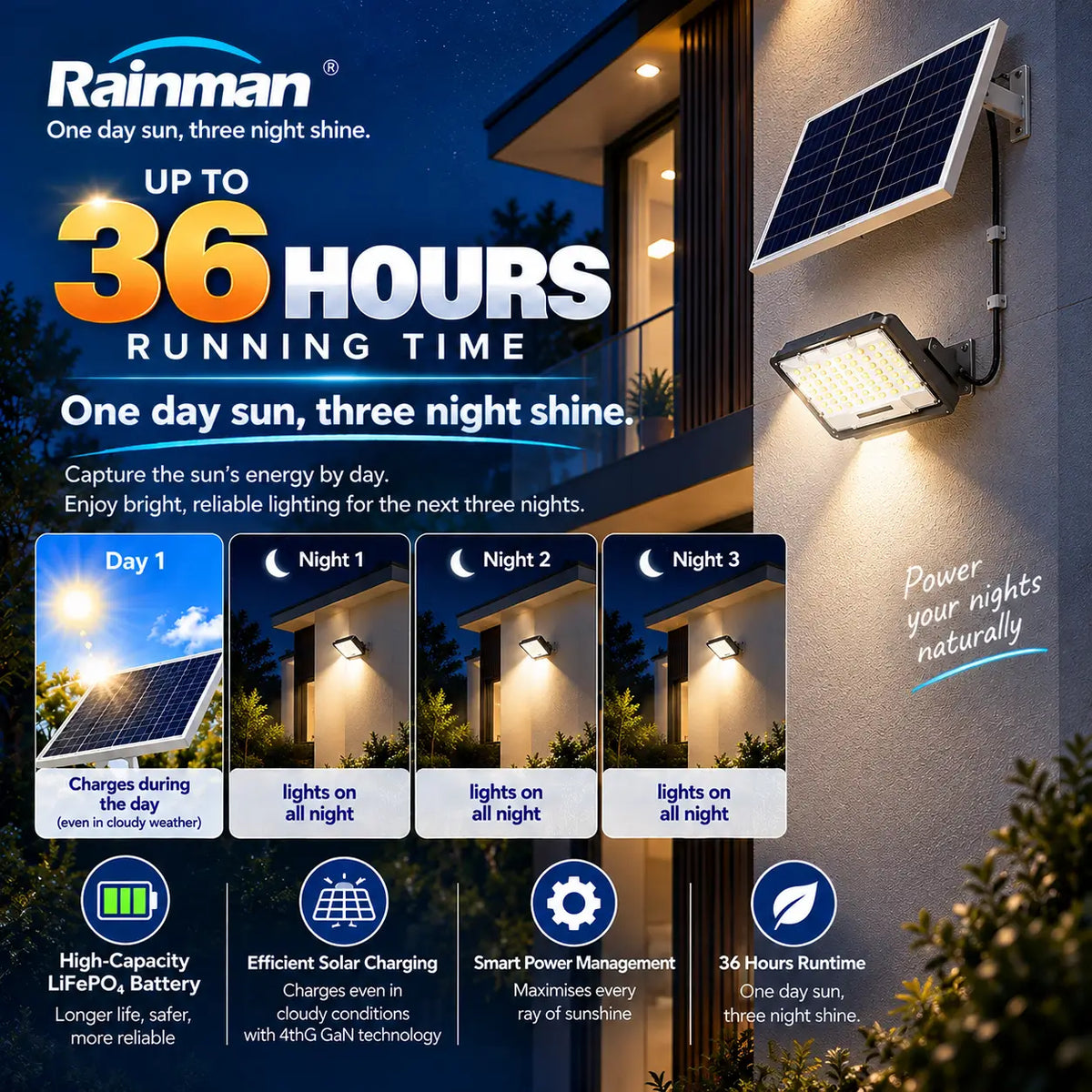
For example, a flood light that only operates for short periods when motion is detected may require relatively little stored energy.
But a high-output flood light designed to operate continuously from dusk until dawn can require a substantial battery and solar panel.
The same applies to a street light.
If the light must provide reliable illumination for 10 or 12 hours every night, enough energy must first be collected during the day and then stored in the battery.
This is why the size and quality of the battery and solar panel matter far more than an impressive wattage number printed on the product listing.
Motion Sensor or Always-On?
Both solar flood lights and solar street lights are available with different operating systems.
Some use motion sensors and remain dim or completely off until movement is detected.
Others are designed to provide continuous lighting throughout the night.
Motion sensor lights are popular in Australia, particularly around homes, side passages, entrances and areas where full-time lighting is not necessary.
There are several reasons for this.
A sensor system saves energy because the LED does not need to operate at full brightness all night. This means the product can often use a smaller battery and solar panel.
That can also make the product less expensive.
However, sensor lighting is not automatically the best choice for every application.
For locations such as:
- Commercial properties
- Long driveways
- Farm entrances
- Private roads
- Car parks
- Industrial areas
- Remote work areas
continuous lighting may be more useful.
In these situations, people may want the area to remain visibly illuminated throughout the night rather than waiting for motion to activate the light.
The better choice therefore depends on how the site is actually used.
When Should You Choose a Solar Flood Light?
A solar flood light is usually a good choice when your main objective is to illuminate a broad area.
For example:
Backyards and open areas
A flood light can spread light across a relatively large section of a yard.
Sheds and farm buildings
Mounting the light directly to the building can make installation simple while illuminating the surrounding area.
Commercial buildings
Flood lights can illuminate entrances, loading areas, external walls and parking areas.
Car parks
Depending on the layout and mounting height, flood lights can provide wide-area coverage across parking spaces.
Building perimeter lighting
A series of flood lights can be positioned around a building to illuminate several different zones.
When Should You Choose a Solar Street Light?
A solar street light generally makes more sense when the area you want to illuminate follows a road, driveway or pathway.
For example:
Long driveways
Installing lights at suitable intervals can provide more consistent illumination along the driveway.
Private roads
Street lights can be positioned to create a continuous lighting route.
Farm access roads
Properties without convenient access to mains electricity can benefit particularly from standalone solar street lighting.
Commercial and industrial access roads
Street lights can provide more organised road illumination for vehicles and pedestrians.
Large rural properties
Installing mains-powered lighting over long distances can require trenching, cabling and electrical work. Solar street lights can avoid much of this infrastructure.
What About Car Parks?
Car parks are an interesting example because either type of light may work.
A flood light mounted on a building may be suitable for illuminating a smaller parking area close to the structure.
For a larger open car park, pole-mounted street lights may provide more even coverage.
Some sites may even use both.
For example, street lights can illuminate the driving lanes while flood lights illuminate building entrances or loading areas.
This is why choosing between a flood light and street light should be based on the site layout rather than simply the product name.
Installation Height Matters
Installation height has a major effect on the final lighting performance.
A light installed higher above the ground can cover a larger area, but the illumination reaching the ground will generally become less concentrated.
This means a light that looks extremely bright when tested at two metres may perform very differently when installed six metres above a roadway.
For this reason, a good solar lighting system needs to balance:
- Lumen output
- Beam pattern
- Mounting height
- Coverage area
- Battery capacity
- Solar charging capability
This is particularly important for street lighting, where mounting height can significantly affect road-level illumination.
Don't Choose Only by the Advertised Wattage
Whether you are buying a solar flood light or solar street light, one of the most important rules is to avoid choosing purely on the advertised wattage.
If a small solar light claims to be 1000W or 2000W, consider what that would actually mean.
A genuine 1000W light operating for eight hours would consume approximately 8,000 watt-hours of energy.
That would require an extremely large battery and a substantial solar array to recharge it.
Clearly, that is very different from the compact products commonly advertised online as "1000W solar lights".
Instead, look for realistic information about:
- Lumen output
- Battery capacity
- Solar panel size
- Runtime
- Operating mode
- Construction quality
- Warranty
These specifications provide a much better indication of how the light is likely to perform.
So, Which One Should You Buy?
A simple way to decide is to start with the shape of the area you need to illuminate.
If you want to illuminate a wide open area, such as a yard, shed, building frontage or general parking area, a solar flood light is often the better starting point.
If you want to illuminate a long route, such as a driveway, private road or pathway, a solar street light is generally more suitable.
If the application is more complicated, such as a large commercial property or car park, the best solution may involve both types of lighting.
At SolarEasy, we offer both solar flood lights and solar street lights because different properties require different lighting solutions.
Rather than simply choosing the product with the largest wattage number, consider where the light will be installed, how wide an area needs to be covered, how many hours the light needs to operate, and whether continuous or sensor-based lighting is more appropriate.
Final Takeaway
Solar flood lights and solar street lights use similar technology, but they are designed for different lighting tasks.
A flood light primarily spreads light across an area.
A street light primarily distributes light along a road, driveway or pathway.
Neither one is automatically better than the other.
The right choice depends on the location, installation height, beam pattern, required runtime and the amount of usable light needed on the ground.
Most importantly, when comparing solar lights, look beyond exaggerated wattage claims.
A well-designed solar lighting system should have a sensible balance between the LED output, battery capacity, solar panel size and expected overnight runtime.
That balance is ultimately far more important than whether the label says "flood light" or "street light".