
How Bright Does Your Solar Flood Light Really Need to Be?
When choosing a solar flood light, it is easy to assume that brighter is always better.
If one light is advertised as 500W and another as 1000W, the larger number may seem like the obvious choice. Some products go even further, advertising 2000W or similarly impressive figures.
But outdoor lighting is not a competition to find the biggest number.
A light can be too dim for the job, but it can also be unnecessarily bright. Excessive brightness can create glare, disturb neighbours and consume valuable battery energy that could otherwise be used to extend overnight runtime.
The better question is not:
"What is the brightest solar flood light I can buy?"
It is:
"How much useful light do I actually need for this area?"
For solar lighting in particular, finding the right answer can make a significant difference to both lighting quality and overnight performance.
Start With Lumens, Not Advertised Watts
Before deciding how bright your solar flood light needs to be, it is important to use the right measurement.
Watts measure electrical power consumption.
Lumens measure the amount of visible light produced.
For modern LED lighting, wattage alone is not a reliable measurement of brightness because LED efficiency varies.
This is especially important in the solar-light market, where products may be advertised using extremely high figures such as "500W", "1000W" or "2000W". In some cases, these figures may not represent the actual continuous electrical power of the light at all.
If you want to compare brightness, look for a credible lumen output rather than simply choosing the product with the largest wattage number.
Start With the Area You Want to Illuminate
The right amount of light depends first on what you are trying to illuminate.
A small entrance doesn't need the same lighting as a large rural yard.
Common Australian applications might include:
| Application | General Lighting Requirement |
|---|---|
| Pathway or small entrance | Low to moderate |
| Residential driveway | Moderate |
| Backyard or large garden | Moderate to high |
| Shed or workshop exterior | Moderate to high |
| Farm entrance or rural property | High |
| Large yard or car park | High |
| Commercial outdoor area | Higher or multiple lights |
These are general categories rather than fixed rules.
The actual amount of light required depends on the size and shape of the area, mounting height, beam angle, surrounding surfaces and what people need to do in that space.
For example, softly illuminating a driveway so someone can find their way to the house is very different from lighting a work area where people need to see objects clearly.
Start with the purpose of the light, then choose the brightness.
Area Makes a Big Difference
Imagine using the same flood light in two different spaces.
In the first situation, it illuminates an area of around 20 square metres.
In the second, you expect the same light to cover 200 square metres.
The light hasn't changed, but the result certainly will.
As light spreads over a larger area, the illumination at any particular point generally becomes lower.
This is why total lumen output alone cannot tell you exactly how bright the ground will appear.
Before choosing a light, consider:
How wide is the area?
How long is it?
Where can the light be installed?
Does the entire area need illumination, or only one important section?
These practical questions are often more useful than simply looking for the highest lumen figure available.
Mounting Height Changes the Result
Installation height also has a major influence on outdoor lighting.
A flood light installed relatively low can concentrate its light over a smaller area.
Install the same light much higher and the beam can cover a wider area, but the illumination reaching the ground will generally be less intense.
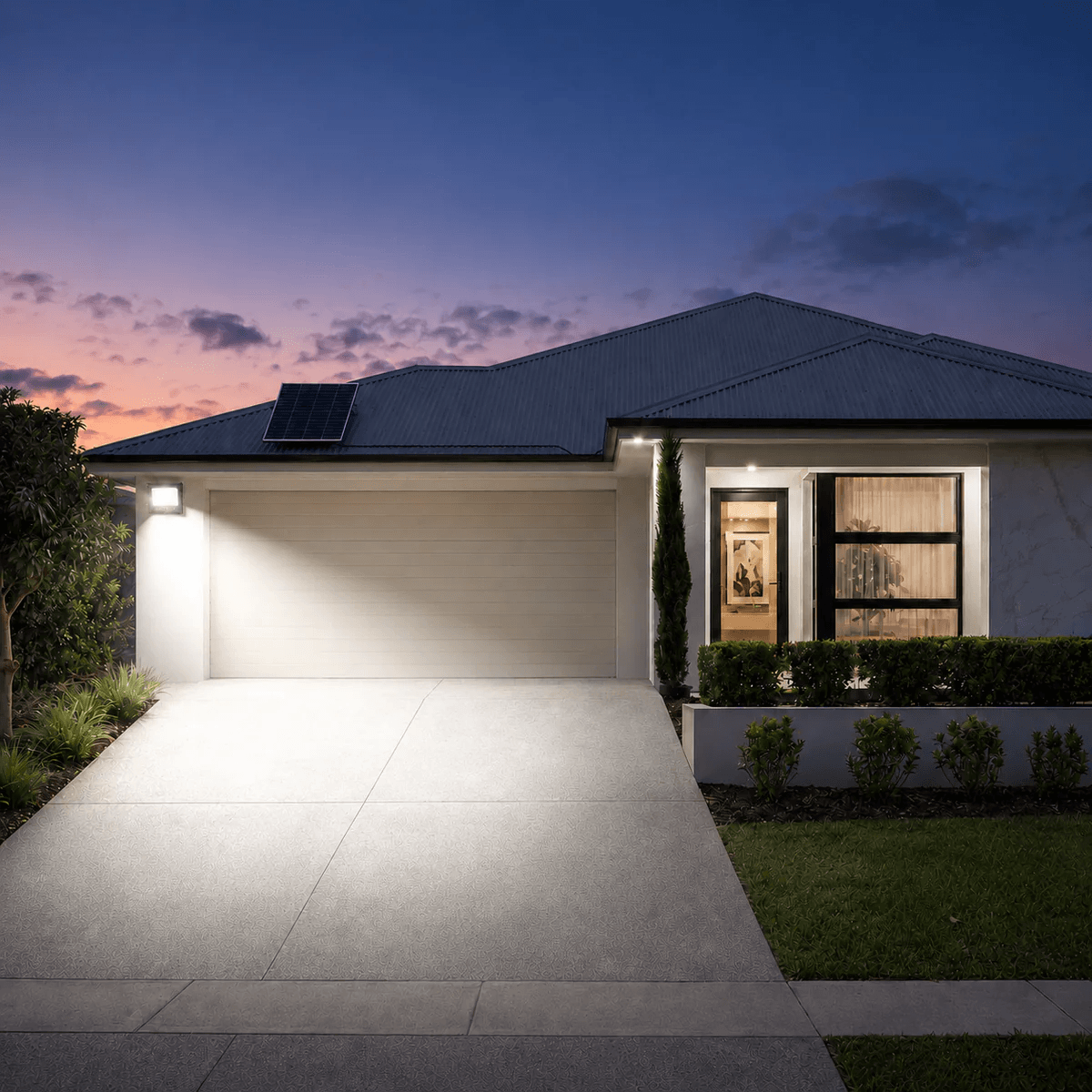
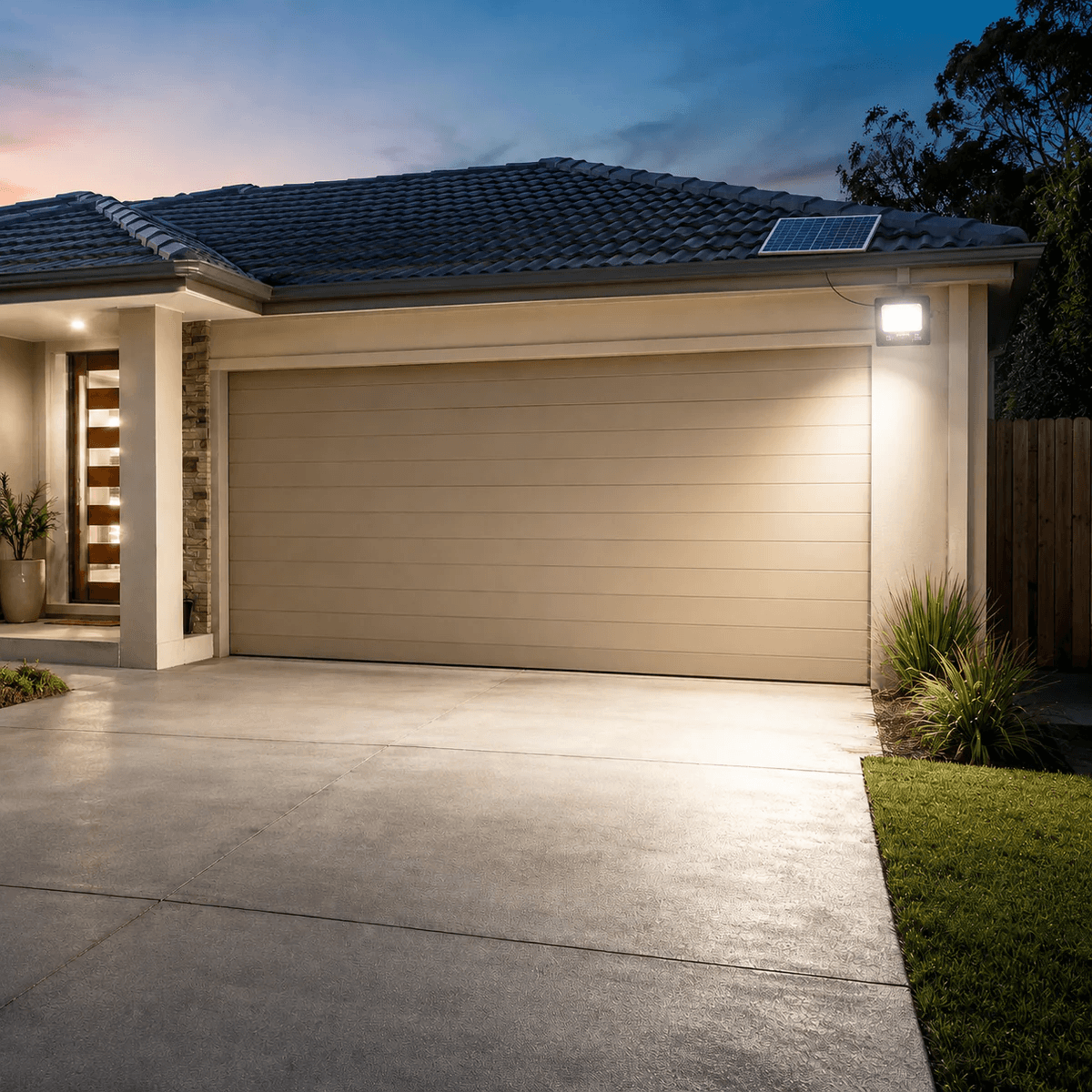
For example, a light installed at approximately 2–3 metres around a residential property has a very different job from a solar street light mounted several metres above a driveway, yard or car park.
Higher installation may therefore require:
- More lumen output
- Different beam distribution
- More careful positioning
- More than one light for larger areas
This is why two customers buying exactly the same solar light can have very different experiences.
The installation matters almost as much as the light itself.
Beam Angle Matters Too
Not every flood light distributes its lumens in the same way.
Consider two lights with the same total lumen output.
One has a relatively narrow beam.
The other has a much wider beam.
The narrow beam concentrates more of its light into a smaller area. It may appear brighter in the centre and can be useful when you want to illuminate a particular location or reach further into the distance.
A wider beam spreads the available light across a larger area. This may be more suitable for a backyard, driveway, car park or general outdoor area.
Neither design is automatically better.
The correct choice depends on where you need the light.
This is another reason why comparing solar lights using one specification alone can be misleading.
Lumens tell you how much light is produced. Beam distribution helps determine where that light goes.
Lumens and Lux Are Not the Same Thing
You may also come across another lighting measurement: lux.
The difference is useful to understand.
Lumens measure the total quantity of visible light produced by the light source.
Lux measures how much light reaches a particular surface.
A simple way to think about it is:
Lumens tell you what comes out of the light. Lux tells you how much of that light reaches the place you want illuminated.
For example, the same flood light may produce exactly the same number of lumens whether it is installed three metres or six metres above the ground.
But the lux level on the ground can be very different because the light is being distributed over a different distance and area.
This is why professional lighting design considers much more than the lumen figure printed on the product specification.
For most homeowners, you don't need to perform complicated lighting calculations. But understanding the distinction helps explain why lumen output alone doesn't guarantee a particular real-world result.
More Brightness Can Create More Problems
There is another side to choosing brightness that is often overlooked.
A light can be too bright.
An extremely bright flood light installed incorrectly around a residential property can produce uncomfortable glare.
It can also spill unnecessary light into neighbouring properties, windows or the street.
For Australian residential installations, it is worth considering where the beam is directed and whether it may affect neighbours.
Good outdoor lighting should illuminate the intended area without unnecessarily illuminating everything around it.
More brightness can also mean more energy consumption.
And for a solar light, energy is limited.
Brightness and Runtime Must Be Balanced
This is one of the most important differences between a conventional mains-powered flood light and a solar flood light.
A mains-powered light is connected to the electricity grid.
A solar flood light has only the energy collected by its solar panel and stored in its battery.
If you increase the continuous LED power, you increase energy consumption.
That creates a simple relationship:
More Brightness → More Energy Consumption → Faster Battery Discharge
To compensate, you may need:
Larger Battery → Larger Solar Panel → More Charging Capacity
This is why an extremely bright solar light that operates for only a few hours may not be the best choice for someone who needs reliable lighting throughout the night.
For many applications, slightly lower but well-controlled brightness for eight, ten or more hours may be considerably more useful than maximum brightness for a short period.
The right balance depends on your purpose.
If you only need occasional illumination when someone enters an area, a high-brightness motion-sensor light may work very well.
If you need continuous overnight illumination, energy efficiency and power management become much more important.
With solar lighting, useful brightness and useful runtime need to be considered together.
One Very Bright Light or Several Smaller Lights?
For a large area, the answer isn't always to install one extremely powerful flood light.
Imagine a large backyard or commercial yard illuminated by a single high-output light.
The area immediately in front of the light may be extremely bright, while corners and areas behind objects remain dark.
This creates uneven illumination:
Very bright centre → darker outer areas → unwanted shadows
In some situations, two or more smaller lights positioned strategically can produce a better result.
Multiple lights can provide:
- More even coverage
- Fewer dark areas
- Reduced glare
- Better illumination from different directions
- Greater flexibility in installation
This can be particularly useful for large driveways, rural properties, farms, sheds, car parks and commercial outdoor areas.
Again, the objective isn't simply to maximise total brightness.
It is to put useful light where it is actually needed.
A Simple Brightness Checklist Before You Buy
Before choosing your solar flood light, ask yourself:
1. What am I trying to illuminate?
A pathway, driveway, backyard, shed, farm entrance or commercial area will have different requirements.
2. How large is the area?
Consider both width and distance.
3. How high will the light be installed?
Higher mounting generally spreads the light over a larger area.
4. Do I need wide coverage or concentrated lighting?
Consider the beam pattern, not just total lumens.
5. Do I need continuous lighting throughout the night?
If yes, runtime and energy efficiency become particularly important.
6. What is the genuine lumen output?
Don't rely only on large advertised wattage figures.
7. Could several smaller lights provide better coverage?
For large or irregular areas, multiple lights may provide a better result than one extremely bright unit.
Choose Useful Light, Not Maximum Light
There is no single brightness level that is perfect for every solar flood light installation.
A homeowner illuminating a driveway has different requirements from someone lighting a farm entrance, large shed, car park or commercial property.
That's why choosing a solar flood light should begin with the application — not the biggest number on the product listing.
Consider the area.
Consider the mounting height.
Consider the beam pattern.
Consider the genuine lumen output.
And, importantly for solar lighting, consider how much battery energy is required to maintain that brightness throughout the night.
The goal of a good solar flood light isn't to produce the biggest brightness number.
It is to put the right amount of light in the right place for the required amount of time.
Once you approach solar lighting this way, it becomes much easier to choose a system based on real performance rather than marketing numbers.