
How to Choose a Quality Solar Flood Light
Buying a solar flood light should be simple. You need outdoor lighting, you choose the brightness you want, install the light and let the sun take care of the rest.
Unfortunately, the reality can be more complicated.
Search online and you will find solar flood lights ranging from inexpensive plastic units to larger aluminium systems, with advertised ratings of 100W, 500W, 1000W or even 2000W. Some promise all-night operation, huge brightness and years of outdoor service.
But the biggest number or lowest price doesn't necessarily tell you which light is better.
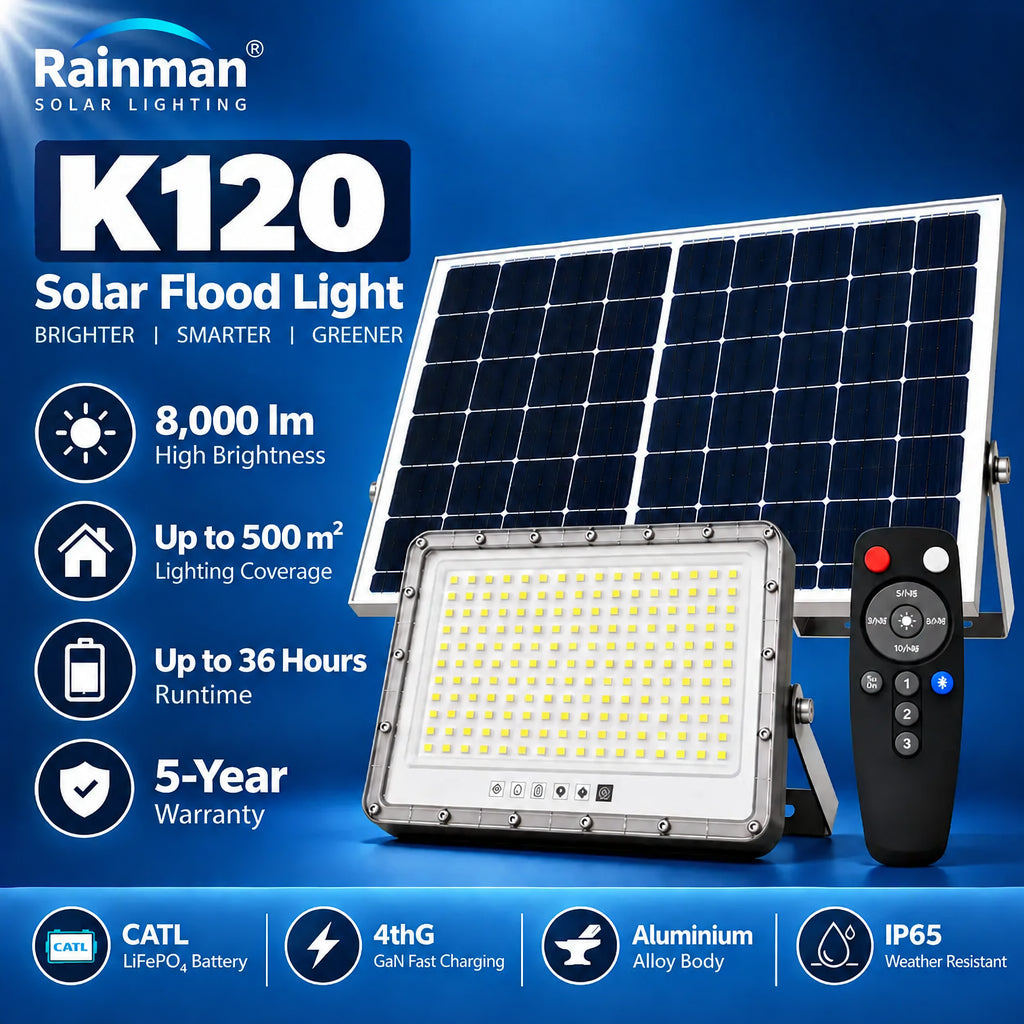
A quality solar flood light is a complete energy system. The solar panel, battery, LEDs, housing and electronic controls all need to work together.
For Australian conditions, where a light may face intense summer heat, strong UV exposure, winter weather and years of outdoor use, choosing the right system becomes even more important.
Here are the key things to look for before you buy.
Start With What You Actually Need to Illuminate
Before comparing specifications, consider what you want the light to do.
Lighting a small pathway is very different from illuminating a large driveway, backyard, shed, farm entrance or commercial yard.
Think about:
- The size of the area
- How high the light will be mounted
- How far the light needs to reach
- Whether you need broad or concentrated illumination
- Whether the area requires light throughout the night
You should also decide whether you want an always-on light or a motion-sensor light.
Motion-sensor lights can remain off or dimmed for much of the night and increase brightness when movement is detected. This can significantly reduce energy consumption.
An always-on solar flood light has a harder job. It needs enough stored energy to provide useful illumination for many hours continuously.
Neither system is automatically better. The right choice depends on the application.
Look at Lumens, Not Just Advertised Wattage
One of the biggest sources of confusion in solar lighting is wattage.
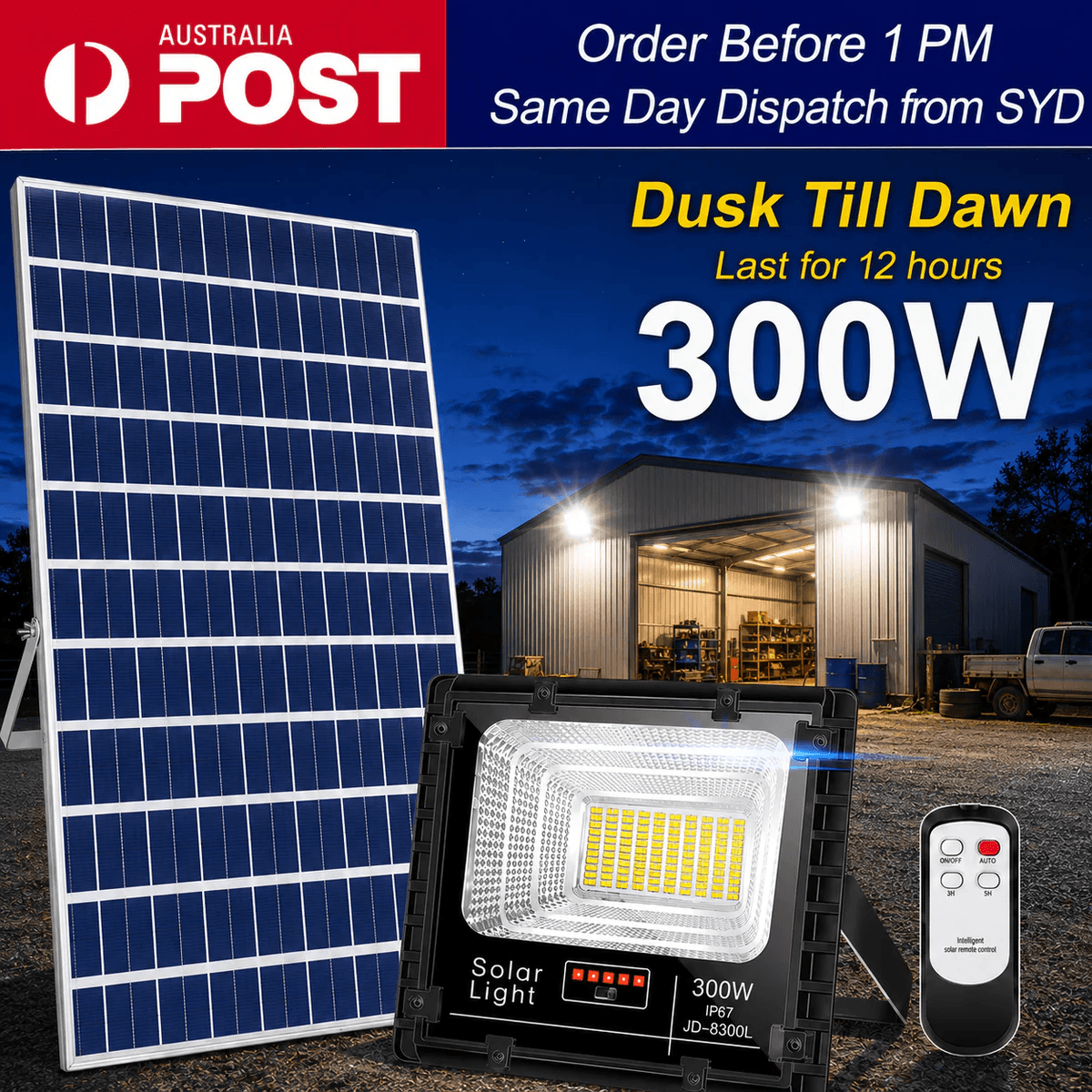
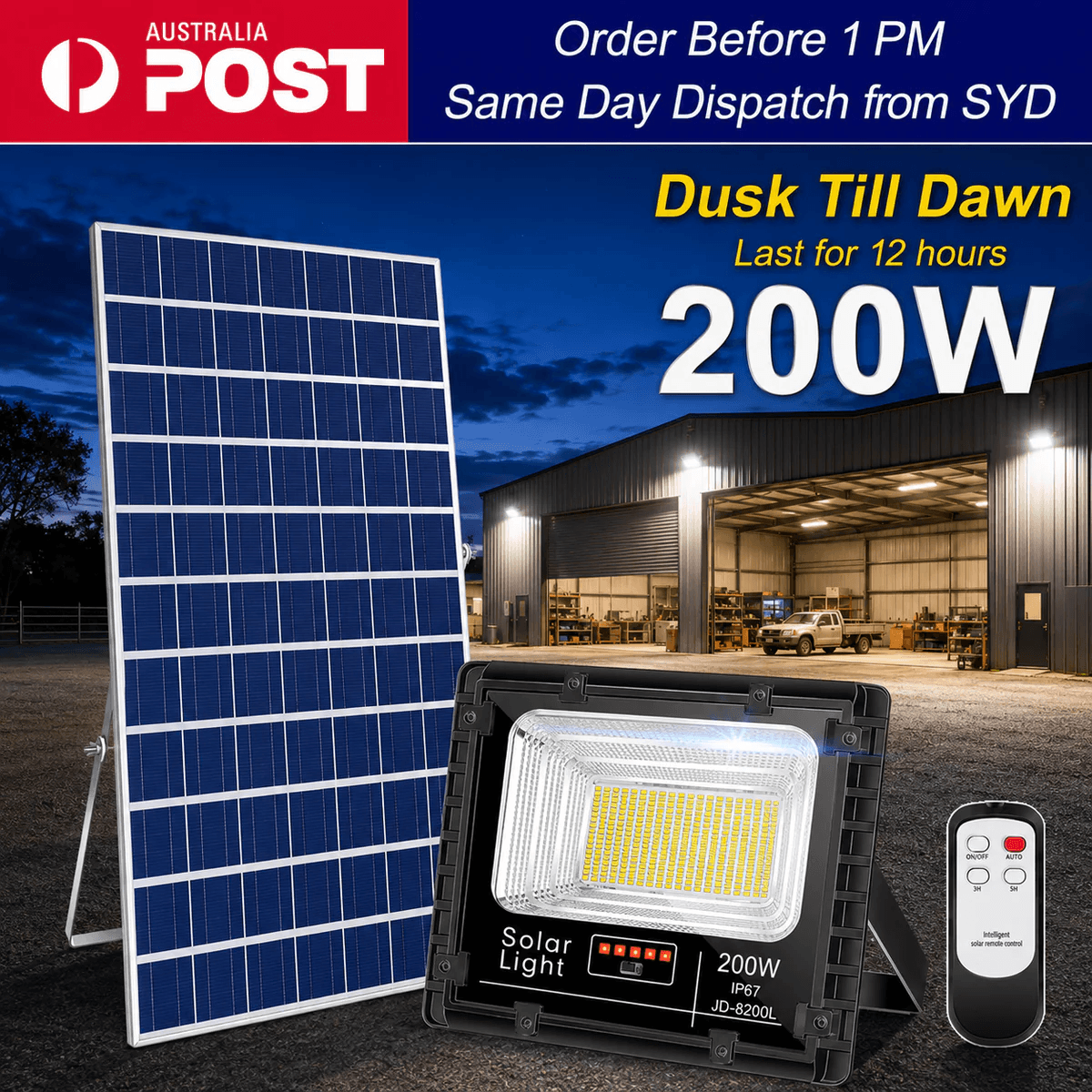
You may see compact solar lights advertised as "500W", "1000W" or even "2000W".
These numbers should not automatically be interpreted as genuine continuous electrical power.
Some sellers may use large wattage-style numbers as model designations rather than actual power consumption. Either way, consumers should look deeper.
Watts measure electrical power. Lumens measure visible light output.
If you want to know how bright a light actually is, lumen output is therefore a much more useful starting point.
You can also perform a simple reality check.
A genuine 1000W light operating continuously for eight hours would consume:
1,000W × 8 hours = 8,000Wh, or 8kWh
That would require a very substantial battery and solar charging system.
If the product has a small panel and compact battery, ask whether the claimed power makes physical sense.
Don't automatically choose the biggest number.
Look for realistic specifications that work together.
Check the Battery — Not Just the Runtime Claim
The battery is one of the most important components in any solar flood light.
It stores the energy collected during the day and supplies that energy to the LEDs at night.
A larger battery can generally store more energy, but battery capacity needs to be understood correctly.
Look for specifications such as:
- Battery chemistry
- Battery voltage
- Amp-hours (Ah)
- Watt-hours (Wh)
Watt-hours are particularly useful because they indicate stored energy.
For example:
Battery Wh = Battery Voltage × Battery Ah
So a 12.8V, 20Ah battery contains approximately:
12.8 × 20 = 256Wh
This allows you to make a more meaningful comparison between the battery capacity and the expected energy consumption of the light.
Battery quality matters as well as capacity.
Two batteries with similar advertised specifications may perform differently depending on cell quality, battery-management design, operating temperature and how deeply the battery is discharged every night.
This is particularly important if you want the solar light to remain reliable for years rather than simply perform well when it is new.
Make Sure the Solar Panel Is Properly Matched
A large battery sounds impressive, but there is an important question:
Can the solar panel recharge it?
Every night, the light removes energy from the battery. The following day, the panel needs to replace that energy.
If the light consumes more energy overnight than the panel can regularly replace, the battery will gradually become depleted.
This is especially noticeable during Australian winter or several consecutive cloudy days.
Look at:
- Solar panel wattage
- Physical panel size
- Charging time
- Recommended installation position
- Whether the panel can be adjusted
- Whether it will receive unobstructed direct sunlight
Remember that daylight hours are not the same as peak solar-production hours.
A panel may be outside for ten hours between sunrise and sunset, but it will not necessarily produce its rated power for those entire ten hours.
A well-designed solar flood light therefore needs sufficient charging capacity and some performance margin for less-than-perfect weather.
Consider Housing Material and Heat Management
Housing material can easily be overlooked, but it matters greatly for a permanently installed outdoor light.
Lower-cost solar lights often use plastic housings. Good-quality UV-stabilised engineering plastics can perform well, particularly for smaller products.
However, lower-quality plastics may deteriorate after prolonged exposure to strong UV and heat. Over time, they can fade, become brittle, warp or crack.
For larger solar flood lights intended for long-term outdoor installation, aluminium housing generally offers several advantages.
It provides greater structural strength and is not affected by UV exposure in the same way as many plastics.
Aluminium also offers an important thermal advantage.
LEDs and electronics generate heat. During an Australian summer, the light housing may already be extremely hot from direct sunlight.
A properly designed aluminium housing can help conduct heat away from critical components much more effectively than plastic.
That can contribute to better long-term reliability.
However, don't assume that aluminium automatically means high quality. Protective coatings, corrosion resistance, sealing and overall construction still matter.
Look Beyond the IP Rating
Outdoor solar lights are commonly advertised with ratings such as IP65 or IP66.
These ratings describe levels of protection against dust and water ingress under defined test conditions, and they are useful when comparing outdoor products.
But an IP number shouldn't be the only thing you inspect.
Also consider the physical construction of the light:
- Are cable entry points properly protected?
- Do joints appear well sealed?
- Are mounting brackets substantial?
- Are fasteners suitable for outdoor use?
- Is the housing designed to drain or prevent water accumulation?
For a solar light permanently exposed to Australian weather, these details can become important over several years of use.
Consider How the Light Uses Energy Throughout the Night
A quality solar flood light doesn't simply need a big battery. It needs to use its stored energy intelligently.
This is especially important for always-on lighting.
If a light operates at maximum electrical power continuously from sunset until sunrise, it may consume a large amount of energy early in the night.
A more sophisticated system can manage brightness and power consumption to balance useful illumination with available battery capacity.
Efficient LEDs also play an important role.
If one LED system can produce the required illumination using less electrical energy, the battery can potentially support a longer runtime.
This creates an important relationship:
LED Efficiency + Battery Capacity + Solar Charging + Power Management = Overnight Performance
The individual specifications matter, but how they work together matters even more.
Think About Australian Winter, Not Just a Sunny Summer Day
A solar flood light may perform beautifully after a full day of strong summer sunshine.
That doesn't necessarily tell you how it will perform throughout the year.
Winter is often the better test of system design.
Shorter days, lower sun angles and cloudy weather can reduce the amount of solar energy available for charging.
At the same time, nights are longer.
That creates exactly the opposite conditions a solar light would prefer:
Less charging time + longer operating time.
When choosing a light for year-round use, consider whether its battery and panel have enough capacity to cope with less favourable conditions.
If overnight reliability is important, some reserve capacity can make a significant difference.
Warranty Can Tell You Something About Expected Quality
Specifications tell you what a product claims to do.
Warranty tells you something about how confidently the supplier stands behind it.
If a solar light is marketed as a long-life outdoor product, it is reasonable to ask how long the warranty lasts.
Also consider what the warranty actually covers and who provides the support.
For Australian buyers, having access to a local supplier can be valuable if you need troubleshooting, replacement parts or warranty assistance several years after purchase.
A long warranty doesn't automatically guarantee a great product, but it is an important part of the overall quality assessment.
A Simple Solar Flood Light Buyer's Checklist
Before purchasing, try to find clear answers to these questions:
Brightness
- What is the actual lumen output?
- Is the advertised wattage genuine electrical power or simply a model designation?
Battery
- What battery chemistry is used?
- What is the battery capacity in Ah and Wh?
- What realistic overnight runtime is expected?
Solar Panel
- What is the panel wattage?
- Is it large enough to recharge the battery effectively?
- Can it be positioned for good sunlight exposure?
Construction
- Is the housing aluminium, plastic or another material?
- How is heat managed?
- What is the IP rating?
- Is the mounting hardware suitable for long-term outdoor use?
Performance
- Is the light always-on or motion activated?
- Does it use intelligent power management?
- How does it perform during winter and cloudy weather?
Support
- How long is the warranty?
- Is there Australian-based after-sales support?
If a seller provides clear, realistic answers to these questions, you have much more useful information than a product title containing an enormous wattage number.
Buy the System, Not the Marketing Number
The best solar flood light isn't necessarily the one claiming the highest wattage, containing the most LEDs or offering the lowest price.
A quality solar flood light is a balanced system.
The panel must collect enough energy.
The battery must store enough energy.
The LEDs must convert that energy efficiently into useful light.
The housing must protect the system and help manage heat.
And the electronic controls must manage the available energy so the light can continue operating when you need it.
This becomes particularly important under Australian conditions, where intense summer heat, strong UV exposure, winter weather and long-term outdoor installation can expose weaknesses in poorly designed products.
So before buying your next solar flood light, don't simply ask:
"How many watts is it?"
Ask:
"How well has the entire system been designed?"
That is a much better way to identify a solar flood light that can deliver real brightness, reliable overnight runtime and long-term outdoor performance.