
Solar Powered Security Camera Information Hub | Section 4: Buying Guides & Comparisons
Choosing the best solar security camera for an Australian home starts with the part of the property you want to monitor. A compact camera watching a front doorway has a different job from a system covering a long driveway, detached garage or large backyard.
The right choice should provide useful footage, reliable access and manageable ongoing costs without creating unnecessary notifications or lighting disturbance.
Rather than ranking cameras by one specification, this guide explains what to prioritise for common residential locations. Use G01 for the overall buying process and the technical articles elsewhere in this hub when you need a feature explained in detail.
1. Start with Your Home's Priority Areas
List the entrances and outdoor spaces where footage would be most useful. For many households, the first priority is the front entrance or driveway rather than every corner of the garden.
Decide what you need to observe. Seeing whether someone entered a side passage is different from identifying a visitor's face. An overview of the whole front yard may provide less detail at the doorway than a camera dedicated to that entrance.
Also consider whether you need several areas visible at once. One camera that rotates between the driveway and backyard may leave an important entrance outside its current view.
Create a small set of priorities before comparing products. This makes it easier to decide which features justify extra cost.
2. What to Look For at the Front Entrance
For a front door or porch, prioritise a useful view of approaching visitors, clear recordings at the expected distance and convenient access to saved clips.
A compact fixed camera may suit a clearly defined approach. A wider or movable design may be useful where visitors can arrive from several directions, but additional coverage should not sacrifice essential doorway detail.
Two-way audio can help with visitor communication, provided the microphone and speaker are suitably positioned. It does not necessarily provide a doorbell button or indoor chime.
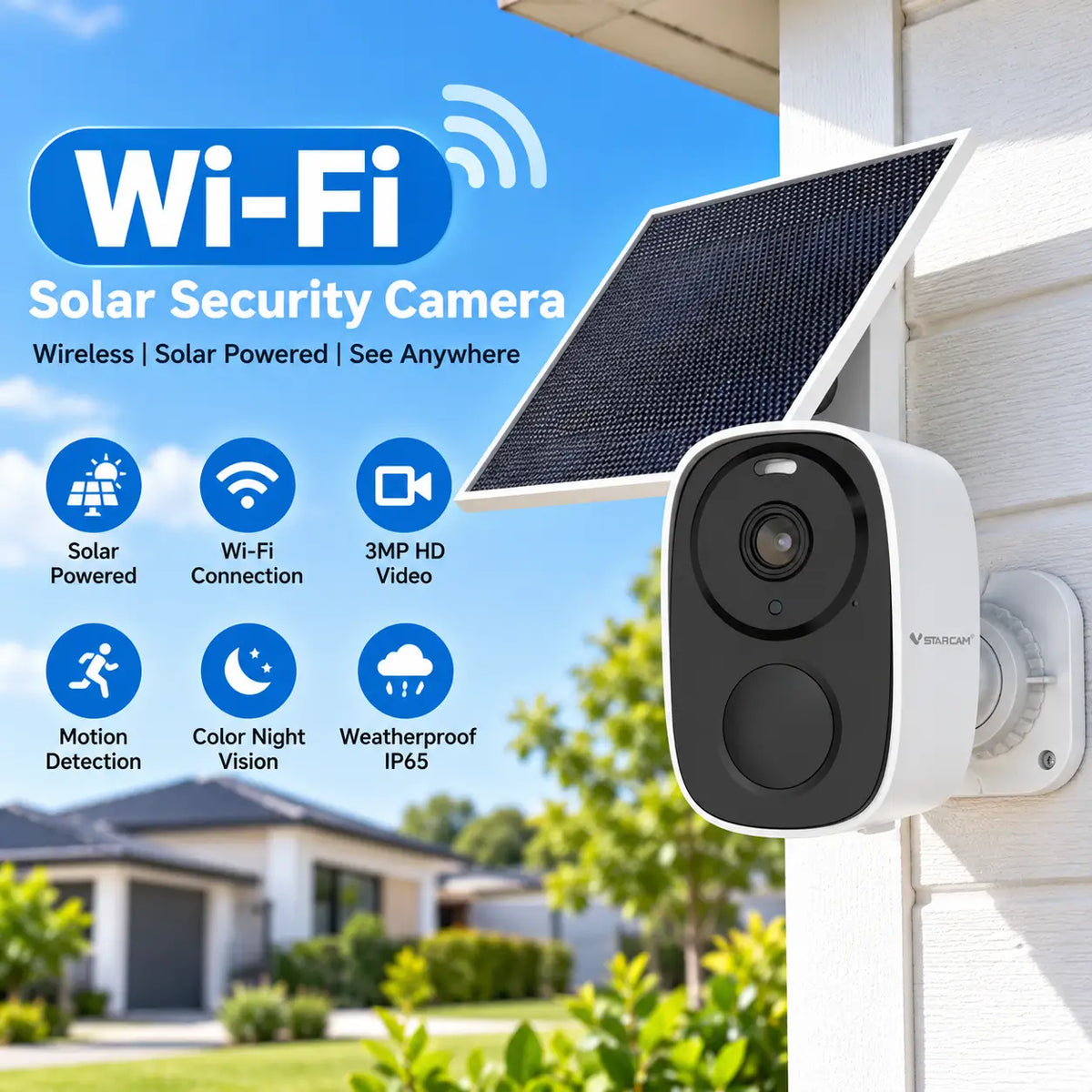
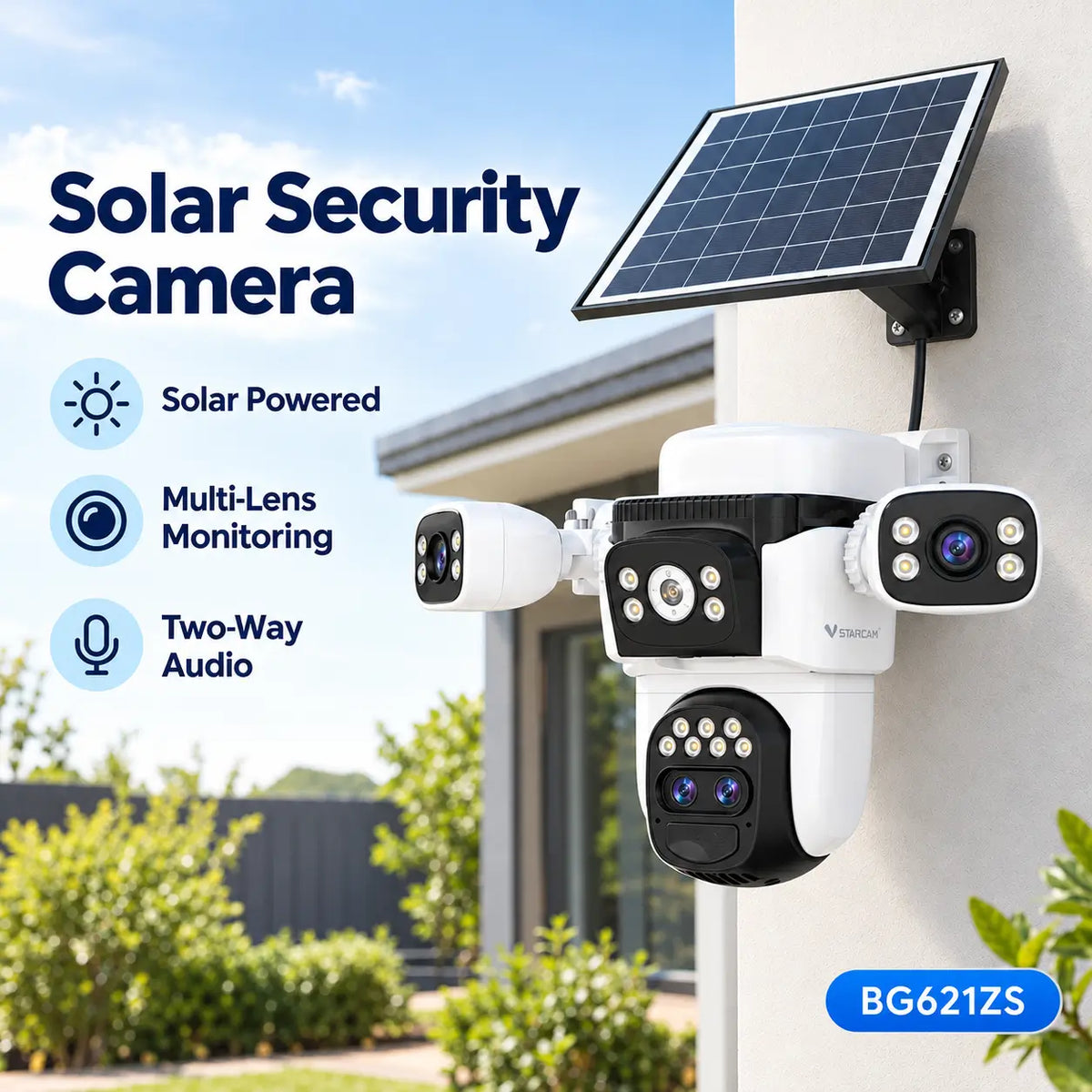
Check the charging arrangement carefully. A sheltered porch can be suitable for the camera while offering poor sunlight for an integrated panel. A compatible separate panel may provide more flexibility if its cable can reach a sunny location.
For parcel monitoring, confirm that packages left near the doorstep remain inside the camera's view.
3. Choosing a Camera for Driveways and Garages
Driveways introduce greater distances and more movement. A camera should show the access point you care about, not simply provide an impressive wide overview.
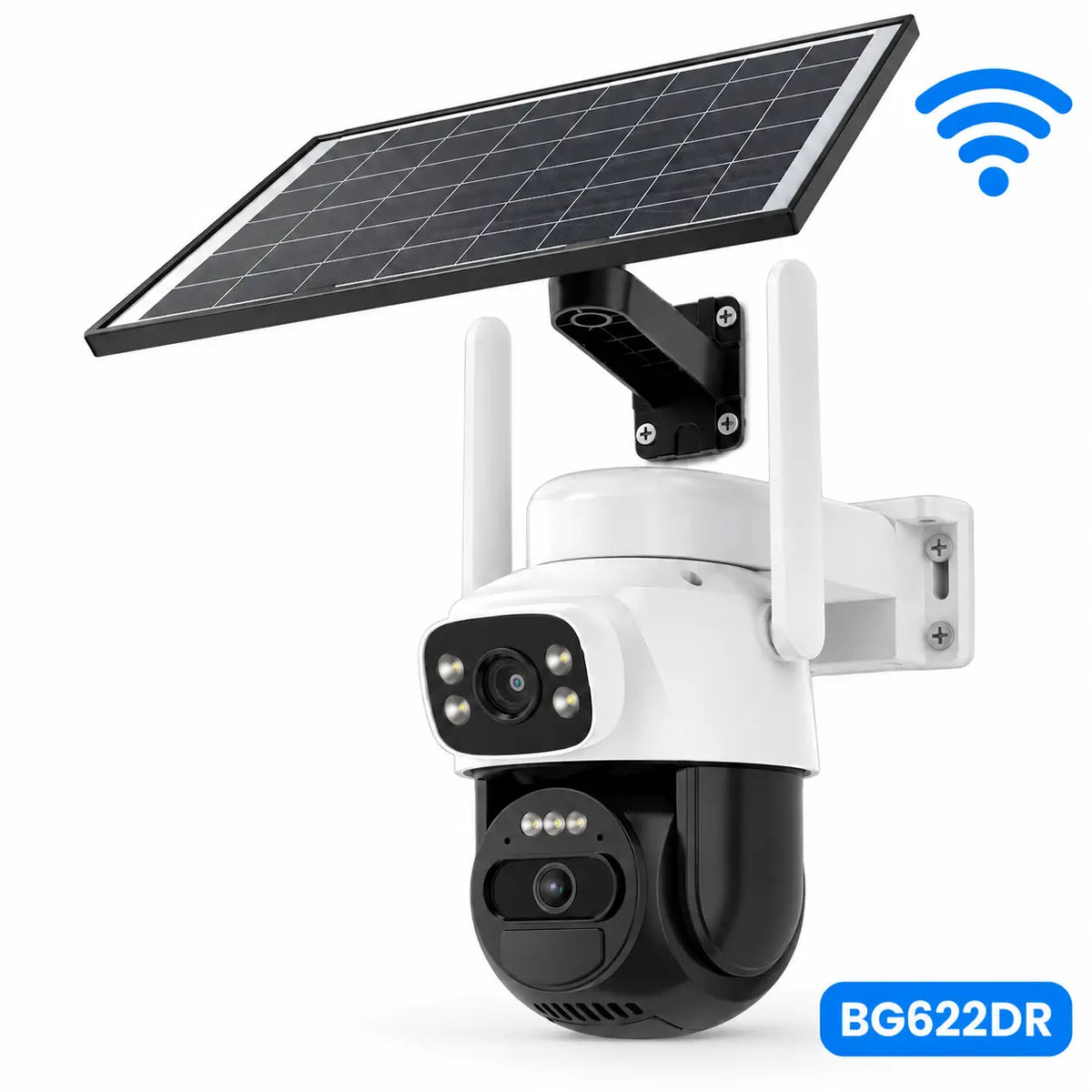
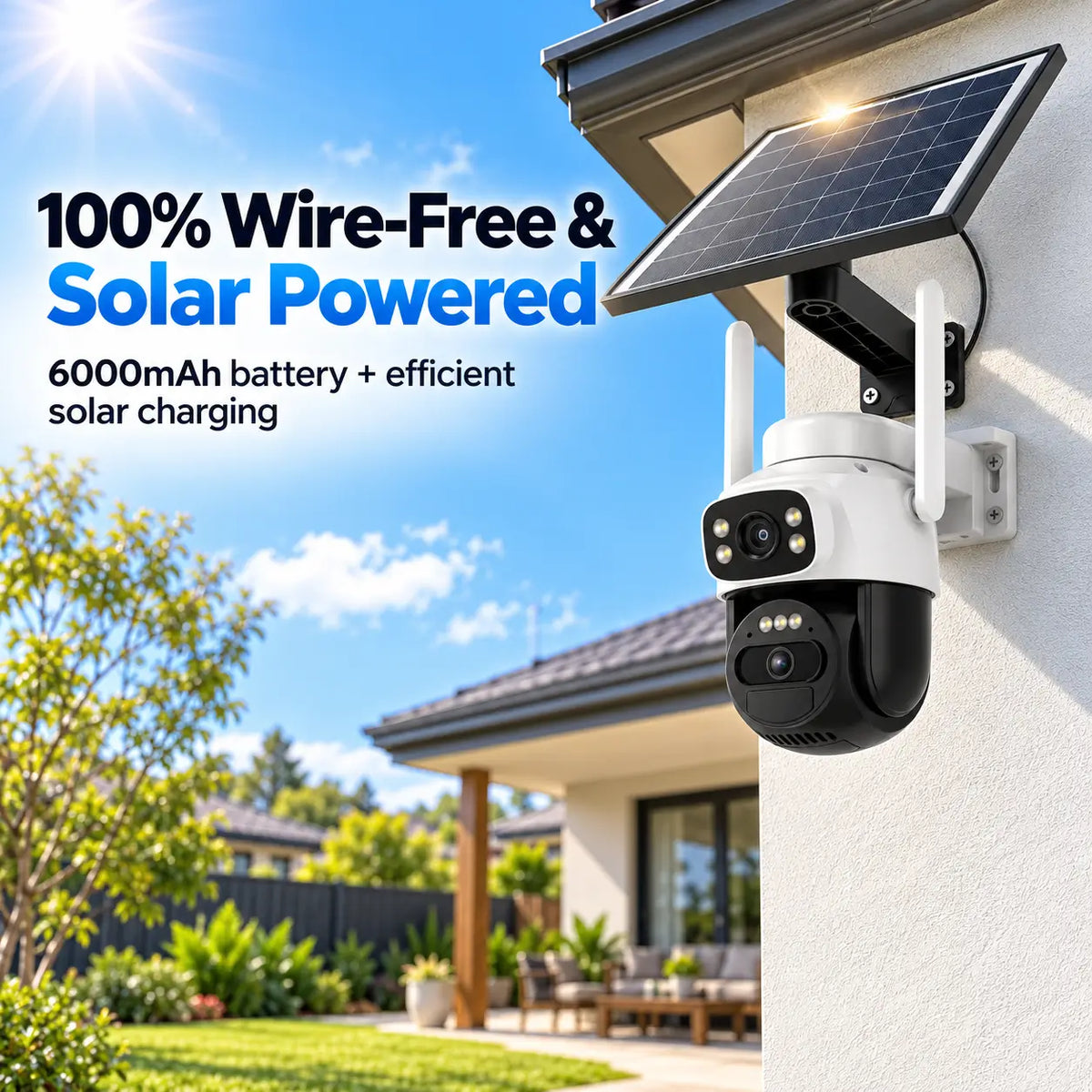
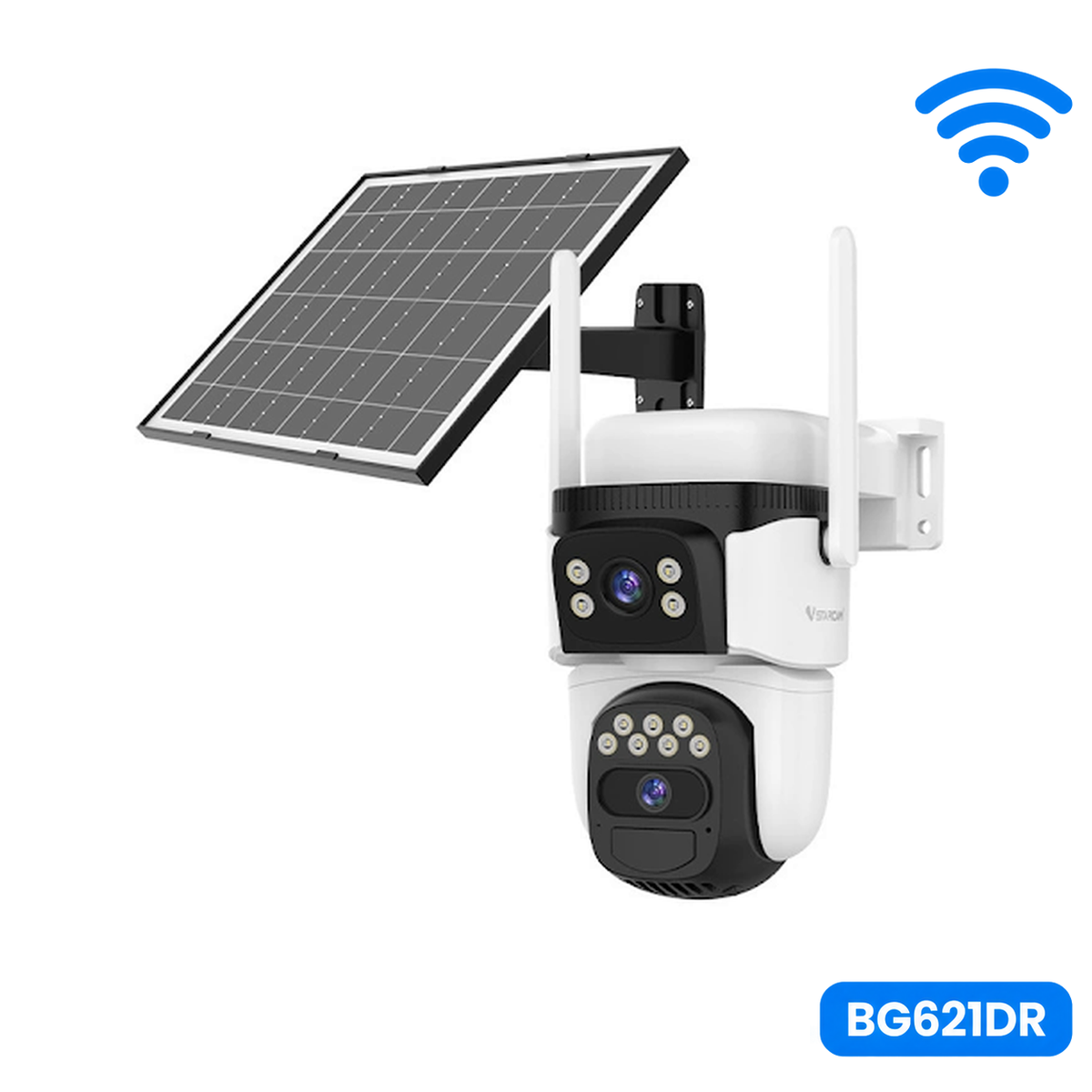
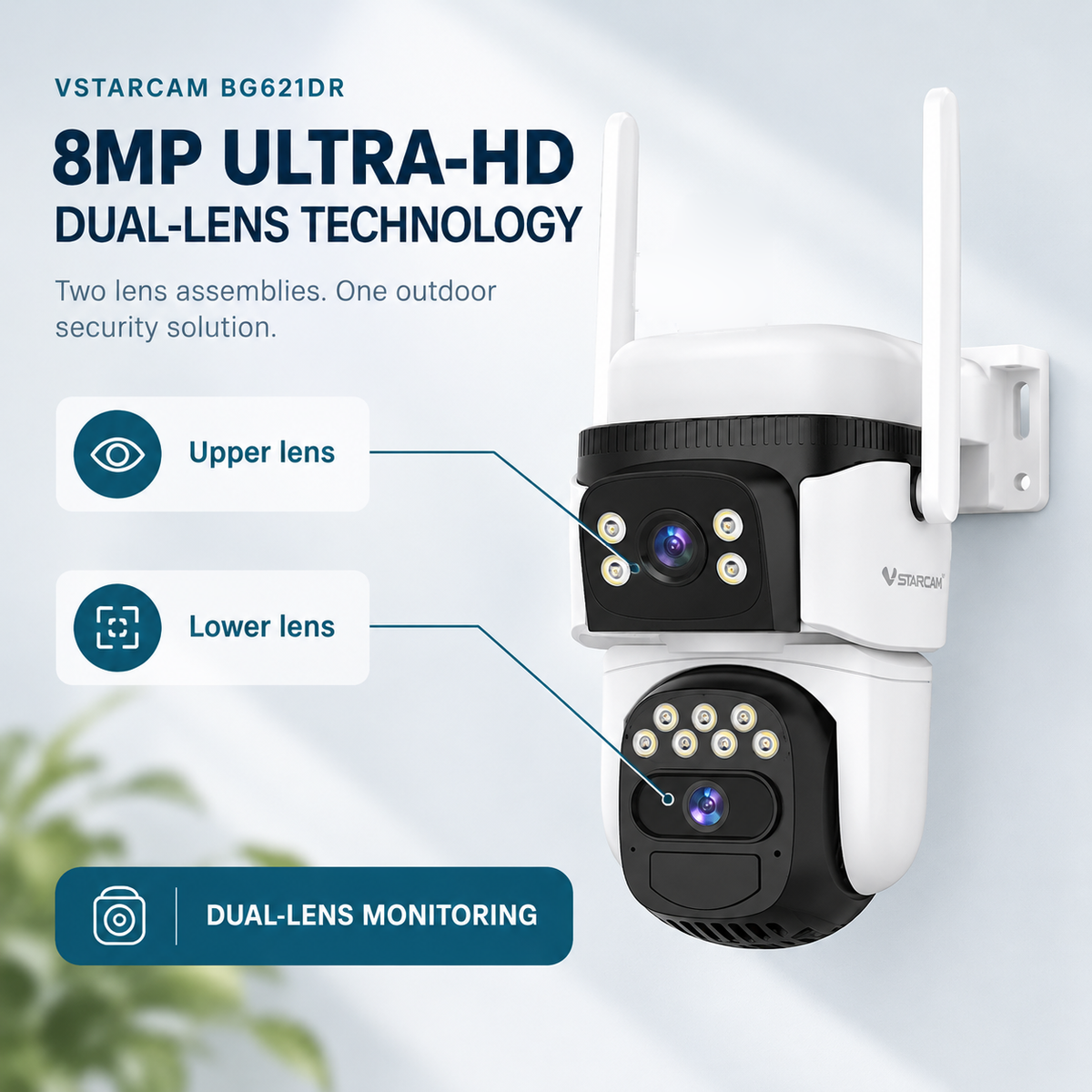
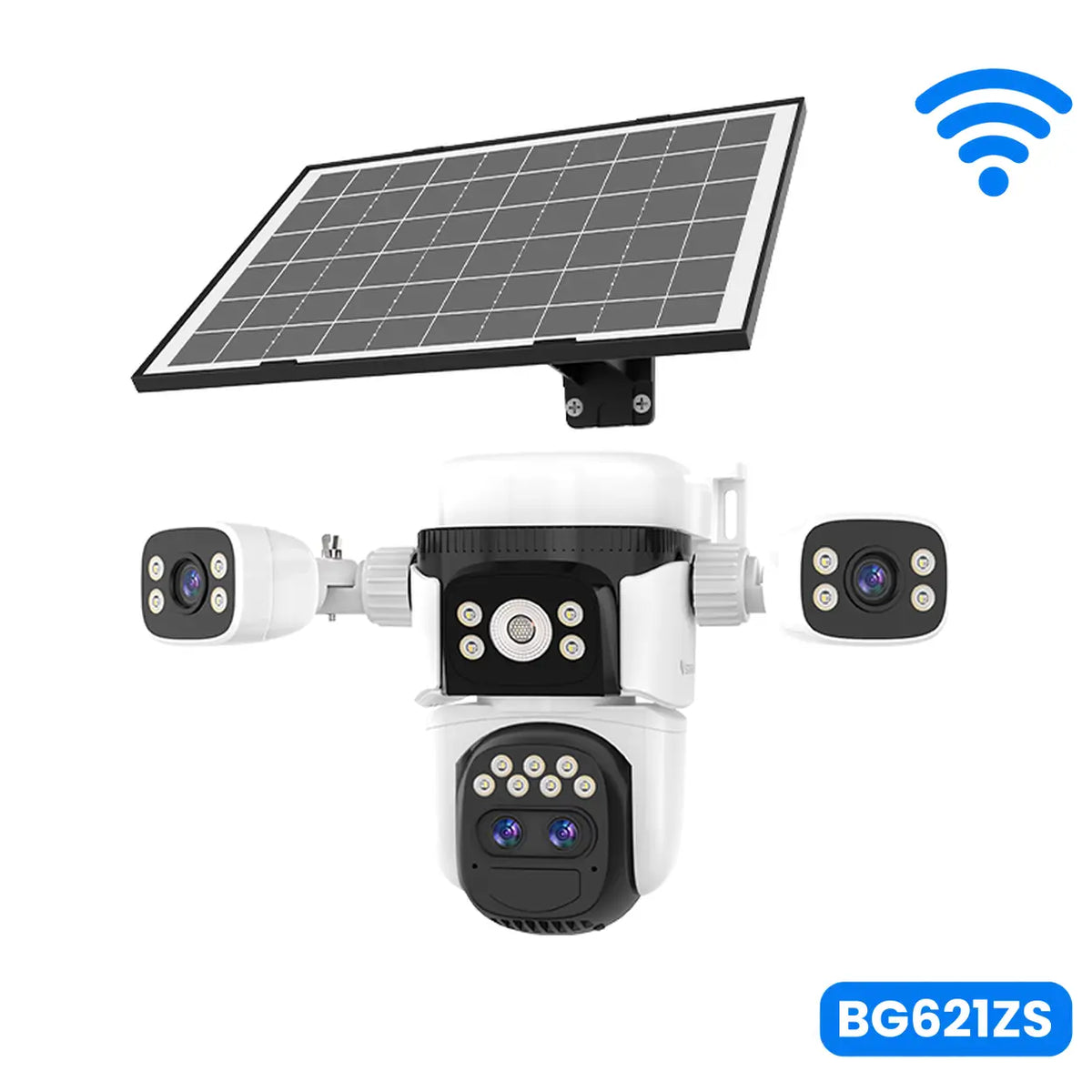
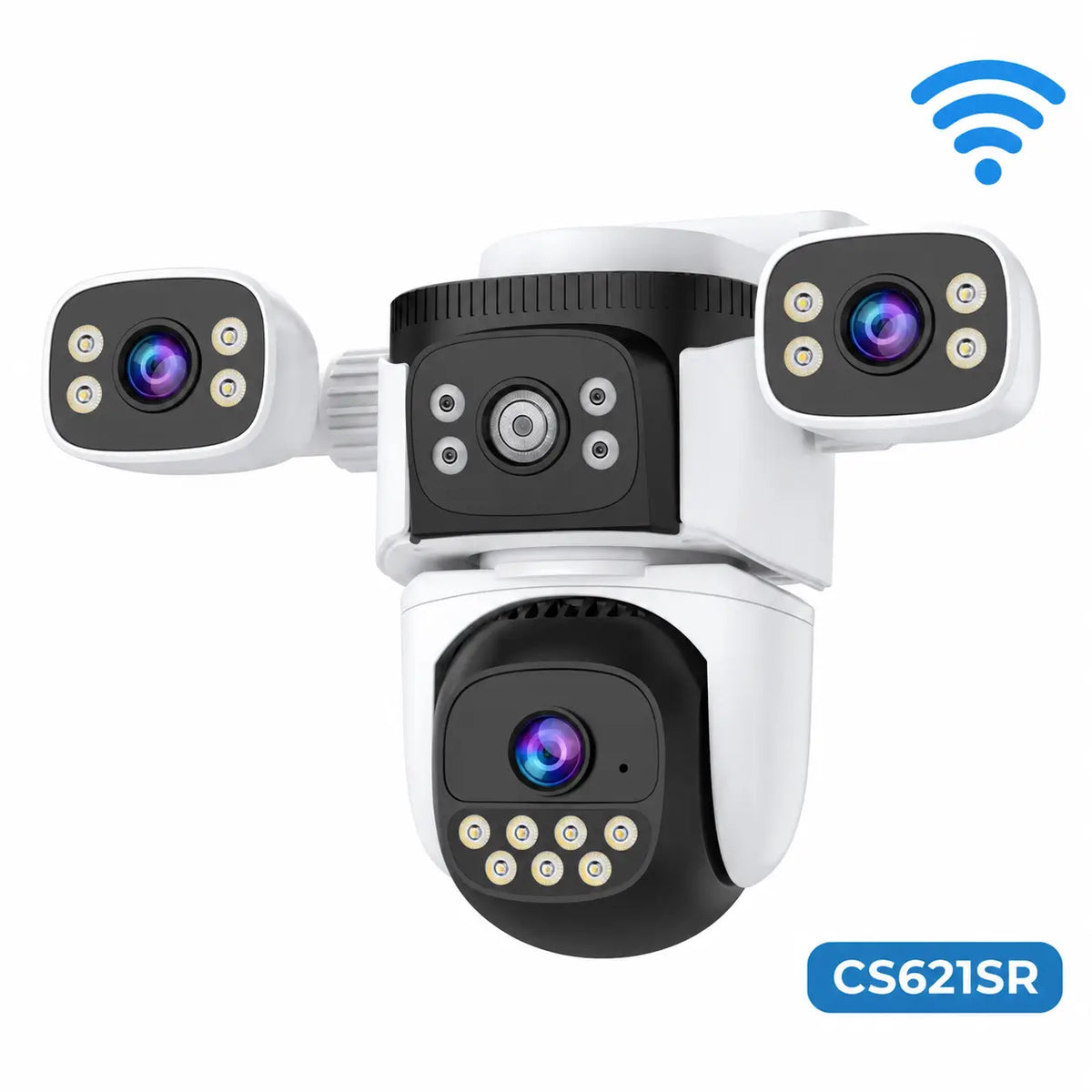
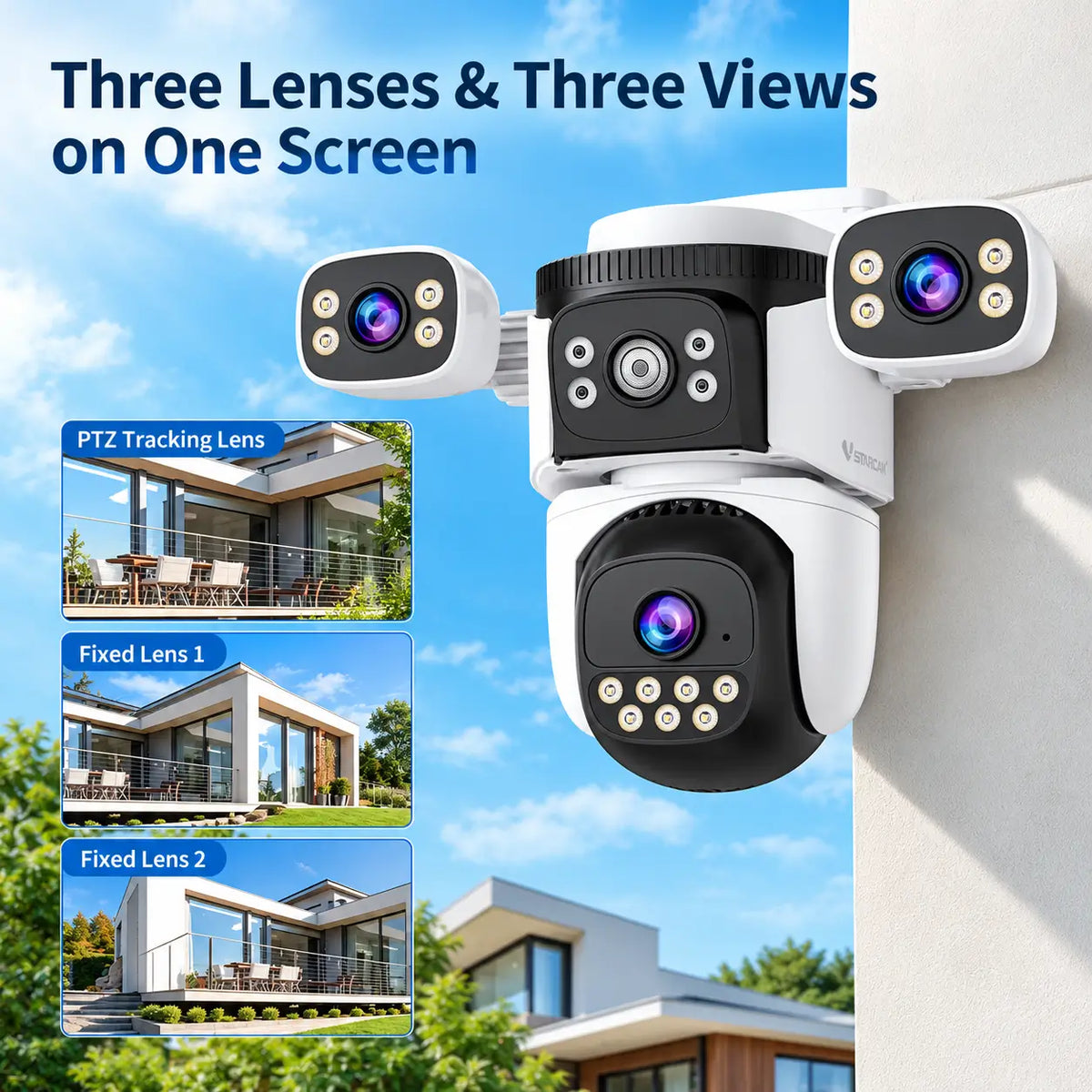
Consider a fixed view for consistent entrance coverage. A PTZ camera can offer remote inspection of a wider forecourt, while a suitable multi-view design may preserve an entrance view when another lens moves.
Check sample recordings of moving subjects. High resolution alone does not guarantee readable vehicle number plates, particularly at night or across a wide scene.
Assess likely recording activity as well. A camera overlooking a public road may trigger frequently, increasing notifications and energy use. Detection zones and relevant object filtering may help where supported, but their availability and operation should be confirmed.
For detached garages, verify connectivity at the building. The home having broadband does not establish usable Wi-Fi through an external wall or metal garage structure.
4. Buying for Backyards and Side Entrances
Backyards often require a balance between useful coverage and day-to-day comfort. Children, pets, garden movement and regular household activity can create recordings you do not need alerts for.
Look for notification controls and detection settings that let you focus on relevant access points. If distinguishing people from animals matters, check the specific detection categories supported rather than relying on a general AI label.
For a narrow side passage, a fixed camera may offer a simpler solution than a larger moving model. Check whether nearby walls will interfere with night-time illumination or limit the view.
For a larger backyard, work out whether obstacles divide the space into separate areas. Several appropriately placed cameras may be more useful than one multi-lens camera mounted where fences or buildings obstruct its views.
Choose lighting that suits the neighbourhood. A bright spotlight facing a bedroom window can be inconvenient even when the footage is clear.
5. Choose a Practical Home Network Connection
A Wi-Fi solar camera can be convenient where the household network reaches the installation location. It normally avoids a separate mobile data plan, although optional services may still cost extra.
Check the camera's supported Wi-Fi bands and security settings. Do not assume every model supports both 2.4GHz and 5GHz. Test the intended location rather than judging coverage from inside the lounge room.
For a distant rear gate or outbuilding, compare the cost and practicality of extending Wi-Fi with a compatible 4G camera and data plan. 4G can be useful on suburban properties as well as farms, provided suitable reception is available.
If neither connection is reliable, resolve that limitation before ordering a camera for remote access.
6. Compare Recording Access and Household Costs
Ask how you will find and download an important clip. A camera that displays live video but provides inconvenient playback may be frustrating when you need to review an event.
Local storage can provide supported recording without mandatory cloud storage fees. However, footage saved only inside a stolen camera may be lost. Cloud backup can preserve recordings that have successfully uploaded and remain within the service's retention period.
Check the cost of storage for the number of cameras you intend to install. Also confirm which functions remain available without a subscription and whether local recording continues during an internet outage.
For shared household access, examine account permissions and available account protections. Avoid buying additional cameras until you know whether the app can manage the intended models together.
7. Match the Features to Each Location
| Home location | Buying priorities | Detail to confirm before ordering |
|---|---|---|
| Front doorway | Visitor detail, clip access, optional two-way audio | Camera coverage and sunlight for the panel |
| Driveway | Entrance coverage, moving subjects, relevant alerts | Recording mode and expected activity levels |
| Detached garage | Useful entrance view and reliable connectivity | Wi-Fi reception or compatible mobile service |
| Side passage | Defined coverage and suitable night footage | Nearby walls, reflections and detection limits |
| Backyard | Access points, manageable alerts, appropriate lighting | Coverage around obstacles and routine activity |
| Distant gate | Connection, energy reserve and service access | Reception and practical panel placement |
These are comparison priorities, not guarantees that a particular camera type will suit every home.
8. Questions to Ask Before Buying
Check what the package includes: an approved solar panel, cable, bracket and memory card should not be assumed. Confirm whether mounting accessories suit the intended surface.
Review the camera's weather and temperature specifications, especially for exposed or coastal homes. Enclosure ratings do not describe every environmental risk.
Ask how manual recharging, replacement accessories and support would work. A camera mounted somewhere difficult to reach should not depend on an inconvenient maintenance routine.
Finally, consider whether solar charging suits the location at all. Persistent shade or a requirement for extensive uninterrupted recording may justify a different system. Compare alternatives rather than buying extra features to compensate for an unsuitable power arrangement.
Final Thoughts
The best solar security camera for an Australian home is the one that addresses a defined monitoring need and works within the property's sunlight and network conditions.
Prioritise a useful view, dependable recording access and realistic operating requirements. Then compare extras such as remote movement, multiple views, two-way audio and visible lighting.
Browse SolarEasy's solar security camera range and check each current product listing against the requirements of your entrance, driveway or backyard. Confirm important model-specific details before ordering.
About SolarEasy
SolarEasy is an Australian-owned online retailer specialising in solar powered products for homes, gardens and outdoor applications.
Our Solar Powered Security Camera Information Hub provides practical information to help Australian customers choose equipment suited to their properties.