
Solar Powered Security Camera Information Hub | Section 3: Features & Technology Explained
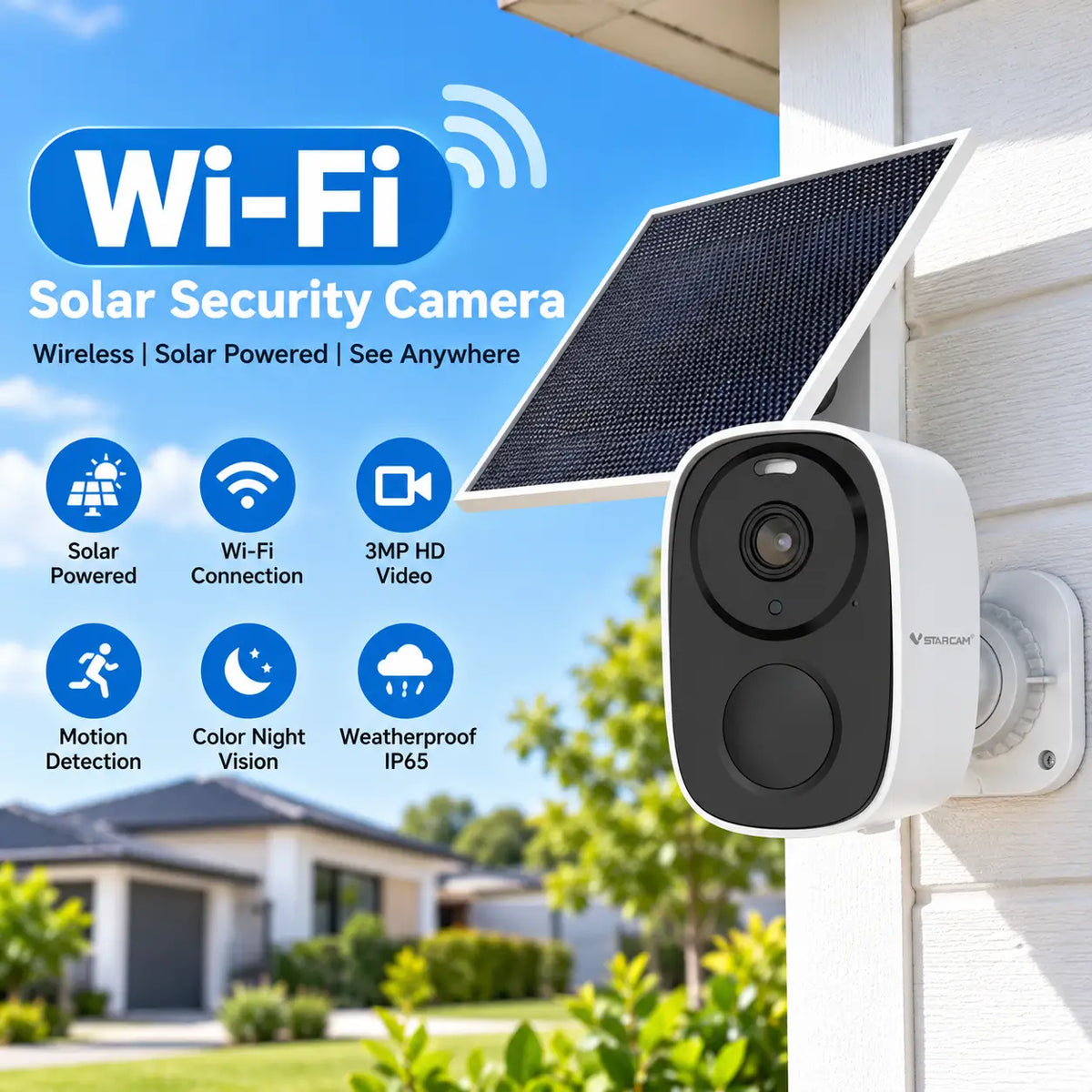
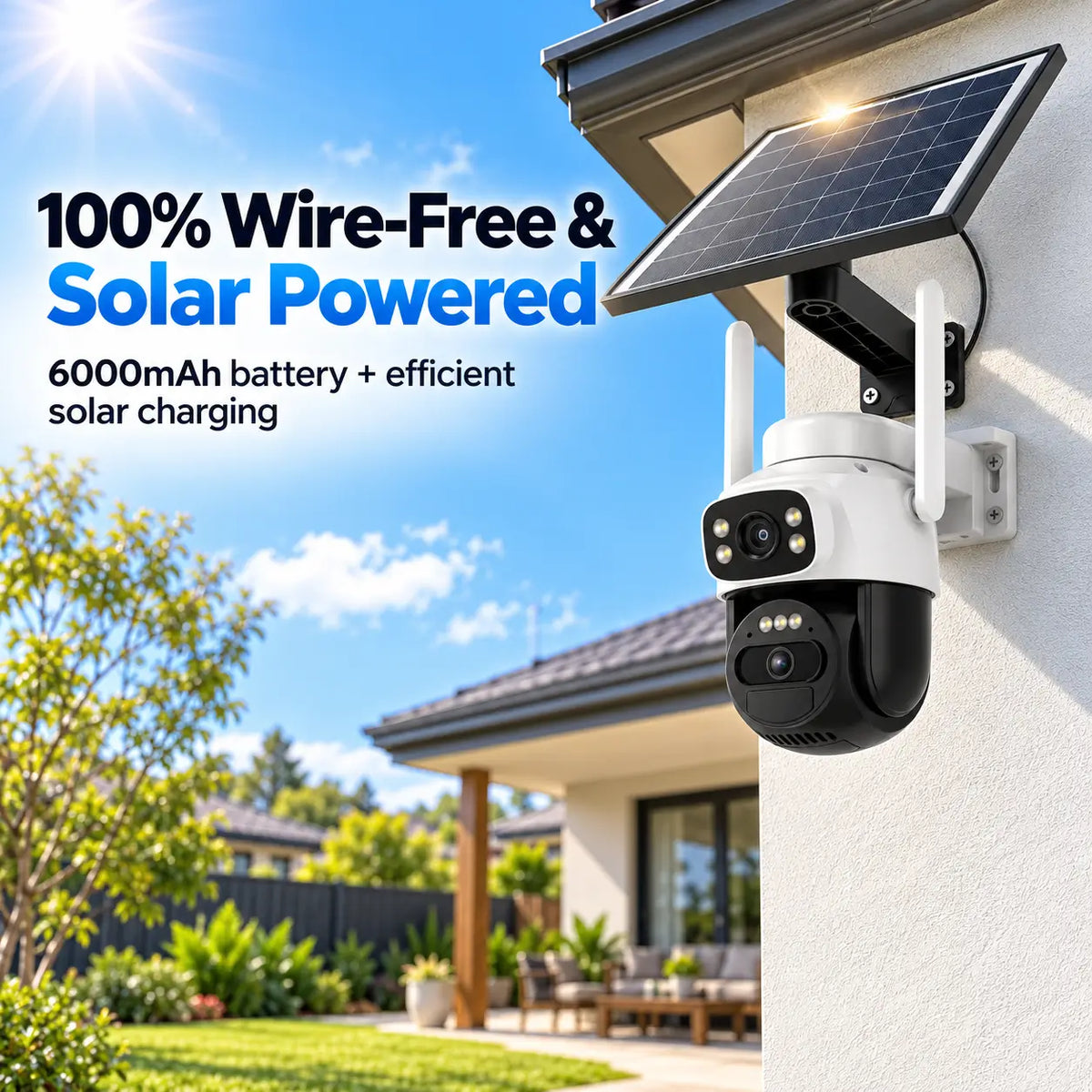
Solar powered security cameras are often installed outdoors, where they may be exposed to rain, dust, wind and changing temperatures.
For Australian homeowners, choosing a camera with suitable weather protection is particularly important.
Product specifications commonly include ratings such as IP65, IP66 and IP67.
These ratings indicate different levels of protection against dust and water ingress.
However, a higher IP rating does not automatically mean that a camera is suitable for every outdoor environment.
Understanding what these numbers represent can help buyers select equipment appropriate for their property and avoid common misunderstandings about waterproof performance.
1. What Does an IP Rating Mean?
IP stands for Ingress Protection.
IP ratings are defined under the international IEC 60529 classification system, which describes the protection provided by electrical equipment enclosures against the entry of solid objects and water.
An IP rating normally contains two digits.
For example:
IP65
The first digit, 6, describes protection against solid particles and dust.
The second digit, 5, describes protection against water.
The higher the second digit within the relevant test classifications, the different or more demanding the specified water exposure test.
However, individual water tests have different conditions, and not every higher-numbered rating automatically includes every lower-numbered test.
2. What Does the First Digit Mean?
For IP65, IP66 and IP67, the first digit is 6.
This indicates the enclosure meets the dust-tight classification under the applicable test conditions.
Dust protection is important for outdoor cameras because fine particles can affect internal electronics and mechanical components.
Australian properties may experience dusty conditions around:
- Rural roads
- Farms and paddocks
- Construction sites
- Workshops and sheds
- Exposed outdoor locations
A dust-tight enclosure helps protect the camera's internal components.
However, the rating applies to the enclosure under defined conditions. It does not guarantee that external surfaces, lenses or connectors will remain clean.
3. What Does IP65 Mean?
An IP65 rating indicates that the enclosure is dust-tight and protected against water jets under specified test conditions.
For many outdoor security camera installations, IP65 can provide suitable protection against ordinary rain exposure.
A camera with this rating may be appropriate for residential entrances, garages, backyards and similar locations when installed according to the manufacturer's instructions.
However, IP65 does not mean the camera can be submerged in water.
It also does not guarantee resistance to every form of pressure washing or prolonged exposure to harsh environments.
4. What Does IP66 Mean?
An IP66 rating indicates dust-tight protection and resistance to more powerful water jets under the relevant test conditions.
Compared with IP65, the water-jet test for IP66 is more demanding.
This can provide additional reassurance for outdoor equipment exposed to wind-driven rain or more challenging weather conditions.
However, an IP66 camera is not automatically suitable for underwater use.
Its actual durability also depends on materials, seals, cable connections and correct installation.
5. What Does IP67 Mean?
An IP67 rating indicates dust-tight protection and resistance to temporary immersion in water under defined test conditions.
The standard IPX7 test involves temporary immersion under specified depth and duration conditions, commonly described as up to one metre for 30 minutes.
However, this should not be interpreted as permission to use the camera underwater.
The rating does not guarantee protection against indefinite immersion, saltwater exposure or high-pressure water jets.
Importantly, IP67 does not automatically establish compliance with the IP65 or IP66 water-jet tests unless those ratings have also been tested and declared.
6. IP65 vs IP66 vs IP67: Comparison
| Rating | Dust Protection | Water Protection | Main Consideration |
|---|---|---|---|
| IP65 | Dust-tight | Water jets | Common outdoor rain exposure |
| IP66 | Dust-tight | Powerful water jets | More demanding jet exposure |
| IP67 | Dust-tight | Temporary immersion | Accidental short-term immersion under test conditions |
These ratings describe specific enclosure tests, not an overall ranking of product quality.
For example, a properly installed IP65 camera may provide reliable service in a sheltered residential location.
An IP67 camera may offer immersion protection but still require separate confirmation of resistance to powerful water jets.
The most appropriate rating depends on the intended environment.
7. Are IP-Rated Solar Cameras Completely Waterproof?
The word waterproof is often used in marketing, but it can be misleading.
An IP rating establishes resistance to specified types of water exposure.
It does not guarantee protection against every possible situation.
Outdoor cameras may still be affected by:
- Damaged seals
- Incorrectly fitted charging-port covers
- Poorly protected cable connectors
- Physical damage
- Long-term material deterioration
- Exposure outside the manufacturer's operating conditions
For this reason, weather-resistant is often a more accurate general description than completely waterproof.
Buyers should check the manufacturer's installation instructions and warranty conditions.
8. What About the Solar Panel and Charging Connection?
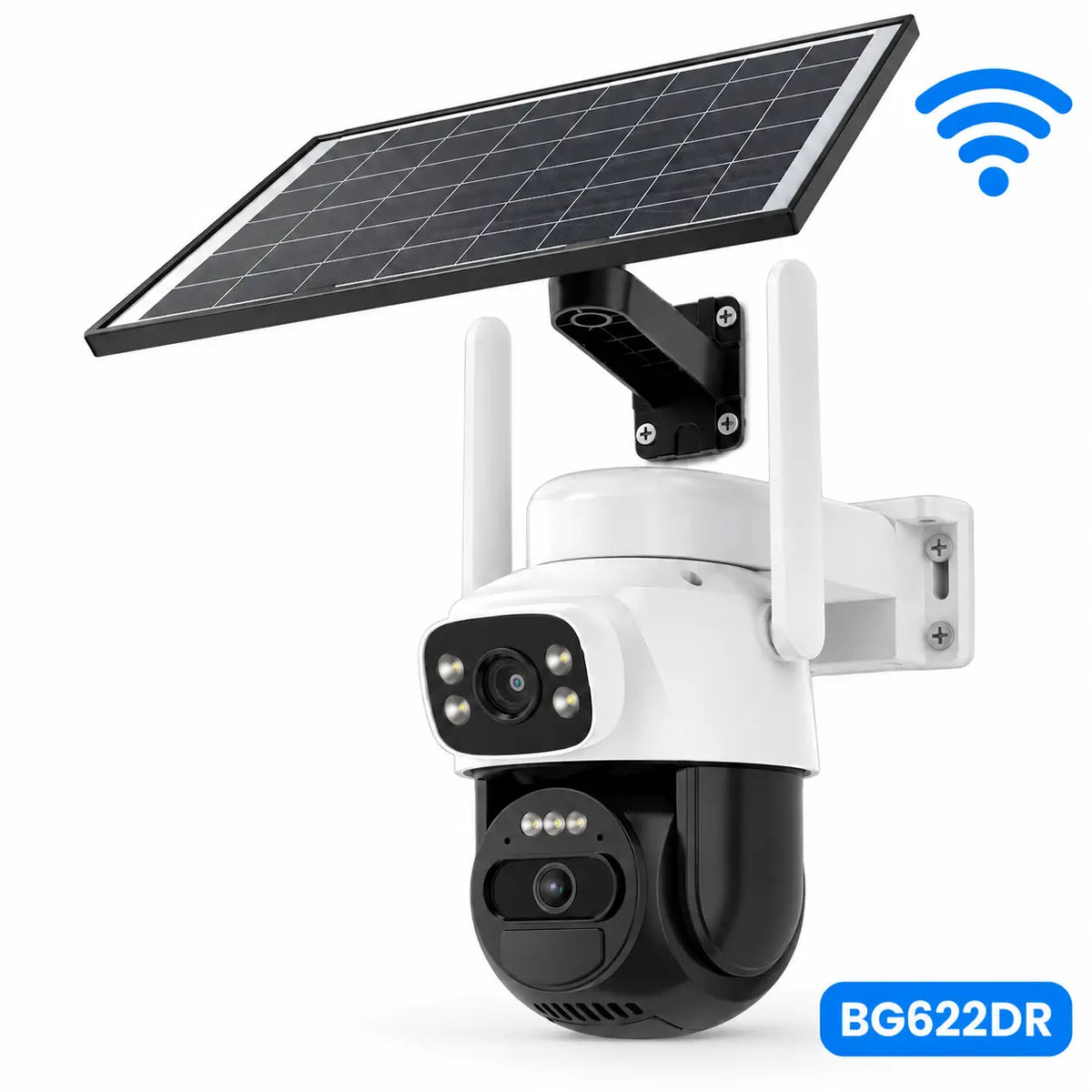
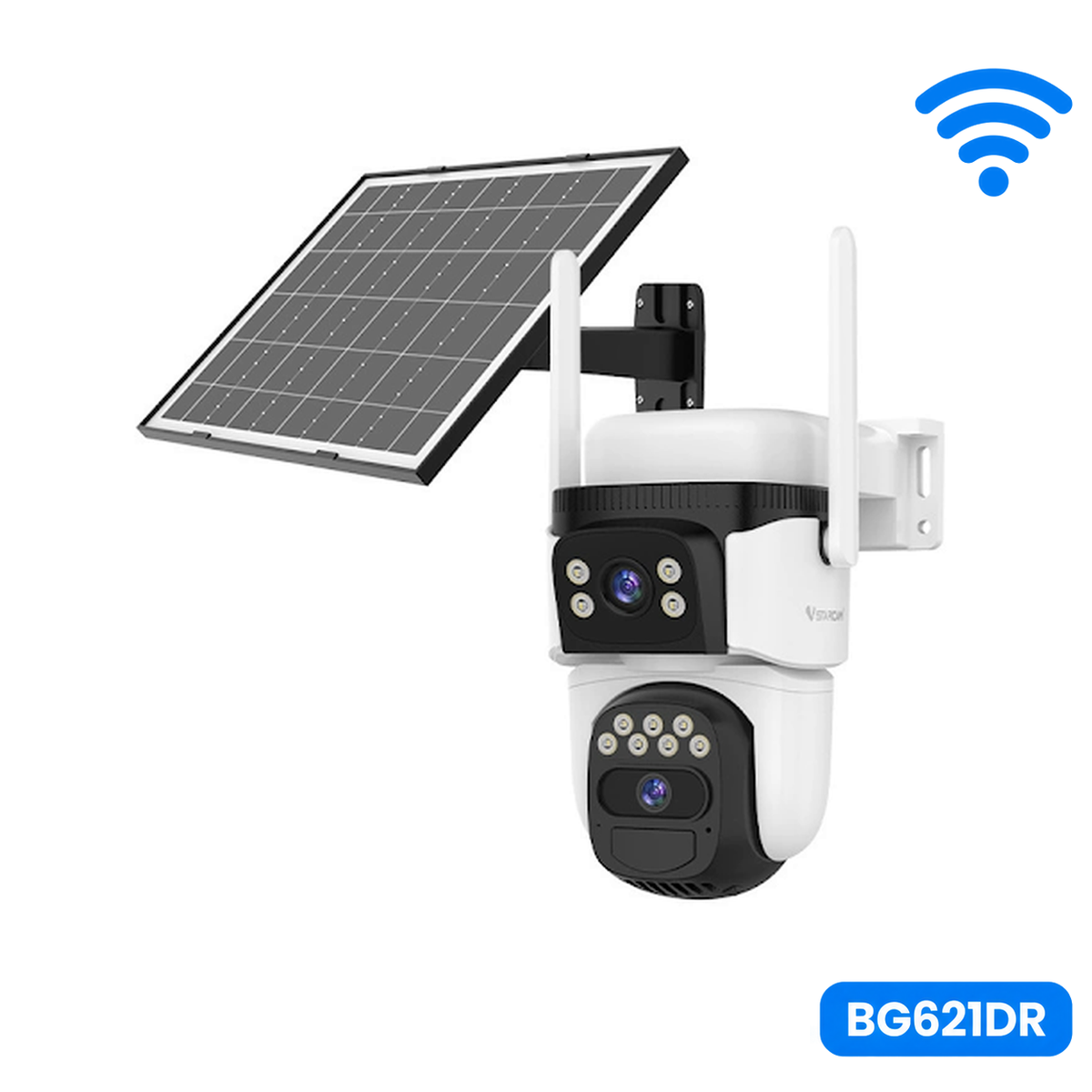
A solar powered security camera normally includes both a camera unit and a solar panel.
These components may have different weather-resistance specifications.
For example, a camera may have a declared IP rating while the external charging connector requires additional protection.
The camera's enclosure rating should not automatically be assumed to apply to the solar panel, cable or connector.
Water entering an exposed charging connection can potentially cause corrosion or electrical problems.
Users should ensure that all external components are installed according to the manufacturer's requirements.
If the system includes rubber covers, seals or weatherproof connectors, they should be properly secured.
9. Choosing an IP Rating for Australian Conditions
Residential Homes
For many suburban homes, a properly installed outdoor-rated camera with suitable water resistance may provide adequate protection.
Placement beneath an eave can reduce direct exposure, although the camera should still be rated for its environment.
Coastal Properties
Coastal areas may expose equipment to salt spray and corrosive conditions.
An IP rating alone does not establish resistance to salt corrosion.
Buyers should look for appropriate materials and manufacturer guidance for coastal installations.
Farms and Rural Properties
Rural cameras may encounter dust, rain and wide temperature variations.
Dust-tight protection can be particularly useful, but users should also consider operating temperature and long-term exposure.
Construction Sites
Construction sites may involve dust, debris and changing weather conditions.
A suitable outdoor enclosure is important, but cameras should also be positioned to reduce the risk of accidental impact and cable damage.
10. Does a Higher IP Rating Mean a Better Camera?
Not necessarily.
IP ratings describe enclosure protection against particular environmental conditions.
They do not directly measure:
- Image quality
- Battery capacity
- Solar charging performance
- Wi-Fi or 4G reliability
- Software quality
- Product lifespan
A camera with a higher IP rating may still perform poorly in other areas.
Similarly, a camera with an appropriate IP65 rating may be entirely suitable for a particular installation.
Buyers should evaluate weather resistance alongside the camera's other specifications.
11. Common Questions About IP Ratings
Is IP65 Suitable for Outdoor Security Cameras?
It can be suitable for many outdoor installations, depending on the camera design, exposure and manufacturer instructions.
Is IP67 Better Than IP66?
Not in every situation. IP67 specifies temporary immersion protection, while IP66 specifies protection against powerful water jets.
Can an IP67 Camera Be Left Underwater?
No. IP67 does not establish suitability for continuous underwater operation.
Does IP66 Protect Against Australian Storms?
IP66 provides protection under specified water-jet tests, but no IP rating guarantees resistance to every storm condition or installation defect.
Do IP Ratings Cover Heat and UV Exposure?
No. IP ratings do not directly establish resistance to high temperatures, ultraviolet radiation or long-term weathering.
Final Thoughts
IP65, IP66 and IP67 ratings help buyers understand the dust and water protection offered by outdoor solar security camera enclosures.
IP65 addresses dust and water-jet protection, IP66 covers more powerful water jets, and IP67 specifies temporary immersion resistance.
However, these ratings should not be interpreted as guarantees of unlimited waterproof performance.
For Australian homes, farms and construction sites, reliable outdoor operation depends on suitable enclosure protection, appropriate materials and correct installation.
The best choice is a camera with weather protection matched to its actual operating environment, rather than simply the highest advertised IP number.
About SolarEasy
SolarEasy is an Australian-owned online retailer specialising in solar powered products for homes, gardens and outdoor applications.
Our Solar Powered Security Camera Information Hub provides practical guidance for Australian homeowners, builders and rural property owners.
Explore our solar powered products at SolarEasy.