
Solar Powered Security Camera Information Hub | Section 3: Features & Technology Explained | F05
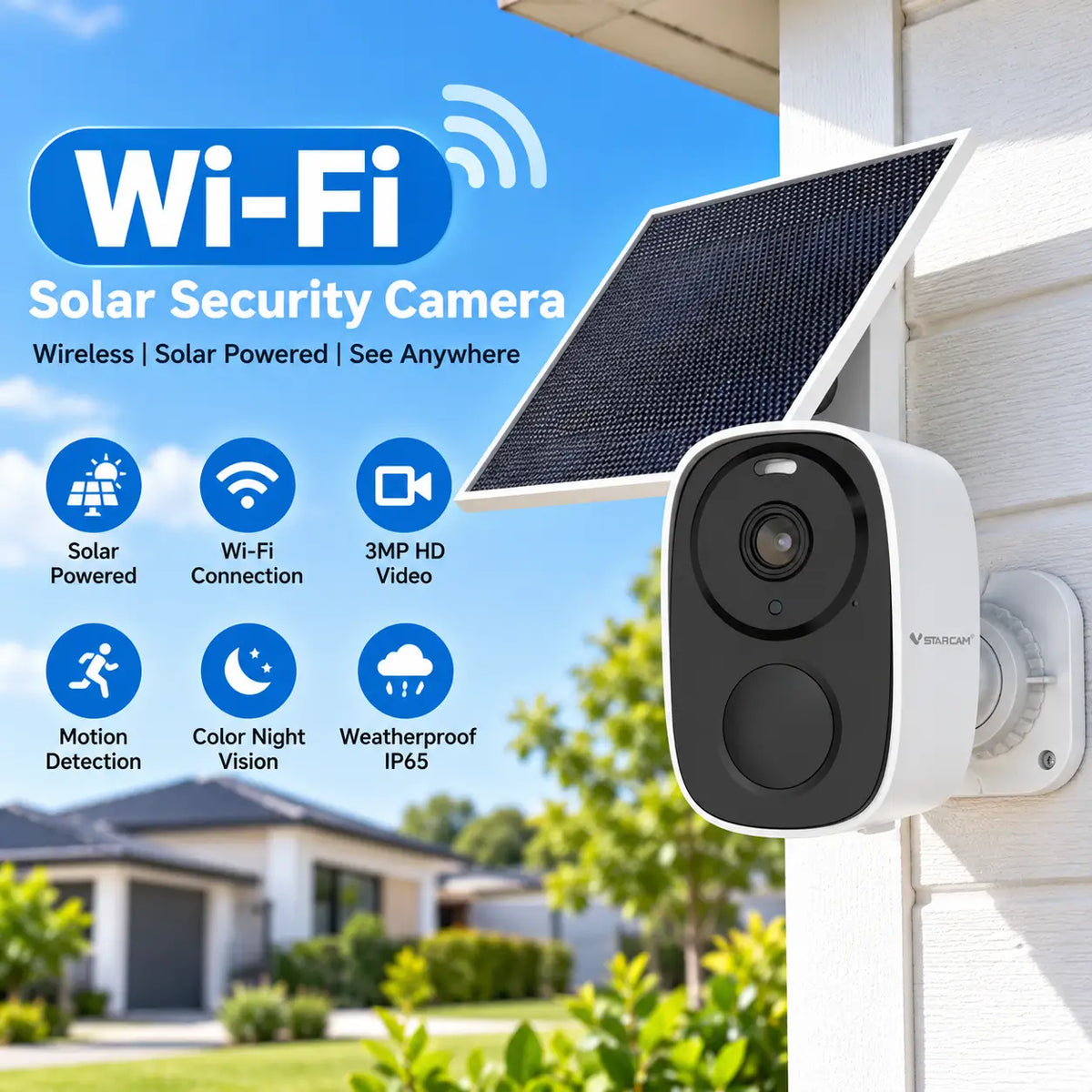
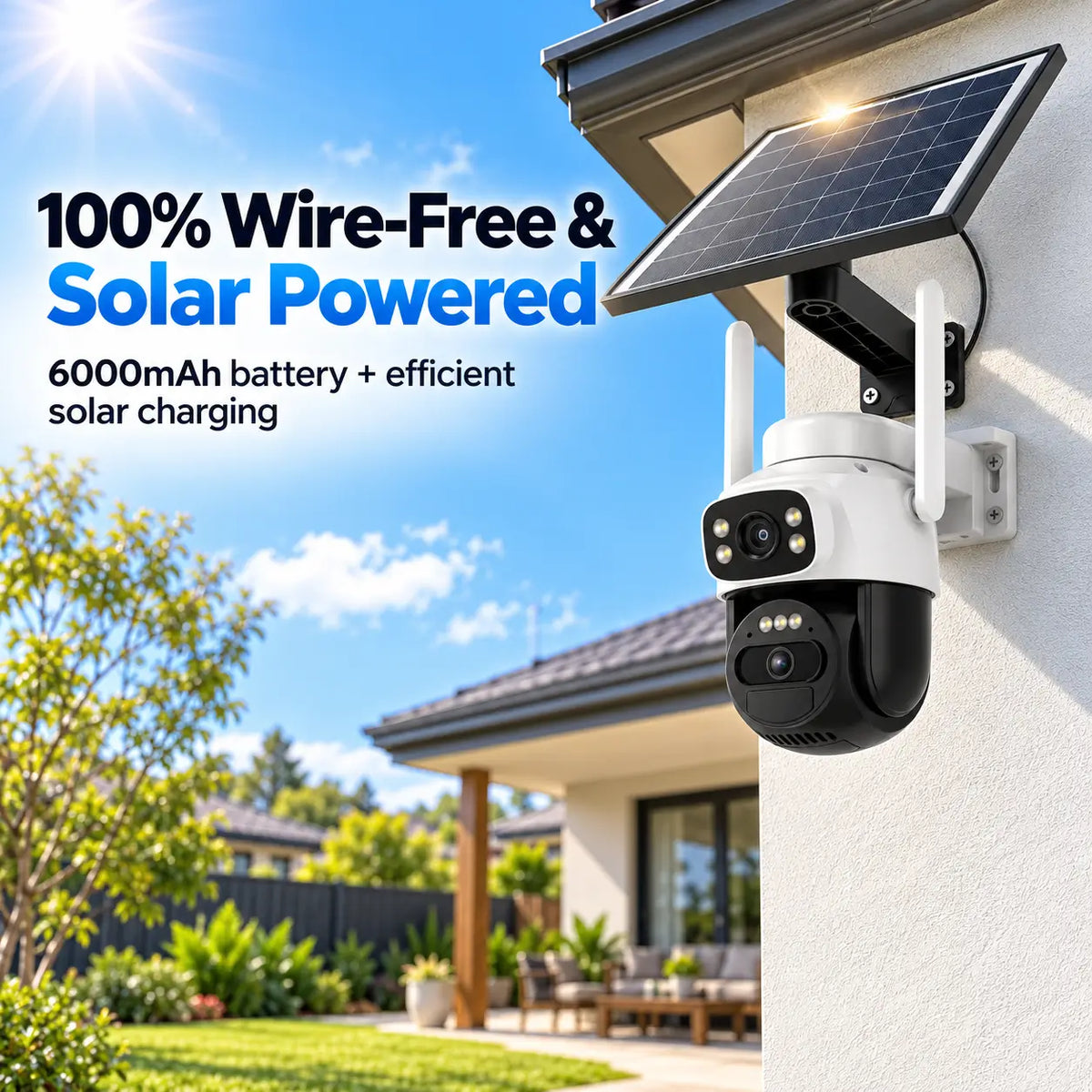
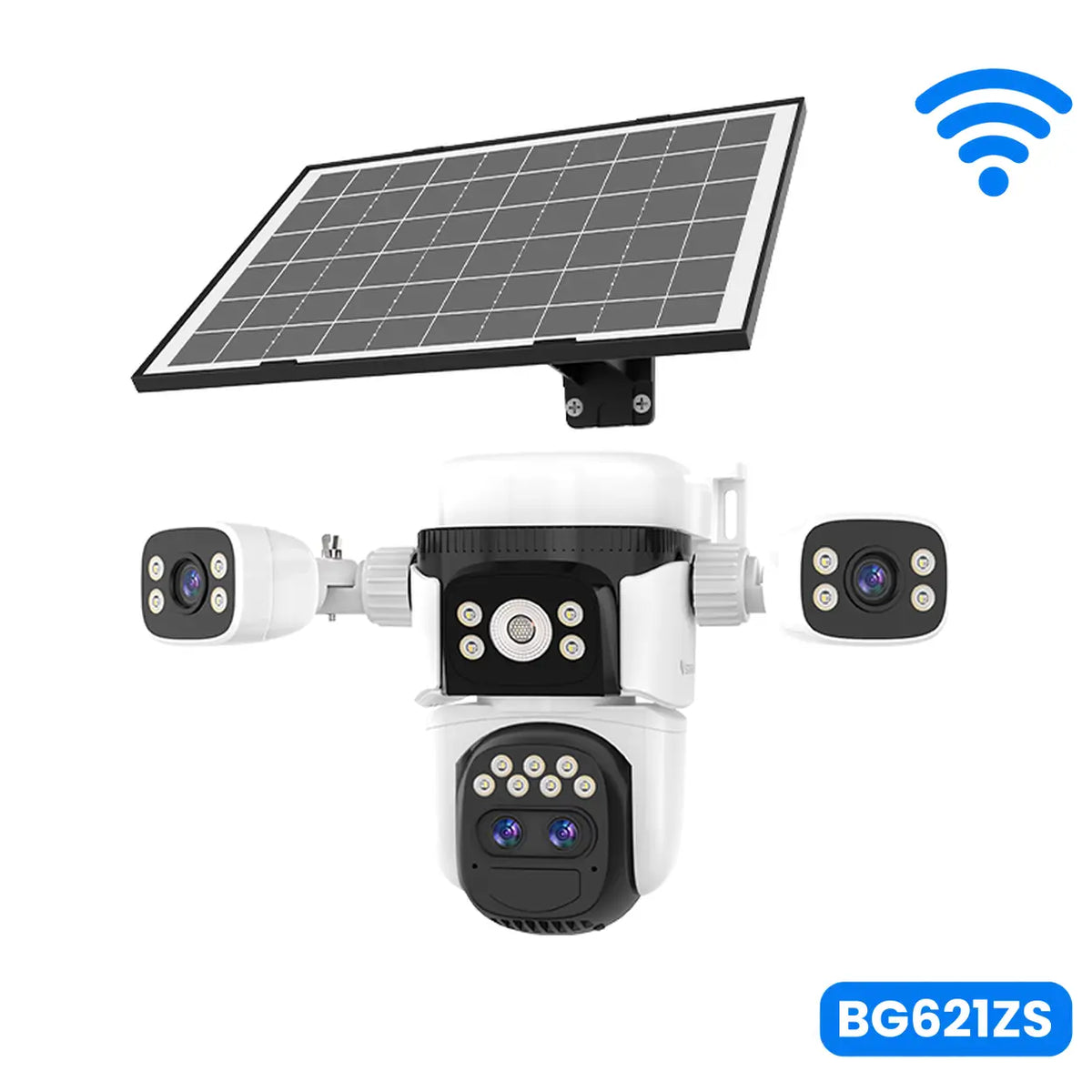
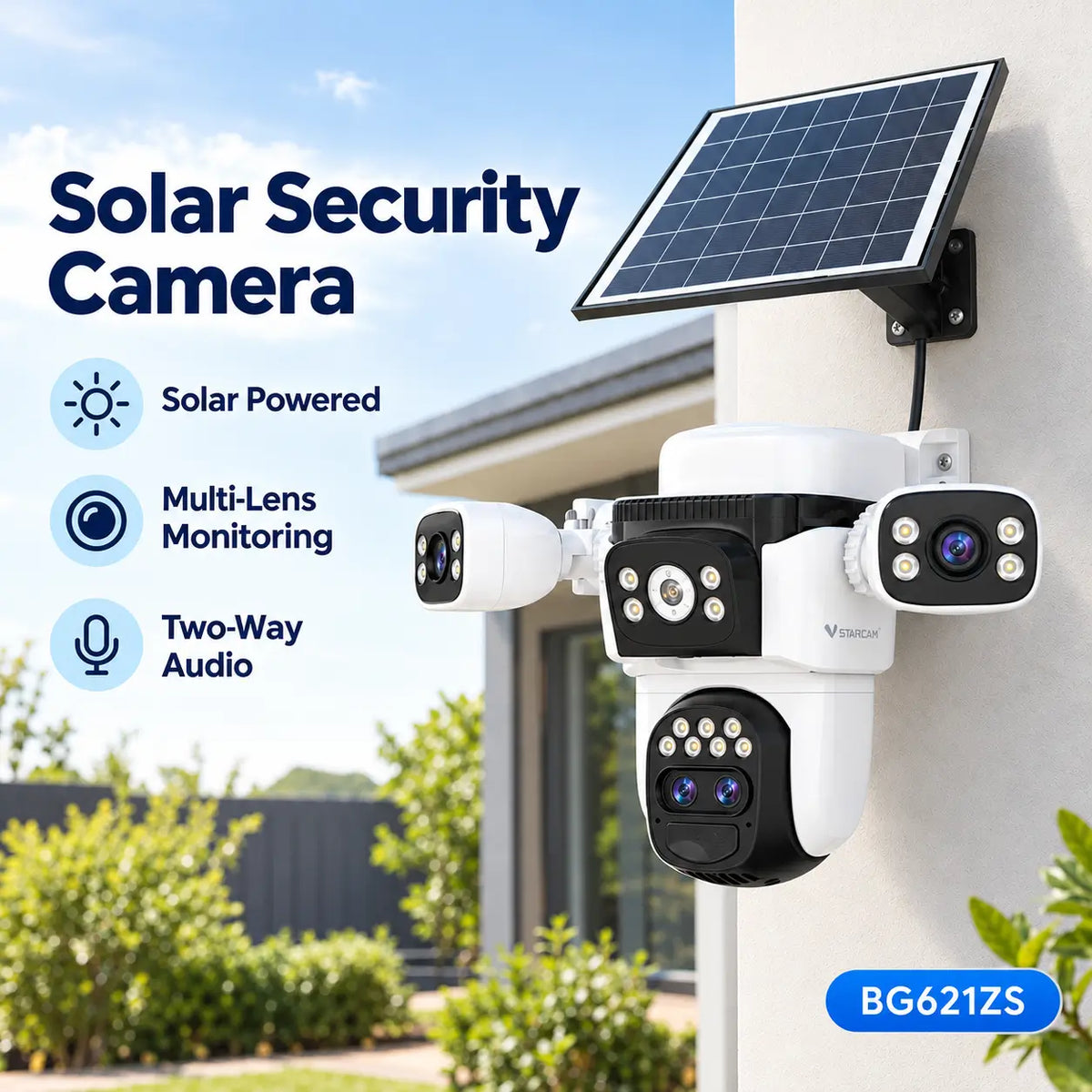
A solar panel is an essential component of a solar powered security camera system. It converts sunlight into electrical energy, helping recharge the camera's built-in battery and reducing the need for frequent manual charging.
However, not all solar panels deliver the same charging performance.
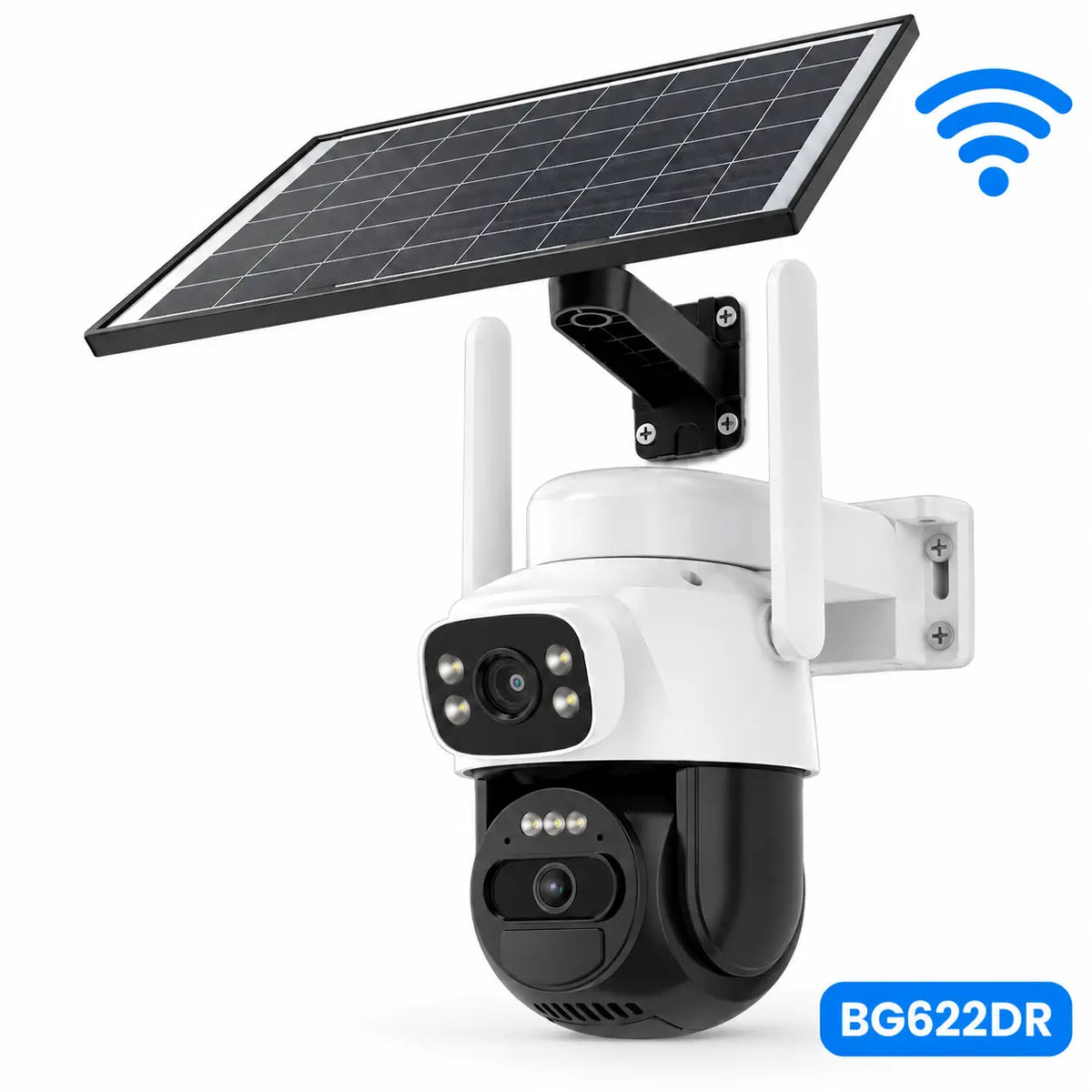
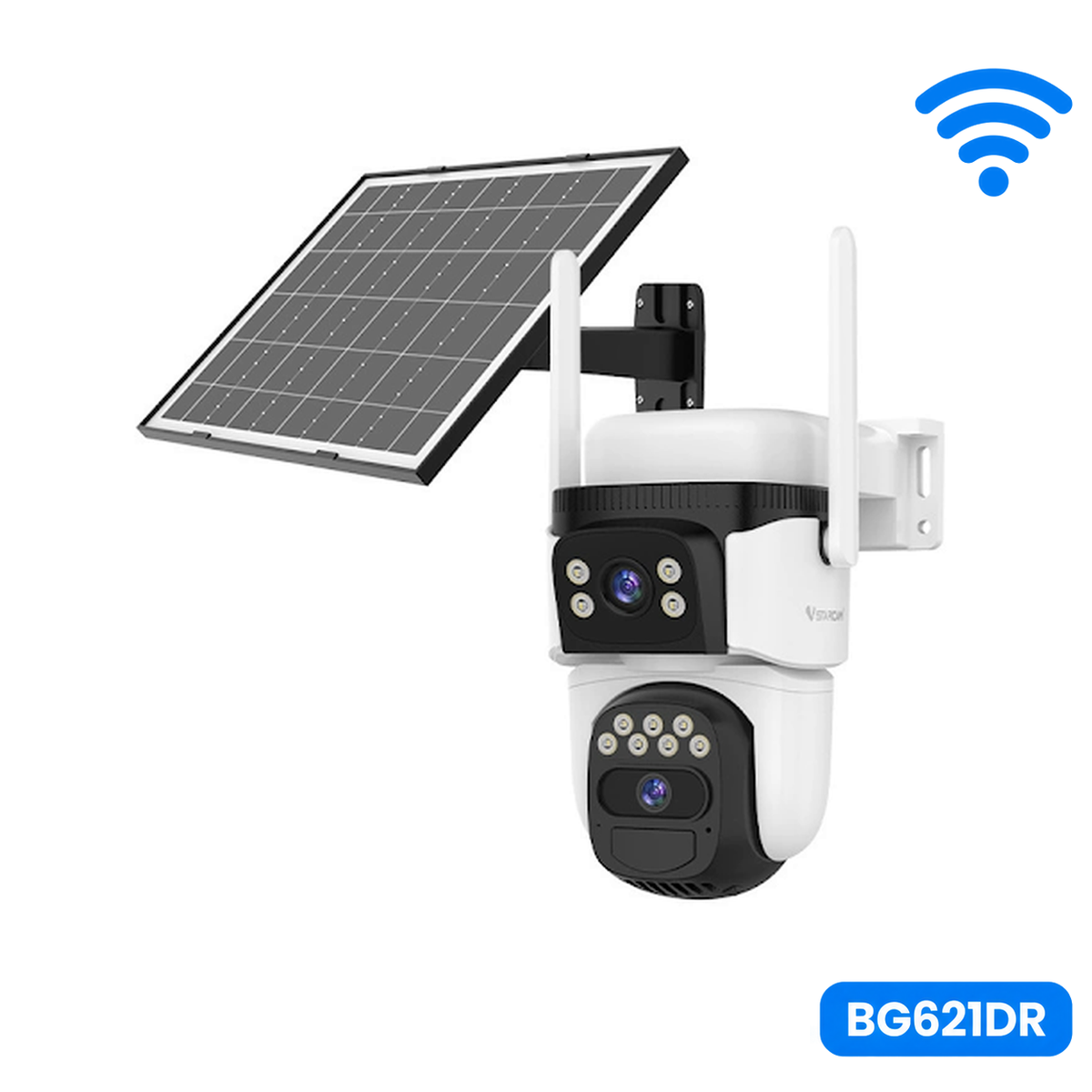
When comparing solar security cameras in Australia, buyers may notice different solar panel sizes, wattage ratings and designs. Some compact cameras include small external panels, while larger security camera systems may use higher-powered panels.
But does a larger solar panel always charge faster? What does a 5W or 10W solar panel actually mean? And how much sunlight does a solar security camera need?
Understanding solar panel wattage, charging efficiency and real-world performance can help Australian homeowners, builders and rural property owners choose a more reliable solar security camera system.
1. How Does a Solar Panel Power a Security Camera?
A solar panel contains photovoltaic cells that convert sunlight into direct current (DC) electricity.
When sunlight reaches these cells, electrical energy is generated and supplied to the camera's charging system.
In most battery-powered solar security cameras, this electricity helps recharge the internal battery.
The battery then provides power when sunlight is unavailable, including at night.
The charging process generally involves three components:
- Solar Panel: Converts sunlight into electrical energy.
- Charging Circuit: Regulates the electricity supplied to the battery.
- Rechargeable Battery: Stores energy for use when solar generation is insufficient.
The camera's charging circuit is important because batteries require controlled charging voltage and current.
A solar panel should therefore be compatible with the camera's electrical specifications.
Not every solar panel can be connected safely to every security camera.
2. What Does Solar Panel Wattage Mean?
Solar panel wattage describes the panel's rated electrical power output under specified standard test conditions.
Power is measured in watts (W).
Solar security camera panels may be advertised with ratings such as 3W, 5W, 6W or 10W.
A higher wattage rating indicates greater potential power generation under the same test conditions.
However, the advertised wattage is not necessarily the amount of power the panel produces throughout the day.
Actual output changes with sunlight intensity, temperature, shading and other operating conditions.
Comparing Different Solar Panel Wattages
| Solar Panel Rating | General Characteristics | Potential Application |
|---|---|---|
| 3W | Compact, relatively low rated output | Small, energy-efficient cameras |
| 5W | Moderate rated output | Many battery-powered outdoor cameras |
| 6W | Slightly higher rated output | Cameras requiring additional charging capacity |
| 10W | Greater potential power generation | More demanding compatible camera systems |
These examples are general comparisons, not minimum requirements for particular camera types.
A 10W panel does not automatically make a security camera more reliable than a 5W panel.
The camera's energy consumption, battery capacity and charging system must also be considered.
3. Solar Panel Wattage vs Actual Energy Generation
One of the most important distinctions is the difference between power and energy.
Watts (W) measure the rate of electrical power generation.
Watt-hours (Wh) measure the amount of electrical energy generated or consumed over time.
For example, if a solar panel produces an average of 4W for three hours, it generates:
4W × 3 hours = 12Wh
This is a simplified calculation.
In real outdoor conditions, solar panel output varies throughout the day rather than remaining constant.
A panel may generate relatively high power during strong sunlight and considerably less during cloudy conditions or early morning and late afternoon.
Some of the generated energy is also lost through electrical conversion and battery charging.
Why Rated Wattage Is Not Daily Output
A 5W solar panel does not produce 5W continuously for 24 hours.
Its output depends on the amount of usable sunlight reaching the photovoltaic cells.
For this reason, buyers should not assume that multiplying rated wattage by daylight hours will provide an accurate daily charging estimate.
Actual energy production requires consideration of sunlight conditions and system losses.
4. What Is Solar Panel Charging Efficiency?
Solar panel efficiency describes how effectively a photovoltaic panel converts incoming sunlight into electrical energy.
For example, a panel with higher photovoltaic conversion efficiency can potentially generate more electricity from the same surface area under comparable conditions.
However, photovoltaic cell efficiency is not the same as the efficiency of the complete camera charging system.
Several factors influence the amount of energy that ultimately reaches the battery.
These include:
- Photovoltaic cell efficiency
- Solar panel operating temperature
- Electrical conversion losses
- Charging circuit performance
- Battery charging characteristics
- Available sunlight
Therefore, a solar panel advertised with high conversion efficiency does not necessarily guarantee fast battery charging.
The complete system must operate efficiently.
5. Monocrystalline vs Polycrystalline Solar Panels
Solar panels used with security cameras may contain different types of photovoltaic cells.
Two familiar technologies are monocrystalline and polycrystalline silicon.
Monocrystalline Solar Panels
Monocrystalline panels use cells made from single-crystal silicon.
They generally offer relatively high conversion efficiency and are commonly used where available panel space is limited.
This can make them suitable for compact security camera installations.
Polycrystalline Solar Panels
Polycrystalline panels use silicon containing multiple crystal regions.
They have traditionally offered lower conversion efficiency than comparable monocrystalline panels, although actual performance varies between products.
Both technologies can generate electricity for solar security cameras when properly designed and matched to the system.
Which Is Better?
For compact solar security cameras, panel efficiency and physical size can be important considerations.
However, buyers should not judge panel quality solely by its colour or appearance.
The manufacturer's specifications, build quality and compatibility with the camera are more reliable indicators.
6. Does a Larger Solar Panel Charge Faster?
A physically larger panel may contain more photovoltaic cell area and therefore have the potential to generate more electricity.
However, panel size alone does not determine charging speed.
Two panels of similar dimensions may have different rated wattages because of differences in cell technology, efficiency and design.
Similarly, a higher-wattage panel may not charge a particular camera faster if the camera's charging circuit limits the amount of power it can accept.
For example, connecting an oversized panel to a camera does not automatically increase charging current beyond the system's supported limits.
Using an incompatible panel may also damage the equipment.
Always follow the manufacturer's approved solar panel specifications and connection requirements.
7. How Do Solar Panel Wattage and Battery Capacity Work Together?
Solar panel wattage and battery capacity describe two different parts of the camera's energy system.
The solar panel determines the potential rate of electricity generation.
The battery determines how much electrical energy can be stored.
A larger battery provides additional energy storage, but it may also require more energy to recharge from a low state of charge.
A higher-wattage solar panel can potentially replenish energy more quickly when sufficient sunlight is available and the charging system supports the additional input.
However, the most important consideration is the balance between daily energy generation and daily camera consumption.
Example: Two Different Camera Systems
Consider two hypothetical solar security cameras.
Camera A
Compact, energy-efficient camera
Relatively small rechargeable battery
5W solar panel
Occasional motion-triggered recording
Camera B
Larger camera with additional functions
Higher-capacity rechargeable battery
10W solar panel
More frequent recording and motorised movement
Camera B has a larger solar panel, but it may also consume substantially more electricity.
Therefore, Camera B is not necessarily more energy-efficient or more reliable than Camera A.
The complete energy requirements must be considered.
For more information about battery capacity, read F04 – Solar Security Camera Battery Capacity Explained: 5,200mAh, 10,000mAh and Beyond.
8. What Affects Solar Panel Performance in Australia?
Australia offers many locations with strong solar resources, but actual charging performance varies by region, season and local conditions.
Sunlight Intensity
Solar panels generally produce more electricity under strong, direct sunlight than under weak or heavily diffused light.
Panel Temperature
Solar panels can become hot during Australian summer conditions.
Higher cell temperatures generally reduce the electrical conversion efficiency of conventional crystalline silicon panels.
Strong sunshine does not mean a panel will always operate at its rated output.
Cloud Cover
Solar panels can still generate electricity under cloudy skies, but output is usually reduced.
The amount of reduction depends on cloud conditions and available sunlight.
Dirt and Surface Contamination
Dust, bird droppings and accumulated debris can block sunlight from reaching photovoltaic cells.
This may reduce electricity generation.
Shading
Partial shading can significantly reduce panel output, depending on the panel's internal electrical design.
For practical guidance on solar panel direction, positioning and avoiding shade, see our installation articles in Section 5.
9. How Much Solar Panel Power Does a Security Camera Need?
There is no single wattage suitable for every solar security camera.
The required panel output depends on the camera's energy consumption, recording behaviour, battery capacity and available sunlight.
A small camera that remains in low-power standby between recording events may require relatively little daily energy.
A camera operating frequent live viewing, night-time illumination, mobile network communication or motorised tracking may have greater energy requirements.
When comparing models, Australian buyers should consider:
- The solar panel's rated wattage
- Compatibility with the camera
- Battery storage capacity
- Expected recording frequency
- Local sunlight conditions
- The manufacturer's charging and operating recommendations
It is also useful to check whether the manufacturer provides realistic charging information rather than relying only on promotional claims.
10. Common Solar Panel Misunderstandings
Does a 10W Panel Always Charge Twice as Fast as a 5W Panel?
No.
A 10W panel has twice the rated power of a 5W panel, but actual charging speed depends on sunlight, electrical losses and the camera's charging limits.
Can a Solar Panel Charge a Camera on Cloudy Days?
Yes, solar panels can generate electricity under cloudy conditions, although output is generally lower than under strong sunlight.
Does a Larger Solar Panel Guarantee Longer Camera Runtime?
No.
Runtime also depends on battery storage and camera power consumption.
Can Any Solar Panel Be Used with Any Camera?
No.
Voltage, connectors, polarity, charging requirements and manufacturer compatibility must be checked.
Does a Higher Efficiency Rating Guarantee Better Performance?
Not necessarily.
Panel efficiency is only one factor. Overall system design and real-world operating conditions also matter.
Final Thoughts
Solar panel wattage, charging efficiency and overall performance are important considerations when choosing a solar powered security camera.
A higher-wattage panel offers greater potential electricity generation, but actual charging performance depends on sunlight conditions, panel efficiency and the camera's charging system.
Similarly, a larger solar panel does not automatically guarantee longer runtime.
For Australian homeowners, builders and rural property owners, the best approach is to evaluate the complete solar security camera system, including its battery capacity, energy consumption and compatible solar panel.
A reliable solar security camera requires the right balance between solar energy generation, battery storage and daily power consumption.
Understanding these fundamentals can help buyers make more informed decisions and select equipment suited to their monitoring requirements.
About SolarEasy
SolarEasy is an Australian-owned online retailer specialising in solar powered products for homes, gardens and outdoor applications.
Our Solar Powered Security Camera Information Hub provides practical information to help Australian homeowners, builders and rural property owners understand solar security technology and make informed purchasing decisions.
Explore our solar powered products at SolarEasy.