
Why Rainman Focuses on Real Light Output, Not Fake Wattage
Real Light. Real Runtime. Real Engineering.
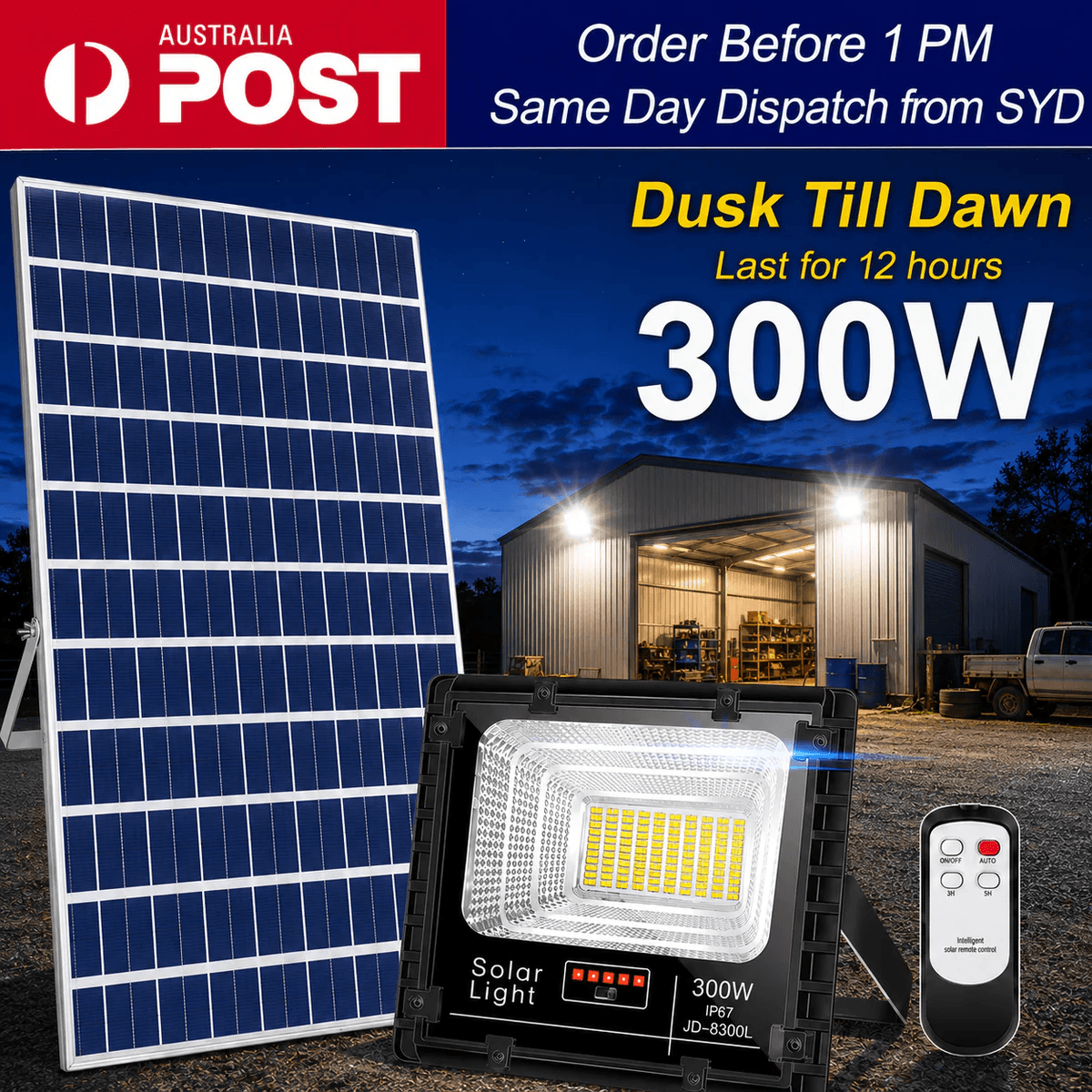
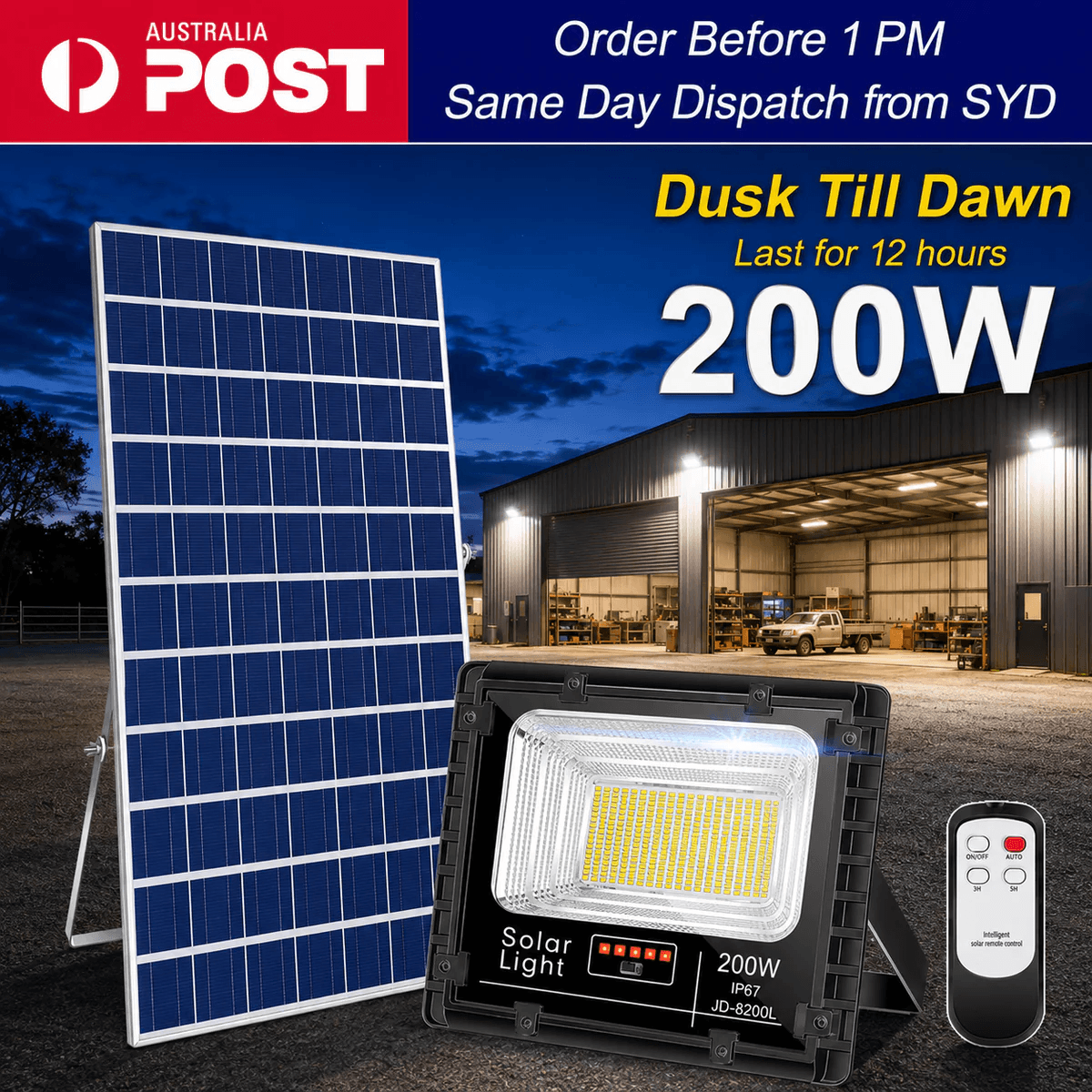
Search online for a solar street light or solar floodlight and you will quickly see some very large numbers.
500W.
1000W.
2000W.
Sometimes even more.
For many customers, it is natural to assume that the bigger number means the brighter light.
But with solar lighting, that assumption can be very misleading.
A solar light is not connected to unlimited mains electricity.
Every watt of electricity used at night must first be collected from sunlight, converted by the controller, and stored in the battery.
That means the numbers have to add up.
If a product claims extremely high wattage, but has only a small battery and a small solar panel, then there is a simple question to ask:
Where is all that energy supposed to come from?
Rainman takes a different approach.
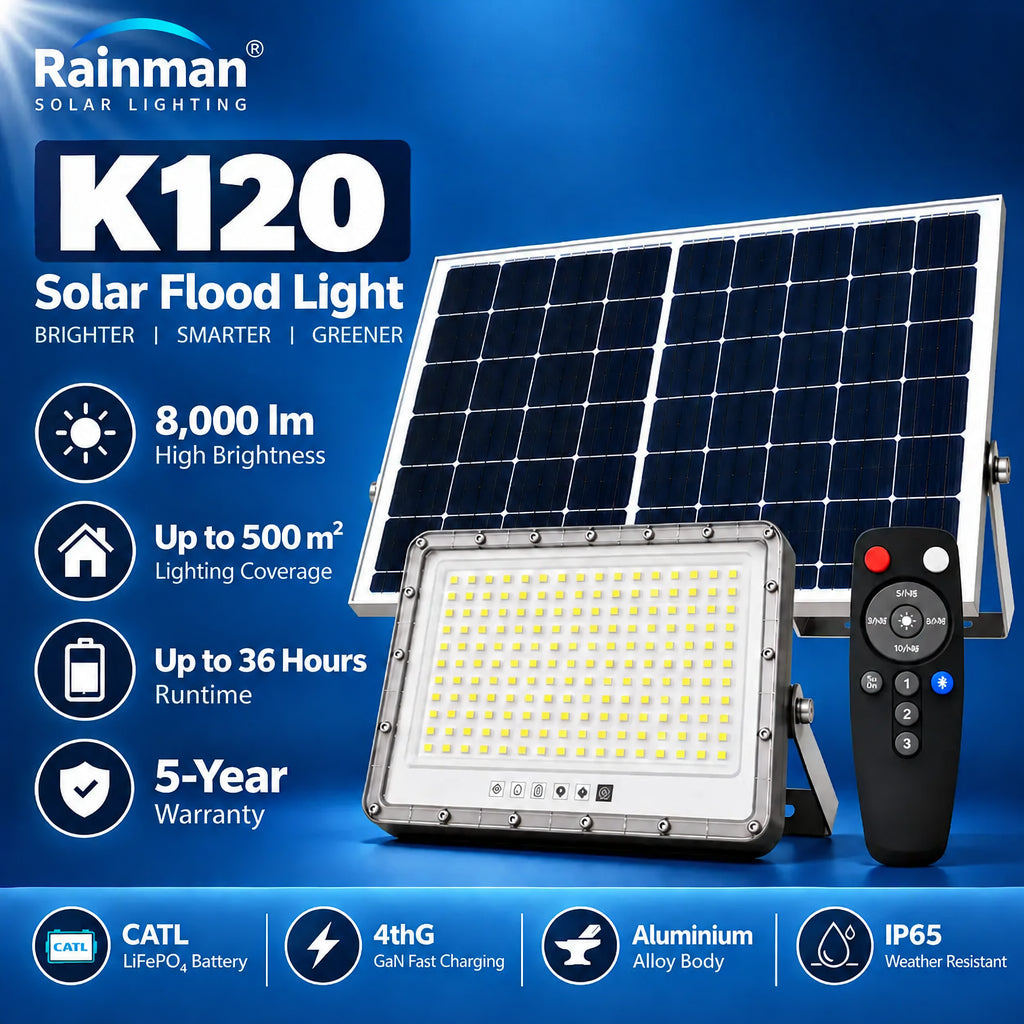
Instead of building the product story around exaggerated wattage numbers, Rainman focuses on what customers can actually use:
- real lumen output;
- practical lighting coverage;
- actual battery capacity;
- solar panel size;
- LED efficiency;
- overnight runtime.
Because in solar lighting, the biggest number is not always the most useful number.
Why Extreme Wattage Claims Can Be Misleading
Wattage is a measure of electrical power consumption.
It does not directly tell you how much useful light a lamp produces.
More importantly, a genuine high-wattage solar light would require a very large amount of stored energy.
Consider a simple example.
If a solar light actually consumed 1000 watts continuously, then:
- one hour of operation would require 1000Wh of energy;
- four hours would require 4000Wh;
- eight hours would require 8000Wh.
That is 8kWh of stored energy for one eight-hour night.
To put that back into the battery the following day, the solar panel would also need to generate a very large amount of electricity.
That would require a solar array far larger than the small panel typically seen on a compact solar street light.
This is why some extremely large advertised wattage numbers should be treated carefully.
The light may still be useful.
It may even be bright.
But the printed wattage may not represent the actual continuous electrical power of the LED system.
If the claimed wattage is huge but the battery and solar panel are small, the numbers simply do not add up.
Look at the Solar Panel Size – It Tells You a Lot
The solar panel is one of the easiest reality checks when evaluating a solar street light.
Many all-in-one solar street lights have the solar panel built directly into the top of the light body.
This design is compact and convenient, but it creates one major limitation:
the panel area is physically restricted by the size of the light.
A small built-in panel can only collect a limited amount of solar energy during the day.
If the same product also claims extremely high power output throughout the night, customers should ask whether the panel is actually large enough to support that level of energy consumption.
Rainman uses a different design philosophy.
The solar panel and light head are separated, allowing a much larger solar panel to be used.
Depending on the model being compared, the Rainman panel can be around three to four times larger than the small integrated panel commonly found on compact all-in-one solar street lights.
That larger panel area provides a much stronger foundation for energy generation.
This becomes particularly important when the system is also designed with:
- a larger battery;
- dusk-to-dawn operation;
- multi-night energy reserve;
- higher real light output.
A genuinely capable solar light needs a solar panel large enough to support the energy it consumes.
The Better Question Is: How Much Useful Light Does It Produce?
Instead of focusing only on wattage, a better way to judge lighting performance is to look at lumens.
Wattage tells you how much electrical power is being used.
Lumens tell you how much light is actually being produced.
For solar lighting, this distinction is especially important.
A more efficient LED system can produce more useful light from the same amount of battery energy.
That means a better-designed system does not necessarily need to consume more electricity in order to provide better illumination.
Rainman therefore focuses on real lumen output rather than oversized wattage claims.
The more useful question is not:
"How many watts does it say?"
It is:
"How much useful light does it actually produce?"
Rainman Publishes Lumens and Recommended Lighting Coverage
Rainman goes one step further.
Our models do not rely on wattage alone.
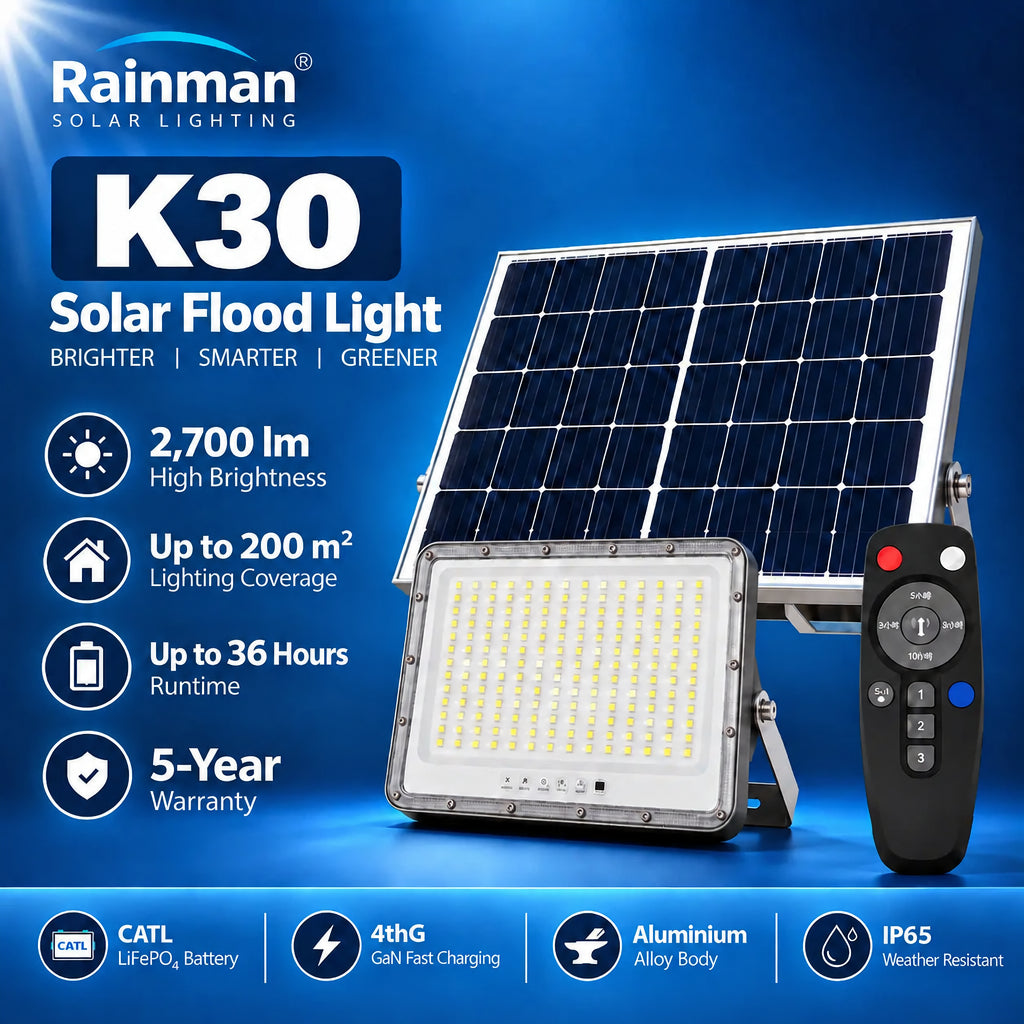
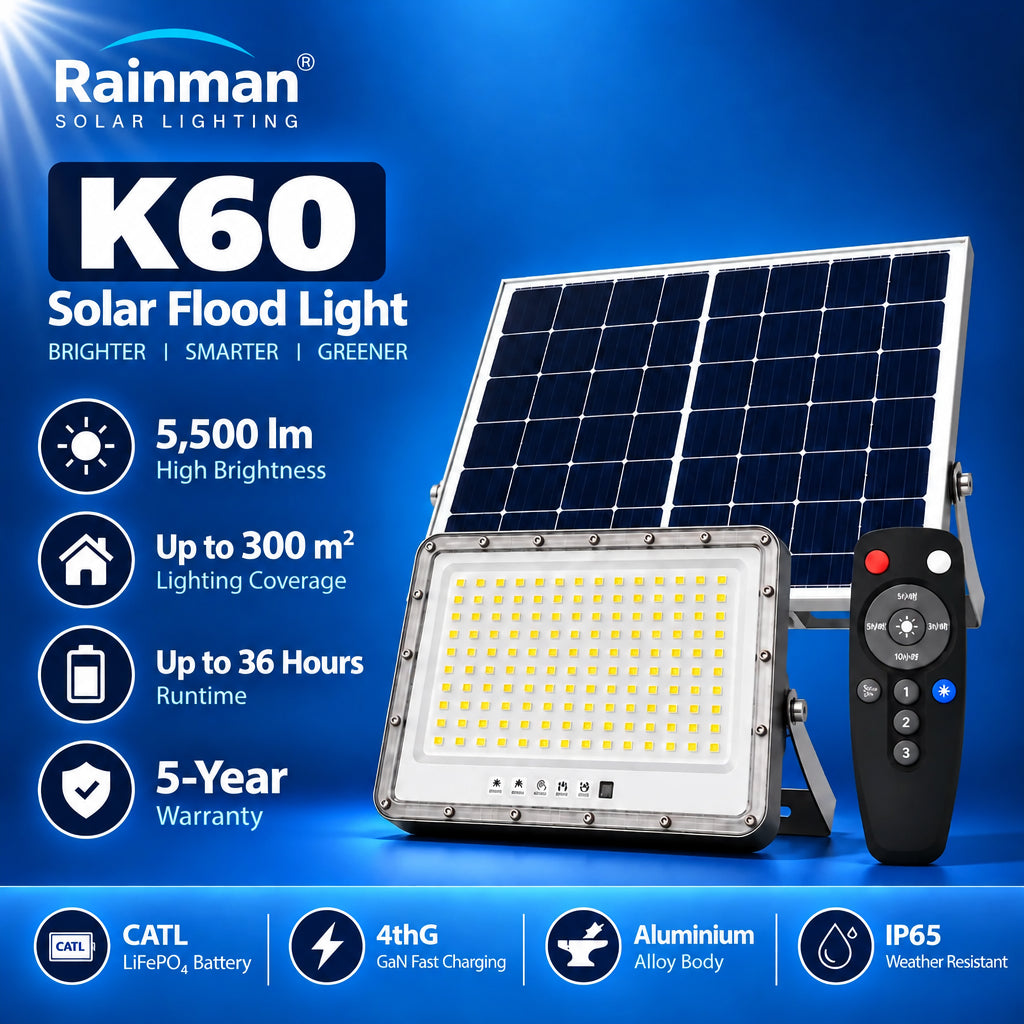
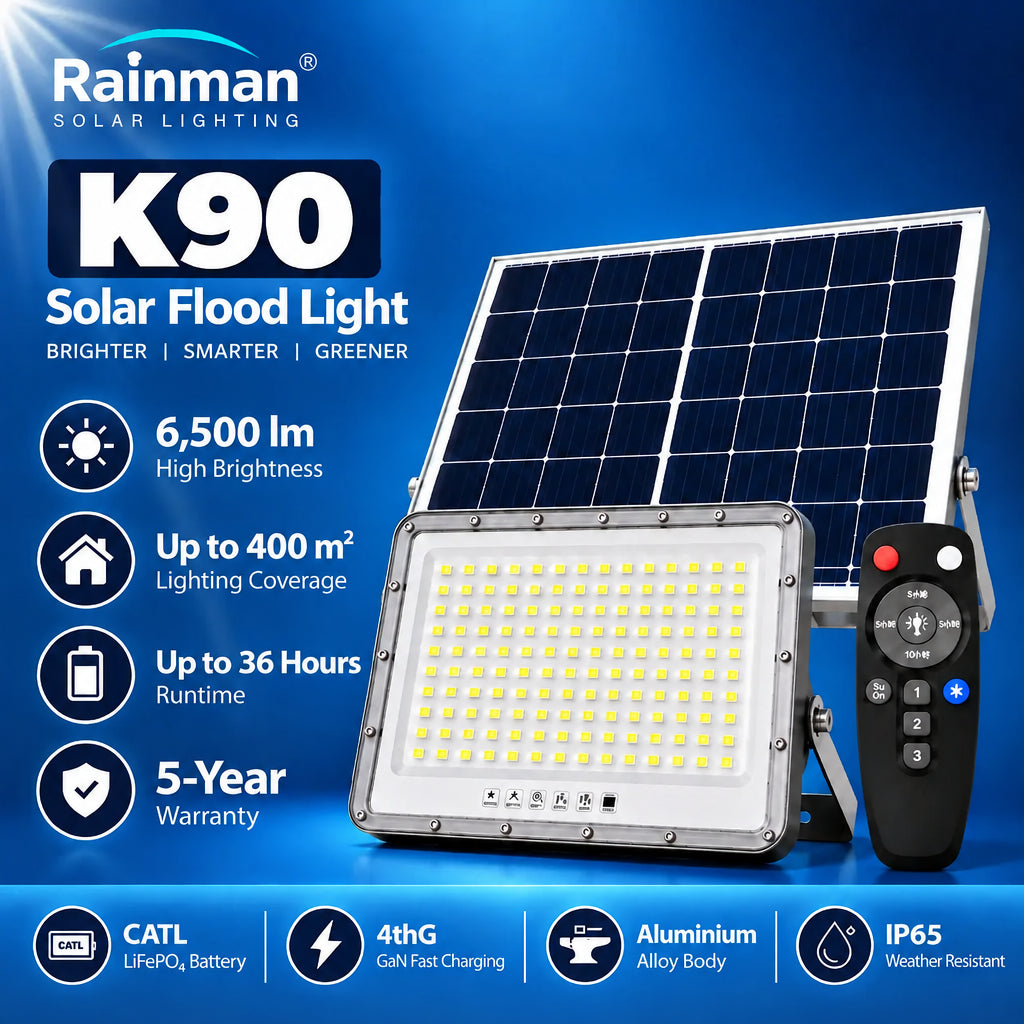
Rainman specifies lumen output and also provides a recommended illumination area or coverage range so customers can better understand what the light is designed to do in real-world use.
For most buyers, these questions are far more useful:
How bright is the light actually?
How large an area can it realistically illuminate?
A "2000W" label tells the customer very little if the product does not also explain:
- actual lumen output;
- battery capacity;
- solar panel size;
- overnight runtime;
- practical lighting coverage.
Rainman is designed to make these specifications easier to understand and easier to compare.
This is especially useful for customers trying to choose a light for:
- driveways;
- farms;
- yards;
- pathways;
- car parks;
- commercial properties;
- building surrounds;
- rural areas.
For these applications, practical coverage matters much more than a marketing number.
Dual 5054 LED Technology – More Useful Light from Stored Energy
Rainman uses a high-efficiency LED system built around dual 5054 LED chip technology.
The objective is not simply to drive the LEDs as hard as possible.
It is to produce more useful illumination from each watt-hour stored in the battery.
This matters because every bit of energy used at night has already been collected and stored during the day.
If the LED system wastes energy, the battery drains faster.
If the LED system uses energy efficiently, the same battery reserve can provide longer runtime or stronger useful illumination.
This relationship between light output and energy consumption is central to Rainman's design.
More efficient LEDs mean more useful light from the same stored energy.
High-Transmission Optical Lenses – Bright LEDs Are Not Enough
The LED chip itself is only part of the lighting system.
The optical lens also matters.
A poor lens can absorb, scatter or redirect light inefficiently.
That means some of the LED output never reaches the area where illumination is needed.
Rainman uses a high-transmission optical lens system designed to reduce unnecessary optical loss and improve useful light delivery.
This helps direct more of the available light toward the target area.
That distinction is important.
A solar light should not simply look bright when you stare directly at the lamp.
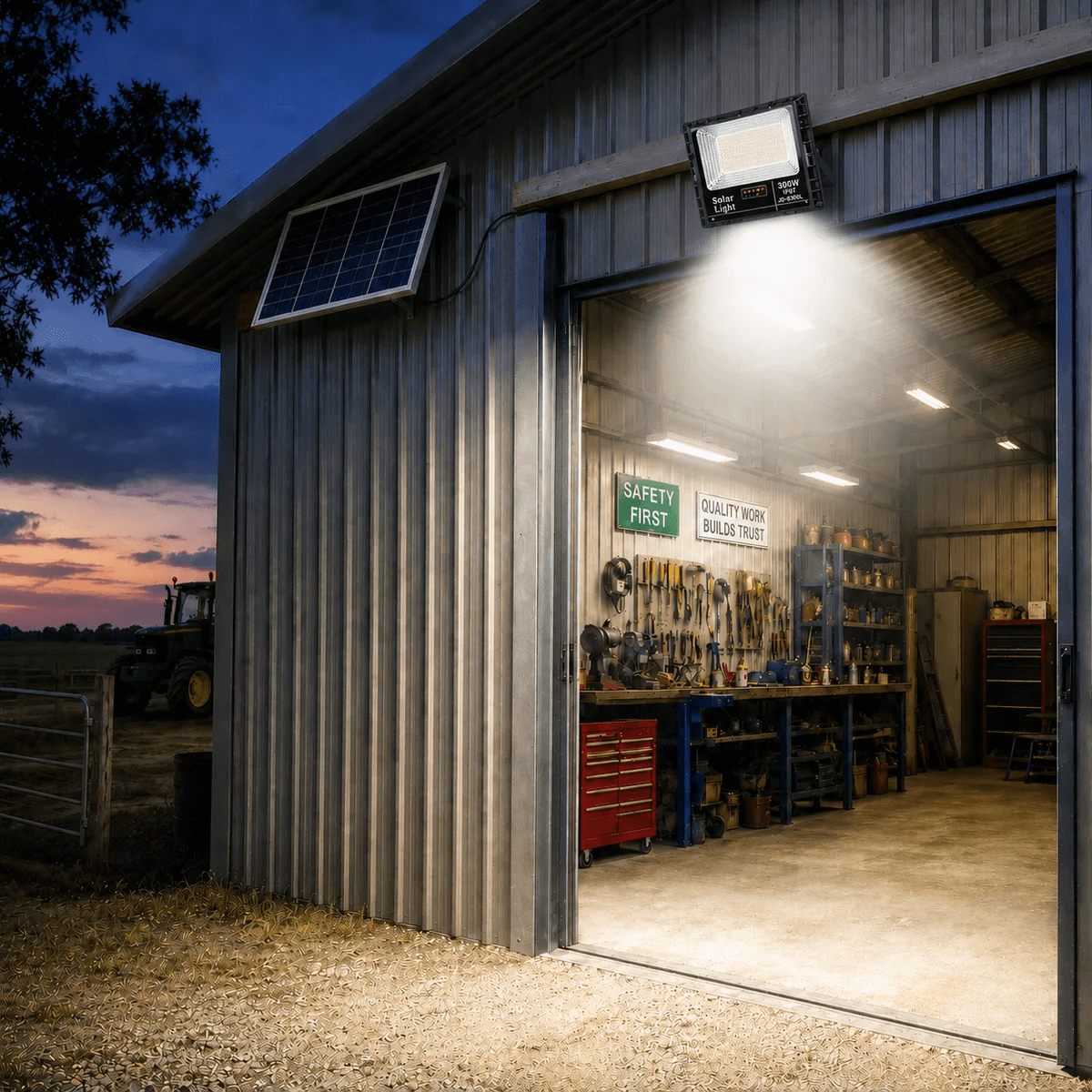
It should illuminate the area where people actually need light.
A good solar light should illuminate the ground, not just look bright when you look at the lamp.
Light Distribution Matters as Much as Raw Brightness
Brightness alone does not determine whether a light is useful.
Beam distribution also matters.
A poor optical system may create:
- a very bright centre spot;
- dark areas around the edges;
- excessive glare;
- uneven coverage.
For outdoor lighting, a more useful result is often a wider and more consistent lighting area.
That is why Rainman considers practical illumination coverage, not just peak brightness.
For a driveway, farm, car park or commercial area, customers need useful light across the space rather than one intensely bright point.
This is another reason Rainman provides a recommended coverage range.
It gives customers a more realistic idea of how the light is intended to perform.
Real Brightness Must Match Real Battery Capacity
A bright LED system needs energy.
That energy has to come from the battery.
If the battery is too small, the light may appear very bright for a short period but cannot maintain that performance through the night.
This is one of the problems with judging solar lights by wattage alone.
Brightness without enough stored energy is only temporary brightness.
Rainman uses CATL 33155 LiFePO₄ battery cells because long overnight operation requires substantial real energy storage.
The battery system is designed to support the lighting system rather than simply create an impressive specification on paper.
This becomes even more important during winter.
When daily solar input is reduced, a smaller battery can be depleted much more quickly.
That is why some products with very large advertised wattage figures may operate for only three or four hours in poor winter charging conditions.
The problem is not necessarily the LED.
The problem is that the energy storage and energy collection system are not large enough to support the claimed output for long enough.
Real Brightness Must Also Match the Solar Panel
The same rule applies to the solar panel.
Whatever energy is used at night must eventually be replaced during the day.
A brighter light requires more energy.
Longer runtime requires more energy.
A larger battery also requires more charging energy.
This means the entire system has to be balanced.
Rainman combines:
- a larger separated solar panel;
- high-density monocrystalline cells;
- CATL LiFePO₄ battery storage;
- a Gen-4 GaN charging controller;
- efficient dual 5054 LEDs.
Each component supports the others.
This is what separates real solar-light engineering from simply printing a large wattage number on the product title.
Efficiency Is Better Than Simply Driving LEDs Harder
It is possible to make an LED look very bright by increasing the current supplied to it.
But there are consequences.
Higher current can mean:
- faster battery drain;
- more heat;
- greater LED stress;
- reduced runtime.
For solar lighting, efficiency is usually more valuable than excessive electrical loading.
Rainman focuses on producing useful illumination efficiently rather than using battery energy as quickly as possible.
This approach supports both brightness and runtime.
It also helps reduce heat.
Aluminium Cooling Supports Stable LED Performance
LED performance and temperature are closely connected.
Higher operating temperatures can increase stress on the LED system and contribute to faster long-term light degradation.
Rainman therefore uses a one-piece die-cast aluminium housing.
The aluminium body acts as a large heat-dissipation structure, helping move heat away from the LED board and internal electronics.
This supports more stable operation and helps protect the LEDs, controller and battery.
Again, this is part of the same system philosophy.
The LED cannot be considered separately from the housing.
The battery cannot be considered separately from the charging system.
The solar panel cannot be considered separately from energy consumption.
Everything has to work together.
What Customers Should Compare Instead of Wattage
When comparing solar street lights or floodlights, Rainman recommends looking beyond the headline wattage number.
Instead, compare the complete system.
Look at:
- Lumen output – how much light is actually produced?
- Lighting coverage – how large an area is the light designed to illuminate?
- Battery capacity – how much real energy can be stored?
- Battery chemistry – is it suitable for daily cycling?
- Solar panel size – is the panel large enough to recharge the battery?
- Panel technology – how efficiently can it collect solar energy?
- LED type – how efficiently is battery energy converted into light?
- Runtime – how long is the light designed to operate?
- Housing material – how well does it manage heat and weather?
- Warranty – how confident is the supplier in the product?
These specifications tell you far more about real performance than a single oversized wattage claim.
Look at the complete system, not one oversized number.
Why Rainman Does Not Build Its Story Around "1000W"
Rainman could follow the market and place an enormous wattage number at the top of every product.
But that would not explain how the light actually performs.
We would rather tell customers:
- what battery is inside;
- what LED technology is used;
- how much light it produces;
- what area it can illuminate;
- how large the solar panel is;
- how the battery is charged;
- how the system is designed for overnight runtime.
We believe these are more meaningful questions.
We would rather explain how the light works than impress customers with a number that does not explain real performance.
That is the Rainman difference.
Why We Chose the Name Rainman
The name Rainman reflects the idea behind the product.
We wanted to build a solar light that does not only perform on perfect sunny days, but continues doing its job when conditions become more difficult.
Just like a dependable worker that keeps going when it is needed most, Rainman is designed to keep providing useful illumination through cloudy weather, winter conditions and periods of reduced sunlight.
Of course, no solar light can create energy when there is no useful sunlight at all.
But with a larger energy reserve, a high-density monocrystalline solar panel, GaN fast-charging technology and careful energy management, Rainman is designed to make the most of the solar energy that is available.
That is why we chose the name Rainman.
Because we believe a good outdoor light should not only work when the weather is perfect.
It should keep doing its job when the weather is not.
Real Light. Real Runtime. Real Engineering.
Rainman does not ask customers to believe a large wattage number.
It gives them more meaningful information:
real lumen output, practical lighting coverage, real battery capacity and a solar panel sized to support the system.
Behind that are the five core technologies that define Rainman:
Dual 5054 LEDs and high-transmission optics produce useful light efficiently.
CATL LiFePO₄ batteries provide substantial real energy storage.
Gen-4 GaN charging technology helps transfer available solar energy efficiently.
High-density monocrystalline solar panels provide stronger daytime energy collection.
Die-cast aluminium construction helps control heat and protect the complete system.
The result is a solar light designed around real energy, real illumination and real-world performance.